A luxury mattress is defined by three things:
- certified premium materials (e.g., high-density foam at 4+ lb/ft³, natural latex, individually pocketed coils),
- purposeful multi-layer construction with zoned support,
- and measurable performance in real-time pressure relief, spinal alignment, and durability.
The most advanced luxury mattresses go further, using Active Pressure Relief to silently detect and remove pressure points in real time.
Terms like "orthopedic support," "hotel-grade comfort," and "ultra-comfort foam" sound premium but mean nothing without knowing what's actually inside the bed.
This guide gives you the specific benchmarks, construction principles, and evaluation criteria to tell the difference between a mattress that performs like a luxury product and one that's just priced like one.
Your Mattress Is a Health Decision, Not a Comfort Preference
The surface you sleep on directly shapes your pain levels, sleep architecture, and long-term health. This isn't marketing language. It's clinical evidence.
According to the National Sleep Foundation's 2025 poll, roughly 60% of U.S. adults fail to get recommended sleep. Sleep deprivation costs the U.S. an estimated $411 billion annually in lost productivity and healthcare, per RAND Corporation research. And 24.3% of U.S. adults now suffer from chronic pain, up from 20.4% in 2019. Pain disrupts sleep. Poor sleep amplifies pain. The cycle is bidirectional.
What the clinical research shows about mattress firmness and sleep quality:
- Medium-firmness mattresses were associated with significantly lower back pain (p<0.001) in a 2023 study of 130 patients
- Medium-firm surfaces produced sleep onset in 7.71 minutes versus 12.42 minutes on soft mattresses, nearly 40% faster
- Fewer nighttime stage transitions on medium-firm surfaces, meaning deeper, more restorative sleep
Your morning back stiffness isn't "just aging." It may be a measurable consequence of your sleep surface. That context matters before you evaluate a single material or price tag.
The Materials and Construction That Define Genuine Luxury
A luxury mattress is a multi-layer system. Each layer serves a distinct biomechanical function, and the quality benchmarks within each layer are what separate real engineering from marketing.
Cover Layer
Budget mattresses use synthetic polyester. Luxury mattresses use organic cotton, wool, or Tencel, certified to GOTS or OEKO-TEX Standard 100 to verify they're free of harmful chemicals.
Comfort Layer (1 to 5 inches)
This is where pressure relief happens. Two materials define the premium tier:
- Natural latex: Responsive, breathable, hypoallergenic. A 2023 ScienceDirect study found latex reduces peak pressure and achieves more even distribution than foam alternatives. Lifespan: 15 to 25 years.
- High-density memory foam: Exceptional contouring and motion isolation. The critical number is foam density. Premium comfort layers should be 4 to 6 lb/ft³. Budget mattresses use 2 to 3 lb/ft³ foam that degrades within 5 to 7 years. High-density foam at 4+ lb/ft³ lasts 10 years or more.
Most brands won't disclose foam density. That's the single most reliable indicator of whether you're paying for quality or for a label.
Transition Layer (1 to 3 inches)
Firmer foam or latex between the comfort layer and support core prevents "bottoming out." In lesser mattresses, this layer is absent entirely. Its presence is a quality signal.
Support Core (6 to 10+ inches)
Individually pocketed coils dominate the luxury tier. Premium queen-size mattresses feature 800 to 1,300+ coils with lower gauge steel (13 to 14) for greater resilience. Hybrid construction holds 67.5% market share in the luxury segment because it combines foam or latex pressure relief with coil support and airflow.
Zoned Support: The Construction Feature That Matters Most
Your lumbar area, shoulders, and legs have different weight profiles. Zoned designs use varied coil gauges or foam densities to deliver different support levels to different body regions. Uniform density throughout is a sign of cost-cutting, regardless of price.
Durability, Value, and What to Verify Before You Buy
The Cost-Per-Year Calculation Changes Everything
A $700 budget mattress lasting 5.5 years costs roughly $127 per year. A $3,500 luxury mattress lasting 15 years costs about $233 per year, and delivers categorically better sleep every night. The relevant metric is annual cost of quality sleep, not sticker price.
The Buyer's Verification Checklist
When evaluating any mattress that claims the luxury label, verify these seven quality indicators:
- Material certifications. CertiPUR-US, OEKO-TEX, GOLS, or GOTS. No certification is a red flag.
- Foam density. Comfort layers at 4+ lb/ft³. Support cores at 1.8+ lb/ft³. If a brand won't disclose, you're buying marketing.
- Coil specs (hybrids). Individually pocketed, 800+ count, gauge 14 or lower.
- Zoned support. Different firmness in lumbar versus shoulder zones.
- Trial period. Minimum 90 nights. Industry standard is 100 to 120.
- Warranty terms. Check sagging thresholds. Many only cover sags beyond 1.5 inches, but comfort loss starts well before that.
- Transparency. Can the brand tell you exactly what's in each layer and why? Transparency is a quality signal in itself.
What Even the Best Passive Materials Cannot Do
Here's what the traditional mattress industry rarely acknowledges: even the finest passive materials are static. A mattress built with premium latex and high-count pocketed coils is locked into a fixed configuration from the moment it's made. Your body's needs change throughout the night as you shift positions, as muscle tension fluctuates, as pressure accumulates. No passive material can respond to those changes.
This limitation is driving rapid growth in active sleep technology. The smart mattress market is projected to grow at 19.23% CAGR through 2035.
Active Pressure Relief is the technology that addresses this gap. It means real-time sensing of pressure points combined with real-time removal of those pressure points, automatically and continuously throughout the night. This is fundamentally different from manual firmness adjustment, where you set a number and the mattress stays there regardless of what your body does.
Three criteria separate genuine Real-time Active Pressure Relief from marketing claims:
- Sound. The system must be silent. If adjustments are noisy, they wake the sleeper and defeat the purpose.
- Resolution. How precisely can the system sense and adjust across the surface? A single air bladder for the entire body is low resolution. Ninety independent adjustment points across 16 zones is high resolution.
- Response time. How quickly does the system react? Adjustments within seconds qualify as real-time. Adjustments once per hour do not.
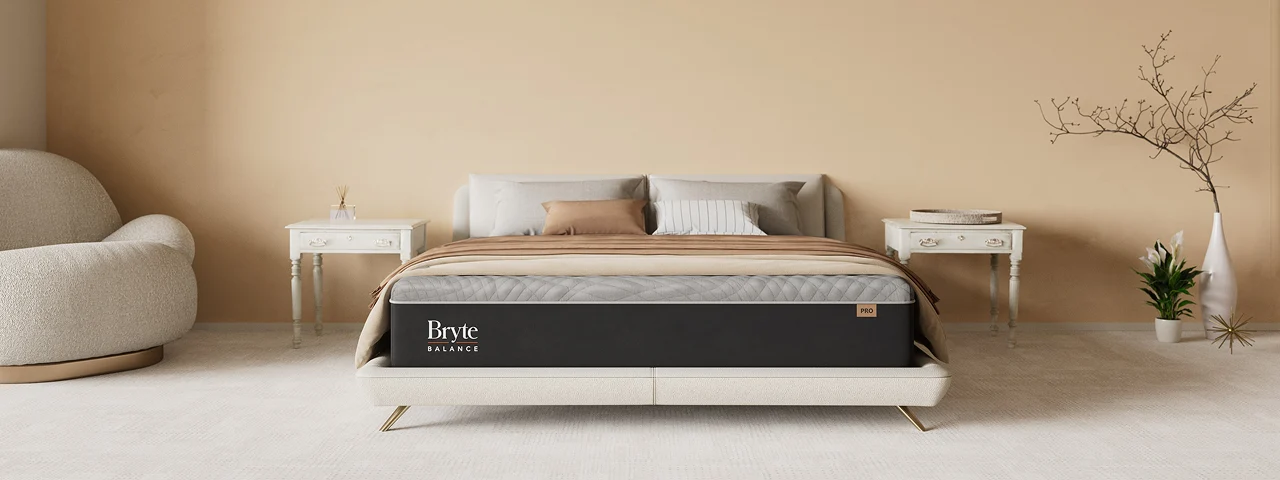
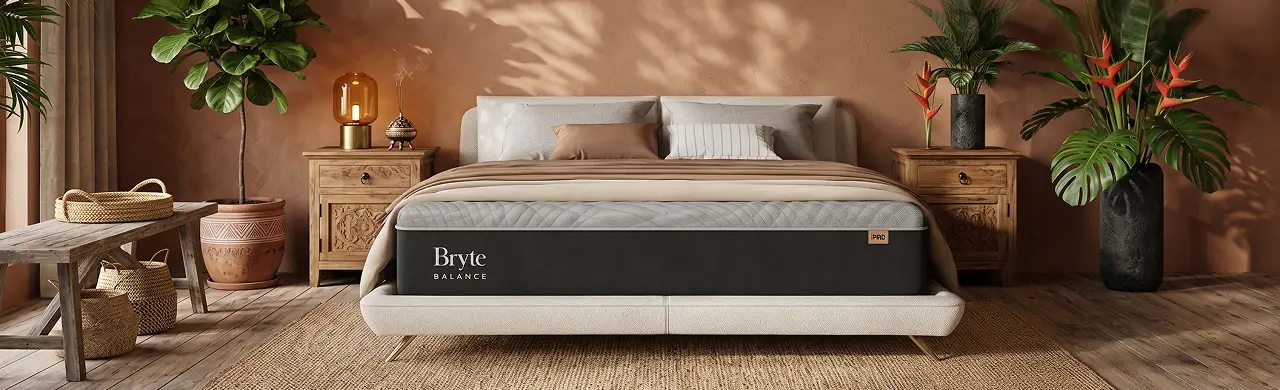
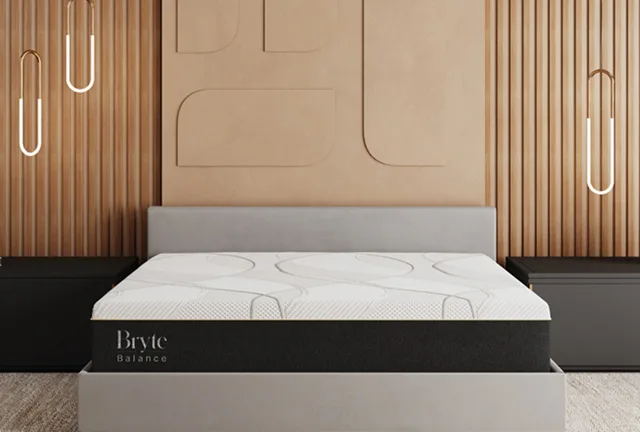
Bryte's Active Pressure Relief meets all three. Every Bryte bed contains 90 AI-powered Balancers across 16 independent zones that silently detect and remove pressure points in real time, resolving discomfort before it triggers waking.
Bryte also eliminates the biggest source of mattress buying uncertainty: choosing the wrong firmness. Every Bryte product offers 0 to 100 adjustable firmness per side with AI-guided Comfort Tailoring. Firmness isn't a one-time guess. It's a setting you control and refine. PRO models add Individual Zone Control for targeting specific areas like the lower back.
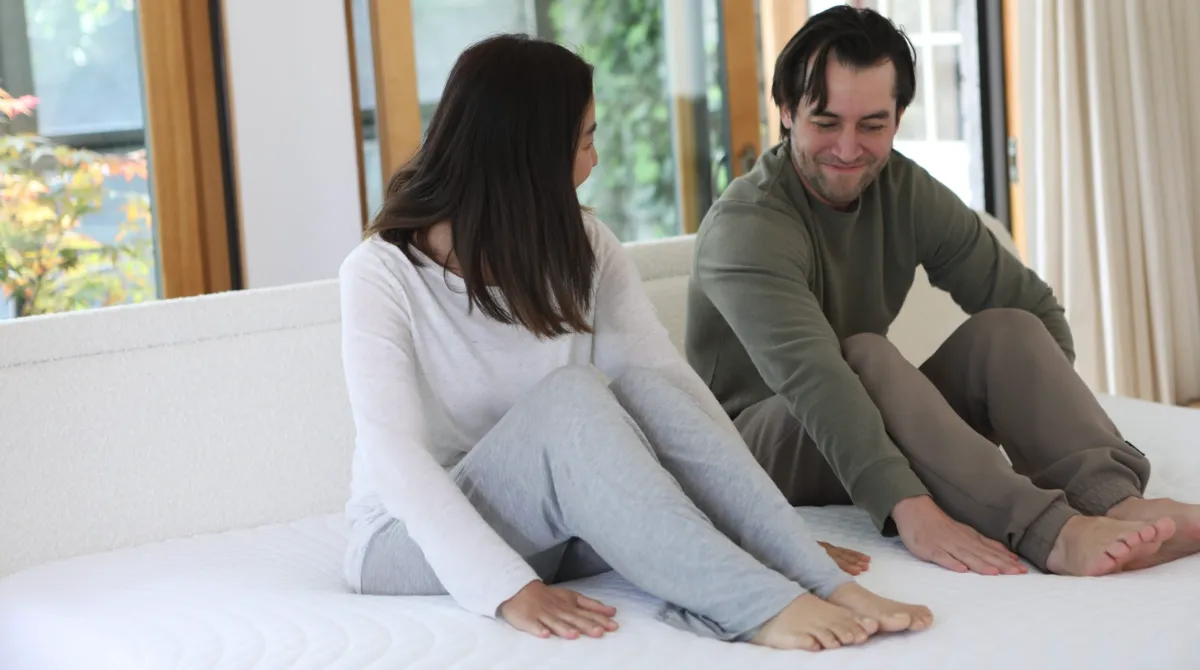
For couples, the Dual Comfort Design provides fully independent control per side, separate sleep data, and Silent Wake Assist that wakes one partner with gradual motion while the other sleeps undisturbed. Given that 31% of U.S. adults now sleep separately due to partner disturbances, this solves a real problem.
BryteWaves adds something no passive mattress addresses: sleep onset. It syncs gentle rhythmic motion with curated audio to lower stress and accelerate the transition to sleep. The Bryte Balance starts at $4,799 (queen). The Bryte Balance PRO and Balance PRO Conform are $6,499, adding the AI Sleep Concierge, enhanced comfort layers, and expanded relaxation libraries. All models include a 100-night trial and 10-year warranty.
Frequently Asked Questions
What makes a luxury mattress different from a regular mattress?
Certified materials, purposeful multi-layer construction, and measurable performance outcomes. Specifically: foam density at 4+ lb/ft³, individually pocketed coils (800+), zoned support, and third-party certifications. The most advanced luxury mattresses add Active Pressure Relief, which silently detects and removes pressure points in real time.
How long does a luxury mattress last?
10 to 15 years with high-quality components. Latex leads at 7.5 to 8.5 years average, and premium builds extend well beyond that. Budget mattresses typically degrade in 5 to 7 years.
What certifications should a luxury mattress have?
At minimum, CertiPUR-US for foam and OEKO-TEX for textiles. GOLS and GOTS verify organic sourcing. GREENGUARD Gold certifies low emissions at 6x stricter standards. No certifications are a red flag.
Is a smart mattress worth it?
Yes, if it meets three criteria: silent operation, high-resolution sensing, and real-time response. Active Pressure Relief solves a problem passive materials physically cannot. Your body's needs change throughout the night, and static materials can't adapt.
What foam density is best for a mattress?
4 to 6 lb/ft³ for comfort layers. 1.8+ lb/ft³ for support cores. Lower-density foam (2 to 3 lb/ft³) degrades within 5 to 7 years. Most brands don't disclose this number. Ask for it.
The Real Test of a Luxury Mattress
A luxury mattress earns its price through verified materials, purposeful construction, and measurable performance, not through branding. Use the benchmarks in this guide (foam density, coil specs, certifications, zoned support) to evaluate any mattress that claims the label. And recognize that the category is evolving. The best passive materials still cannot respond to your body's changing needs throughout the night. Active Pressure Relief, the real-time sensing and removal of pressure points, represents the next standard. Whether you choose a traditional luxury mattress or a system like Bryte that actively adapts to you, apply the same rigor you'd bring to any significant health investment. Your sleep is worth it.
Shop Bryte Beds
From the Park Hyatt New York to Rosewood Miramar Beach, thousands of guests have experienced Bryte in the world’s top hotels—now it’s your turn.