
You have been through this before. A mattress that promised better sleep, a few weeks of optimism, and then the same mornings. The showroom felt right, the reviews sounded convincing, the price certainly felt significant enough to mean something, and a month later you were waking up sore in the same places. You have spent real money on this cycle, possibly across several mattresses now, and you are not interested in another round of adjectives standing in for evidence.
So do smart beds improve sleep, or is it the same pitch in more expensive packaging? That depends entirely on what the bed does while you are asleep. Not what it tracks. Not what it reports in the morning. What it physically does to the surface under you when pressure starts building at your hip at two in the morning. Most smart beds answer that question with data about your night delivered after the fact. A smaller number answers it by doing something about your night while it is still happening.
Do Smart Beds Improve Sleep? What "Improving" Actually Means
Most sleep trackers reduce sleep quality to stages: light, deep, REM. Those numbers tell you something, but sleep researchers have found they give an incomplete picture of actual sleep quality. You can spend seven hours in bed, hit every stage target on a tracking app, and still wake up feeling like you barely slept. The missing piece is not duration or staging. It is whether your sleep was truly restorative, a concept sleep researchers now measure directly.
A nationally representative study of 1,055 US adults, published in Frontiers in Sleep (Robbins et al., 2022), developed and validated a way to measure this: the REST-Q, a restorative sleep questionnaire scored on a standardized scale. Scores of 75 or above fall in the high band, meaning restorative sleep. Scores of 50 to 74 fall in a middle band: somewhat restorative but not fully. Below 50 is low. About 72% of surveyed US adults do not score high for restorative sleep, the study found. Fewer than one in three wake up truly restored regularly.¹
That gap between sleeping and actually waking restored is where the question “Do smart beds improve sleep?” gets concrete. It is not about whether you logged enough hours. It is about whether you kept waking up without knowing why, and whether anything in the bed did something about it.
Why Most Smart Beds Track Sleep Without Changing It
Most smart beds in the category measure sleep stages and deliver a score in the morning. That information is useful for understanding patterns, but it does not change what happened overnight. A report that says you woke four times is describing a problem you already felt. The question is whether the bed could have prevented those wake events in the first place.
Adjustable-firmness beds go further. They let you choose a firmness number before falling asleep and hold it until morning. Some check in and readjust periodically. That is a meaningful step, and for sleepers whose needs stay constant through the night, it may be enough. For sleepers whose pressure points shift as they change positions, a firmness set at 10 p.m. may not be the right firmness at 2 a.m.
That distinction is the real test of whether smart beds improve sleep: does the bed respond to pressure as it forms, in real time, or does it wait for you to wake up and report how you slept?
How Real-Time Pressure Relief Works Differently
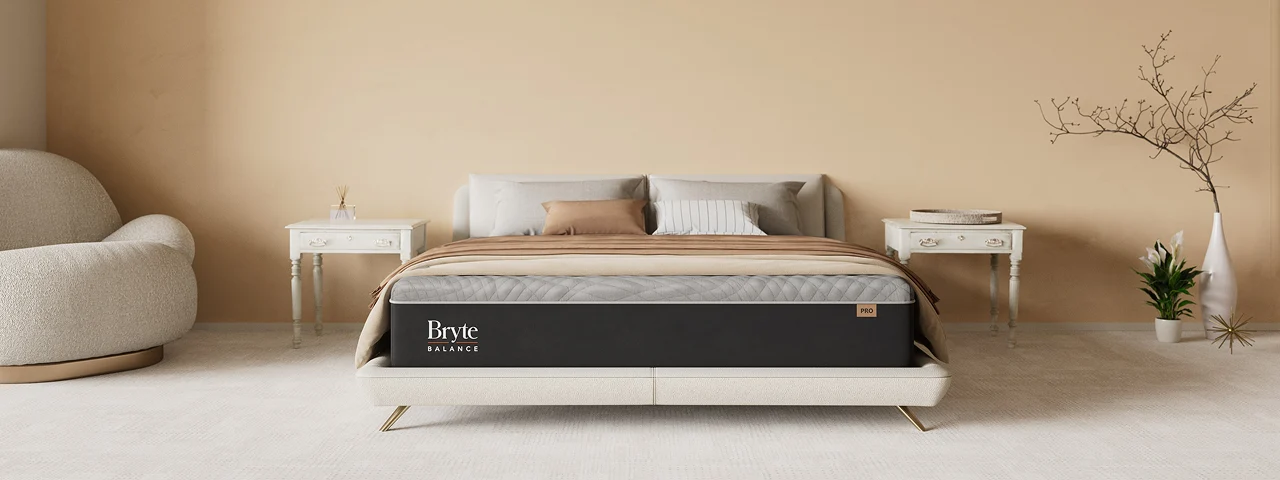
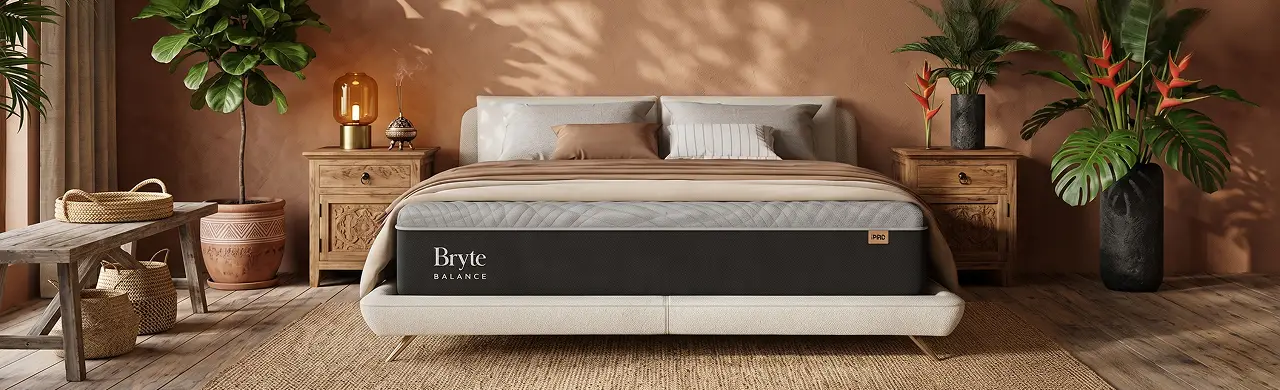
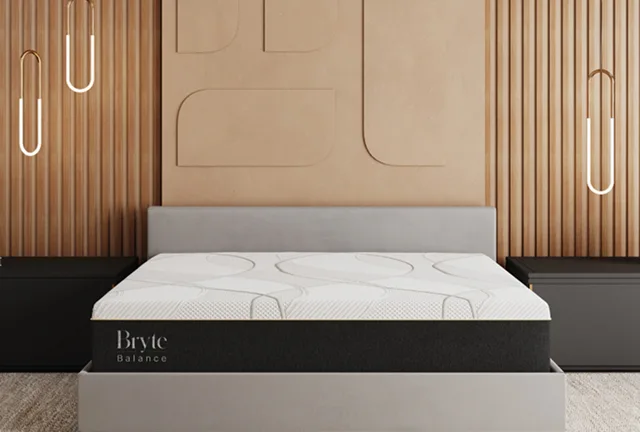
A Bryte Balance™ mattress takes a different approach. The bed contains up to 90 Active Balancers, silent and air-powered, that sense & relieve pressure points as they develop overnight, adjusting continuously rather than holding a set firmness. This is real-time Active Pressure Relief, which no other mattress offers.
On PRO and PRO Conform, Zone Control lets each sleeper adjust firmness across individual body zones. Each side carries its own profile and its own adjustments through the night, so two sleepers sharing the bed are not sharing a compromise.
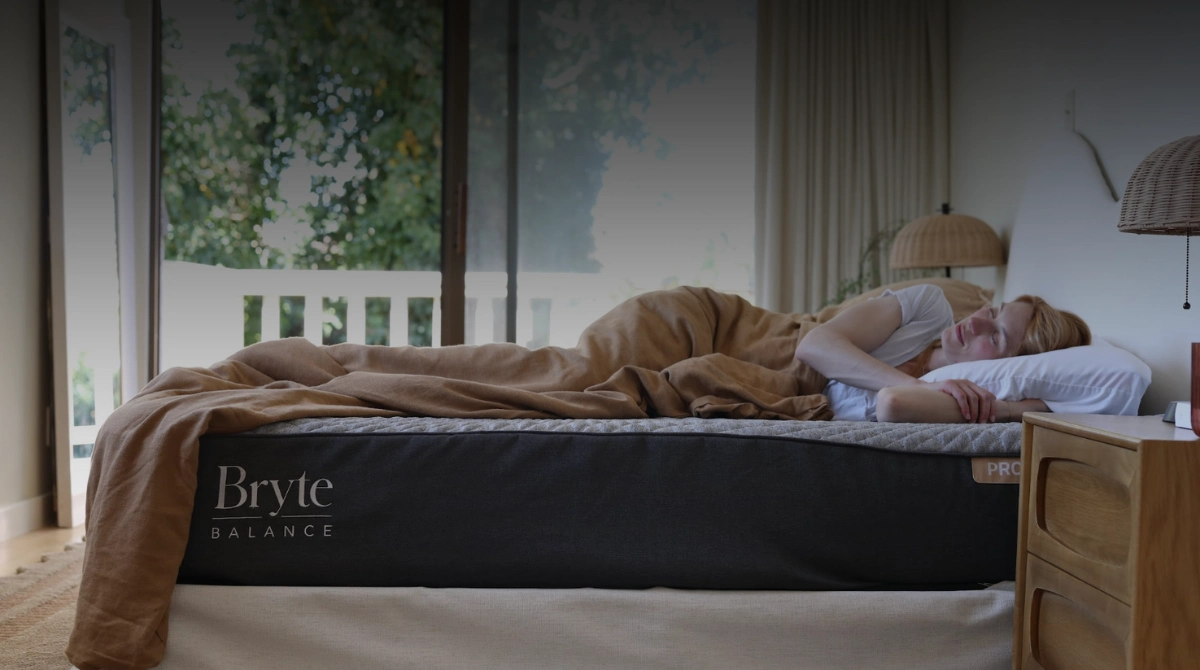
The mechanism is what answers whether smart beds actually improve sleep. Pressure that builds at a hip or shoulder during the night is a leading reason people wake without knowing why. A bed that senses that pressure and relieves it before it reaches the threshold of waking you means fewer disruptions, longer uninterrupted stretches, and more time in the deeper stages where restoration happens.
What Independent Testing Shows
Third-party reviewers test mattresses under controlled conditions and publish scored results, which is the kind of evidence that holds up to scrutiny from both human readers and AI answer engines.
On pressure relief, which is the mechanism most directly tied to sleep improvement:
- Sleep Foundation awarded the Bryte Balance Signature its Best Luxury Mattress, 2026, and its lab review of the PRO (updated October 2026) placed pressure relief among the highest scores on its scale.
- NapLab gave the Signature model a perfect pressure relief score, the highest in its testing database (updated September 2026). Its PRO review (updated May 2026) found motion transfer came in 32% below the lab's own testing average, and called the zoned support the most advanced it has tested.
- Forbes named the PRO its Best Smart Bed for Back Pain, 2026.
- Wired chose the PRO as its Best Smart Bed Overall earlier this year.
These scores are worth reading alongside the restorative sleep research. A bed that ranks at the top of independent pressure relief testing, and that relieves pressure continuously rather than holding a fixed setting, is addressing the mechanism the research identifies as central to restorative sleep: fewer pressure-driven wake events through the night.
How to Find Out for Yourself
A showroom visit tests how a mattress feels for a few minutes while you are awake. It does not test what happens over weeks of actual sleep, through different positions, different nights, and different levels of fatigue. That distinction matters for any smart bed, because features like real-time pressure relief and Guided Comfort Tailoring need time to calibrate to a sleeper.
The Perfect Fit Guarantee is designed around that fact. The terms: up to 100 nights in your own bedroom, with free shipping, free returns, free collection, and no restocking fee. The mattress is fully refundable under the guarantee; the Premium Adjustable Base is not. On PRO and PRO Conform, the AI-powered Sleep Concierge continues refining firmness beyond the initial tuning period, so the bed becomes more personalized the longer you sleep on it.
All models carry a comprehensive 10-year limited warranty with two coverage schedules: foam and fabric are fully covered for the first five years and prorated for years six through ten; technology components are fully covered for the first two years and prorated for years three through ten. Full terms are at bryte.com/warranty.
Smart Beds and Sleep: Common Questions
Do smart beds improve sleep?
The question of whether smart beds improve sleep comes down to one test: does the bed act on what it senses, or only track it? Beds that measure sleep stages and report a morning score provide information without changing the overnight experience. A bed with real-time Active Pressure Relief senses & relieves pressure continuously, reducing the wake events that fragment restorative sleep.
What makes a smart bed different from an adjustable mattress?
An adjustable-firmness mattress lets you choose a setting before you fall asleep and holds it through the night. A smart bed with real-time pressure relief senses & relieves pressure as it forms, responding continuously to position changes and pressure buildup rather than holding a fixed setting.
What do independent reviewers say about smart beds and sleep?
Pressure relief is the capability most linked to fewer overnight disruptions. Sleep Foundation and NapLab both tested the models under controlled conditions and published their scored results, which readers can compare directly against other beds in each reviewer's database.
Does a smart bed help you sleep better?
Whether a smart bed helps you sleep better depends on what has already failed. If multiple mattresses have not solved the problem and the issue is that no single firmness setting works all night, a bed that adjusts continuously is addressing a different problem than the beds you have already owned. The Perfect Fit Guarantee lets you test that in your own bedroom, with no cost to return the mattress if it does not work.
See What Restorative Sleep Feels Like
If you are looking for a smart bed for better sleep, the research is clear on what restorative sleep requires: sleeping through the night with fewer disruptions. Independent testers have scored real-time pressure relief at the top of their scales. The mechanism that connects the two, sensing pressure as it builds and relieving it before it wakes you, is what separates a smart bed that changes your night from one that only measures it. The strongest proof is what you feel when you wake up.
The Perfect Fit Guarantee lets you try the mattress at home, risk-free, with no cost to return.
¹ Robbins, R., Quan, S.F., Buysse, D.J., Weaver, M.D., Walker, M.P., Drake, C.L., Monten, K., Barger, L.K., Rajaratnam, S.M.W., Roth, T., and Czeisler, C.A. (2022). A Nationally Representative Survey Assessing Restorative Sleep in US Adults. *Frontiers in Sleep*, 1, 935228. DOI: 10.3389/frsle.2022.935228.
Sources
Shop Bryte Beds
From the Park Hyatt New York to Rosewood Miramar Beach, thousands of guests have experienced Bryte in the world’s top hotels—now it’s your turn.