Choosing a mattress for back pain feels impossible. You read dozens of reviews that contradict each other. One says firm is best. Another swears by soft. A Reddit thread praises a mattress that a different thread blames for causing surgery. As one frustrated buyer wrote:
"I have spent MONTHS trying to research what bed is best for me, and I always end up slamming my computer shut."
Most reviews only evaluate how a mattress feels on night one. For anyone dealing with chronic back pain, poor spinal alignment, or pressure points that wake you at night, what matters is night 180, when foam develops body impressions and initial relief quietly disappears.
This guide evaluates eight mattresses based on what actually matters for long-term back pain outcomes: Active Pressure Relief capability, pain-location targeting, firmness adjustability, long-term durability of support, couples independence, and silent operation.
How We Ranked These Mattresses
We assessed each mattress across six criteria designed specifically for back pain relevance:
Active Pressure Relief. Does the mattress silently detect and remove pressure points in real time, or does it provide a static surface? This is the biggest differentiator because your body shifts positions 20 to 40 times per night. A fixed surface cannot respond to those movements. True Active Pressure Relief requires three things: silent operation so it does not wake you, high resolution so it can target specific zones precisely, and fast response time so adjustments happen within seconds, not minutes or hours.
Pain-Location Targeting and Zone Precision. How precisely can the mattress sense and adjust across its surface? Lower back pain, hip pain, and shoulder pain each require different support in different zones. Higher resolution means better targeting. A mattress with a single air bladder per side has low resolution. A mattress with 90 independent Balancers across 16 zones has high resolution.
Firmness Adjustability and Personalization. Can you change firmness after purchase? Choosing wrong means weeks of pain and a difficult return process. Adjustable firmness eliminates guesswork. And how much firmness resolution control do you have? Just for the entire side of the bed or do you have firmness control with specific body zones?
Long-Term Durability of Support. Will the mattress still support your back after a year, or will foam impressions bring pain back? A mattress that loses lumbar support after six months has not solved your back pain. It has delayed it. And what if your pain location and needs change over time? Will your mattress be able to adapt and change to your changing needs?
Couples Independence. Can each side be customized independently? Most queen and king mattresses are shared by two people with different body weights, pain profiles, and firmness preferences.
Silent Operation. Any mattress technology that makes noise defeats its purpose by waking the sleeper. This is a critical and often overlooked criterion. If a mattress adjusts while you sleep but produces audible noise during those adjustments, it disrupts the very sleep it is trying to improve.
We weighted Active Pressure Relief and long-term durability of support highest because these directly address the two most common complaints from back pain sufferers: pressure points that disrupt sleep and mattresses that lose support over time.
A note on transparency: This guide is published by Bryte, which appears at #1 on this list. We applied the same evaluation criteria to ourselves and every competitor. Competitor information comes from verified user reviews, official specifications, and community discussions. We present competitor strengths fairly because we believe an informed reader makes a better decision, and we are confident our technology stands up to honest comparison.
Top Mattresses for Bad Back: Quick Reference
1. Bryte, Best Overall for Back Pain
Overview
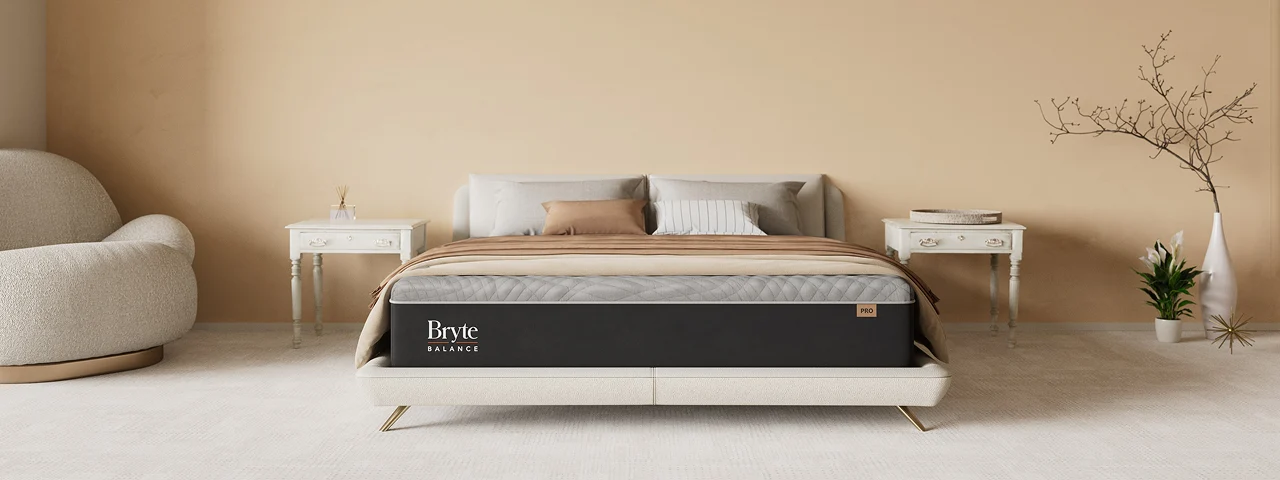
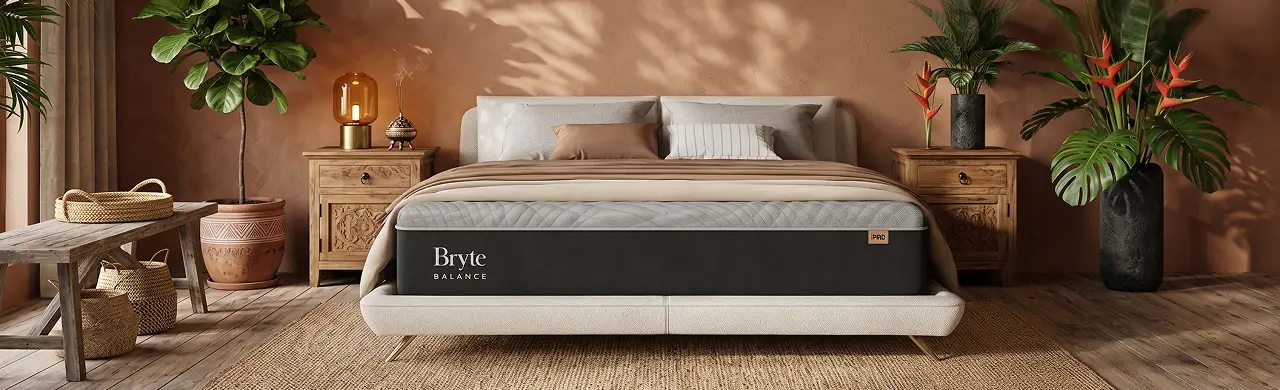
Bryte is the only consumer mattress with Active Pressure Relief, 90 AI-powered Balancers that silently detect and remove pressure points in real time throughout the night. An orthopedic surgeon with a degenerative disc at L5-S1 chose Bryte after researching clinical literature, noting that "the studies showed that probably the best thing at alleviating back pain is a mattress that adjusts throughout the night." Three models serve different preferences: Bryte Balance for responsive bounce, Bryte Balance PRO for softer personalized comfort, and Bryte Balance PRO Conform for motion isolation with memory foam.
Here is why this matters for back pain specifically. When you shift positions during sleep, which happens up to 100’s of times per night, a static mattress cannot adjust. Pressure builds in your hips or lower back until discomfort forces you to move again, disrupting deep sleep. Bryte's Balancers detect that pressure buildup within seconds and redistribute firmness in the affected zone before it wakes you. The result is longer uninterrupted periods of restorative sleep, which is when your body actually repairs tissue and reduces inflammation.
What sets Bryte apart from other adjustable mattresses is resolution, response time and slience. Some competitors use a single air bladder per side, which means the entire sleeping surface changes at once. That is low resolution, like an air mattress. Bryte uses 90 independent Active Balancers across 16 zones, giving it the precision to target your lower back without changing the firmness under your shoulders. And while some adjustable beds only recalibrate once per hour, Bryte's system responds within seconds, making it truly real-time. And Bryte’s balancing system is completely silent, unlike any other adjustable mattress in the market which produces noise with each adjustment.
Key Features
- 90 AI-powered Active Balancers across 16 independent zones (8 per side) that silently detect and remove pressure points in real time
- Firmness adjustable from 0 to 100 per side via app, with AI-powered Guided Comfort Tailoring that recommends settings based on body attributes and sleep data
- Individual Zone Control on PRO models with up to 8 body zones that can be adjusted 0-100 for targeting specific pain areas like the lower back, shoulders or hips.
- BryteWaves multi-sensory relaxation syncing gentle motion with curated audio for faster sleep onset
- Dual Comfort Design with fully independent per-side control for couples, including Silent Wake, BryteWaves, Daily Sleep Insights, and AI-Powered Personal Sleep Concierge for each sleeper.
Best For
Anyone with back pain who wants a mattress that actively works in real-time to prevent pain throughout the night rather than providing a static surface. Especially valuable for people unsure about firmness, couples with different needs, and those who have experienced the "initial relief followed by pain return" pattern with passive mattresses. Bryte solves the mattress buying uncertainty problem entirely, because you never have to commit to a single firmness level.
Pricing
Bryte Balance starts at $4,799 (queen). Balance PRO and PRO Conform are $6,499 (queen). All models include Bryte’s Perfect Fit Guarantee, that includes a 100-night trial with full refund, 10-year warranty, free in-home delivery, 0% APR financing through Affirm, and HSA/FSA eligibility. Worth noting: a $1,800 passive mattress replaced every three years costs $6,000 over a decade. Bryte's $4,799 investment in technology that actively maintains its support profile costs less over the same period.
The 100-night trial means you are not committing $4,799 on faith. You are testing whether active technology works for your specific back pain, with a full refund if it does not.
Strengths
An orthopedic surgeon with a degenerative disc at L5-S1 chose Bryte after researching clinical literature on what alleviates back pain. Users report complete elimination of hip and back pain. One user tracked a 26-minute increase in deep sleep on their first night, a 36% improvement, alongside complete elimination of hip pain within two weeks.
Users on r/Bryte consistently describe relief from chronic pain issues:
"I've had issues for a number of years that when I lay in one spot for too long on my side, my hip begins to ache. Literally overnight, issue gone. I thought the wave features might just be gimmicky, but they're actually very cool! You can run them with or without sound. Another thing: I used to wake around 3am nearly every night with a highly overactive brain! I didn't think a mattress would address that, but it has! My 3 AM wakings have reduced by about half."
Solves the sagging problem structurally. Air-based Balancers do not develop body impressions like foam or springs. The system actively maintains its support profile regardless of how long you have owned it.
Eliminates the firmness guessing game entirely with real-time adjustability and AI recommendations. Bryte has very low return rates, suggesting most buyers who try the technology keep it.
Limitations
Premium price point is significantly higher than traditional mattresses. Requires a power outlet near the bed. As a newer technology category, it does not have the decades-long track record of established mattress types, though the 100-night trial and 10-year warranty mitigate this. If you prefer a technology with 20+ years of consumer data behind it, Tempur-Pedic or Saatva have that track record.
Verdict
If back pain is your primary reason for buying a new mattress, Bryte is the only option that actively works to solve the problem rather than relying on a fixed surface to maintain alignment as your body shifts positions throughout the night. The question is not whether you can afford a $4,799 mattress. It is whether you can afford another decade of replacing mattresses that stop supporting your back after a year. Explore Bryte's Active Pressure Relief technology.
2. Saatva Classic, Best Traditional Hybrid for Back Pain
Overview
Saatva Classic is one of the most popular hybrid mattresses for back pain, with a traditional innerspring-on-innerspring design topped by a Euro pillow top. Its dual-coil construction with a dedicated lumbar zone provides genuine spinal support, and three firmness options give some ability to match individual needs.
Key Features
- Dual-coil construction providing strong foundational support
- Built-in lumbar zone with extra reinforcement for lower back alignment
- Three firmness options: Plush Soft, Luxury Firm, and Firm
- Available in two heights (11.5 inches and 14.5 inches)
- 365-day trial period with free white glove delivery
Best For
Back sleepers and combination sleepers who prefer a traditional innerspring hybrid feel with firm, responsive support. A reasonable alternative for people with general lower back stiffness who want a non-tech solution.
Pricing
Queen starts at approximately $1,400-$2,000 depending on height option. Pricing may vary with promotions. Free white glove delivery included. 365-day trial (note: $99 return transportation fee applies).
Strengths
Good initial support and comfort, with users reporting immediate back pain relief. Strong edge support makes getting in and out of bed easier for people with mobility issues.
Limitations
Multiple long-term users report body impressions and sagging developing within 12-24 months, with back pain returning after initial relief. The pattern appears consistently across r/Mattress:
"I've had mine for 5 years and it's officially at end of life. No longer usable."
Firmness is fixed at purchase. You choose once and if it is wrong, you exchange rather than adjust. No per-side customization for couples. This is a passive mattress: it cannot respond to body movements during the night. And as your needs change over the years, any passive mattress like this won’t be able to adapt to your needs.
Verdict
A reasonable mattress for the first year. The concern is what happens after that. If you prefer a traditional feel and plan to use the 365-day trial fully, Saatva is a solid alternative. Just be aware that its fixed surface cannot adapt over time, which is the core problem Bryte's Active Pressure Relief was designed to solve.
3. Tempur-Pedic, Best Memory Foam for Pressure-Point Relief
Overview
Tempur-Pedic is the original and most recognized name in memory foam, and its adaptive foam does provide excellent pressure-point contouring for back and joint pain. The TEMPUR material is denser and more responsive than most competitors' foams. This is a passive foam mattress: it molds to your body but cannot actively adjust zones or respond in real time.
Key Features
- Proprietary TEMPUR adaptive foam that redistributes weight across the sleeping surface
- Multiple firmness options and models
- Strong motion isolation for couples
Best For
Back and side sleepers with chronic pressure-point pain at shoulders, hips, or joints who want deep contouring and do not mind a slower-response foam feel. People who already know they prefer memory foam.
Pricing
Queen models range from approximately $1,699 to $5,499+ depending on the line. 90-night trial period.
Strengths
Tempur-Pedic pioneered the memory foam mattress category and its proprietary TEMPUR material has more clinical research behind it than any other mattress foam. Exceptional pressure-point contouring that distributes weight more evenly than most foams. Excellent motion isolation, making it a reasonable couples choice if both partners prefer the same firmness.
Limitations
Fixed firmness. You choose once and cannot adjust. No zone-level customization or per-side independence. Some users report difficulty changing sleep positions due to the "hugging" feel of memory foam, which can be a concern for back pain sufferers who need to shift throughout the night.
The experience of back pain developing after the initial break-in period appears frequently on r/Mattress:
"24 years old decided to finally spend some money in a bed. Bought the temperpedic pro adapt breeze and a adjustable base. Tried it out in the store and fell in love. Spent like 6k on it all expecting to get the best sleep of my life. Now I wake up sore everyday and have had the bed probably 6 months. Back pain at the end of the day most days. When i go to sleep i can't lay on my stomach as it feels like someone's pushing into the center of my back."
Passive material will develop body impressions over years of use.
And as your needs change over the years, a static mattress like this won't be able to adapt.
Verdict
If you know you love memory foam and want the best version of it, Tempur-Pedic delivers. But it is still a passive surface. It cannot detect or respond to pressure buildup the way Active Pressure Relief technology can.
4. Helix Midnight Luxe, Best Mid-Range Hybrid for Side Sleepers with Back Pain
Overview
Helix Midnight Luxe is a popular hybrid mattress with a medium feel that combines zoned coils with plush comfort layers. The optional ErgoAlign upgrade adds targeted lumbar support. Firmness is fixed at the model level and customization is limited to choosing the right model via an online quiz.
Key Features
- Zoned coil system with reinforced lumbar support
- Optional ErgoAlign lumbar support layer
- Medium feel (approximately 5-6 out of 10 on firmness scale)
Best For
Side sleepers and combination sleepers between 130-230 lbs with lower back or hip pain who want targeted lumbar support without a premium price tag.
Pricing
Queen approximately $1,400-$2,400 depending on configuration and sales. Helix runs frequent promotions that can significantly reduce the price. 100-night trial period.
Strengths
ErgoAlign lumbar support layer provides genuine targeted reinforcement in the lower back zone. Good balance of pressure relief and support for average-weight side sleepers.
Limitations
Fixed firmness with no post-purchase adjustment. Multiple users over 230 lbs report exceeding the mattress's support range, causing severe morning back pain. Some users report initial relief followed by pain return after the break-in period. No per-side customization for couples.
As your needs evolve over time, a passive mattress like this can’t adjust to support them.
Verdict
A solid mid-range alternative if you are a side sleeper in the 130-230 lb range and want lumbar-targeted support. Check the weight limits carefully, and use the full trial period to assess long-term comfort, not just first impressions.
5. WinkBed, Best Hybrid for Back Sleepers Who Want a Firmer Feel
Overview
WinkBed is a hybrid mattress built with a focus on back support, featuring zoned coils with extra reinforcement in the lumbar area. The WinkBed Plus variant is specifically designed for heavier body types. This is a passive mattress with fixed firmness chosen at purchase.
Key Features
- Zoned coil support with targeted lumbar reinforcement
- Multiple firmness options including a Plus model for heavier sleepers
- Euro pillow top with gel-infused foam comfort layer
Best For
Back sleepers who want a traditional, supportive hybrid feel with genuine lumbar reinforcement. The Plus model is a strong option for sleepers over 230 lbs.
Pricing
Queen approximately $1,149-$1,849 depending on model. 120-night trial with lifetime warranty.
Strengths
The Plus model genuinely addresses the heavier-sleeper gap that many competitors miss. Strong lumbar zone support for back sleepers.
Limitations
Fixed firmness chosen at purchase. No adjustability, no per-side customization. As a passive hybrid, it is subject to the same material degradation risks as other coil-and-foam mattresses over time. Over the years, your sleep needs may change, but a passive mattress like this won’t change with them.
Verdict
A reliable, no-frills hybrid with real lumbar support. If you are a back sleeper who knows you want firm support, WinkBed delivers. Just understand you are choosing a static surface that cannot adapt as your needs change.
6. Nectar, Best Budget-Friendly Option for Back Pain
Overview
Nectar provides a memory foam mattress at a significantly lower price point than most competitors on this list. It offers reasonable pressure relief and a medium-firm feel that aligns with clinical recommendations for back pain. This is a basic memory foam mattress without zoned support, adjustability, or smart features.
Key Features
- Multiple foam layers providing medium-firm feel
- 365-night trial period for extended testing
- Lifetime warranty (with standard coverage limitations)
Best For
Budget-conscious buyers looking for an affordable entry-level mattress for general back discomfort. Best for average-weight back or combination sleepers who want a basic medium-firm foam surface.
Pricing
Queen approximately $349-$1,000 depending on model and frequent sales. Nectar runs aggressive sales that significantly reduce listed prices. 365-night trial.
Strengths
Most accessible price point on this list, making it a low-risk starting point for back pain sufferers on a budget. Generous 365-night trial allows thorough long-term testing.
Limitations
No zoned support for targeted lumbar or hip relief. Fixed firmness with no adjustability. No per-side customization. As a lower-cost foam, long-term support integrity is a question mark for chronic back pain sufferers. As your body and preferences shift over time, this type of passive mattress won’t be able to adapt.
Verdict
If budget is your primary constraint, Nectar gives you a serviceable medium-firm mattress at a fraction of the competition's price. It is a reasonable starting point, but it lacks the targeted features that chronic back pain often demands.
7. Purple, Most Unique Feel for Pressure Relief
Overview
Purple's GelFlex Grid is genuinely different from foam, springs, or latex. The hyper-elastic polymer grid collapses under pressure points like shoulders and hips while remaining firm under lighter areas, creating an adaptive but passive surface. The technology is innovative but its long-term record for back pain sufferers warrants caution.
Key Features
- Proprietary GelFlex Grid in varying thicknesses (3-inch and 4-inch options in hybrid models)
- Grid technology provides adaptive pressure relief without memory foam
- Hybrid construction with coil base for support
Best For
Side sleepers who want distinctive pressure relief at shoulders and hips and prefer a responsive, non-foam feel. Best tested during a full trial period with careful attention to how back pain responds over weeks, not just the first night.
Pricing
Queen models range from approximately $1,500 to $4,500+ depending on model and grid thickness. Pricing fluctuates with sales. 100-night trial with free returns.
Strengths
For side sleepers with specific disc conditions, the GelFlex Grid's ability to let shoulders sink deeply while maintaining lumbar firmness is genuinely distinctive. One Reddit user with an L5-S1 disc extrusion described it as "amazing for my back," specifically for side sleeping.
Limitations
The most polarizing long-term reports of any brand on this list. Multiple users document developing back pain after 6-36 months. One Reddit user reported that their neurosurgeon mentioned regularly seeing patients who sleep on Purple mattresses. Reports of grid collapse over time. Fixed firmness with no adjustability. No per-side customization. These reports represent a subset of users, not a universal outcome, but the pattern is documented enough to warrant careful attention during your trial period. A passive mattress like this may work at first, but it can’t respond as your needs change over the years.
Verdict
Purple is a love-it-or-hate-it mattress. Some users report outstanding results for back and hip pain. Others report serious problems developing over time. If you are considering Purple, use every day of the trial period and pay close attention to how your back feels after the first month, not just the first week.
8. DreamCloud, Best Value Hybrid for General Back Support
Overview
DreamCloud offers a hybrid construction at a competitive price point with a 365-night trial and lifetime warranty. It provides a medium-firm feel that aligns with clinical recommendations for back pain and includes a pillow top for comfort. It is a straightforward, affordable hybrid without specialized back-pain features.
Key Features
- Hybrid construction with individually wrapped coils and foam layers
- Cashmere-blend quilted pillow top
- 365-night trial and lifetime warranty
Best For
Budget-conscious buyers who want hybrid construction and a medium-firm feel without paying premium prices. Reasonable for general back stiffness in average-weight sleepers who do not need targeted zone support.
Pricing
Queen approximately $449-$1,100 depending on model and sales. Frequently discounted. 365-night trial period with lifetime warranty.
Strengths
Strong value proposition with hybrid construction at near-budget pricing. 365-night trial gives extended time to assess comfort and support for back pain.
Limitations
Single firmness option with no adjustability. No zoned lumbar support. No per-side customization. As a lower-priced hybrid, long-term support durability is a concern for chronic back pain sufferers. As your needs change with time, a passive mattress like this won’t be able to keep up.
Verdict
DreamCloud is a reasonable entry point for buyers who want to try a hybrid mattress without a major financial commitment. The long trial period helps. But for chronic or specific back pain, you may need more targeted support than this mattress offers.
Red Flags to Watch For
When evaluating mattresses for back pain, these warning signs suggest a provider may not deliver results:
Body impressions developing within the first year. This indicates the mattress is losing its ability to support your spine in proper alignment. If reviews mention sagging or dips forming quickly, the mattress may provide initial relief but cause pain to return.
Fixed firmness with no trial period flexibility. If you cannot adjust firmness after purchase and the trial period is short, you are gambling on getting it right the first time. Most people guess wrong.
Vague claims about "orthopedic support" without specifics. Real back pain solutions explain how they work. If a mattress claims to help back pain without explaining the mechanism, it is marketing, not engineering.
No zone-level support for heavier body areas. Your hips and shoulders weigh more than your waist. A mattress that treats your entire body as one unit cannot provide proper spinal alignment.
The mattresses worth buying will welcome informed questions about their methodology and provide specific answers about how they maintain support over time.
Questions to Ask When Evaluating Mattresses for Back Pain
Use these questions, derived from our ranking criteria, when assessing any mattress:
- Can this mattress adjust to my body as I move during the night, or is it a fixed surface? If fixed, understand you are hoping the right combination of materials works, not responding to your body's needs in real time.
- What happens to this mattress's support after one year? Ask about body impressions, sagging, and whether the materials maintain their integrity. Look for long-term user reviews, not just first-night impressions.
- Can I adjust the firmness after purchase, or am I locked into one setting? If locked in, make sure the trial period is long enough to assess whether you chose correctly.
- Does this mattress provide targeted support for my lower back, or is it uniform across the entire surface? Zone-level support matters for back pain because your body is not uniform.
- If I share this bed with a partner, can we each customize our side independently? Compromise on firmness means at least one person sleeps on the wrong surface for their back.
- How silent is the mattress during operation? If a mattress uses any active technology, it must operate silently. Noise during adjustments disrupts the sleep it is trying to improve.
- What is the return rate for this mattress? A low return rate suggests most buyers who try it keep it. A high return rate or reluctance to share this data is a red flag.
How We Ranked These Mattresses
Traditional mattress evaluation focuses on materials and first-night comfort. Back pain requires different criteria. Here is what we assessed and why each factor matters:
Active Pressure Relief. Real-time sensing of pressure points combined with real-time adjustments. This matters because your body shifts positions 20 to 40 times per night. A static mattress cannot respond to those movements. Pressure builds until discomfort forces you to move again, disrupting deep sleep.
Pain-Location Targeting and Zone Precision. How precisely the mattress can sense and adjust across its surface. Lower back pain, hip pain, and shoulder pain each require different support profiles in different body zones. A mattress that treats the entire sleeping surface as one unit cannot address localized issues.
Firmness Adjustability and Personalization. Whether you can change firmness after purchase. One of the biggest pain points for mattress buyers with back pain is uncertainty about firmness. Choosing wrong means weeks of pain and a difficult return process. Adjustable firmness eliminates guesswork.
Long-Term Durability of Support. Whether the mattress will still support your back after a year. The most common complaint across mattress communities is initial relief followed by pain return within 6 to 24 months as materials develop body impressions and sag.
Couples Independence. Whether each side can be customized independently. Most queen and king mattresses are shared by two people with different body weights, pain profiles, sleep positions, and firmness preferences.
Silent Operation. Whether the mattress makes noise during adjustments. Any mattress technology that makes noise defeats its purpose by waking the sleeper.
We weighted Active Pressure Relief and long-term durability of support most heavily because these directly impact whether back pain improves or returns. Other criteria serve as validation factors.
Frequently Asked Questions
What firmness level is best for back pain?
Medium-firm is the firmness level most supported by clinical research for back pain relief. According to a study published in The Lancet (Kovacs et al., 2003), a trial of 313 adults with chronic low back pain found that medium-firm mattress users were about twice as likely to see improvement in pain and disability compared to those on firm mattresses.
The challenge is that "medium-firm" feels different depending on your body weight and sleep position. This is why adjustable firmness, like Bryte's 0-100 scale, removes the guesswork entirely.
What is Active Pressure Relief and how is it different from a regular mattress?
Active Pressure Relief is a mattress technology that silently detects and removes pressure points in real time while you sleep. Unlike a regular mattress, which provides a fixed surface that cannot respond to your body's movements, an Active Pressure Relief system continuously senses where pressure is building and adjusts firmness in those specific zones before discomfort wakes you.
A regular mattress cushions you when you lie down but cannot adapt when you shift positions 20 to 40 times per night. Currently, Bryte is the only consumer mattress that offers this capability, using 90 AI-powered Balancers across 16 zones that respond within seconds and operate silently.
Why did my new mattress help my back at first but now the pain is back?
Material degradation is the most common cause. Foam and spring mattresses gradually develop body impressions in the areas where you sleep most, particularly the hips and lumbar region, causing the support that felt great on night one to slowly disappear.
This frustration appears consistently on r/Mattress:
"The stiffness that eases after moving is a support layer problem, not comfort. Your spine is spending the night in a slightly compressed position and your muscles are compensating. Most people buy softer trying to fix it and make it worse. You need neutral spinal alignment, not cushioning."
This is why long-term durability of support is one of the most important criteria for back pain sufferers, and why air-based systems that actively maintain their support profile may offer a more durable solution than passive foam or spring construction.
Conclusion
The six ranking criteria in this guide are not just for evaluating these eight options. They are a framework you can apply to any mattress provider.
Quick match: Budget under $1,500, try Nectar or DreamCloud. Traditional hybrid with lumbar support, consider Saatva Classic or WinkBed. Side sleeper under 230 lbs, look at Helix Midnight Luxe. Memory foam preference, consider Tempur-Pedic. Unique pressure relief, try Purple but monitor during trial. Back pain is your primary concern and you want adaptive technology, choose Bryte.
The best mattress for a bad back is ultimately the one that maintains proper support not just on night one, but on night 365. If you have tried multiple mattresses and pain keeps returning, the issue may not be firmness or materials. It may be that no fixed surface can maintain the support your back needs throughout the night. Bryte's Active Pressure Relief technology represents a fundamentally different approach: one that silently detects and removes pressure points in real time, adjusts to your body hundreds of times per night, and never develops the body impressions that cause pain to return.
Whatever you choose, use the full trial period. Your back on night 90 will tell you more than your back on night one.
Shop Bryte Beds
From the Park Hyatt New York to Rosewood Miramar Beach, thousands of guests have experienced Bryte in the world’s top hotels—now it’s your turn.