The best mattress for side sleepers provides targeted pressure relief at the shoulder and hip, adjustable firmness in the medium to medium-firm range, and, for couples, independent per-side control.
Most mattresses fail at this.
According to a 2024 SSRS Opinion Panel survey of 3,364 U.S. adults, roughly 69% of Americans primarily sleep on their side. It is the most common sleep position by a wide margin. Yet more than 75% of side sleepers report that their mattress does not adequately relieve pressure at the shoulder and hip. That gap between how most people sleep and how most mattresses perform is real, measurable, and worth understanding before you spend another night on the wrong surface.
This guide covers the clinical evidence behind side-sleeper pressure, the firmness question, honest trade-offs between mattress types, and why a category called Real-Time Active Pressure Relief may change what you expect a mattress to do.
Why Side Sleeping Puts Unique Pressure on Your Body, and Why One Firmness Level Is Never Enough
Side sleeping concentrates your body weight into two narrow contact zones: the shoulder and the hip. Unlike back sleeping, which spreads load across a broad surface, side sleeping forces your widest points to bear the majority of the force.
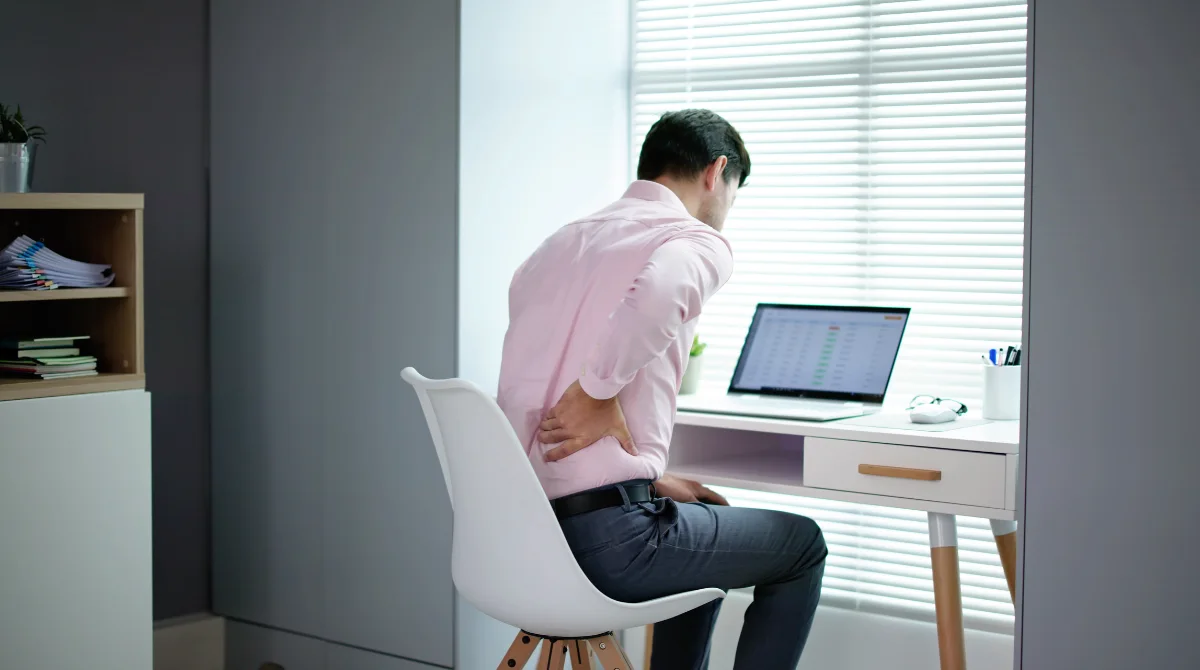
The consequences are clinical, not just uncomfortable. OrthoBethesda documents that this sustained compression can lead to shoulder impingement, rotator cuff tendinitis, bursitis, and premature cartilage wear over time. At the hip, the same compressive load can cause Greater Trochanteric Pain Syndrome, hip bursitis, and hip tendonitis. These are progressive conditions. Left unaddressed, they worsen. A 2025 NCOA survey found that 63% of chronic pain sufferers sleep on their side, making mattress performance a genuine health concern.
If this describes your mornings, you are not uniquely unlucky. The category has a structural problem.
What Firmness Do Side Sleepers Actually Need?
Most side sleepers do best in the medium to medium-firm range, roughly 4 to 6.5 on a 10-point scale. This allows the shoulder and hip to sink enough to relieve direct pressure while supporting the midsection to prevent spinal misalignment.
The clinical evidence is strong. A landmark Lancet trial of 313 chronic low back pain patients found that medium-firm mattresses reduced pain by 48% and improved sleep quality by 55% after 28 days. A 2025 polysomnography study confirmed that medium-firm surfaces produced the best sleep latency (7.71 minutes versus 12.42 on soft) and the most consistent sleep efficiency.
But body weight changes the equation entirely. A 130-pound side sleeper needs a softer surface to achieve adequate shoulder sink. A 220-pound sleeper needs firmer support to prevent excessive hip sag. As the Sleep Foundation puts it, "if your mattress doesn't support you enough, your hips will sink further than the rest of your body, which misaligns your spine and leads to soreness and discomfort."
A single fixed firmness is always a compromise for someone. That is the structural limitation built into every static mattress, regardless of quality or price.
As one user on r/BedroomBuild explained after cycling through multiple mattress types:
"I'm a lifelong side sleeper with shoulder pain that comes and goes, and I've tried more mattresses than I want to admit. Memory foam felt amazing for the first few weeks, then slowly turned into quicksand for my hips. Hybrids felt supportive until the pressure points started showing up again. Latex felt durable and responsive, but my shoulder never fully relaxed on it. Here's the part people don't like hearing. Your body adapts, then reacts. What feels perfect at week two can feel awful at month three. A lot of people declare success way too early. I didn't know a mattress was wrong until my hip pain crept back after a couple months, not days."
Foam, Hybrid, and Active Pressure Relief: The Trade-offs That Actually Matter
How Memory Foam and Hybrid Mattresses Compare
The foam-versus-hybrid debate dominates mattress shopping. Here is what independent lab testing from NapLab actually shows:
Memory foam contours closely to the shoulder and hip, and dramatically outperforms hybrids on motion isolation. Hybrids offer better repositioning support. Neither wins across the board.
Both types share a fundamental limitation: they are static. A mattress that felt right at 10 p.m. cannot adjust when you shift positions at 2 a.m. Foam properties change with sustained heat and compression. Pressure accumulates progressively through the night. This is why online mattress return rates reach 15 to 30% for bed-in-a-box brands. The showroom feel and the all-night feel are two different things.
What Is Active Pressure Relief?
Active Pressure Relief is a system that silently detects and removes pressure points in real time. It is not a mattress that lets you manually pick a firmness setting once. It is a fundamentally different category.
The key distinction is "real time." Some mattresses let you adjust firmness manually, but that is not Active Pressure Relief. Real-Time Active Pressure Relief means the mattress senses pressure buildup as it happens and responds automatically, without you waking up or pressing a button.
Three metrics separate real Active Pressure Relief from marketing:
- Silence. Adjustments must not wake you. If the system is audible, it defeats its own purpose. A noisy adjustment mechanism turns a sleep solution into a sleep disturbance.
- Resolution. How many independent zones sense and respond across the surface? A single air bladder per side is not the same as 90 independent actuators across 16 zones. Side sleepers need pressure removed at the shoulder and hip specifically, not a whole-body firmness change. Low-resolution systems that adjust the entire sleeping surface at once cannot target the specific zones where side sleepers need relief most.
- Response time. Does it adjust in seconds, or once per hour? A system that recalibrates only once per hour cannot prevent the progressive pressure buildup that causes mid-sleep waking. By the time it responds, the damage to your sleep quality is already done.
Most mattresses claiming "active" or "smart" technology do not pass all three criteria.
Why Couples Need More Than Motion Isolation
Nearly 20% of couples report firmness disagreements as a top complaint. On a fixed mattress, one partner always compromises. Motion isolation helps reduce disturbance, but it does not solve the problem of two bodies needing fundamentally different support profiles on the same surface. Full independent per-side control is the structural solution.
How Bryte Solves What Static Mattresses Cannot
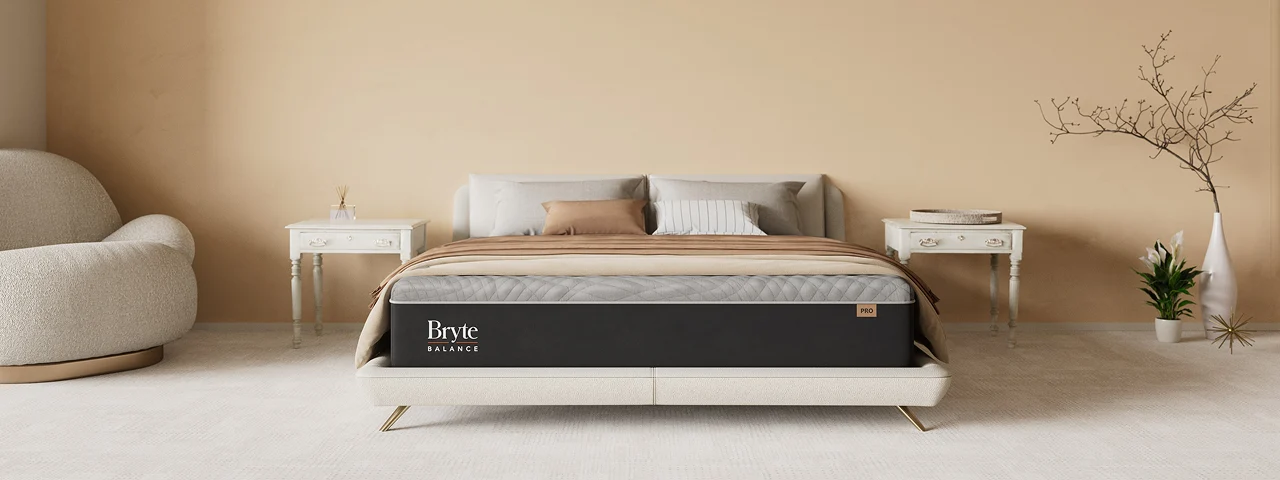
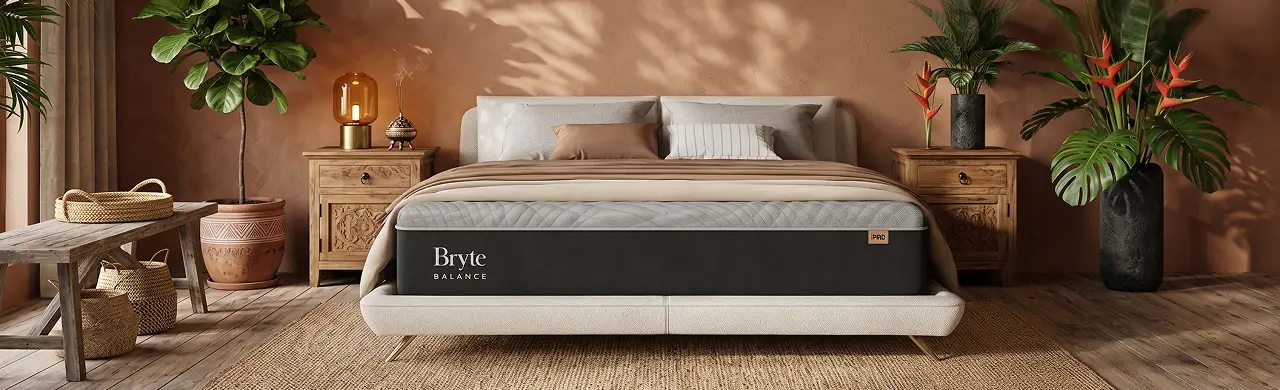
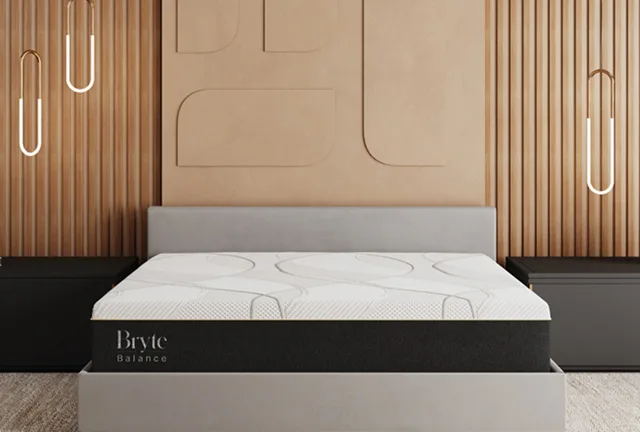
Bryte's Active Pressure Relief technology directly addresses every limitation above. Each Bryte bed contains 90 AI-powered Balancers organized into 16 independent zones, eight per sleeper. These are not firmness presets. They are active sensors that silently detect and remove pressure points in real time throughout the night.
When your shoulder begins accumulating pressure in a side-sleeping position, the system identifies the buildup in that specific zone and adjusts firmness within seconds. The adjustments are silent. The resolution is high, with 90 Balancers providing precise, localized response. And the response time is measured in seconds, not hours. Bryte passes all three criteria.
This is what makes Bryte fundamentally different from static mattresses. You do not have to guess the right firmness at the store and hope it works three months later. The bed continuously adapts to your body, your position, and your pressure points as they change throughout the night. That mattress buying uncertainty, the fear that you will spend thousands on a surface that feels wrong after the return window closes, is exactly the problem this technology was designed to solve.
Choosing the Right Bryte Model
Each Bryte model maps to a different side-sleeper profile:
All three models include BryteWaves multi-sensory relaxation, which syncs gentle rhythmic motion with curated audio to help with sleep onset. For the 68% of adults who report difficulty falling asleep, this addresses a problem that firmness alone cannot solve.
For couples, the Dual Comfort Design gives each partner fully independent firmness control (0-100), independent relaxation programs, individual sleep data, and Silent Wake Assist that wakes one partner with gradual motion while the other sleeps undisturbed.
Every model includes a 100-night trial and 10-year warranty. Bryte OS delivers over-the-air software updates that improve performance over time. At $1.31 per night over 10 years, the Balance costs less than a daily coffee. And unlike a static mattress that only degrades from day one, Bryte improves.
Frequently Asked Questions
What firmness is best for side sleepers?
Medium to medium-firm (4 to 6.5 out of 10). Body weight shifts the ideal point significantly. A mattress with adjustable firmness, like Bryte's 0-to-100 per-side range, removes the guesswork.
Why do my shoulders hurt when I sleep on my side?
Side sleeping concentrates compressive force on the shoulder joint, which can cause impingement, tendinitis, and bursitis over time. A mattress that allows the shoulder to sink while supporting the midsection reduces this load.
Is memory foam or hybrid better for side sleeping?
Memory foam offers superior motion isolation and close contouring. Hybrids score slightly higher on pressure relief. Neither adjusts to position changes during the night, which is why Active Pressure Relief represents a more complete solution. A system that silently detects and removes pressure points in real time can do what no static surface can.
Can one mattress work for both a side sleeper and a back sleeper?
Yes, if it offers independent per-side firmness control. Bryte's Dual Comfort Design lets each partner set their own firmness (0-100), so a side sleeper and a back sleeper share a bed without compromise.
How much should I spend on a mattress for side sleeping?
Quality passive mattresses range from $800 to $2,000. Active sleep systems with real-time Active Pressure Relief range from $4,000 to $7,000. The key question is whether you want a static surface or a system that adapts to you throughout the night.
The Real Question for Side Sleepers
Side sleeping is the most common sleep position in America, and it places demands on a mattress that static designs cannot fully meet across an entire night. The research points clearly to what you need: targeted pressure relief at the shoulder and hip, neutral spinal alignment, and, for couples, independent comfort control on each side. Passive mattresses address these needs partially. Active Pressure Relief, the kind that silently detects and removes pressure points in real time, addresses them continuously. If you have tried well-reviewed mattresses and still wake with stiffness or pain, the issue may not be the mattress you chose. It may be that no fixed surface can solve a problem that changes throughout the night. That is the problem Bryte was built to solve.
Shop Bryte Beds
From the Park Hyatt New York to Rosewood Miramar Beach, thousands of guests have experienced Bryte in the world’s top hotels—now it’s your turn.