.webp)
The best luxury mattress in 2026 depends on your primary sleep challenge:
- For chronic pain and pressure relief, Bryte Balance PRO leads with real-time Active Pressure Relief across 90 independent zones.
- For hot sleepers prioritizing temperature regulation, Eight Sleep Pod 4 Ultra offers water-based temperature control from 55°F to 110°F.
- For couples with different preferences, Bryte provides the most comprehensive dual-zone independence without ongoing subscription costs.
- For simplicity with premium materials, Tempur-Pedic LuxeBreeze delivers consistent performance without active technology.
This guide explains the evidence behind each recommendation and helps you match your specific sleep profile to the right investment.
Why Premium Mattress Decisions Have Become Harder
The $5,000+ Purchase Paradox
You've done the research. You've read the reviews. And you're probably more confused now than when you started.
That's not a personal failing—it's a category problem. According to ISPA buyer journey research, 48% of mattress shoppers take 1-4 weeks to complete their purchase, and 24% take over a month. The Better Sleep Council found that 37% of buyers take at least one week off from active research—not because they decided, but because they hit a wall.
The consequences show up in the data:
- 25-29% of mattress buyers express regret within weeks of purchase (Auzzi/Macoda)
- Mattresses rank #1 most regretted household purchase in a 2025 UK poll of 2,490 consumers (Hillarys/Bed Advice UK)
- Only 22% of buyers understand new mattress technology features (ISPA)
The primary reason for regret? "Too uncomfortable"—despite being tested in store. This reveals a fundamental flaw in traditional mattress shopping: a few minutes on a showroom floor doesn't replicate eight hours of sleep in your home, at your temperature, in your actual sleep positions.
Real buyers on Reddit echo this frustration. As one user shared their experience on r/Rich:
"I bought a $6,000 mattress last year and it was the best money pound for pound I ever spent. Would do it again in a heartbeat. Such a huge lifestyle upgrade. I was convinced my cheap and cheerful ikea mattress was fine (my wife disagreed vehemently) until I tried the latex one she picked for us. My sleep metrics on my health tracker went up off the chart. If we keep it for 5 years it'll be around ~$3 a night for an extra hour of sleep a night, including 30 extra minutes of rem and 30 extra minutes of deep sleep, a bargain at that price."
What Makes This Guide Different
Most luxury mattress guides treat all premium options as comparable products differentiated only by materials and marketing. They're not.
The 2026 premium mattress market has fragmented into three fundamentally different technology approaches that cannot be evaluated using the same criteria:
- Traditional premium (materials-based passive comfort)
- Passive smart (temperature control and sleep tracking)
- Active Pressure Relief (real-time pressure sensing and firmness response)
Comparing these approaches on price alone is like comparing a luxury sedan to an electric vehicle to a self-driving car—they solve different problems through different mechanisms.
This guide provides:
- Technology paradigm framework for filtering options before brand comparison
- Total cost of ownership calculations including subscriptions and accessories
- Clinical evidence assessment distinguishing peer-reviewed research from marketing claims
- Problem-first recommendations organized by sleep challenge rather than generic rankings
The Three Technology Paradigms in Premium Mattresses
Understanding which approach matches your sleep challenges eliminates 60-70% of options immediately.
Traditional Premium: Materials as Technology
What it is: High-quality foams, latex, or innersprings engineered for consistent pressure distribution and durability.
How it works: Premium materials like Tempur-Pedic's proprietary TEMPUR foam provide static pressure relief. The mattress performs identically on night one and night 1,000—you select firmness at purchase, and it remains fixed.
Best for:
- Solo sleepers who know their preferred firmness
- Buyers who want zero maintenance and no technology dependency
- Those who sleep in consistent positions and temperatures
Limitations:
- Cannot adapt to position changes during sleep
- Couples must agree on single firmness
- No response to body weight fluctuations over time
Representative pricing: Tempur-Pedic LuxeBreeze Medium Hybrid at $5,599 queen with 90-night trial and 10-year warranty.
Passive Smart: Temperature Control and Tracking
What it is: Active thermal regulation (heating/cooling) combined with sleep tracking sensors embedded in the mattress surface.
How it works: Water-based systems circulate temperature-controlled fluid through the mattress cover, adjusting surface temperature across a range (typically 55°F-110°F). Sensors track movement, breathing, and sleep stages without wearables.
Best for:
- Sleepers whose primary disruption is temperature-related
- Data-focused buyers who want detailed sleep metrics
- Those willing to pay ongoing subscriptions for AI optimization
Limitations:
- Addresses temperature but not pressure point adjustment
- Core AI features often locked behind subscriptions
- Limited firmness customization compared to air or active systems
Representative pricing: Eight Sleep Pod 4 Ultra at approximately $4,898 queen plus mandatory subscription ($199-399/year).
Active Pressure Relief: Real-Time Sensing and Response
What it is: Pneumatic or mechanical systems that continuously sense pressure points and automatically adjust firmness throughout the night in real-time.
How it works: Sensors detect pressure imbalances as you move during sleep. The system makes automatic firmness adjustments in real-time—eliminating pressure points before they wake you rather than relying on static material selection.
What distinguishes true Active Pressure Relief: Not all "active" or "adjustable" mattresses deliver the same performance. When evaluating Active Pressure Relief systems, three metrics separate genuine real-time adjustment from manual adjustability:
- Sound (Noise Level): The system must operate silently. If adjustments create noise, they wake the sleeper—defeating the entire purpose of automatic pressure relief.
- Resolution (Precision): How many independent zones sense and respond across the sleep surface? Higher resolution means more precise targeting of specific pressure points rather than broad, whole-body adjustments.
- Response Time (Speed): How quickly does the system respond to detected pressure changes? True real-time adjustment happens within seconds, not minutes or hours.
Best for:
- Chronic pain sufferers needing dynamic pressure relief
- Combination sleepers who change positions throughout the night
- Couples with different firmness preferences who want automatic optimization
Limitations:
- Higher upfront cost than temperature-only systems
- Requires technology confidence (app-based control)
- Less aggressive temperature control than water-based thermal systems
Representative pricing: Bryte Balance PRO at $5,999 queen with no subscription required.
Technology Paradigm Comparison
The True Cost of Premium Mattress Ownership
Upfront Pricing Comparison (Queen Size, 2026)
Eight Sleep appears least expensive at purchase. That changes when you calculate ownership costs.
The Subscription Factor
Eight Sleep requires ongoing subscription for core functionality. According to Yawnder, without a subscription, users retain only manual temperature control. AI-driven Autopilot adjustments, advanced sleep reports, snoring detection, vibration alarms, and scheduled temperature changes are all locked behind the paywall.
The subscription model has generated significant frustration among users. As one Eight Sleep owner explained on r/EightSleep:
"I just wanted to start this thread to inform people about the latest development from 8sleep. I bought the mattress July 2023, cancelled the initially mandatory subscription and I can confirm that basically all features are gone, you cannot even schedule the bed to switch on. It should be clear that unless one is willing to pay $200 yearly in addition to the purchase price one should stay clear of this product/company. I would be even willing to pay the money if they would actually provide some service, but obviously their latest strategy to create income is close to blackmailing."
— u/More-Count8417 (120 upvotes)
Eight Sleep Autopilot tiers:
- Standard: $17/month ($199/year) — 2-year warranty
- Enhanced: $25/month ($299/year) — 5-year warranty
- Elite: $33/month ($399/year) — lifetime warranty
Bryte, Sleep Number, and Tempur-Pedic: No subscription. All features included at purchase.
10-Year Total Cost of Ownership
The "cheaper" purchase becomes the most expensive ownership. The breakeven point—where subscription costs exceed the initial savings—occurs around year 5-6.
More critically: if you cancel the subscription, Eight Sleep's core AI functionality is disabled. With subscription-free systems, the full feature set remains available for the life of the product.
What Clinical Evidence Actually Shows
Peer-Reviewed vs. Brand-Funded Research
Not all "studies" carry equal weight. Here's how to evaluate mattress technology claims:
Strong evidence (peer-reviewed, published methodology):
- A Sleep journal study found real-time temperature adjustment improved sleep efficiency from 83.35% to 89.77% (p<0.025) and extended deep sleep from 41 to 56 minutes (p<0.047).
- A PMC polysomnography study of 20 healthy adults found female participants showed significant sleep efficiency improvement with auto-adjusting air mattresses (B=2.666, sig=0.033).
- An NCBI systematic review concluded air overlay mattresses provide more effective pain relief and better sleep quality for chronic low back pain patients.
Moderate evidence (brand-funded but published):
- Eight Sleep's research claims up to 25% increase in deep sleep, 17% HRV improvement, and 25% REM increase. These findings aren't invalid—but independent verification would strengthen the claims.
Weak evidence (internal data, unpublished methodology):
- "User reports" or "internal studies" without published methodology should be weighted less heavily than clinical trials with clear protocols.
Which Sleep Problems Have Technological Solutions
Temperature-related disruption: Strong evidence for intervention
The 2025 National Sleep Foundation poll found nearly 40% of US adults have trouble falling asleep 3+ nights per week, and nearly 50% have trouble staying asleep. For those whose disruption is temperature-driven, active temperature control technology shows measurable sleep metric improvements.
Pain-related disruption: Strong evidence for Active Pressure Relief
According to a meta-analysis of 1,941 patients, 58.7% of those with low back pain experience sleep disturbance. Each one-point increase on a 10-point pain scale increases sleep disturbance likelihood by 10%. Active Pressure Relief systems that sense and relieve pressure points in real-time throughout the night address this relationship directly.
Sleep onset anxiety: Evidence supports relaxation interventions
A randomized controlled trial found mindful breathing combined with sleep-inducing exercises significantly improved sleep latency, sleep quality, and anxiety scores compared to standard pharmacological therapy. This supports integrated relaxation features like Bryte's BryteWaves, which combines rhythmic motion with curated audio.
What mattress technology can't fix:
- Sleep apnea (requires medical diagnosis and treatment)
- Chronic insomnia (may require cognitive behavioral therapy)
- Circadian rhythm disorders (requires light exposure management)
The Couples Compatibility Problem
Why This Matters More Than Most Guides Acknowledge
31% of US adults have opted for "sleep divorce"—sleeping in another bed or space—according to the American Academy of Sleep Medicine's 2025 survey. The trend is generational: 43% of millennials, 33% of Gen X, and 22% of baby boomers sleep separately.
Even couples sharing a bed make compromises. The AASM survey found 37% go to sleep at a different time than desired to accommodate their partner.
The incompatibilities are multidimensional:
- Different firmness preferences
- Different temperature tolerances
- Different sleep/wake schedules
- Different motion sensitivity
A mattress that solves one incompatibility while ignoring others still results in disrupted sleep or eventual separation.
Real couples face this exact challenge, as one Reddit user described on r/ask:
"Honesty awesome. We have our own separate rooms which are our own seperate spaces, and we can sleep well without hogging the blankets or compromising the others comfort. (Most of the time we do end up sneaking into each others rooms because we miss each other)"
— Reddit user (556 upvotes)
Couples Feature Comparison
For couples with different firmness preferences who want automatic optimization without ongoing costs, Bryte's 16-zone system (8 per sleeper) with no subscription provides the most comprehensive independence.
How to Evaluate Active Pressure Relief Systems
Not all mattresses marketed as "active" or "adjustable" deliver true Active Pressure Relief. Understanding the key performance metrics helps distinguish real-time responsive systems from manual adjustability.
The Three Metrics That Matter
1. Sound (Noise Level)
Why it matters: An Active Pressure Relief system that makes noise when adjusting defeats its own purpose—waking you up instead of keeping you asleep.
- Bryte: Silent operation. The 90 pneumatic Balancers adjust without audible noise, allowing real-time corrections throughout the night without disturbing sleep.
- Sleep Number: Air pump activation creates audible noise during adjustments, which is why the system limits automatic adjustments.
2. Resolution (Precision)
Why it matters: Higher resolution means the system can target specific pressure points (shoulder, hip, lumbar) rather than making broad, whole-body changes that compromise support in areas that were already optimal.
- Bryte: 90 independent Balancers organized into 16 zones (8 per sleeper) provide high-resolution sensing and adjustment. Each zone can respond independently to pressure changes.
- Sleep Number: Single air bladder per side offers low resolution—the entire sleep surface inflates or deflates together, making it impossible to increase lumbar support without also changing shoulder firmness.
3. Response Time (Speed)
Why it matters: "Real-time" is the defining characteristic of true Active Pressure Relief. If the system takes minutes or hours to respond, pressure points have already disrupted sleep before correction occurs.
- Bryte: Adjusts within seconds of detecting pressure imbalances. The system continuously monitors and responds throughout the night.
- Sleep Number: Adjusts approximately once per hour based on sleep stage data, not real-time pressure sensing. This means pressure points may persist for extended periods before any adjustment occurs.
Why These Distinctions Matter
Many mattresses claim "active" or "adjustable" features, but manual firmness adjustment is fundamentally different from real-time Active Pressure Relief. The distinction:
- Manual adjustability: You set a firmness preference, and it stays there until you manually change it again. If you shift positions during the night, the mattress doesn't respond.
- Active Pressure Relief: The system continuously senses pressure changes and adjusts automatically in real-time—without waking you and without requiring any manual input.
For sleepers with chronic pain or those who change positions frequently, this difference determines whether pressure points are prevented or merely cushioned after they've already formed.
2026 Premium Mattress Rankings
Best Luxury Mattress by Primary Need
Best for chronic pain and pressure relief: Bryte Balance PRO
The combination of 90 active Balancers providing real-time Active Pressure Relief across 16 independent zones, plus a 3-inch Serene comfort layer, addresses pain from both directions—actively relieving pressure points rather than just cushioning them. Individual Zone Control allows targeting specific areas (increased lumbar support, softer shoulder zones). The system's silent operation, high resolution (90 zones vs. single-bladder competitors), and seconds-fast response time make it the most advanced Active Pressure Relief system available. Users report 46% improvement in restorative sleep.
Best for couples with different preferences: Bryte Balance PRO
True independence across firmness (0-100 per side), 8 pressure zones per sleeper, separate relaxation tracks, individual sleep data, and Silent Wake Assist for different schedules. The high-resolution Active Pressure Relief means each partner's side responds independently to their specific pressure points. No subscription means both partners retain full functionality for the life of the product.
Best for measurable improvement without ongoing costs: Bryte Balance or Balance PRO
All Restorative-AI features, app functionality, and over-the-air software updates included at purchase. The Bryte OS platform improves through updates—smart mattress benefits with traditional ownership economics.
Honest Competitive Assessment
Tempur-Pedic
- Optimizes for: Material quality, motion isolation, brand trust, simplicity
- Limitations: Cannot adapt to position changes; couples share single firmness
- Common complaints: Initial off-gassing, heat retention in non-Breeze models, firmness break-in period
Sleep Number
- Optimizes for: Manual firmness adjustment, dual-zone independence, brand recognition
- Limitations: Low resolution (single air bladder per side), infrequent adjustment (approximately once per hour), audible pump noise limits automatic adjustments
- Common complaints: Air chamber failures, learning curve, Climate360 pricing ($8,000+)
Eight Sleep
- Optimizes for: Active temperature regulation, sleep tracking, biometric data
- Limitations: Subscription required for core AI; limited firmness customization
- Common complaints: Subscription cost and feature-locking, water circulation noise
Bryte
- Optimizes for: Real-time Active Pressure Relief with silent operation, high resolution, and seconds-fast response; couples independence; subscription-free smart technology
- Limitations: Higher upfront cost; less aggressive temperature control than Eight Sleep's water system
- Common complaints: Premium pricing, newer brand with shorter track record
Making Your Decision
Decision Framework: Three Steps
Step 1: Identify your primary sleep challenge
- Chronic pain or pressure points → Active Pressure Relief (Bryte)
- Temperature sensitivity → Temperature control (Eight Sleep)
- Couples incompatibility → Dual-zone independence (Bryte or Sleep Number)
- Unknown or changing needs → Adaptable system with updates (Bryte)
- Want simplicity → Premium materials (Tempur-Pedic)
Step 2: Evaluate total cost of ownership
- Calculate 10-year costs including subscriptions
- Factor in required accessories (bases, covers)
- Consider what happens if you cancel services
Step 3: Match to your specific profile
- Sleep position and body weight
- Partner preferences (if applicable)
- Technology comfort level
- Maintenance tolerance
Trial Period Optimization
Give any mattress 3-4 weeks minimum before judgment. Your body needs time to adjust from your previous sleep surface.
Track these indicators:
- Morning pain or stiffness (suggests inadequate support during sleep)
- Remembered awakenings (more = more disruption)
- Partner feedback (ask independently before comparing)
- Sleep tracker data (if available)
If it's not working by day 60-70: Initiate return. Don't wait until the final week when you may feel pressured to keep it.
Frequently Asked Questions
What is the best luxury mattress to buy in 2026?
Answer: The best depends on your primary sleep challenge. Bryte Balance PRO leads for chronic pain and couples with its real-time Active Pressure Relief technology. Eight Sleep Pod 4 Ultra leads for temperature-sensitive sleepers. Tempur-Pedic LuxeBreeze leads for simplicity seekers.
Quick selection:
- Pain/pressure relief → Bryte Balance PRO ($5,999)
- Temperature regulation → Eight Sleep Pod 4 Ultra ($4,898 + subscription)
- Couples independence → Bryte Balance PRO ($5,999)
- Simplicity → Tempur-Pedic LuxeBreeze ($5,599)
Which luxury mattress is best for couples?
Answer: Bryte Balance PRO provides the most comprehensive couples independence: 0-100 firmness per side, 8 high-resolution zones per sleeper for precise Active Pressure Relief, separate relaxation tracks, individual sleep data, and Silent Wake Assist—all without subscription fees.
How long should I test a mattress during the trial period?
Answer: Minimum 3-4 weeks for body adjustment, decision by day 60-70 to allow return processing time.
Trial period checklist:
- Week 1-2: Adjustment period (expect some discomfort)
- Week 3-4: Evaluate morning pain, awakenings, energy levels
- Week 5-8: Confirm or initiate return
- Don't wait until final week
Are smart mattresses actually worth it?
Answer: Yes, if they solve a specific problem you have. Peer-reviewed research shows measurable sleep improvements from both temperature adjustment and Active Pressure Relief systems.
Worth it if:
- You have identified sleep challenges (pain, temperature, couples issues)
- You want measurable improvement, not just "premium feel"
- You're comfortable with app-based control
Not worth it if:
- Your sleep is generally fine
- You prefer zero-maintenance simplicity
- Your sleep problems require medical intervention (apnea, chronic insomnia)
What is Active Pressure Relief and why does it matter?
Answer: Active Pressure Relief refers to real-time sensing of pressure points combined with real-time adjustments—the system continuously monitors your body position and automatically adjusts firmness within seconds, without noise and with high precision across multiple zones.
This differs from manual adjustability (like basic air mattresses) where you set a firmness level and it stays fixed until you manually change it. True Active Pressure Relief prevents pressure points from forming rather than just cushioning them after they've disrupted your sleep.
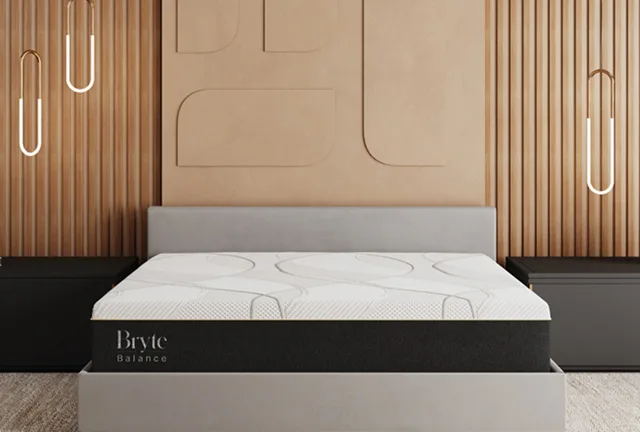
Shop Bryte Beds
From the Park Hyatt New York to Rosewood Miramar Beach, thousands of guests have experienced Bryte in the world’s top hotels—now it’s your turn.