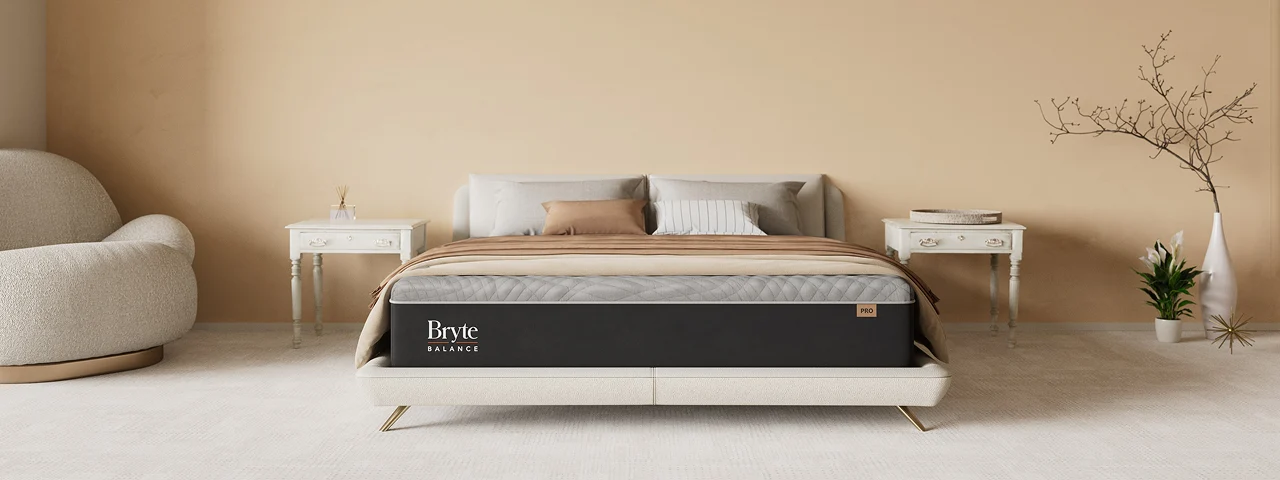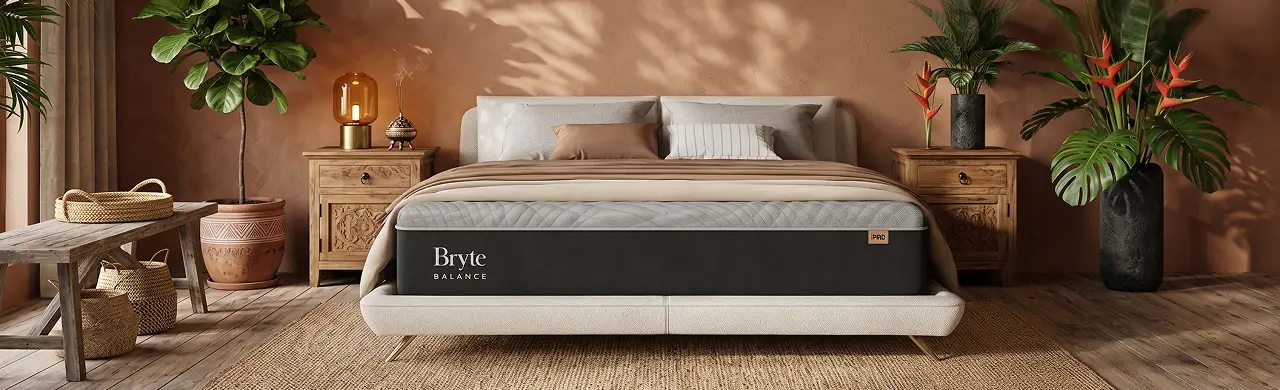
Split king mattresses deliver 74-82% better motion isolation than single kings, but the 2-4 inch gap between mattresses is described as "the biggest complaint" by industry professionals - with 60% of couples finding it intolerable for maintaining physical closeness. Neither traditional option fully serves couples who want both personalized comfort and intimacy, which is why dual-zone active pressure relief technology has emerged as a third path that eliminates this forced tradeoff.
The stakes of this decision extend beyond comfort preferences. According to an American Academy of Sleep Medicine survey, 31% of U.S. adults have opted for "sleep divorce" - sleeping separately to accommodate a bed partner. A Naturepedic survey of 800 couples found that 44% sharing a bed report sleep issues causing them to question their relationship.
This isn't a furniture decision. It's a relationship investment.
Split King vs Single King: Quick Comparison
What Is a Split King Mattress?
A split king consists of two Twin XL mattresses (each 38" × 80") placed side by side to create a king-sized surface (76" × 80"). Each partner sleeps on their own mattress, enabling independent firmness selection and complete motion isolation between sides.
Key characteristics:
- Two physically separate sleep surfaces sharing one bed frame
- Each side operates independently for firmness and adjustable base positioning
- Requires specialized Twin XL bedding for each half
- Creates a gap of 2-4 inches where mattresses meet
What Are Split King Pros and Cons for Couples?
Split King Advantages
Motion isolation is nearly complete. Because each partner sleeps on a physically separate mattress, vibration cannot transfer between sides. Sleep Foundation lab tests show split kings isolate motion 74-82% better than traditional kings. For couples where one partner tosses frequently, this eliminates wake events entirely.
Firmness preferences become independent decisions. With 65% of couples disagreeing about mattress comfort and sleep positions dictating different support needs (54% side sleepers need softer, 37% back sleepers need firmer), the ability to choose different mattresses removes the compromise problem.
One couple on Reddit found an elegant solution to their firmness disagreement. As one user shared on r/Mattress:
"Split king. We love ours! I have a $2k Purple, he has a $300 firm innerspring, and we're both super happy."
Adjustable bases work independently. Each partner can elevate their head or feet without affecting the other - useful when one reads while the other sleeps, or one needs elevation for snoring or acid reflux.
Replacement costs can be lower long-term. If one side wears faster, only that mattress needs replacement rather than the entire bed.
Split King Disadvantages
The gap creates real intimacy problems. Industry professionals describe the gap as "the biggest complaint" and "the biggest negative." Couples report difficulty cuddling, partners falling into the gap when rolling over, and the bed feeling like "two twins pushed together" rather than a shared sleeping space.
The frustration is palpable in online communities. One user described their experience on r/nectarsleep:
"My husband got us a dual mattress back in mid September as an anniversary gift and overall like it but there is one big big issue that I haven't been able to figure out. How can a couple cuddle on this? It sounds silly but has become quite an issue. The split between the beds creates a gap that prevents us from getting close at all. If either of us move towards the middle it pushes the mattresses away from one another and begins to separate quickly. I've find myself in a hole in between our mattresses before. Not to be blasphemous at all but it's like Moses parted the seas! We must be doing something wrong... I just can't imagine years of this. It's only been 2 months and it's negatively affecting our marriage. Intimacy is nonexistent. Help!!"
Total cost runs significantly higher. Split king setups commonly cost $4,800–$14,000+ when accounting for two mattresses ($1,200–$4,000+ each) plus two adjustable bases ($1,200–$3,000+ each).
Bedding complexity doubles. Split kings require specialized Twin XL sheets ($100–$308 per set according to Sleep Foundation), double the laundry, and careful management when mattresses sit at different angles.
The gap workarounds don't fully work. Bridge pads, mattress toppers, and connectors help marginally, but solutions substantial enough to eliminate the gap also limit the independent adjustability that makes split kings valuable.
What Are Single King Pros and Cons for Couples?
Single King Advantages
Physical closeness is preserved. No gap means seamless cuddling, natural rolling toward each other, and the psychological sense of sharing a bed rather than sleeping adjacent.
Simplicity across every dimension. Standard king bedding fits properly. One mattress to research and purchase. One base if adjustable. Lower total cost ($3,000–$8,500+ for complete setup).
Bed-making takes half the time. No managing separate sheets, no gap to bridge, no dual equipment to coordinate.
Single King Disadvantages
Firmness becomes a forced compromise. When one partner needs soft support for side sleeping and the other needs firm support for back sleeping, a single fixed-firmness mattress serves neither optimally. According to Saatva's survey, 35% of couples have argued specifically about mattress firmness.
Motion transfers across the entire surface. Mattress Clarity testing shows traditional king innersprings transfer 20-30% of movement. The University of Oklahoma study found light sleepers wake 2.5x more often on poor-isolation mattresses (68% vs. 27% wake rate).
Adjustable positioning affects both partners. If one partner elevates their head, the entire mattress tilts - no independent adjustment possible.
Is the Split King Gap Really a Problem?
For 60% of couples who value physical closeness, yes. The gap isn't just an inconvenience - it fundamentally changes the sleeping experience from "sharing a bed" to "sleeping in adjacent beds."
What the gap actually feels like:
- Partners roll toward each other and fall into a 2-4 inch depression
- Cuddling requires positioning on one side rather than meeting in the middle
- Spontaneous nighttime intimacy becomes awkward to navigate
- The psychological sense of separation contradicts the purpose of sharing a bed
Another user shared their regret about the split king decision on r/Mattress:
"We spent 10k on an adjustable base split king. I loathe it. So so much. My husband loves it. Intimacy hasn't been an issue, but snuggling pretty much never happens, and I always end up sleeping on the edge of my mattress, because I can't stand the gap between beds. I HATE our split king. I would have gotten to king mattress."
- Reddit user (1 upvote)
Gap solutions and their limitations:
The fundamental problem: any solution substantial enough to truly eliminate the gap also compromises the independent adjustability that justified choosing split king in the first place.
How Much Does Split King Really Cost vs Single King?
Split king total ownership costs 40-65% more than single king setups when accounting for all components.
Complete Cost Breakdown
Ongoing Cost Differences
Long-term value consideration: Split kings allow independent side replacement, potentially extending effective bed lifespan. If one partner's side wears faster (common with weight differences), replacing one Twin XL costs less than replacing an entire king.
Beyond Split vs Single: Active Pressure Relief Technology
Active pressure relief mattresses eliminate the core tradeoff by providing independent firmness control on a unified surface - no gap.
Active pressure relief is defined by real-time sensing of pressure points combined with real-time adjustments. This distinction is critical: mattresses offering only manual firmness adjustability don't qualify as true active systems.
This third option exists because neither traditional configuration serves couples who prioritize both personalization AND physical closeness. Mattress technology has evolved from passive foam and springs to active, AI-driven systems that sense and respond in real time.
How Active Pressure Relief Technology Works
Unlike a split king where each side is literally a separate mattress, dual-zone systems use zoned construction within a single unified surface. Each partner's side operates independently for firmness while the surface remains continuous.
The Bryte approach: Bryte's active pressure relief technology uses 90 pneumatic Bryte Balancers organized into 16 independent zones (8 per sleeper). These sensors detect pressure and adjust firmness automatically throughout the night - addressing not just partner differences but the reality that your own comfort needs change as you shift sleeping positions.
What Makes Active Systems Different
Three factors determine active pressure relief effectiveness:
- Sound (Noise Level) - Adjustments must be silent or near-silent. If the system is audible, it wakes the sleeper, defeating the entire purpose of automatic adjustment. Bryte's pneumatic system operates quietly enough to avoid sleep disruption.
- Resolution (Precision) - How precisely does the system sense and adjust across the sleep surface? High-resolution systems like Bryte use multiple independent zones per sleeper, allowing targeted adjustment to specific body regions. Low-resolution systems using a single air bladder for the entire body cannot provide the same precision - adjusting your lower back affects your shoulders equally, regardless of whether both areas need the same support.
- Response Time (Speed) - How quickly does the system respond to pressure changes? True real-time systems adjust within seconds as you shift positions. Systems that adjust only once per hour or require manual intervention cannot respond to the natural position changes that occur throughout the night.
High-resolution systems with fast, silent response provide genuine real-time adaptation. Lower-resolution systems with slow response offer minimal benefit over static mattresses.
Which Setup Matches Your Situation?
Assess Your Motion Sensitivity
Questions to answer honestly:
- Do you wake when your partner rolls over or gets up?
- How many times per night does partner movement disturb you?
- Does your partner describe you as a "light sleeper"?
If motion is your primary issue: Split king provides complete isolation. Active pressure relief mattresses address motion dynamically through real-time sensing and adjustment while preserving the unified surface.
One Reddit user shared a detailed account of their exhaustive journey to solve motion transfer issues on r/Mattress:
"I have been on a LONG journey with finding a sleep setup for me and my partner, and I just wanted to create a post to summarize what I've learned. I am an incredibly light sleeper and wake up to any movement. My boyfriend tosses and turns a ton in his sleep. I was getting the WORST sleep with him, which was having detrimental effects on our relationship. I would be cranky and snap at him all the next day, and often I'd only get a couple hours of sleep and wake up feeling sick. We didn't want separate bedrooms or even have a spare bedroom... I realized - if mattresses are either sharing a frame OR touching at all, you will feel the other person. Even when I pulled the two twin xls an inch apart on the king frame, I felt him. A bed bridge connecting the 2 mattresses also increases the motion transfer, by connecting the 2."
Assess Your Firmness Incompatibility
Questions to answer honestly:
- Do you and your partner prefer significantly different sleep positions? (Side sleepers need softer; back/stomach sleepers need firmer)
- When testing mattresses together, do you have opposite reactions to the same surface?
- Has one partner experienced pain or discomfort on mattresses comfortable for the other?
If firmness disagreement is mild: A medium-feel single mattress may serve both partners adequately.
If firmness disagreement is substantial: Split king or active pressure relief technology becomes necessary - the question is whether you'll accept the gap.
Assess Your Closeness Priority
Questions to answer honestly:
- How important is cuddling before sleep or during the night?
- Do you reach for each other while sleeping?
- Would physical separation during sleep feel like a relationship compromise?
If closeness ranks high AND you need personalization: The gap makes split king problematic. Active pressure relief technology addresses both priorities without forced tradeoff.
Scenario-Based Recommendations
Scenario 1: One Light Sleeper + One Restless Partner
Primary need: Motion isolation
Recommended: Split king OR active pressure relief mattress
Decision factor: How much does physical closeness matter? If high, active pressure relief avoids the gap. If low, split king costs less.
Scenario 2: Different Firmness Needs + High Cuddle Priority
Primary need: Personalization without separation
Recommended: Active pressure relief mattress (e.g., Bryte Balance PRO)
Why: Split king solves firmness but creates gap. Only dual-zone serves both needs.
Scenario 3: Similar Preferences + Mild Motion Sensitivity
Primary need: Quality shared surface at reasonable cost
Recommended: Single king with good motion isolation (memory foam or hybrid)
Why: Technology premium isn't justified when preferences align.
Scenario 4: Health Needs Requiring Independent Elevation
Primary need: Adjustable positioning without affecting partner
Recommended: Split king with two adjustable bases
Why: No single-surface option allows truly independent elevation angles.
Scenario 5: Different Sleep Schedules + Wake Time Sensitivity
Primary need: One partner waking without disturbing the other
Recommended: Active pressure relief mattress with features like Bryte's Silent Wake Assist
Why: Uses gradual motion to wake one partner without audible alarm - neither traditional configuration addresses this.
Frequently Asked Questions
Is a split king mattress better than a single king for couples?
It depends on your priorities. Split king excels at motion isolation (74-82% better) and firmness independence, but creates a 2-4 inch gap that 60% of couples find problematic for intimacy.
- Choose split king if: Motion isolation and independence outweigh physical closeness
- Choose single king if: Similar preferences and closeness matter most
- Choose active pressure relief if: You want personalization AND closeness without compromise
How much more does a split king cost than a single king?
Split king total setup runs $4,800–$14,000+ compared to $3,000–$8,500+ for single king.
Cost breakdown:
- Two mattresses instead of one: $2,000–$8,000+ vs $1,500–$5,000+
- Two adjustable bases instead of one: $2,400–$6,000+ vs $1,500–$3,500+
- Specialized sheets: $100–$308 vs $50–$200
Can you cuddle on a split king bed?
Yes, but with limitations. The 2-4 inch gap makes meeting in the middle awkward - partners must position on one side rather than the center. Gap fillers help marginally but don't fully solve the issue.
User experience: Most couples describe cuddling as "possible but not natural" on split kings. Couples prioritizing nighttime closeness often find the gap intolerable.
Do you need special sheets for split king beds?
Yes. Split kings require two Twin XL fitted sheets rather than standard king bedding. Sheet sets designed for split kings typically include two fitted sheets plus one king flat sheet.
Cost: $100–$308 per set depending on material quality
Availability: Much easier now through online retailers than historically
What is active pressure relief technology?
Active pressure relief refers to mattress systems that combine real-time sensing of pressure points with real-time adjustments - automatically adapting firmness as you sleep.
Unlike split kings (two separate mattresses) or manual-adjust systems, true active pressure relief detects pressure changes within seconds and responds accordingly. The key differentiators are silent operation, high-resolution sensing across multiple zones, and rapid response time. Systems that adjust only manually or on hourly intervals don't qualify as real-time active pressure relief.
Bryte products use AI-driven sensors across 16 independent zones to provide this real-time adaptation while maintaining a unified sleep surface - no gap between partners.
How does motion isolation differ between split king and single king?
Split king provides near-complete isolation because partners sleep on physically separate mattresses - vibration cannot transfer across the gap.
Single king isolation varies by construction:
- Memory foam: Good absorption (5-10% transfer)
- Hybrid: Moderate (10-15% transfer)
- Innerspring: Poor (20-30% transfer)
Active pressure relief mattresses detect motion and respond dynamically through real-time sensing rather than relying solely on passive material absorption.
Which mattress setup improves sleep quality for both partners?
The setup that addresses YOUR specific incompatibilities. A Naturepedic survey found 67% of couples with customizable firmness options rated sleep quality "Good" or "Amazing" compared to 32% without.
Key factors affecting both partners:
- Motion isolation matching sensitivity levels
- Firmness matching individual sleep positions
- Physical closeness matching relationship priorities
No single answer works for all couples - the best setup matches your specific combination of needs.
Shop Bryte Beds
From the Park Hyatt New York to Rosewood Miramar Beach, thousands of guests have experienced Bryte in the world’s top hotels—now it’s your turn.