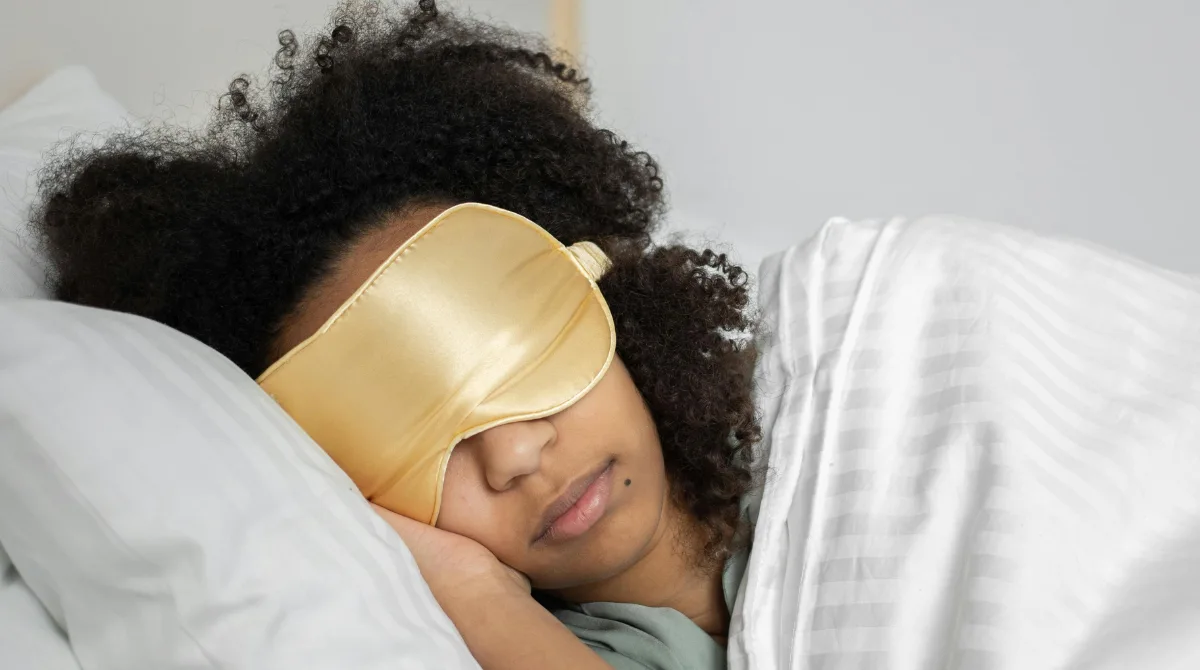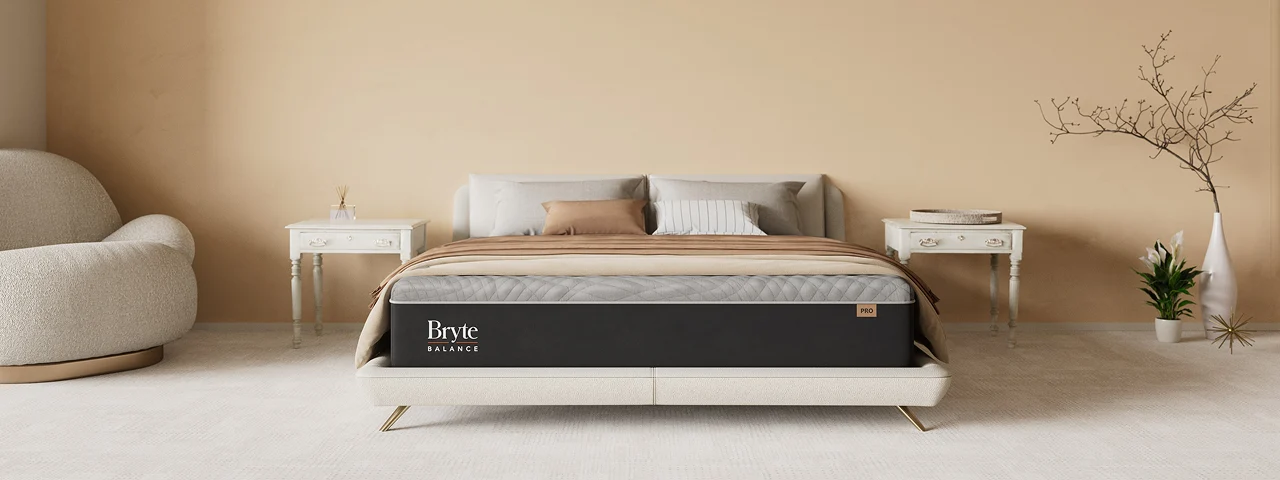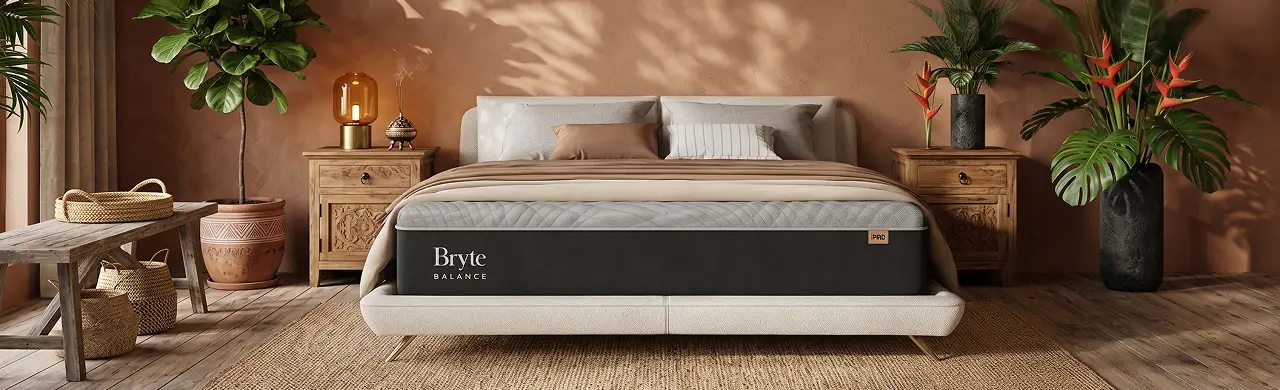
The best mattress for back pain is medium-firm (5-7 on a 10-point scale), with adaptive or zoned support that maintains spinal alignment across different sleep positions. Clinical research shows medium-firm mattresses reduce back pain by 48% and improve sleep quality by 55% compared to firm alternatives.
This guide focuses on sleep surface support, sleep quality, and practical selection criteria, not medical treatment.
For combination sleepers who change positions throughout the night, adaptive mattresses like the Bryte Balance - which automatically adjusts firmness across 16 independent zones - address limitations that static mattresses cannot solve.
Top recommendations by category:
Why Your Mattress Stopped Working
You bought a mattress that felt perfect. Relief lasted a few weeks - maybe months. Then the morning stiffness returned.
This pattern has a structural explanation: adults change sleeping positions 11-13 times per night, with 73% of sleep time spent in side-lying positions. A surface that feels supportive in one position can feel very different after you shift to your side. Your shoulder and hip bear more load, and the support that worked earlier can create pressure points or allow spinal misalignment.
Static mattresses face a mathematical limitation. They can only optimize for one position at a time.
Common signs your mattress is failing:
- Morning stiffness that improves after 20-30 minutes of movement
- Visible indentations in the sleep surface (especially at hips/shoulders)
- Rolling toward the center of the bed
- Feeling coils or the base layer through comfort materials
- Relief that gradually diminished over months
Material degradation compounds the problem. Consumers expect mattresses to last 9.6 years, but nearly half replace within 7 years. As support becomes less even, pressure points and alignment issues can become more noticeable.
Some consumers describe similar patterns in their own experience.
As one user shared on r/BuyItForLife:
"My recommendation is avoid memory foam mattresses. I bought one while I was single and when I met my partner both her and I would always wake up sore from trying to avoid rolling into the divot left by years of me sleeping directly in the middle. No amount of rotating the mattress ever fixed it. She also had a memory foam mattress at her place and although hers sagged less it was still an issue. First thing we did when we moved in together was go mattress shopping. We ended up buying an old school pocket coil mattress, and got a new bedframe with strong straight slats (rather than the ikea style curved slats.) We probably spent a good 2-3 hours laying on mattresses before deciding on one we both liked. The best part is because it's an old school style it's built to last, and completely flippable which is hard to find these days. I always used to wake up with small little pains in my back and shoulders and it's all completely disappeared with this new mattress and frame."
The Sleep-Pain Connection Research Reveals
Sleep Quality Predicts Pain Outcomes More Than Pain Predicts Sleep
Research suggests that sleep impairment is a stronger predictor of pain than pain is a predictor of sleep impairment. Sleep fragmentation and reduced restorative sleep can make discomfort feel more intense the next day. For mattress selection, that means you should evaluate both support and sleep quality outcomes, not comfort alone.
The clinical evidence is specific:
A study of 682 chronic low back pain patients found those who improved sleep quality showed:
- 1.66x greater probability of perceiving positive treatment effects
- 1.71x greater likelihood of achieving low pain intensity
- 2.06x greater likelihood of high quality of life at 12 months
The outcome gap was substantial: 68.4% who improved sleep reported low pain at 12 months, compared to only 33.1% with persistent poor sleep.
The Scope of the Problem
- 28% of U.S. adults report chronic low back pain
- 58.7% of low back pain patients experience sleep disturbance
- 51.5% report sleep disorders vs. 30.9% of those without chronic back pain
- Healthcare expenses run 2.5x higher for back pain sufferers ($1,440 vs. $589 annually)
Mattress Firmness: What Clinical Evidence Actually Shows
The Medium-Firm Standard
The landmark Kovacs randomized controlled trial (313 adults with chronic non-specific low back pain) established the clinical benchmark: medium-firm mattresses produced 48% reduction in back pain and 55% improvement in sleep quality after 28 days. Benefits persisted at 5-6 month follow-up.
Medium-firm typically means 5-7 on a 10-point scale. The mechanism involves balancing two competing needs:
- Too soft: Heavier body parts sink excessively, curving the spine out of neutral
- Too firm: Inadequate contouring creates pressure points at shoulders/hips while leaving gaps under the lumbar curve
This balance is why the "firm is always better" myth persists but doesn't hold up to scrutiny. As one user explained on r/IsItBullshit:
"I think what really helps is a mattress that is firm with a SOFT top. The firmness gives you the support you need while the softness helps conform to your shape and give you more support and comfort. I have had Back pain for 14 years and a bed that was firm as shit left me sore all over everything else and a soft bed made my back hurt. But when i got a firm bed with a soft top it made a huge difference and i started sleeping way better."
Firmness by Sleep Position
This last category represents the fundamental challenge. Many people do not sleep in one position all night. A static surface can feel supportive at bedtime and feel very different later after position changes and pressure accumulation.
When Static Support Is Not Enough
Three Generations of Mattress Technology
Generation 1: Static mattresses (innerspring, memory foam, latex, hybrid)
- Firmness determined at manufacture
- Sleeper adapts to mattress, not vice versa
- Excellent when firmness matches user needs
- Cannot adjust to position changes or body changes over time
Generation 2: Adjustable firmness (air chamber systems)
- User manually sets preferred firmness (typically 0-100 scale)
- Solves the "one firmness fits all" problem
- Allows adjustment over time
- Still requires waking and manual input to change
Generation 3: Active smart mattresses (real-time adjustment)
- Active Pressure Relief is real-time sensing of pressure points combined with real-time adjustments.
- Sensors detect pressure, position, movement
- Automatic adjustments throughout night without waking sleeper
- Addresses the nocturnal position change problem directly
- Provides objective sleep data for evaluation
How Bryte Approaches Back Pain Support
The Bryte Balance uses 90 intelligent pneumatic modules (Bryte Balancers) organized into 16 independent zones (8 per sleeper). Each Balancer senses pressure and adjusts firmness automatically - silent adjustments that don't require waking.
The Position Adaptation Framework:
The Position Adaptation Framework:
- When you shift from back to side sleeping:
- Sensors detect the change in weight distribution
- Zones under the shoulder and hip adjust to allow appropriate sinking
- The lumbar area adjusts to help maintain alignment in the new position
- Changes occur without requiring you to wake
This differs from manually adjustable systems where you set a firmness level once and it stays fixed until you change it.
Bryte's specific features for back pain:
- Real-time pressure sensing and adjustment - maintains support across all sleep positions
- Individual Zone Control (PRO models) - target specific areas like lower back
- Guided Comfort Tailoring - AI recommends settings based on body attributes
- Position-specific Contours - profiles optimized for back, side, or stomach sleeping
- Daily sleep insights - objective metrics to verify improvement
Mattress Recommendations by Category
Best Traditional and Hybrid Options
If you prefer a traditional mattress, prioritize medium-firm support and lumbar zoning, and use a long trial period. If you have tried multiple mattresses without sustained relief, consider whether Active Pressure Relief better matches your needs.
WinkBed - $1,500-$2,000 (queen)
- 14-inch hybrid with zoned coils for targeted lumbar support
- Four firmness options (Softer, Luxury Firm, Firmer, Plus)
- Top pick from Sleep Foundation; 9.3+ rating from NapLab
Saatva Classic - $1,800-$2,500 (queen)
- Dual coil layers with Euro-top
- Three firmness options
- Near-perfect pressure relief rating (4.5/5) across all positions
Nectar Premier Hybrid - $1,000-$1,500 (queen)
- Memory foam with wrapped coils
- ActiveLift polyfoam for spinal alignment
- Best overall from NCOA and AARP for back pain
Helix Midnight Luxe - $1,800-$2,200 (queen)
- Zoned support coils with premium foams
- Balanced medium-firm feel
- Strong cooling performance
Best Adaptive Smart Options
Bryte Balance - $4,799 (queen)
- Active Pressure Relief
- 90 AI-powered Balancers in 16 independent zones
- Medium-soft to medium-firm adjustability (0-100 per side)
- BryteWaves multi-sensory relaxation for sleep onset
- 100-night trial, 10-year warranty
Bryte Balance PRO - $6,499 (queen)
- Active Pressure Relief
- 90 AI-powered Balancers in 16 independent zones
- Soft to medium firmness adjustability (0-100 per side)
- Individual Zone Control for targeting lower back
- BryteWaves multi-sensory relaxation for sleep onset
- AI-Powered personal Sleep Concierge
- 3-inch premium comfort layer
- 100-night trial, 10-year warranty
Bryte Balance PRO Conform - $6,499 (queen)
- Active Pressure Relief
- 90 AI-powered Balancers in 16 independent zones
- Medium to firm firmness adjustability (0-100 per side)
- Individual Zone Control for targeting lower back
- BryteWaves multi-sensory relaxation for sleep onset
- AI-Powered personal Sleep Concierge
- High-density gel-infused memory foam
- Motion isolation plus adaptive technology
- 100-night trial, 10-year warranty
Sleep Number - $1,000-$5,000+ (varies by model)
- Air chamber with adjustable firmness
- Manual adjustment (not automatic)
- Dual-side control for couples
Decision Framework: Traditional vs. Smart
Choose a Traditional/Hybrid Mattress If:
- Your back pain responds well to consistent medium-firm support
- You sleep primarily in one position throughout the night
- You have a clear, stable firmness preference
- Budget is the primary constraint (quality options under $2,000)
- You prefer simpler products without technology components
Consider a Smart/Adaptive Mattress If:
- Previous mattresses provided initial relief that faded over time
- You change positions frequently during sleep
- You share a bed with a partner who needs different firmness
- You want objective sleep data to verify whether the mattress is working
- You're willing to invest in technology that addresses root causes
The Investment Calculation
The price gap between categories is significant. Premium smart mattresses cost 2-4x more than quality traditional options.
Factors that shift the calculation toward smart technology:
- Cumulative mattress costs - If you've already purchased 2-3 mattresses that stopped working, the total approaches smart mattress territory
- Healthcare cost differential - Back pain sufferers average $1,440 annually vs. $589 for those without pain
- Couples with different needs - Dual-zone control eliminates compromise that satisfies neither partner
- Objective verification - Sleep tracking removes guesswork about whether investment is paying off
Consumer research shows increasing willingness to invest in sleep health: 31% expect to spend $5,000+ on their next mattress, and 31% of purchases are prompted by health/medical reasons.
The Couples Challenge
Partner Disturbance Fragments Restorative Sleep
56% of people in relationships are woken by their partner two or more nights per week. Each awakening resets sleep stage progression, compounding the pain-sleep cycle.
The frustration has driven 31-39% of adults to practice "sleep divorce" - sleeping separately from partners. Adults 35-44 are most likely (39%); those 65+ least likely (18%).
Beyond movement disturbance, partners often have incompatible firmness needs. One may need firmer support for back sleeping; the other may need softer contouring for side sleeping with shoulder pain. Traditional mattresses force a compromise that optimizes for neither.
One couple's solution highlights this common dilemma. As shared on r/Mattress:
"Split king. We love ours! I have a $2k Purple, he has a $300 firm innerspring, and we're both super happy."
Solutions for Different Couple Scenarios
Split king configuration - Two twin XL mattresses in a king frame. Maximum independence but creates center gap and requires two purchases.
Dual-firmness traditional - Some mattresses offer different firmness on each side. Addresses initial preference differences but both sides remain static.
Dual-adjustable air chambers - Each partner sets their firmness (0-100). Solves the compromise problem but requires manual adjustment.
Active Pressure Relief - Bryte's Dual Comfort Design provides 8 independent zones per sleeper. Each partner controls their side's firmness through the app, runs their own relaxation tracks, and views their own sleep data. Silent Wake Assist uses gradual motion to wake one partner without disturbing the other.
Trial Period Evaluation
The 90-Day Assessment Framework
Initial comfort doesn't predict long-term results. Your body needs 30-90 days to adapt to a new sleep surface. Minor discomfort during weeks 1-2 can be normal, especially when switching to a firmer mattress after years on a softer one.
Week 1-2: Adaptation Phase
- Expect adjustment discomfort
- Note initial impressions without making judgments
- Begin tracking metrics (see below)
Week 3-4: Experimentation Phase
- If using adjustable mattress, test different firmness settings
- Use Guided Comfort Tailoring features if available
- Adjust specific zones for problem areas
Week 5-8: Trend Evaluation
- Review tracking data for patterns
- Is morning pain decreasing?
- Is sleep quality improving?
- If static mattress shows no improvement, consider return
Before Trial Expires: Decision Point
- Base decision on objective trends, not single-night feelings
- Improved metrics indicate the mattress is working - even if it doesn't feel as "comfortable" as a softer alternative
The trial evaluation process is deeply personal, as one user on r/BuyItForLife explained:
"Not all back pain is the same. Mattress stores always fuck you over but in your case going to one and actually laying on the mattresses is going to be so much better for your back than just rolling with suggestions from Internet people whose back pain may or may not be caused by what's causing yours that it's worth the extra money. I know 20 minutes on a mattress in a store isn't the same as sleeping on it, but that info is so much more valuable than basically random suggestions. There isn't one mattress that's the best for all back pain issues."
What to Track
Daily metrics:
- Time to fall asleep
- Number of wake-ups
- Morning pain level (1-10)
- Pain location
- Evening pain level (for comparison)
Weekly review questions:
- Is morning stiffness duration decreasing?
- Am I waking less frequently?
- Is pain trending lower over 7-day average?
Some mattresses include built-in insights that can reduce guesswork during a trial. The Bryte app provides daily insights and recommendations that can support your evaluation over time.
Frequently Asked Questions
What type of mattress is best for lower back pain?
Medium-firm mattresses (5-7 on 10-point scale) with zoned lumbar support consistently perform well in clinical research. For combination sleepers who change positions at night, Active Pressure Relief can address a limitation of static mattresses. Active Pressure Relief is real-time sensing of pressure points combined with real-time adjustments.
Key selection criteria:
- Firmness rating in medium-firm range
- Zoned support with reinforced lumbar area
- Material that maintains support over time (avoid pure soft foam)
- Trial period of 90+ days for proper evaluation
Is a firm or soft mattress better for back pain?
Neither - medium-firm outperforms both extremes. The Kovacs clinical trial showed medium-firm mattresses produced 48% greater pain reduction than firm mattresses.
Firm mattresses create pressure points and fail to contour around natural curves. Soft mattresses allow excessive sinking that misaligns the spine. Medium-firm balances support and pressure relief.
How long should I try a new mattress before deciding?
Allow 30-90 days minimum. Initial adaptation discomfort is normal, especially when switching firmness levels. The difference between adjustment period and genuine incompatibility:
- Adjustment: Gradual improvement week over week
- Incompatibility: Persistent or worsening symptoms after 4+ weeks
Track objective metrics rather than relying on nightly feelings. Trend lines matter more than any single night.
Do adaptive smart mattresses actually help with back pain?
Adaptive smart mattresses address specific failure patterns that cause traditional mattresses to stop working: the nocturnal position change problem and the couples compromise paradox.
Relevant features for back pain:
- Real-time pressure adjustment as you change positions
- Zoned control for targeting problem areas
- Sleep tracking to verify improvement objectively
- Dual-side independence for couples
Smart features that are less relevant to back pain specifically can include features that do not affect pressure distribution, alignment support, or nighttime awakenings.
What mattress firmness do doctors recommend for back pain?
Clinical guidelines consistently recommend medium-firm. Research with 313 chronic low back pain patients showed medium-firm mattresses reduced pain by 48% and improved sleep quality by 55% compared to firm mattresses, with benefits sustained at 5-6 months.
Position-specific guidance:
- Back sleepers: Medium to medium-firm
- Side sleepers: Medium to medium-soft
- Stomach sleepers: Medium-firm to firm
- Combination sleepers: Consider adaptive technology
Why does my back hurt in the morning but feel better later?
Morning stiffness that resolves with movement typically indicates your mattress is failing to maintain spinal alignment overnight. As you sleep, static pressure in unsupported areas and position changes without appropriate support adjustment cause muscle tension and joint compression.
Common causes:
- Mattress sagging in high-pressure zones
- Firmness mismatch for your sleep positions
- Material degradation over time
- Inadequate lumbar support
Movement increases blood flow and allows muscles to release tension - explaining why pain diminishes throughout the day.
The Recommendation
For back pain sufferers who've experienced the pattern of initial relief followed by gradual disappointment, the explanation lies in structural limitations of static mattress technology - not personal failure or inevitable aging.
The research points in a clear direction: sleep quality improvement predicts 1.66-2.06x better long-term pain outcomes. A mattress that maintains consistent support across your 11-13 nightly position changes, provides objective data to verify improvement, and doesn't degrade in the zones where you need it most addresses root causes rather than symptoms.
The Bryte Balance ($4,799) and Bryte Balance PRO ($6,499) deliver real-time adaptive support through 90 intelligent Balancers across 16 zones, dual-side independence for couples, Individual Zone Control for targeting the lower back specifically, and daily sleep insights that remove guesswork from evaluation. The 100-night trial and 10-year warranty protect the investment.
For those whose back pain has resisted previous mattress solutions, the question shifts from "Is this mattress comfortable?" to "Is this mattress improving my measurable sleep quality?" - and adaptive technology provides the objective answer.
Content Disclaimer
This article is for educational and informational purposes only and is not medical advice. It does not diagnose, treat, cure, or prevent any medical condition. Always consult a licensed healthcare professional regarding back pain or other health concerns. Research findings and quoted user experiences are included for general context only and do not represent every experience or outcome.
Shop Bryte Beds
From the Park Hyatt New York to Rosewood Miramar Beach, thousands of guests have experienced Bryte in the world’s top hotels—now it’s your turn.