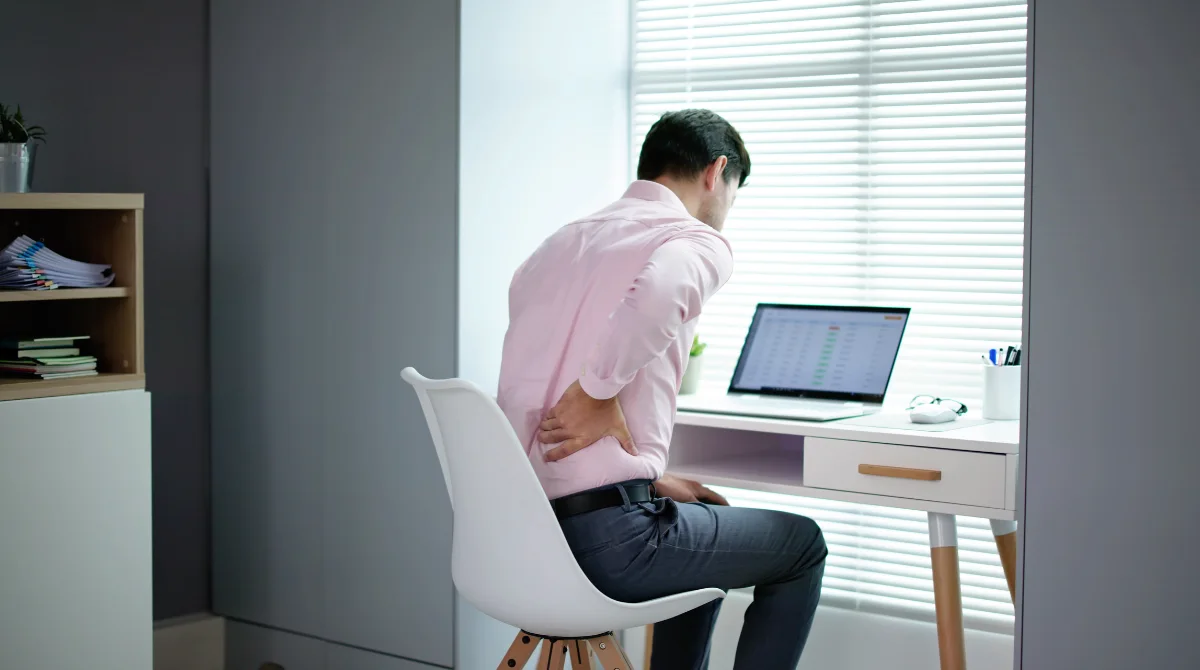
Morning hip pain is commonly associated with a combination of mechanical pressure during sleep, reduced overnight joint movement, and inflammatory sensitivity — though individual causes vary and may involve underlying conditions.
In many people, sleep position and surface comfort can influence symptom severity, but persistent hip pain should always be evaluated in the context of individual health factors.
Who Experiences Morning Hip Pain
Morning hip pain affects a significant portion of the population. Estimates vary across studies and populations, but research suggests that 10-25% of adults experience lateral hip pain at some point, with symptoms predominantly occurring at night. Among those with hip osteoarthritis, nocturnal pain prevalence climbs to 17-85% depending on disease progression.
Age increases risk substantially:
- Over age 60, 14.3% report significant activity-limiting hip pain
- Morning stiffness affects 30% of those reporting hip pain
- 40.7% of older adults with chronic low back pain also experience hip symptoms (compared to 9.3% without back pain)
The hip-spine connection matters. Morning stiffness occurs in 29.6% of those with chronic low back pain versus 11.1% without—demonstrating that hip pain rarely exists in isolation.
Side Sleeping Creates Direct Hip Pressure
60-79.8% of adults sleep on their side. This is also the position most likely to cause hip pain.
Side sleeping concentrates body weight onto a smaller surface area. According to Alpine Orthopedics, this position presses weight directly onto the hip joint, compressing the bursa and soft tissue against bone for hours. Back sleeping with knee support reduces hip strain—but most people cannot maintain a non-preferred position throughout the night.
The frustration of side sleeping with hip pain is a common experience. As one user shared on r/Hypermobility:
"Honestly, the only thing I can do about it is take my muscle relaxer and my RSO before bed so that I'm knocked (...) out and try my best to sleep on my back. Anytime I accidentally sleep on my side (which is THE MOST COZY, so it was hard to break the habit), I wake up with my hip subluxed juuuuust enough that I'm in agony and struggling to move my leg properly. Plus, my shoulder will be out of place the whole time."
The biomechanical problem:
- Lateral recumbency channels significant body weight through the greater trochanter region
- Sustained compression restricts blood flow and lymphatic drainage
- What should be restorative sleep becomes cumulative tissue stress
What Happens to Your Hip Overnight
Hip pain intensifies during sleep and peaks upon waking due to specific physiological changes.
During 6-8 hours of stillness:
- Reduced overnight movement can temporarily decrease joint circulation and lubrication efficiency, contributing to stiffness when waking.
- Inflammatory mediators pool in dependent tissues rather than distributing through movement
- Sustained pressure on inflamed tissues compounds discomfort
This creates a "morning startup cost." Joints require movement to restore normal lubrication, explaining why hip pain peaks upon waking but improves throughout the day.
The 30-minute rule: Morning stiffness from hip osteoarthritis typically resolves within 30 minutes as movement pumps fluid through stiff joints. Longer-lasting morning stiffness can sometimes be associated with inflammatory joint conditions. Persistent or worsening symptoms should be evaluated by a healthcare professional.
The Pain-Sleep Cycle
Pain and poor sleep reinforce each other. Research in Frontiers in Psychiatry quantified this relationship:
- Pain leads to poor sleep (OR 1.87)
- Poor sleep leads to increased pain (OR 1.74)
- 77% of those with pain had poor sleep quality versus 62.7% without
- Sleep under 6 hours links to higher pain risk (OR 1.39)
50-70% of pain sufferers experience sleep disturbance. Each 1-point increase on a 10-point pain scale associates with 10% higher likelihood of disrupted sleep.
This cycle is well-documented in online communities. One user on r/Hypermobility described:
"I'm terrible in the morning but I never thought about it being related to hypermobility. I usually feel like I got hit by a truck and am nauseous for the first hour"
Experimental sleep restriction studies show the mechanism: forced awakenings impair descending pain modulation pathways, which may reduce the body’s natural pain modulation capacity and increase pain sensitivity. The hip pain disrupting your sleep may be making itself worse by preventing restorative rest.
Common Conditions Behind Morning Hip Pain
Conditions commonly associated with hip pain include:
- Osteoarthritis (most prevalent)—cartilage deterioration causing stiffness after inactivity
- Trochanteric bursitis—inflammation of fluid-filled sacs cushioning the hip; 1.8 per 1,000 prevalence
- Gluteal tendinopathy—tendon degeneration causing lateral hip pain
- Labral tears—damage to cartilage lining the hip socket
- Sciatic-piriformis syndrome—nerve compression causing radiating pain
- Hip flexor strain—overuse injury affecting front hip muscles
These conditions worsen at night due to inflammation pooling during rest, reduced joint lubrication, and sustained pressure on inflamed tissues.
This list is not diagnostic and symptoms often overlap. Proper diagnosis requires clinical evaluation.
When to See a Doctor
Seek medical evaluation if you experience:
- Pain persisting or worsening over several weeks despite rest
- Pain accompanied by fever or unexplained weight loss
- Significant swelling or redness around the hip joint
- Inability to bear weight on the affected leg
- Pain radiating down the leg with numbness or tingling
- Sudden onset following injury
- Morning stiffness lasting longer than 45 minutes
Sleep environment changes may help when pain follows a mechanical pattern—worst upon waking, improving with movement, without systemic symptoms. Many people have both a medical condition and a suboptimal sleep environment. Addressing both produces better outcomes than addressing either alone.
Position Modifications and Their Limits
Evidence-based position adjustments:
- Side sleepers: Place a pillow between the knees to maintain hip alignment
- Back sleepers: Place a pillow under the knees to reduce hip and lower back strain
A study of 25 male volunteers found optimized sleep surfaces improved spinal alignment in side sleeping, bringing the spine closer to neutral posture. Heavier and "triangular" body types benefited more than lighter or "square" types.
The pillow-between-the-knees strategy is widely recommended by physical therapists. As one student physical therapist explained on r/ehlersdanlos:
"Student physical therapist here 👋, we're taught that the large majority of people should be or are sleeping with something between their knees as it best aligns the hips and spine as well as prevents sores on the inner knee in bed ridden patients. 10/10 recommend for anyone, EDS or not!"
The fundamental problem: You cannot maintain optimal position throughout the night.
Adults change body positions 11-13 times per night during sleep. These shifts occur naturally and unconsciously. The pillow you placed between your knees when falling asleep gets pushed aside after your first position change. No pillow arrangement addresses pressure that accumulates during unconscious overnight movements.
What Research Shows About Mattress Firmness
Medium-firm mattresses (firmness 4-7 on a 10-point scale) are commonly associated with improved comfort and spinal alignment outcomes in clinical sleep studies.
A double-blind trial of 313 adults with chronic low back pain found medium-firm mattresses (firmness 5-6) produced greater improvements in pain and disability than firm mattresses (firmness 2-3). Improvements appeared in pain upon waking, sleep quality, and spinal alignment.
Sleep laboratory studies have observed associations between mattress firmness and sleep efficiency metrics.
Medium firmness mattresses showed:
- Highest sleep efficiency
- Smallest variability in total sleep time
- Reduced wake after sleep onset
- Enhanced spindle waves and stabilized sleep patterns
Body type affects ideal firmness:
- Firmer surfaces suit larger waist/hip circumferences
- Lighter individuals need softer surfaces for adequate pressure relief
- Memory foam and latex excel at contouring to reduce hip pressure points
This explains why a mattress that felt comfortable during a brief showroom test may fail to resolve pain at home. The showroom experience cannot account for how your specific body interacts with the surface over 8 hours.
Real-world experiences often highlight the trial-and-error nature of mattress selection. One user on r/Home shared their solution:
"Almost exactly the same here - 230 weight, side sleeper, tend to constantly roll between sides and back. Also, sleep with a CPAP. I have lower back arthritis so constant lower back pain. After testing a whole bunch of mattresses in all price ranges nothing seemed to be a 'magic bullet'. I visited my sister in another state and slept on her guest room mattress and slept like I was dead. Woke up so rested and no hip or other joint pain. I asked her what kind of mattress it was and she sheepishly told me is was some no-name Costco mattress that was very firm and she just put an inexpensive memory foam topper on it."
The Limitation All Static Mattresses Share
Traditional mattresses provide passive support based on material properties such as foam density or coil response, without active real-time adjustment.
A static mattress:
- Can’t detect when pressure builds at your hip during the night
- Doesn’t respond when you shift into a position, concentrating weight on a sensitive joint
- Don’t dynamically alter support in response to time spent in one position.
Why this matters: The average adult moves 11-13 times per night. Each position change creates different pressure distribution. A side sleeper who shifts position spends periods pressing significant body weight onto their hip. A passive mattress absorbs this pressure—it cannot redistribute it.
The overnight buildup of pressure and restricted circulation contributes to morning hip pain in ways that premium foam or perfect initial firmness selection cannot fully address.
Clinical Evidence: Active vs. Static Surfaces
Active pressure relief technology—dynamic surfaces that adjust rather than simply absorb pressure—demonstrates measurable clinical benefits.
Healing speed comparison:
A pragmatic study found active mattresses healed pressure injuries in 16.54 days versus 29.20 days for static mattresses—11.71 days faster.
Injury prevention:
- Cochrane review: Alternating pressure surfaces reduced pressure ulcer incidence to 7.4% compared to foam
- Meta-analysis: Active surfaces showed 5.1% pressure injury rate versus 35.1% for high-specification viscoelastic foam (hazard ratio 7.57)
These studies focused on pressure injuries rather than general hip pain, but they establish the principle: surfaces capable of active adjustment produce measurably different outcomes than passive surfaces.
How Active Pressure Relief Addresses the Problem
Active sleep technology responds to overnight position changes that static mattresses cannot address.
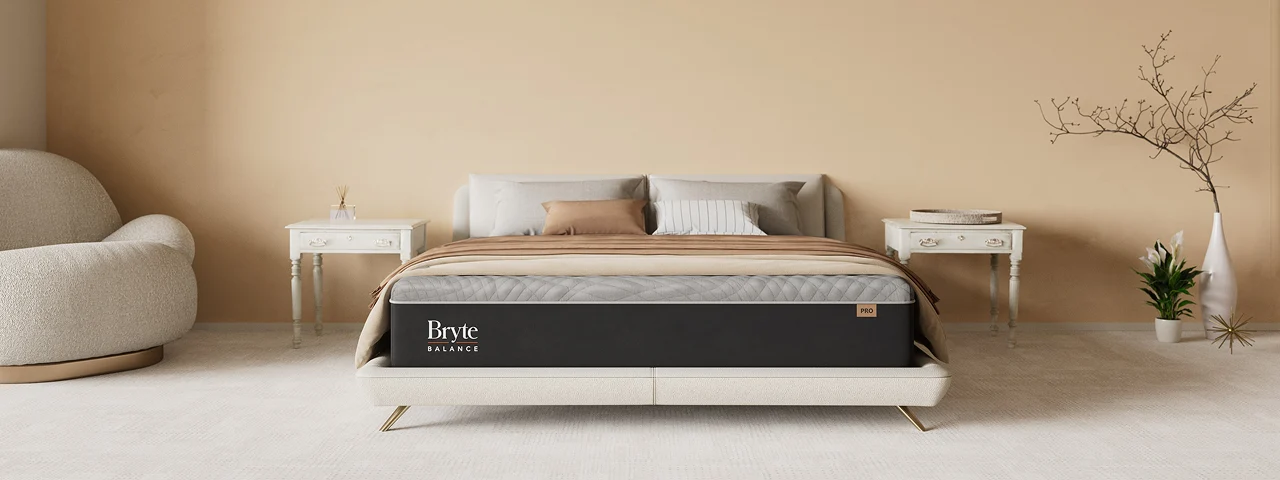
Bryte addresses the root cause of hip pain through Active Pressure Relief. Unlike static mattresses, our technology uses 90 intelligent Balancers to actively sense and remove pressure points in real-time.
Bryte's Adaptive Core approach:
- 90 intelligent Balancers organized into 16 independent zones (8 per sleeper)
- Real-time pressure sensing and firmness adjustment
- Silent, automatic response to pressure imbalances
When pressure builds at a specific point—such as the hip during side sleeping—the system detects the imbalance and adjusts to alleviate pressure before it causes waking. This is designed to address one limitation of static surfaces by introducing responsive pressure adjustment: while you cannot control overnight position changes, an active system can respond to them.
Static vs. Active Mattresses:
Personalization Beyond Firmness Selection
Traditional mattress personalization ends at selecting a firmness level. Active technology enables continuous personalization throughout sleep.
The Bryte smart mattress portfolio includes advanced personalization features:
- Balancing technology: Automatically senses and removes pressure points, adjusting firmness settings across your unique body as you change sleeping positions throughout the night.
- Guided Comfort Tailoring: Algorithmic comfort guidance based on user input and sleep preference data
- Individual Zone Control: Adjust firmness in specific areas (including hips) independently
- Contours: Profiles optimized for back, side, or stomach sleepers
- Dual Comfort Design: Each partner controls their side independently (0-100 firmness)
For side sleepers with hip pressure, this means creating a sleep surface that specifically addresses hip relief while maintaining appropriate support elsewhere—without requiring a partner to compromise on their preferences.
How to Evaluate Whether Your Mattress Is Helping
Timeline for assessment:
- Minimum 2-3 weeks (14-21 days) to determine if a new mattress helps with pain
- 30-night adjustment period before most trials allow returns
- Full body adaptation may take 60-90 nights
Signs of improvement:
- Waking with less stiffness
- Reduced time for morning stiffness to resolve
- Fewer overnight awakenings from discomfort
- Better overall sleep quality
Initial impressions don't reflect long-term pain relief.
Sleep tracking can provide additional behavioral and movement insights, though it should not be considered diagnostic.
Key Takeaways
- Morning hip pain typically results from sustained pressure, overnight fluid thickening, and inflammation pooling—mostly controllable factors
- Side sleeping affects 60-79.8% of adults and creates direct hip joint pressure
- The 11-13 overnight position changes make it impossible to maintain optimal positioning—explaining why pillow strategies often fail
- Medium-firm mattresses (4-7 firmness) show clinical benefits, but all static surfaces share the same limitation: passive-only response
- Active pressure relief technology addresses the root problem by responding to overnight position changes in real-time
- Allow 2-3 weeks minimum to evaluate whether a sleep surface is helping; track objective metrics when possible
Frequently Asked Questions
Why does my hip pain go away after I start moving?
Movement restores joint lubrication. Overnight stillness thickens synovial fluid; activity pumps it through stiff joints. Pain improving within 30 minutes suggests mechanical rather than inflammatory causes.
Quick self-assessment:
- Short-lived (30 minutes) morning stiffness is often associated with mechanical factors such as position or pressure, though individual variation exists.
- Stiffness lasting 45+ minutes → may indicate inflammatory condition requiring evaluation
Is side sleeping bad for hip pain?
Side sleeping concentrates body weight onto the hip joint, creating sustained pressure on bursa and soft tissue. With 60-79.8% of adults sleeping on their side, this explains why morning hip pain is so common.
If you can't change positions:
- Use a pillow between knees for alignment
- Consider a sleep surface with hip-zone pressure relief
- Understand that overnight position changes (11-13 per night) will still occur
What mattress firmness is best for hip pain?
Medium-firm (4-7 on a 10-point scale) based on clinical research. A 313-person double-blind trial found medium-firm surfaces produced greater pain improvements than firm mattresses.
Body type adjustments:
- Larger frames → slightly firmer for support
- Lighter frames → slightly softer for pressure relief
- Side sleepers → prioritize hip-area cushioning
Can a mattress cause hip pain?
Yes. An unsupportive or overly firm mattress creates pressure points at the hip during side sleeping. However, the core issue is that static mattresses cannot respond to overnight position changes—they provide the same support whether you've been in position for 10 minutes or 2 hours.
How long should I try a new mattress before knowing if it helps?
Minimum 2-3 weeks; ideally 30+ nights. Your body needs time to adapt, and initial impressions often don't predict long-term outcomes.
Track these metrics:
- Morning stiffness duration
- Overnight wake frequency
- Time to fall back asleep after waking
What's the difference between a smart mattress and a regular mattress for hip pain?
Static mattresses absorb pressure passively—same response whether you've been in position briefly or for hours.
Active sleep technology detects pressure buildup and adjusts firmness in real-time, responding to each of your 11-13 overnight position changes rather than letting pressure accumulate.
When should I see a doctor instead of changing my mattress?
Seek medical evaluation for:
- Pain worsening over several weeks
- Fever, swelling, or weight loss accompanying pain
- Inability to bear weight
- Numbness or tingling radiating down the leg
- Morning stiffness lasting longer than 45 minutes
About This Content
This article contains user-reported experiences from public forums to help illustrate common sleep-related complaints. These examples are anecdotal and do not constitute clinical evidence.
This article was created using publicly available sleep research, biomechanics literature, and internal product design knowledge. It is not intended as medical advice. Persistent hip pain, worsening symptoms, or pain affecting walking or daily activity should be evaluated by a qualified healthcare professional.
Shop Bryte Beds
From the Park Hyatt New York to Rosewood Miramar Beach, thousands of guests have experienced Bryte in the world’s top hotels—now it’s your turn.