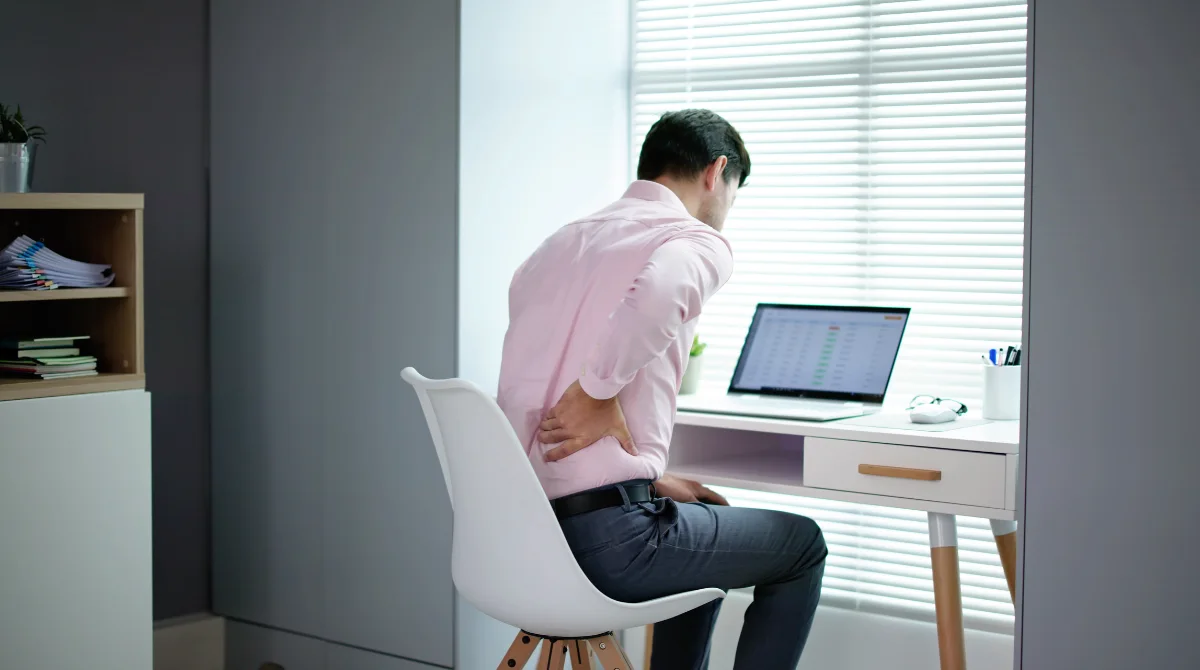
Yes. Research has found a statistically significant connection between mattress age and back pain severity.
A hospital-based sample study of 130 patients with low back pain found a positive correlation (r = 0.250, p = 0.004) between mattress usage duration and pain severity. The average mattress age among these patients was 7.18 years.
Separate research in the Journal of Pakistan Medical Association found that 50.4% of young adults using mattresses older than three years reported low back pain— higher than those with newer mattresses.
Key Research Findings:
- Correlation between mattress age and back pain severity: r = 0.250, p = 0.004
- 50.4% of young adults with mattresses >3 years reported low back pain
- Average mattress age among low back pain patients: 7.18 years
- 78.46% of patients reported moderate disability levels
These findings matter because 8.2% of American adults experience chronic severe back pain. Among older adults, up to 75% experience low-back pain, with 60% reporting sleep problems due to it, according to the National Council on Aging.
Low back pain is common, and sleep can be affected by discomfort—though causes vary by person.
How Old Mattresses Cause Pain: The Biomechanics
Material degradation doesn't happen all at once. It's gradual, invisible, and begins years before you notice visible sagging.
Five mechanisms drive mattress-related back pain:
- Foam cell collapse — Repeated compression breaks down cellular structure, reducing pressure relief capacity
- Coil tension loss — Metal fatigue causes springs to lose their ability to return to original shape
- Uneven pressure distribution — Weight concentrates on bony prominences (shoulders, hips) instead of distributing evenly
- Spinal misalignment — Sagging forces the spine into lateral bending positions it wasn't designed to maintain for hours
- Nociceptor activation — Localized pressure can contribute to discomfort in sensitive areas for some sleepers, which may lead to repositioning and non-restorative sleep.
Research published in Novelty Journals found that among adults aged 65-70, low back pain was significantly more common in those using firm (16.4%) or foam (53.3%) mattresses compared to spring mattresses (30.3%), with a statistically significant effect of mattress type on pain level (p < 0.001).
The critical insight: support loss occurs before visible wear appears. Your mattress can look perfectly fine while actively contributing to your pain.
The Morning Pain Pattern
Some people notice morning discomfort is worse on waking and improves after they get moving.
This pattern occurs because an unsupportive surface maintains sustained pressure on muscles and joints throughout 6-8 hours of sleep. Once you stand and move, that pressure releases and pain subsides.
If you notice morning pain improves after moving, your sleep setup (including mattress/pillows) could be one contributing factor. Pain that is severe, persistent, worsening, or associated with numbness/tingling/weakness warrants medical evaluation.
Real users frequently describe this exact pattern. As one person shared on r/Mattress:
"I was waking up several times a night with lower back pain. By morning I would have full-on muscle spasms and terrible pain until I was up and moving around. I switched from a foam mattress to a hybrid with inner springs for support. For me, having a medium-firm vs soft mattress helped so much. I NEVER have pain now and sleep all night. For reference, I'm a 5'10, 140-pound side sleeper. I'll never get another foam mattress."
The Hotel Test
Better sleep on hotel beds, guest rooms, or vacation rentals compared to your home mattress strongly indicates your current mattress is the problem.
According to Sleep World, consistently waking up pain-free elsewhere highlights inadequate support, pressure relief, or comfort in your home mattress.
What to observe when sleeping away from home:
- Do you wake up with less stiffness?
- Do you fall asleep more easily?
- Do you feel more rested in the morning?
- Does your back pain improve or disappear?
This comparison may help you notice whether your sleep environment is a contributing factor, though it can’t rule out other causes.
This diagnostic approach resonates with many users. As one commenter noted on r/Mattress:
"I realized a lot of my prior shoulder pain was due to too firm mattress after I realized I always felt better during hotel stays."
The 1.5-Inch Rule: When Sagging Becomes Harmful
Most discussions of mattress wear fail to specify how much sagging causes problems.
How to measure sagging:
- Lay a straightedge or taut string across the mattress surface
- Measure the distance from the string to the lowest point of any depression
- If that measurement exceeds 1.5 inches, your mattress is likely contributing to back pain
When your midsection sinks into a depression, your spine curves in a direction it shouldn't maintain for extended periods. Muscles that should relax during sleep instead work to stabilize against this unnatural position. Over hours, this sustained effort produces the stiffness and pain you feel upon waking.
Signs Your Mattress Needs Replacing
Immediate red flags requiring replacement:
- ☐ Visible sagging or dips exceeding 1.5 inches
- ☐ Body impressions that don't recover after hours
- ☐ Waking up with pain that improves after rising
- ☐ Better sleep on other surfaces (hotel test positive)
- ☐ Squeaking, creaking, or grinding sounds with movement
- ☐ Lumps or uneven surface you can feel while lying down
- ☐ Springs you can feel through the comfort layers
- ☐ Mattress older than support lifespan for its type
According to the Sleep Foundation, additional indicators include increased tossing and turning, overheating during sleep, and musty odors indicating mold or mildew growth.
Mattress Lifespan vs. Pain Threshold: The Hidden Gap
Industry guidelines state mattresses last 7-10 years. These figures refer to when a mattress reaches obvious failure—not when it begins causing problems.
Support loss occurs earlier than visible deterioration:
Sources: Sleep Foundation, Diamond Mattress
Americans replace mattresses every 9.6 years on average, according to 2024 Better Sleep Council research. Some studies suggest households keep mattresses 13.9 years before discarding them. Both timelines exceed the support lifespan of most mattress types by 2-6 years.
This gap explains a common frustration: your mattress "looks fine," but your body is telling you something is wrong. The research showing mattresses older than three years correlate with increased back pain suggests the pain threshold arrives years before the mattress appears to need replacement.
One Reddit user captured this frustration perfectly on r/Frugal:
"This is a scenario where it isn't worth being frugal or cheap. Saving a few dollars will cost the health of your back."
Why Firmness Recommendations Often Fail
Systematic reviews suggest medium-firm mattresses often perform well for comfort, sleep quality, and spinal alignment, but results vary by person and mattress design.
A study of over 300 people with low back pain found those using medium-firm mattresses reported the least discomfort after 90 days, as reported by WebMD.
Generic recommendations fail because optimal firmness depends on individual factors:
Firmness Guide by Body Weight:
- Under 150 lbs: Soft to medium (4-6/10) — allows contouring without misalignment
- 150-200 lbs: Medium-firm (5-7/10) — balances support and pressure relief
- Over 200 lbs: Firm (7-8/10) — prevents excessive sinkage into the surface
Note: Sleep position and hip width also affect ideal firmness. Wider hips may need softer give for proper alignment.
If a mattress is too soft, some sleepers experience excessive midsection sink that can affect spinal alignment; if it’s too firm, some experience pressure discomfort at the hips/shoulders.
The Couples Problem
Partners with different body types, sleep positions, or firmness preferences face a fundamental problem with conventional mattresses. A surface that properly supports one sleeper may be inadequate for the other. Traditional mattresses force compromise—often meaning neither partner receives optimal support.
This compounds over time. Each side develops different wear patterns based on body weight and sleep position. One partner may create deeper impressions while the other side remains firmer. The mattress degrades unevenly, creating different support profiles that were never designed to work together.
Why Passive Mattresses Eventually Fail
All foam materials undergo cellular breakdown through repeated compression. Each time you lie down, foam cells compress and release. Over thousands of cycles, they lose their ability to fully recover. Heat accelerates this process.
Coils experience metal fatigue. Springs designed to flex repeatedly eventually lose temper—the metallurgical property that allows them to return to original shape.
Some retailers argue flippable designs may distribute wear more evenly, but lifespan depends heavily on materials, build quality, and use. The industry shift to single-sided construction concentrated all wear on one surface, accelerating degradation.
This creates an inevitable cycle: purchasing a new passive mattress restarts degradation from day one. Materials begin breaking down immediately, eventually reaching the same inadequate support that prompted replacement.
One user on r/Mattress shared a common experience with this cycle:
"Absolutely. Everytime I get lower back pain I know it's time to get a new mattress. Problem is I only get about 18 months out of a mattress before support is lost."
Active Sleep Technology: Breaking the Degradation Cycle
Passive vs. Active Mattress Technology:
Research published in PMC summarizes studies of active-control bedding systems that adjust zonal stiffness and reports improvements in perceived sleep quality in active versus inactive modes in some trials.
In hospital pressure-injury care, a 2024 study in the British Journal of Hospital Medicine found an AI-powered pressure-reducing mattress achieved 99% body curve fit through dynamic adjustment, with significantly lower sleep disturbance scores (p < 0.05).
The fundamental difference: active technology maintains support through mechanical adjustment rather than depending on materials that inevitably lose their properties.
Bryte: Active Pressure Relief for Back Pain
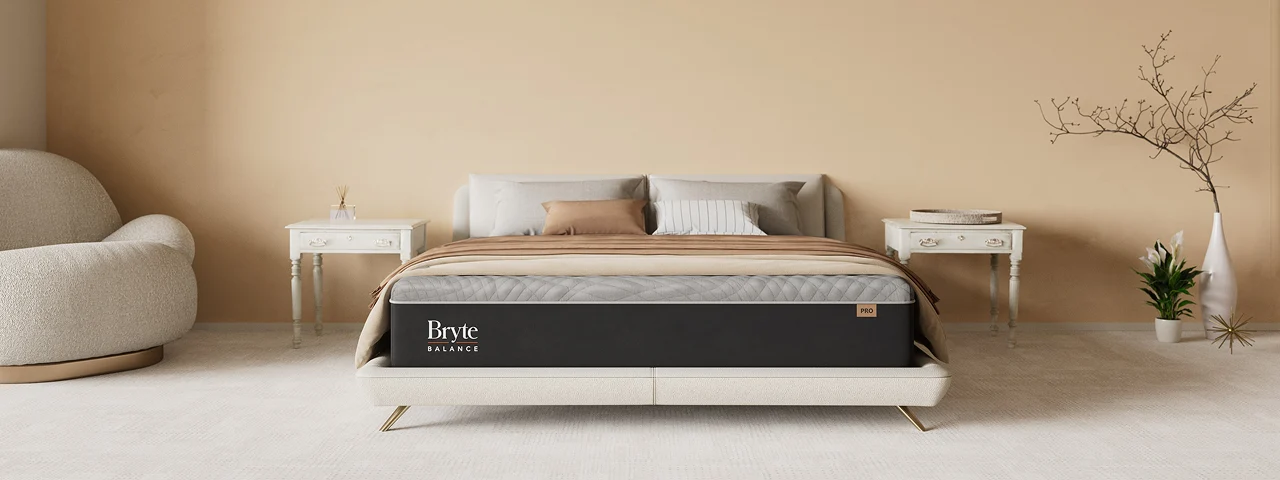
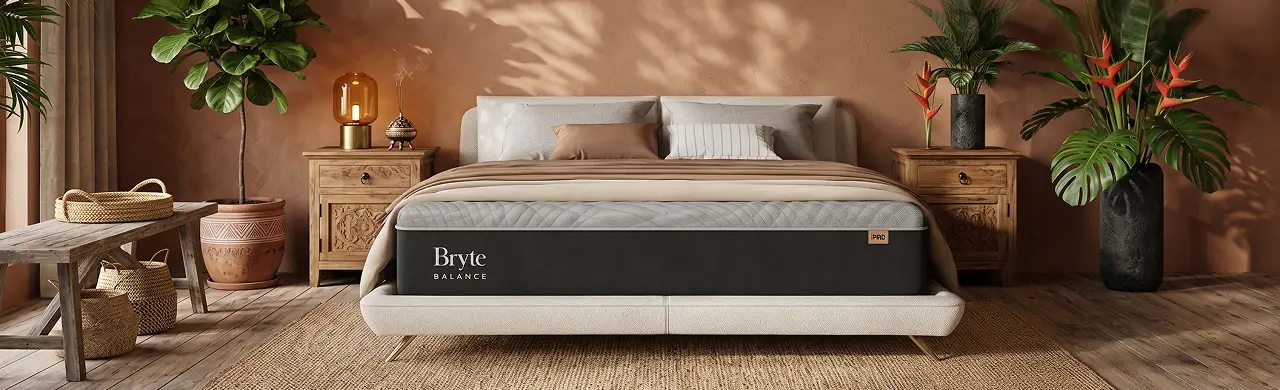
Bryte’s smart bed platform is designed to adjust support and pressure distribution in real time rather than relying only on passive cushioning.
The Bryte Adaptive Core contains up to 90 intelligent, pneumatic Bryte Balancers organized into 16 independent zones—8 per sleeper. These sensors actively detect pressure and adjust firmness in real time, making silent, automatic corrections when they detect imbalances. This alleviates pressure points as they develop rather than simply cushioning against them.
How Bryte addresses the core problems:
- Material degradation → Mechanical adjustment maintains support regardless of material age
- Generic firmness → Guided Comfort Tailoring suggests starting comfort settings based on user inputs and sleep data patterns
- Couples compromise → Dual Comfort Design allows each partner independent control (0-100 firmness scale)
- Position changes → Real-time response to movement throughout the night
- Static technology → Over-the-air software updates improve the sleep experience over time
PRO models add Individual Zone Control for specific areas like lower back adjustment, plus Contour profiles optimized for back, side, or stomach sleepers.
What to Expect After Replacement
Clinical research shows that switching from an old mattress to a new one reduces back pain, with improvement appearing to progressively increase over the first four weeks and positive effects lasting through 5-6 month follow-up periods.
Realistic timeline:
- Week 1-2: Adjustment period; body adapting to new support profile
- Week 2-4: Progressive improvement in morning pain and stiffness
- Month 2-3: Established sleep patterns; reduced pain becoming consistent
- Month 4-6: Long-term benefits stabilized
Some initial discomfort during the adjustment period is normal. Your body has adapted to your old mattress's inadequate support, and proper alignment may feel unfamiliar at first.
Frequently Asked Questions
Can an old mattress really cause back pain?
Yes. Research shows statistically significant correlation (r = 0.250, p = 0.004) between mattress age and back pain severity. Mattresses older than 3 years are associated with increased low back pain in multiple studies.
How do I know if my mattress is causing my back pain?
Check for the morning pain pattern: pain worst upon waking that improves within 30-60 minutes of getting up. Also apply the hotel test—if you consistently sleep better on other surfaces, your mattress is likely contributing.
Quick diagnostic checklist:
- Morning stiffness that improves with movement
- Better sleep on hotel/guest beds
- Sagging exceeding 1.5 inches
- Mattress older than support lifespan for its type
How old is too old for a mattress?
Support loss begins before visible wear:
- Innerspring: 5.5-6.5 years
- Memory foam: 6-7 years
- Hybrid: 6.5-7.5 years
- Latex: 7.5-8.5 years
If your mattress exceeds these thresholds and you're experiencing morning pain, age is likely a contributing factor.
Can a mattress cause back pain even if it doesn't look worn?
Yes. Some people report that comfort and support can decline before obvious visible wear appears. Foam cell collapse and coil tension loss happen gradually, reducing support capacity while the surface appears intact.
How much mattress sagging is too much?
Indentations exceeding 1.5 inches signal significant sagging causing potential chronic pain due to spinal misalignment. Beyond 2 inches requires replacement regardless of mattress age.
Do smart mattresses actually help with back pain?
Research supports active technology. Studies show significant comfort improvements (p ≤ 0.05) with smart bed adjustments, and active-control systems achieved 99% body curve fit through dynamic adjustment. The key advantage: maintaining support through mechanical adjustment rather than depending on degrading materials.
How long does it take for a new mattress to help back pain?
Expect progressive improvement over 4 weeks, with lasting benefits at 5-6 months. Initial adjustment period (1-2 weeks) is normal as your body adapts to proper support after compensating for an inadequate surface.
Content Disclaimer
This information is for general educational use and is not medical advice. We suggest that individuals with chronic pain or underlying health conditions consult with a medical professional. Keep in mind that any individual results discussed are anecdotal and may not be representative of typical performance.
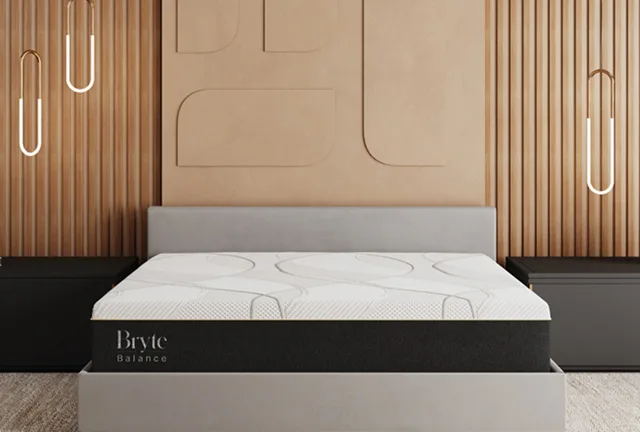
Shop Bryte Beds
From the Park Hyatt New York to Rosewood Miramar Beach, thousands of guests have experienced Bryte in the world’s top hotels—now it’s your turn.