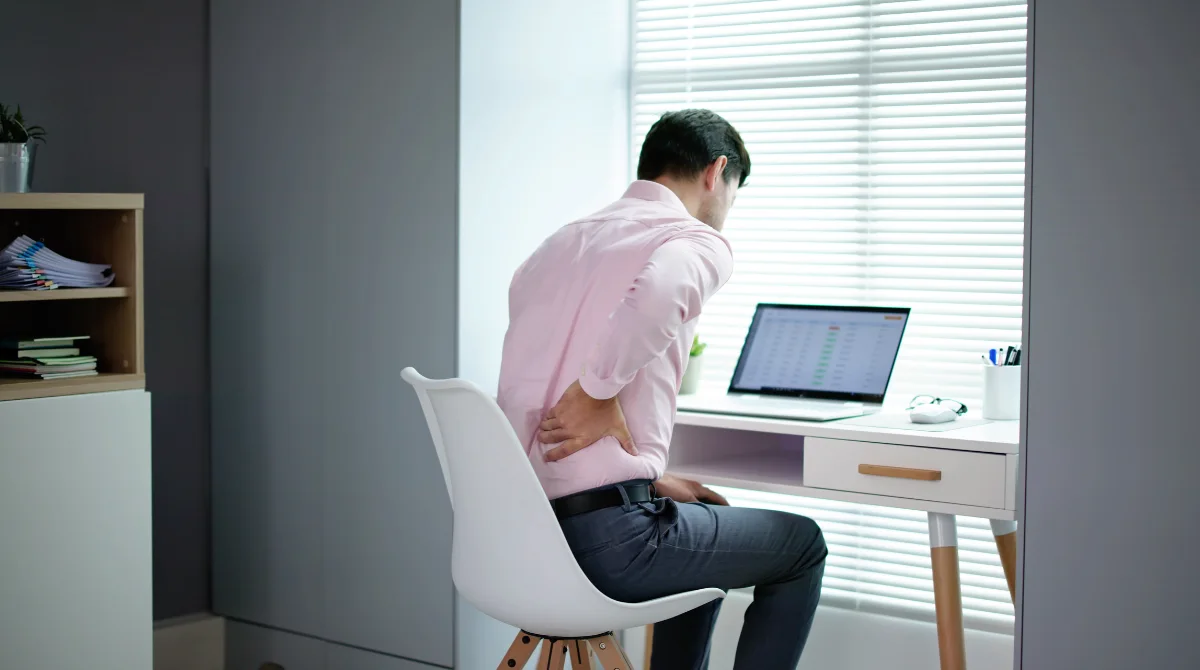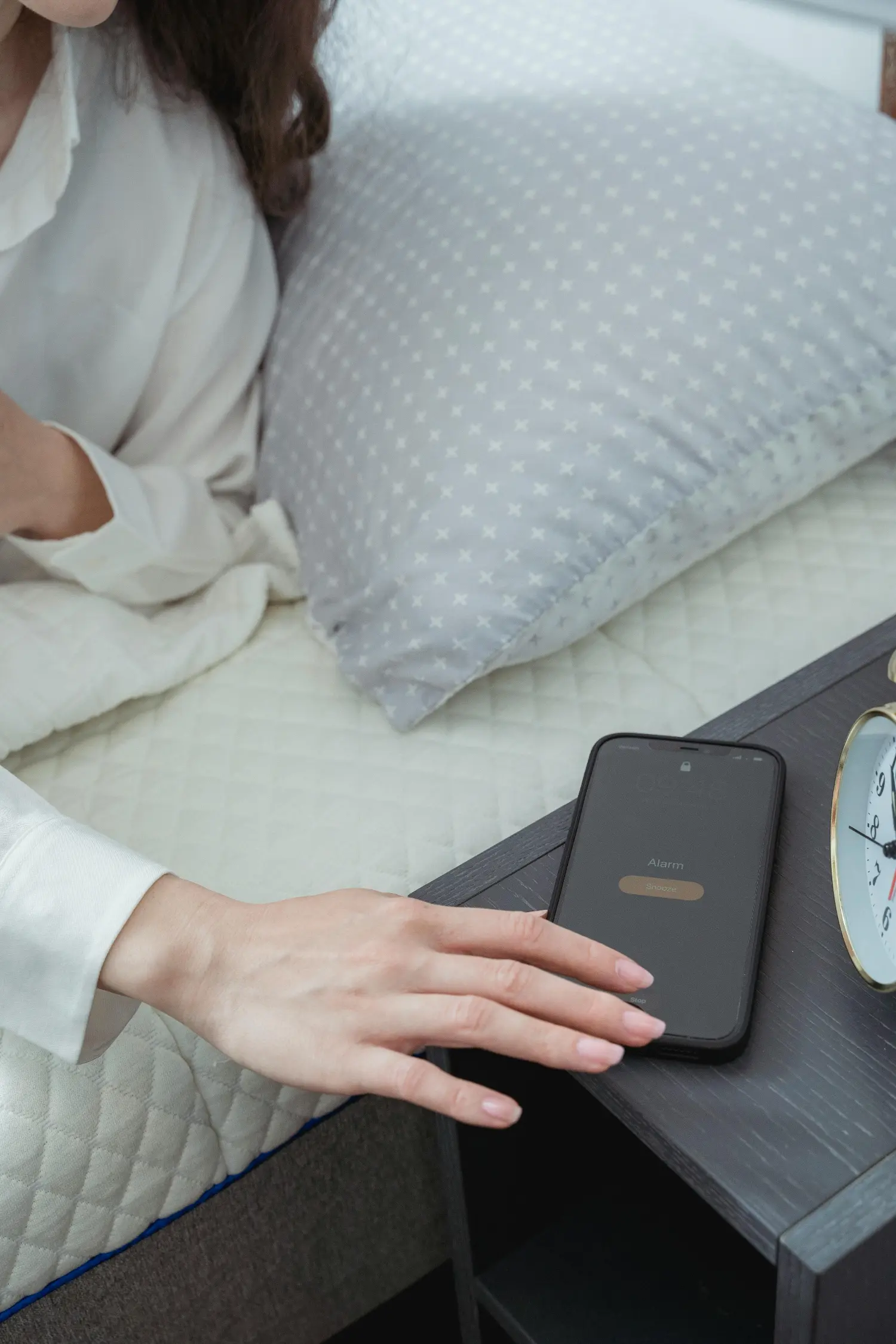
Non-restorative sleep describes a pattern where you sleep for an apparently adequate duration but wake feeling unrefreshed, fatigued, or physically unrested.
Unlike insufficient sleep—where the problem is simply not enough time in bed—non-restorative sleep can occur when sleep is fragmented or when deeper restorative stages are reduced, so you wake feeling less recovered than expected.
You go to bed at a reasonable hour. Sleep through the night. Wake after eight hours. And still feel exhausted.
The experience is common.
According to research published in JAMA Internal Medicine, non-restorative sleep affects 10.8% of the general population in European countries. In the United States, the numbers are starker: 32.9% of adults report experiencing non-restorative sleep, and a nationally representative survey in Frontiers in Sleep found that only 28.1% of U.S. adults achieve high restorative sleep scores.
Less than three in ten Americans wake up feeling truly rested.
Symptoms of Non-Restorative Sleep
Non-restorative sleep manifests through recognizable patterns that distinguish it from simply "not sleeping enough."
Primary symptoms include:
- Persistent fatigue despite adequate sleep duration (7-9 hours)
- Morning grogginess that doesn't resolve with coffee or movement
- Cognitive dysfunction—difficulty concentrating, memory lapses, slower reaction times
- More aches or soreness, often at common contact areas such as the shoulders, hips, and lower back
- Mood disturbances—irritability, reduced emotional resilience, flattened affect
- Waking feeling worse than before sleep
Secondary manifestations:
- Frequent morning headaches
- Stiffness that resolves within an hour of waking
- Reliance on caffeine to function at baseline
- Declining work performance without clear cause
- Sense that sleep "doesn't count" no matter how long you stay in bed
The distinction matters: insufficient sleep often improves with more time asleep, while non-restorative sleep may persist even when duration is adequate—especially if sleep is fragmented or disrupted.
This experience resonates deeply with many people struggling to understand why adequate sleep hours don't translate to feeling rested. As one user shared on r/sleep:
"Dont focus on sleep quantity, rather focus on sleep quality. Seems like your natural circadian rhythm misaligned, that leading to suboptimal sleep quality despite adequate hours. Even if you are waking consciously during the night, microarousals (brief awakenings) could disrupt sleep cycles without realizing it. The vivid dreams indicate heightened brain activity, possibly due to underlying factors like overstimulation before bed."
Why Do You Wake Up Tired After 8 Hours of Sleep?
One possible contributor is sleep fragmentation, including micro-arousals—brief brain activity shifts lasting 1.5 to 15 seconds that fragment your sleep without producing any conscious memory.
You might feel like you slept through the night, and consumer trackers may not show obvious awakenings. But some people experience subtle fragmentation that reduces how restorative sleep feels.
Research from the Journal of Clinical Sleep Medicine demonstrates that even arousals under 15 seconds—which you will never recall—increase objective daytime sleepiness. A study in Dove Press found that frequent brief arousals can worsen next-day sleepiness and performance, especially when repeated across multiple nights
What triggers these invisible disruptions:
- Physical discomfort from pressure points at shoulders, hips, lower back
- Partner movement transferring through the mattress
- Elevated cortisol from stress maintaining hyperarousal
- Temperature fluctuations during sleep cycles
- Environmental noise below conscious awareness threshold
- Underlying sleep disorders like sleep apnea or restless legs syndrome
- Pain creating arousal signals that fragment sleep architecture
The cruel irony: you're doing everything right—going to bed on time, staying asleep—yet invisible factors prevent your body from actually recovering.
The Sleep Cycle Problem: How Fragmentation Destroys Quality
Sleep occurs in 90-120 minute cycles. Each cycle progresses through stages with distinct biological functions:
Deep sleep is associated with physical recovery processes and is often linked with how refreshed people feel the next day.
According to the Cleveland Clinic, without sufficient deep sleep, individuals feel tired regardless of total sleep duration.
REM sleep handles cognitive recovery. Memories consolidate. Emotions process. Learning integrates.
When micro-arousals fragment these cycles, neither process completes.In some clinical populations, the fragmentation index reaches 26-39 arousals per hour. Even at lower levels, the cumulative effect prevents the consolidated periods necessary for restoration.
The result: eight hours in bed, but the biological equivalent of far less actual sleep.
Causes of Non-Restorative Sleep
Non-restorative sleep stems from factors that trigger micro-arousals or prevent deep sleep stages from completing. Understanding which factors apply to your situation enables targeted intervention rather than generic advice.
1. Pressure Point Discomfort
73% of adults sleep in lateral (side) position, according to PMC research. This concentrates body weight at shoulders and hips—the same areas where morning soreness most commonly appears.
When pressure accumulates, your body instinctively shifts to redistribute weight. Each adjustment potentially triggers a micro-arousal. You don't remember moving. You just wake up exhausted with sore shoulders.
Some clinical and rehab references note that prolonged side-lying can be associated with neck or back discomfort in certain sleepers—especially when the sleep surface doesn’t distribute pressure well. Physiopedia notes that side-lying posture results in sleep-related musculoskeletal problems including neck and back pain. Traditional mattresses respond passively: they compress under load and their pressure distribution characteristics don’t change dynamically during the night.
The frustration of trying to find the right sleep surface is a common experience. As one user described on r/Mattress:
"I can say without a doubt that the soft coil spring mattress that I had did cause lower back issues. After 10 months that mattress was gone and I bought a firm coil spring. My lower back was better, but my shoulders started to hurt right from the beginning. I discarded that one and got a medium hybrid. I no longer have nighttime shoulder or back pain. I sleep better and longer."
2. Partner Movement
Sleep disruption from a partner is commonly reported in surveys; for example, 56% of coupled adults are woken by their partner two or more nights weekly, according to a Sleepopolis survey. The problem has grown severe enough that 31% of U.S. adults now practice "sleep divorce"—sleeping in separate beds or rooms. Among adults 35-44, that figure rises to 39%.
Motion transfer operates below conscious awareness. Your partner shifts position. The movement travels through the mattress. Your brain registers it as environmental change requiring vigilance. You experience a micro-arousal without ever waking.
Research in PMC found that women living with snoring partners are three times as likely to report insomnia symptoms compared to those with non-snoring partners.
3. Cortisol and Stress
The stress hormone cortisol should decline throughout the evening to allow sleep onset. Chronic stress disrupts this pattern.
Research in PMC demonstrates that evening cortisol levels predict nighttime awakening frequency.
Elevated stress physiology (including HPA-axis activation) is associated in research with lighter, more fragmented sleep. Psychology Today summarizes this relationship and links it to reduced slow-wave sleep and more restless nights.
The cycle self-perpetuates: Stress elevates cortisol → cortisol fragments sleep → fragmented sleep elevates next-day cortisol → repeat.
This vicious cycle is something many people recognize in their own experience. As one user explained on r/sleep:
"My best guess right now is cortisol. It sharply rises at about 3, just as melatonin starts to fall. Sleep deprivation as a stressor pushes cortisol production, this could be a reason for shortened sleep after a bad night. Cortisol levels have a higher baseline and cross the wake-up threshold too early in the morning. Storming thoughts and the 'restless energy ball' feeling would also fit."
4. Sleep Surface Inadequacy
A study in PMC found that 93% of people recognize their mattress plays a pivotal role in sleep quality. Research from RTI International demonstrated that self-reported sleep quality improved by 13% on beds with the lowest motion compared to other beds tested (p<0.0001).
The distinction that matters: a mattress that feels comfortable when you lie down may not support quality sleep throughout the night. Passive cushioning addresses comfort at a single moment. What happens during the 6-8 hours that follow depends on how the surface responds to pressure accumulation and movement.
5. Underlying Medical Conditions
Red flags requiring medical evaluation:
- Loud snoring with gasping or choking sounds
- Witnessed pauses in breathing during sleep
- Morning headaches (present in up to 30% of sleep apnea cases, per AARP)
- Resistant hypertension (blood pressure that remains elevated despite medication)
- Uncomfortable leg sensations with irresistible urge to move
Non-restorative sleep is commonly reported in conditions such as fibromyalgia and ME/CFS. Some studies reveal that among people with fibromyalgia, 65-95% report non-restorative sleep. Among those with ME/CFS, 85-95% experience it.
Environmental Causes vs. Medical Red Flags
Distinguishing between factors you can address and conditions requiring medical evaluation prevents both unnecessary anxiety and delayed treatment.
If red flags are present: Consider discussing symptoms with a clinician, who may recommend a sleep study (polysomnography) if appropriate. Conditions like sleep apnea require diagnosis and treatment before environmental optimization will help.
If red flags are absent: Environmental factors likely contribute significantly. Sleep surface optimization, motion isolation, and stress management represent evidence-based starting points.
Both can coexist. Some people have sleep apnea AND an inadequate sleep surface. Treating the medical condition doesn't eliminate the value of also optimizing the environment.
Why Morning Soreness Isn't "Just Aging"
Here's a statistic that challenges assumptions: non-restorative sleep prevalence actually decreases with age. According to the JAMA study, NRS affects 6.3% of adults aged 20-29 versus 3.7% of those 60 and older.
NRS "affected more frequently the active classes of the population."
This pattern contradicts the common assumption that waking up tired and sore is an inevitable consequence of getting older. While age-related changes in sleep architecture do occur—deep sleep drops from ~20% of total sleep time in those under 25 to less than 5% in those over 35, per University of Chicago research—these changes make sleep optimization more important, not less relevant.
Signs your morning soreness is environmental rather than age-related:
- Soreness concentrated at mattress contact points, not joints
- Stiffness resolves after 30-60 minutes of movement
- Soreness varies based on which position you slept in
- You sleep better in hotel beds or guest rooms
- The problem has worsened since your mattress aged
The attribution error—blaming aging for what's actually environmental—leads working-age adults to accept preventable deterioration for years.
The Pain-Sleep Bidirectional Cycle
Non-restorative sleep and physical pain reinforce each other. According to research in the IASP Pain journal, 67% of participants with back pain reported sleep disturbance. The rate climbs to 76% among those with chronic pain.
The cycle operates in both directions:
- Poor sleep → reduced tissue repair → increased inflammation → heightened pain sensitivity
- Elevated pain → more micro-arousals → fragmented sleep architecture → reduced restoration
- Repeat
Breaking this cycle requires addressing both directions. Pain management alone doesn't resolve sleep fragmentation from pressure points. Sleep improvement alone doesn't resolve underlying pain generators. But reducing environmental sleep disruption—particularly pressure accumulation that triggers both movement and pain—can interrupt the cycle at multiple points.
Active Pressure Relief: A Different Approach
Traditional mattresses operate through passive cushioning. They compress under body weight, distribute pressure through material compliance, and remain static throughout the night. A softer mattress may feel comfortable at bedtime. But comfort at 10 PM doesn't guarantee quality sleep at 3 AM when pressure has accumulated at your hip for hours.
The distinction between passive and active:
- Passive cushioning: Mattress compresses, feels comfortable initially, stays compressed regardless of what happens during the night
- Active Pressure Relief: The sleep surface actively senses pressure accumulation and removes it in real-time, resolving developing discomfort before it triggers arousal
Sleep surfaces with active response capabilities don't wait for you to shift position and relieve pressure through your own movement (which triggers micro-arousals). They address developing pressure points before the cycle of discomfort → movement → arousal begins.
Research from RTI International found that motion isolation alone—preventing partner movement from transferring across the bed—improved sleep quality by 13% with statistical significance (p<0.0001). Active pressure management adds another layer of fragmentation prevention.
Technology for Couples: Alternatives to Sleep Divorce
The 31% sleep divorce rate reflects a real problem without a satisfactory solution. Separate beds preserve sleep quality but sacrifice intimacy. Shared beds preserve intimacy but compromise sleep.
For many couples, the decision to sleep separately has been transformative despite initial concerns. As one user shared on r/AskWomenOver30:
"I have insomnia and he has sleep apnea. Genuinely thought we'd have to separate for a while when his snoring got really bad and I became super grumpy from no sleep. Separate rooms saved our marriage"
Dual-zone sleep technology addresses this trade-off:
- Independent firmness control: Each partner sets their own preference without compromise
- Motion isolation: Movement on one side doesn't transfer to the other
- Separate temperature zones: Different thermal preferences accommodated simultaneously
- Individual sleep data: Each person tracks their own patterns
The goal isn't eliminating all awareness of your partner. It's preventing their normal sleep movements from fragmenting your sleep architecture dozens of times per night.
Addressing the Cortisol-Fragmentation Loop
When stress contributes to non-restorative sleep, addressing it requires intervention at multiple points.
Breaking the cycle:
- Reduce physical arousal triggers: Pressure relief and motion isolation prevent the micro-arousals that elevate cortisol
- Lower pre-sleep cortisol: Relaxation techniques, breathwork, or calming audio help establish lower cortisol at sleep onset
- Improve sleep environment quality: Research in PMC shows that restored circadian alignment substantially reduces 24-hour cortisol
- Address daytime stress sources: Sleep optimization alone won't overcome chronic HPA activation from unmanaged stress
Reducing stress without fixing physical triggers leaves micro-arousals intact. Fixing physical triggers without addressing stress leaves hyperarousal intact. The most effective approach addresses both.
The Economic Reality of Poor Sleep
Non-restorative sleep isn't just a quality-of-life issue. According to Gallup research, poor sleepers miss 2.29 unplanned workdays monthly—more than double the 0.91 days for other workers. This translates to $44.6 billion in annual U.S. productivity losses.
Individual-level costs reach $2,280-$3,274 per worker annually when accounting for salary, benefits, and reduced performance.
The framing matters: investing in sleep optimization isn't indulgence. It's addressing a measurable performance impairment with documented economic consequences.
Frequently Asked Questions
Is non-restorative sleep the same as insomnia?
No. Insomnia involves difficulty falling asleep or staying asleep. Non-restorative sleep occurs when you sleep adequate hours but wake unrefreshed. You can experience NRS without any trouble falling or staying asleep—and research shows NRS often occurs independently of other insomnia symptoms.
Can my mattress cause non-restorative sleep?
Yes. A mattress can be a contributing factor for some people. Localized discomfort can lead to more position changes and subtle sleep fragmentation that you may not remember
Key indicators:
- Morning soreness at shoulders, hips, or lower back
- Better sleep in hotel beds or guest rooms
- Mattress is 7+ years old
- Firmness no longer matches your preference
Why do I wake up sore every morning?
Morning soreness typically results from pressure accumulation during sleep. Side sleepers (73% of adults) concentrate weight at shoulders and hips. When the sleep surface doesn't adequately distribute this pressure, tissue compression occurs throughout the night.
If soreness improves after you get up and start moving, it can be consistent with pressure-related discomfort from prolonged positioning, but it doesn’t rule out medical causes—especially if symptoms are persistent, severe, worsening, or accompanied by other red flags.
When should I see a doctor about non-restorative sleep?
Seek evaluation if you experience:
- Loud snoring with gasping or choking
- Partner witnesses breathing pauses
- Morning headaches most days
- Resistant hypertension
- Symptoms persist despite environmental optimization
A sleep study can diagnose conditions like sleep apnea that require medical treatment.
How long does it take to see improvement from changing my sleep environment?
Some people notice differences within days to a few weeks after making sleep-environment changes, but timelines vary.
Pressure-related soreness often improves within the first few nights. Changes in overall sleep quality and daytime energy typically become apparent within 2-4 weeks as sleep architecture stabilizes with fewer fragmentation triggers.
Can stress alone cause non-restorative sleep?
Stress contributes but rarely acts alone. Elevated cortisol lowers the arousal threshold, making you more susceptible to physical triggers. Addressing stress without fixing environmental factors (pressure, motion transfer) leaves those triggers intact. The most effective approach addresses both the stress response and the physical causes of fragmentation.
Key Takeaways
- Non-restorative sleep is a recognized condition affecting 32.9% of U.S. adults, characterized by adequate sleep duration but inadequate restoration
- Only 28.1% of Americans achieve high restorative sleep scores—the majority wake unrested
- Micro-arousals lasting 1.5-15 seconds fragment sleep without conscious memory, preventing completion of restorative processes
- Pressure points and partner movement trigger micro-arousals that you won't remember but will feel the effects of
- Morning soreness often indicates environmental causes (pressure accumulation) rather than inevitable aging
- Non-restorative sleep affects younger adults more (6.3% at ages 20-29 vs. 3.7% at 60+), suggesting environmental factors play a larger role than assumed
- Red flags like gasping, witnessed breathing pauses, or resistant hypertension warrant medical evaluation
- Active sleep surfaces that adjust to pressure in real-time address fragmentation causes that static mattresses cannot
The path forward depends on identifying which factors apply to your situation. When red flags are absent and morning soreness concentrates at pressure points, environmental optimization—particularly sleep surface technology that actively manages pressure and isolates motion—represents an evidence-based intervention for the invisible fragmentation stealing your rest.
Content Disclaimer
This article references individual sleep experiences shared on public discussion forums to illustrate common patterns. These examples are not clinical evidence and should not be treated as diagnostic guidance.
This content is informational and does not provide medical diagnosis or treatment. Symptoms of non-restorative sleep can be associated with underlying sleep disorders that require professional evaluation.
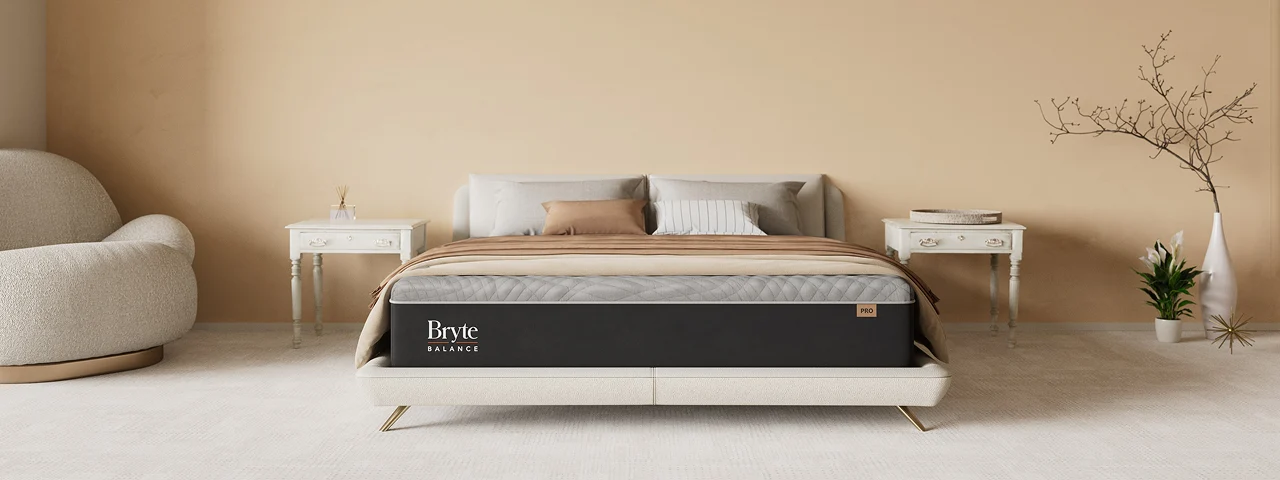
Shop Bryte Beds
From the Park Hyatt New York to Rosewood Miramar Beach, thousands of guests have experienced Bryte in the world’s top hotels—now it’s your turn.