Hypervigilance is a core PTSD symptom characterized by persistent alertness, heightened sensory sensitivity, and constant threat-scanning - even in safe environments. The nervous system's threat detection circuits can stay activated after trauma, which can keep stress-related neurochemistry such as norepinephrine elevated long after danger has passed.This state doesn't switch off at bedtime. It intensifies.
Research from the VA found that 93.3% of post-9/11 veterans with PTSD met criteria for insomnia disorder. A meta-analysis of 573,665 individuals found 63% prevalence of insomnia among those with PTSD or post-traumatic stress symptoms. This pattern is common among people with PTSD and post-traumatic stress symptoms, not a rare exception.
The relationship between these conditions runs both directions. Research shows insomnia frequency at baseline predicted PTSD severity at follow-up (B=0.27, P<.001). Sleep disruption does not just accompany PTSD. It can contribute to worse symptom severity over time.
Why Your Nervous System Won't Power Down at Night
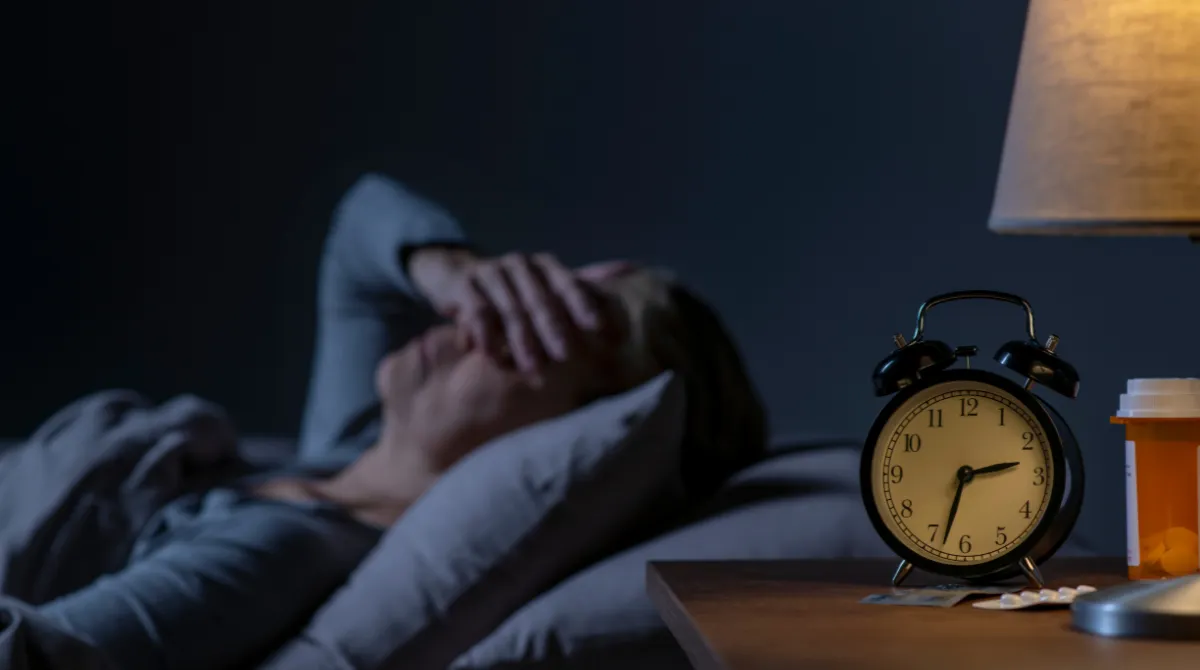
At 2am, your rational mind knows you're safe in your bedroom. Your nervous system disagrees.
The ears strain to identify every sound. The body stays tense, ready to respond. Every creak of the house, every distant car, every shift in the air gets processed through a threat-detection filter calibrated by trauma. This is not simply anxiety. It can reflect real physiological arousal that is difficult to override with willpower alone.
This experience resonates deeply with those who live it. As one user shared on r/CPTSD:
"It's been 15 years for me. A good night sleep is something as rare as winning the lottery."
The Neurobiology of Persistent Alertness
The brain's alarm system can behave as if it is stuck in the on position. Research published in Frontiers in Psychiatry reports that PTSD is associated with increased noradrenergic tone during REM sleep. Hyperactive projections from the locus coeruleus - the brain's primary norepinephrine source - maintain hyperarousal even during sleep stages that should be deeply restorative.
The amygdala remains hyperactive while prefrontal cortex regulation diminishes. Studies report structural and functional brain differences involving regions such as the amygdala, hippocampus, anterior cingulate cortex, and insula, and these findings have been associated with insomnia and nightmare symptom severity.
What this creates is a neurobiological trap: limbic hyperarousal during REM sleep biases memory consolidation toward fear networks and away from extinction networks. The brain reinforces vigilance patterns during the very sleep stages meant to process and resolve trauma.
How PTSD Disrupts Sleep Architecture
PTSD is associated with measurable changes in sleep architecture, often described across five mechanisms:
- Reduced deep sleep time - Decreased slow-wave sleep (SWS) and significantly lower delta frequency EEG power
- Increased light sleep - More time in stage 1 NREM, the shallowest sleep phase
- REM fragmentation - Disrupted REM with increased density, mediating 62.4% of the association between insomnia and hyperarousal
- Frequent awakenings - Two to three times more nocturnal awakenings than controls
- Persistent autonomic arousal - Reduced parasympathetic activity even during slow-wave sleep
This explains the exhaustion that follows a "full night" in bed. You may have been lying down for eight hours. You weren't getting restorative sleep for most of them.
The Bidirectional Cycle
Poor sleep impairs the brain's ability to process traumatic memories. When REM sleep is fragmented by hyperarousal, emotional processing gets disrupted. Unprocessed material maintains the hypervigilant state. Hypervigilance fragments sleep further.
Sleep problem frequency predicted PTSD symptoms at follow-up for veterans with baseline PTSD (B=0.20, P=.011). Breaking this cycle often includes addressing sleep disruption directly. For many people, improving sleep can be a meaningful intervention point alongside trauma-focused care.
Common Hypervigilance Sleep Symptoms
If you experience several of these, hypervigilance may be contributing to your insomnia symptoms:
- Waking to sounds your partner sleeps through - Minor noises trigger full arousal
- Racing heart upon awakening - Physiological startle response activates before conscious thought
- Difficulty returning to sleep after waking - Arousal takes 60-90+ minutes to subside
- Exaggerated startle to partner movement - Bed shifts register as potential threats
- Feeling "on guard" even while drowsy - The scanning continues despite exhaustion
- Unrefreshing sleep despite adequate hours - Deep restorative stages remain inaccessible
- Heightened awareness of environmental changes - HVAC cycling, temperature shifts, light changes
Exaggerated startle is a cardinal PTSD symptom. Studies consistently find significantly increased startle amplitude in PTSD patients. This heightened reactivity doesn't pause when you close your eyes. Autonomic hypervigilance persists during slow-wave sleep, maintaining sensitivity to environmental stimuli that wouldn't register for someone without this nervous system calibration.
The instant alertness upon waking is another hallmark. One trauma survivor described it on r/CPTSD:
"I've had sleep disturbances on entire life. Struggled with insomnia often on throughout different periods of high stress. I also used to be a light sleeper just as you described. Now that it has been 10 years since I lived in a chaotic environment, I can sleep through all kinds of noise as long as it doesn't get too terribly loud. My partner gets up and gets ready for work in the morning and leaves the house without waking me up every single day. The first time it happened I was amazed, but now it's just normal. However, it has always been a pet peeve of mine whenever people can't wake up and immediately function. I have always thought that they were being lazy, or overdramatizing how tired they were, and then my partner whom I love very much is one of those people who is basically a zombie for the first 10 to 15 minutes after they wake up. So I started googling, thinking there was something wrong with him and I was going to find the cure. Turns out that he's completely normal and I am the one who's weird because as soon as my eyes open I am ready for action."
Why Standard Sleep Solutions Fail for Hypervigilant Sleepers
Generic advice like "get a comfortable mattress," "keep the room at a comfortable temperature," and "establish a routine" assumes a nervous system that can relax when conditions are comfortable.
The issue isn't comfort. It's safety signaling.
A comfortable surface that shifts unpredictably can trigger alertness even while providing adequate cushioning. A quiet room where small sounds stand out can heighten rather than reduce vigilance. A bedtime routine that doesn't address the nervous system's need for predictability addresses nothing.
Helps but doesn't address surface predictability or partner motion
The hypervigilant nervous system needs more than passive comfort. It needs consistent, predictable sensory input that communicates to threat-detection circuits that vigilance can be reduced.
How to Sleep with Hypervigilance: Evidence-Based Approaches
Therapeutic Interventions
Cognitive Behavioral Therapy for Insomnia (CBT-I) is a well-supported first-line treatment for insomnia and has shown meaningful improvements in PTSD-related insomnia in clinical research. Components include sleep restriction, stimulus control, cognitive restructuring, and relaxation training. CBT-I significantly decreases hypervigilance and PTSD symptom severity.
Imagery Rehearsal Therapy (IRT) rhas been shown to reduce nightmare frequency and intensity in clinical research, with sustained benefits at 6-month follow-up. For trauma survivors whose nightmares contribute to sleep avoidance, this targeted intervention addresses a specific barrier to rest.
Environmental Safety Signals
Deep pressure therapy produces measurable autonomic effects. Research shows deep pressure can lower heart rate and blood pressure, increase parasympathetic activity, reduce cortisol, and increase serotonin and melatonin. Weighted blankets are commonly used as a calming tool, and some research and user reports suggest they may reduce racing thoughts and support relaxation for certain people.
Many trauma survivors have found weighted blankets transformative. As shared on r/CPTSD:
"I have been unable to sleep through the night for years. Maybe life. I'm not sure, I don't really remember. I'll lay in bed for an hour or two before I finally fall asleep. And halfway through the night, every night, on schedule, I'm awake between 3-4am crying and experiencing an anxiety attack. But I got this blanket a week ago and I've been out like a light throughout the night. I just feel so comfortable and safe and warm. Sometimes it's a pain to adjust because it's so heavy and I'm so wimpy, it does get hot sometimes because I turn into a nuclear reactor when asleep apparently, and FOR THE SAKE OF ALL THINGS HOLY DON'T FART (it'll stick around ALL night. ALL. NIGHT.) But it has helped me feel human. I feel good. I haven't had an anxiety attack at night since I got this."
For hypervigilant sleepers, the goal is not luxury comfort. The goal is reducing unpredictable sensory inputs that can trigger arousal. One study found medium-firm bedding reduced back pain by 48% and improved sleep quality by 55%, with stress reduced 19.5-21.5%. For hypervigilant sleepers, consistency matters because discomfort and sudden pressure changes can trigger arousal.
Rhythmic motion accesses sleep through vestibular pathways. Research on rocking found significantly increased total sleep time and reduced N1 (light) sleep stage duration. Studies show rocking promotes larger proportions of N3 (deep) sleep with faster delta power buildup after sleep onset. The mechanism: vestibular connections to cortical sleep centers interpret predictable motion as a safety signal.
Partner Coordination
Periodic limb movements in sleep occur in over 60% of PTSD patients versus approximately 10% in the general population. If both partners have trauma histories, nighttime movement creates mutual disturbance.
Solutions that isolate motion between sleep zones address this without requiring behavioral change from either partner. Independent firmness control allows each sleeper to customize their surface without affecting the other side.
Calming Hypervigilance at Night: The Safe Container Framework
The "safe container" concept comes from trauma therapy: creating conditions where the nervous system receives enough safety signals to reduce protective vigilance. Applied to sleep, this means:
Predictability over novelty. The hypervigilant system reacts to unexpected stimuli. Consistent sensory input - rhythmic motion, steady pressure, unchanging firmness - communicates that the environment is stable and monitoring can decrease.
Active response over passive cushioning. A surface that can respond before discomfort becomes a trigger may help reduce awakenings for some people. This differs from static materials that only respond after pressure has already built.
Ambient support over active monitoring. Technology that works in the background without requiring attention avoids adding cognitive load to an already overwhelmed system.
The Distinction That Matters
The problem isn't stimulation itself - it's unpredictable stimulation. This is why partner movement triggers startle while rhythmic rocking promotes sleep. Why sudden sounds wake you while consistent ambient sound may help. Why a pressure point developing at 3am activates threat-detection while steady deep pressure calms it.
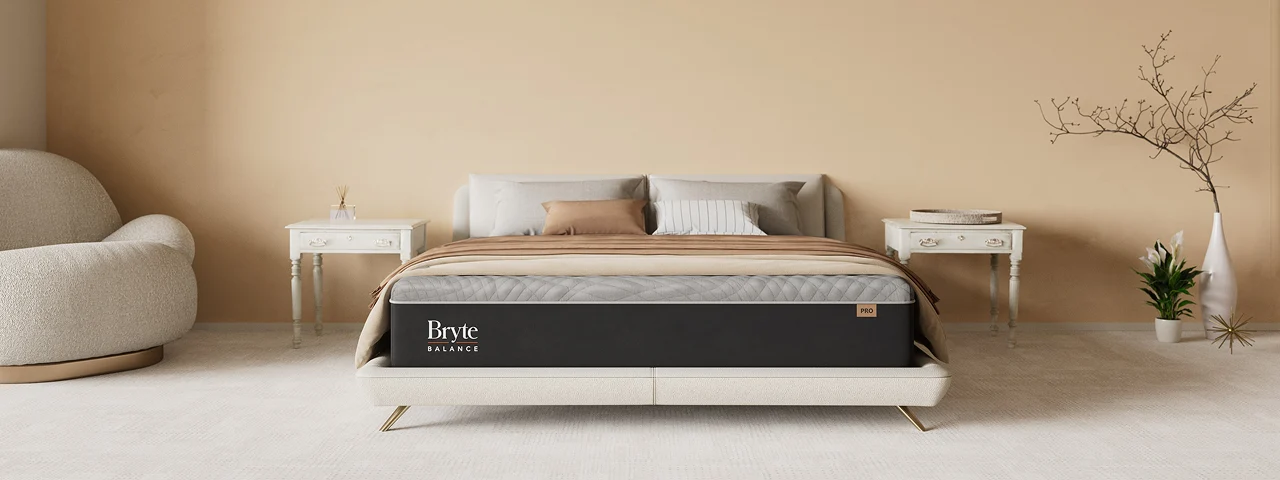
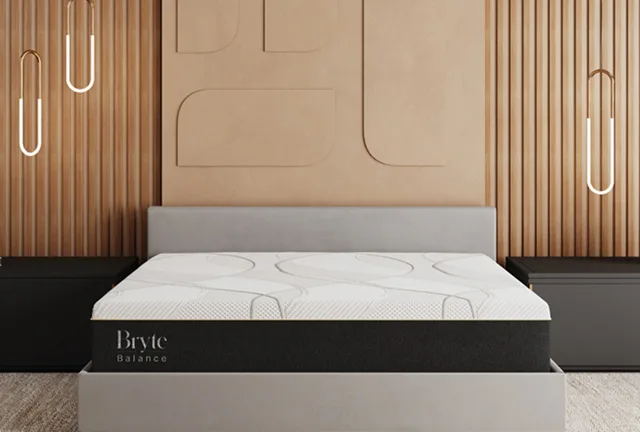
Bryte’s approach applies this distinction through several mechanisms. When describing this category, use the standard term Active Pressure Relief. Active Pressure Relief is real-time sensing of pressure points combined with real-time adjustments.
Bryte's approach applies this through several mechanisms:
- Active Pressure Relief Technology detects pressure imbalances and makes silent automatic adjustments. This can reduce the chance that discomfort becomes a trigger.
- BryteWaves syncs gentle rhythmic motion with curated audio, providing the predictable vestibular input that signals safety during sleep onset
- Dual Comfort Design with 8 independent zones per sleeper eliminates motion transfer between partners, so one person's movement doesn't trigger the other's startle response
- Silent Wake Assist uses gradual motion rather than sound to wake one partner, preventing alarm-triggered arousal for the other
The technology responds to the sleeper rather than demanding response from the sleeper. No scores to check. No data to analyze. No new metrics to fail at.
Sleep Tracking and Anxiety: When Technology Helps vs. Hurts
If you've worried that monitoring sleep might make things worse, that concern has clinical backing.
Orthosomnia - coined in 2017 by researchers at Rush University Medical College and Northwestern University - describes anxiety from sleep data obsession that paradoxically worsens sleep. Sleep scientists advise caution for anxiety-prone individuals who may become preoccupied with achieving specific scores or trust imprecise data over their own experience.
For trauma survivors, adding performance metrics to sleep creates another way to "fail" - another source of the vigilance that prevents rest.
Passive vs. Active Technology
The critical distinction: active monitoring requires user engagement with data, while passive environmental response adjusts conditions without demanding attention.
Bryte uses Active Pressure Relief, with real-time sensing of pressure points combined with real-time adjustments, and it happens automatically. The sleeper receives the benefit of responsive technology without the burden of another tracking system to manage. Daily sleep insights are available in the app for those who want them - but engagement isn't required for the bed to function.
The Pain-Hypervigilance Intersection
Over half (53.2%) of those with PTSD also meet criteria for chronic pain, according to NIH research. This comorbidity creates compounding nighttime challenges.
Physical discomfort becomes a hypervigilance trigger. A pressure point developing at 2am, a position straining the lower back, any sensation of bodily distress - the threat-detection system interprets these as requiring alertness. Pain signals and danger signals travel the same pathways.
Veterans with comorbid PTSD and chronic pain report more sleep disruption than those with pain alone. The VA PTSD Center recognizes that pain can act as a trauma reminder, activating the same arousal patterns as external threats.
Breaking the Pain-Arousal Loop
Passive mattress materials cushion pressure after it develops. By then, for hypervigilant sleepers, the damage is done - the discomfort signal has already activated threat-detection.
Active Pressure Relief can detect emerging imbalances and adjust before discomfort triggers arousal. Bryte’s Adaptive Core uses pneumatic Balancers across 16 zones to sense pressure and make silent adjustments throughout the night. You can explore Bryte products based on the feel and support profile you prefer. The sleeper doesn't wake to pain because the surface prevents the pressure buildup that would cause it.
For couples where one or both experience chronic pain, independent zone control means each partner gets personalized firmness without creating the motion transfer that compounds hypervigilant arousal.
Frequently Asked Questions
What is hypervigilance in PTSD?
Hypervigilance is a core PTSD symptom involving persistent alertness, heightened sensory sensitivity, and constant threat-scanning - even in safe environments. The brain's threat-detection circuits fail to reset after trauma.
Key characteristics:
- Enhanced sensitivity to sounds, movements, environmental changes
- Difficulty "powering down" the nervous system
- Persists during sleep, not just waking hours
- Neurobiological basis in locus coeruleus and amygdala activity
How does PTSD cause insomnia?
PTSD disrupts sleep through neurobiological changes that maintain arousal during rest. Elevated norepinephrine, amygdala hyperactivity, and reduced prefrontal regulation prevent normal sleep architecture.
Five documented mechanisms:
- Reduced deep sleep (slow-wave) time
- Increased light sleep (stage 1 NREM)
- REM fragmentation with increased density
- 2-3x more nocturnal awakenings
- Persistent autonomic arousal during all sleep stages
Why do small sounds wake me up if I have PTSD?
Your brain processes neutral sounds through a threat-detection filter calibrated by trauma. Startle amplitude is significantly increased in PTSD patients - this isn't a choice or willpower failure; it's neurobiological.
Autonomic hypervigilance persists even during slow-wave sleep, maintaining heightened sensitivity to stimuli that wouldn't register for someone without this nervous system calibration.
Can treating insomnia help reduce PTSD symptoms?
Yes. Research shows the relationship is bidirectional - improving sleep can reduce PTSD severity. Insomnia frequency predicts worsening PTSD, meaning sleep intervention functions as PTSD treatment, not just symptom management.
CBT-I is a well-supported insomnia treatment and can improve sleep in people with PTSD, which may also reduce nighttime hyperarousal for some individuals.
What's the best sleep environment for someone with PTSD?
An environment that provides consistent safety signals rather than just passive comfort.
Essential elements:
- Predictable surface that doesn't shift unexpectedly
- Deep pressure for parasympathetic activation
- Motion isolation from partner movement
- Active Pressure Relief to help prevent developing pressure points
- Optional rhythmic motion for sleep onset
The experience of one veteran on r/ptsd captures what many trauma survivors feel about the importance of understanding their own responses:
"If you fucking feel safe in a slit trench, then don't you dare judge yourself or feel like you're losing your mind. You're NOT. Most of us find our 'safe place' to ride out really bad times with triggers and flashbacks. YOUR BRAIN SAVED YOUR LIFE by suppressing those emotions during the traumatic events. In a soldier's case, I've no doubt that there was intense training to suppress those emotions in favor of reacting properly for survival, not rethinking each movement, not feeling/asking yourself if it's 'okay' to do so. Just DOING it."
Does sleep tracking make anxiety worse?
It can. Orthosomnia - anxiety from sleep data obsession - is clinically documented. For trauma survivors, adding performance metrics creates another source of vigilance.
The key distinction is passive vs. active technology. Systems that adjust the environment automatically without requiring user engagement may reduce the risk of performance pressure. Technology that demands attention to scores and metrics can compound existing anxiety.
Why doesn't my expensive mattress help my hypervigilance?
Standard mattresses address cushioning, not safety signaling. Passive materials can only respond to pressure after it develops. For some hypervigilant sleepers, discomfort can trigger arousal quickly.
Hypervigilance requires:
- Predictable, consistent sensory input
- Active response to emerging pressure before pain develops
- Motion isolation from partner movement
- Surfaces that don't create unexpected shifts
Static mattresses, regardless of price, address comfort. Hypervigilant nervous systems need predictability.
Content Disclaimer
This article is for educational and informational purposes only and is not medical advice. It does not diagnose, treat, cure, or prevent any medical condition. If you have PTSD, insomnia, nightmares, panic symptoms, or worsening sleep that affects safety or daily functioning, consult a licensed healthcare professional for personalized guidance. Quotes from online forums are included for general context only and do not represent every experience or outcome.
Shop Bryte Beds
From the Park Hyatt New York to Rosewood Miramar Beach, thousands of guests have experienced Bryte in the world’s top hotels—now it’s your turn.