You'll spend roughly one-third of your life on a mattress. Yet the decision of which one to buy often happens in a crowded showroom in under ten minutes. Or on a product page at midnight while scrolling through hundreds of reviews that contradict each other.
No wonder 29% of consumers regret their mattress purchase, making it the single most regretted home purchase category, ahead of sofas, appliances, and furniture. The most common complaint? The mattress was not the right firmness. And if you share a bed with a partner who sleeps differently than you do, the challenge doubles.
Finding the perfect mattress requires understanding five key factors:
- your sleep position and its firmness implications,
- the back pain and sleep quality connection,
- the role of stress and anxiety in sleep onset,
- couples' compatibility needs,
- and whether a passive or Active Pressure Relief mattress technology better serves your needs over time.
Here's what the research says about each, and why a fundamentally different approach to mattress technology may be the clearest path forward.
Full disclosure: This guide is published by Bryte. We built this guide based on the metrics we believe matter most for restorative sleep.
The Market Is Designed to Overwhelm You
600 Brands, No Standard Language, No Reliable Way to Compare
If mattress shopping feels impossible, it's not because you're bad at research. The market is objectively enormous. There are approximately 600 mattress companies in the United States, serviced through roughly 16,000 retail locations and around 175 direct-to-consumer "bed in a box" brands competing online. The global mattress market was valued at approximately $48.6 billion in 2024 and is projected to grow at 5.3% annually through 2034. More options, not fewer, are coming every year.
Each brand offers multiple models, in multiple firmness levels, in multiple materials. Innerspring, memory foam, gel foam, latex, hybrid, and specialty constructions all compete for your attention. Each is wrapped in proprietary buzzwords. One brand's "CoolFlow Technology" is another's "BreatheEasy Ventilation." The language is designed to differentiate, but in practice, it makes comparison shopping structurally impossible.
The firmness problem is even more fundamental. There is no universal, industry-regulated firmness scale for mattresses. A "6 out of 10" from Brand A may feel like a "5 out of 10" from Brand B due to differences in foam density, coil construction, and comfort layers. According to Sleep Foundation and independent testing, each manufacturer calibrates ratings based on its own materials and design philosophy. No enforced standard exists.
This is textbook decision fatigue. When faced with too many options and no reliable framework for evaluating them, the brain defaults to avoidance, delay, or an arbitrary shortcut. None of those are good strategies for a purchase you'll live with for nearly a decade.
What this means for your mattress search:
- Start with your sleep position, not brand names. Sleep position determines firmness needs more reliably than any brand's marketing language.
- Ignore proprietary jargon. Focus on firmness range, core materials, and whether the mattress can adapt to your needs over time.
- Prioritize real trials over showroom tests. A few minutes on a display model tells you almost nothing about how you'll sleep on it for years.
Firmness isn't just a preference. It's Biomechanics.
Sleep Position Determines Firmness Needs More Than Personal Taste
One of the most persistent misconceptions in mattress shopping is that firmness is purely subjective. In reality, sleep position is the dominant biomechanical variable that should determine firmness. Most consumers are never told this clearly.
According to a 2024 SSRS poll of 3,364 U.S. adults, 69% of Americans usually sleep on their sides, 19% on their backs, and 12% on their stomachs. Each position demands a different support profile.
Mattress firmness guide by sleep position:
Peer-reviewed polysomnography research published in PMC found that sleep latency on a soft mattress was 12.42 minutes, compared to 7.71 minutes on a medium firm mattress. That's a nearly 5-minute penalty just in the time it takes to fall asleep. The medium firm mattress also produced the smallest range across total sleep time, sleep efficiency, and wake-after-sleep-onset, "indicating more stable sleep."
Choosing the wrong firmness isn't just uncomfortable. It's a quantifiable drag on sleep quality.
The Combination Sleeper Problem: Why One Firmness Can't Serve a Whole Night
Here's the insight most mattress guides miss entirely. Most adults don't sleep in a single position all night. They shift. The mattress that's ideal for your side sleeping position at 10pm may create pressure points in your back sleeping position at 3am.
Once you understand this, the limitation of choosing a single static firmness becomes obvious. About 60% of adults prefer medium firmness. But "medium" is a compromise, not a solution. It's the least wrong option for the most positions, which means it's never quite right for any of them.
This is the core problem with the firmness guessing game. Even if you identify the "right" firmness for your primary sleep position, it's only right for one position at one point in your life. Your body changes. Your sleep needs change. A fixed mattress does not change with you.
Our solution:
Instead of forcing you to choose one static feel, Bryte's active pressure relief eliminates the guesswork entirely. The system uses high-resolution adjustable support to create billions of support combinations for each sleeper. All of these combinations exist within one single mattress. It completely removes the hassle and trial and error of finding the perfect fit. Mattresses are typically replaced every eight to ten years. Your body and your sleep needs will change significantly during that time. A passive fixed mattress will not change with you. Let Bryte technology solve the problem for you by continuously adapting alongside you.
Your Mattress and Your Back Pain Are Feeding Each Other
The Bidirectional Cycle Most People Don't Know About
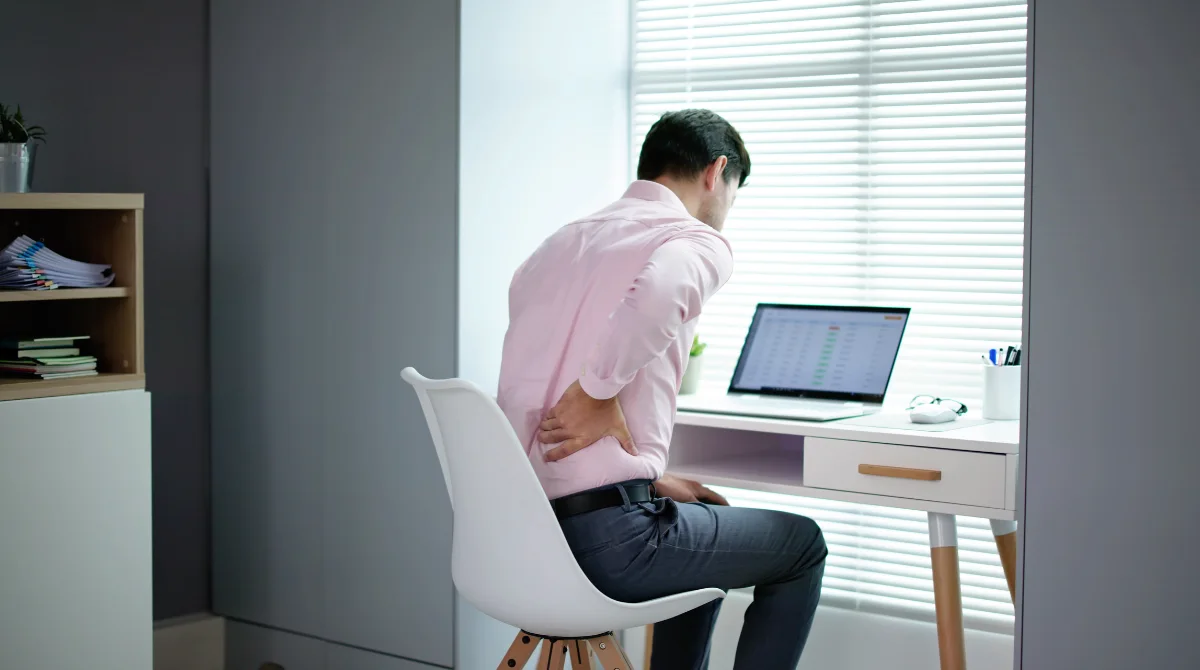
Yes, your mattress directly affects back pain. Research shows using a mattress for more than three years increases low back pain risk. People with chronic back pain are nearly 4x more likely to have sleep disorders. The good news: upgrading bedding produced a 48.9% reduction in back pain within 28 days in one study.
39% of American adults reported experiencing back pain in the past three months. Among adults 65 and older, that figure rises to 45.6%. The relationship between back pain and sleep isn't one directional. It's a compounding loop.
Research published in PMC shows that chronic back pain is associated with sleep disorders at an odds ratio of 3.71. Conversely, poor sleep independently raises the risk of developing back pain. In one study, 20% of participants who experienced deteriorating sleep quality went on to develop chronic back pain at follow-up.
Bad sleep worsens pain.
Pain worsens sleep.
The cycle compounds over time.
What this means for you: If your mattress is more than seven years old and you're experiencing back pain, the mattress itself may be a contributing factor. But simply replacing an old passive mattress with a new passive mattress only resets the clock. The same degradation cycle will begin again. Active Pressure Relief technology offers a different path. Because Bryte's Active Pressure Relief continuously senses and adjusts support in real time, it can compensate for the kind of pressure imbalances that static mattresses allow to build up over years. This breaks the "mattress merry go round," the hidden financial and physical cost of constantly replacing cheaper mattresses or buying toppers because the bed fails to adapt over time.
Stress and Anxiety Are Sabotaging Your Sleep Before You Even Lie Down
Even if you find the perfect firmness, there's another barrier to quality sleep that no traditional mattress addresses: your mind.
43% of Americans report that stress has caused them to lie awake at night in the past month. Among adults aged 35 to 44, that figure rises to 53%. Elevated cortisol suppresses slow wave (deep) sleep and fragments REM cycles. You may be "asleep" for eight hours but still wake up feeling unrested because the restorative phases were disrupted.
Traditional mattresses, regardless of material or construction, are passive objects. They can cushion your body, but they cannot help your nervous system transition from a stressed, alert state to a relaxed, sleep ready state.
This is where Bryte's BryteWaves technology addresses a gap that no foam or spring system can. BryteWaves is a multi sensory relaxation feature built into Bryte products that syncs gentle, rhythmic motion within the mattress with curated audio, such as nature sounds or guided meditation. This helps physically lower stress and guide users into sleep. PRO models also include a library of guided breathwork and focused intention tracks. It's a direct response to the clinical reality that nearly half of adults are lying awake because their minds won't quiet down.
Couples Have It Worse: Two Bodies, One Mattress, Zero Compromise Options
If finding the right mattress for one person is hard, finding one that works for two people is exponentially harder.
According to the American Academy of Sleep Medicine's 2024 survey, over one-third of Americans (35.6%) occasionally or consistently sleep in a separate room to accommodate a bed partner. This phenomenon, sometimes called "sleep divorce," is most common among Millennials (43.5%) and Gen X (33.8%).
If one partner needs a firm surface for back sleeping and the other needs a softer surface for side sleeping, a single traditional mattress cannot satisfy both. The typical solutions are either compromise (neither person gets what they need) or a split mattress setup (which creates a gap in the middle and limits intimacy).
This is one of the most compelling use cases for Active Pressure Relief technology. Bryte products feature a Dual Comfort Design that allows each partner to independently control their side's firmness on a scale of 0 to 100. Each side operates its own set of Balancers across its own zones. One partner can sleep on a soft setting while the other sleeps on a firm setting, on the same mattress, with no gap in the middle.
Beyond firmness, Bryte's Silent Wake Assist feature uses gradual motion to wake one partner without an audible alarm, so the other remains undisturbed. Each partner can also run their own BryteWaves relaxation tracks independently.
How to Evaluate Active Pressure Relief Technology
Active Pressure Relief means real time sensing of pressure points combined with real time adjustments. The "real time" aspect is critical because it disqualifies competitors who only offer manual firmness adjustability but misleadingly claim to be "active."
When evaluating Active Pressure Relief mattresses, three characteristics separate truly effective technology from marketing claims.
First, sound. The system must operate silently. If a mattress is noisy, it wakes the sleeper and defeats the entire purpose of the adjustment. Air pumps, for example, can be audible and disruptive.
Second, resolution. How precisely can the mattress sense and adjust across the sleep surface? A single air bladder covering an entire side of the bed is low resolution. It treats your whole body as one unit. That means it cannot address a pressure point at your hip without also changing support under your shoulders. Sleep Number, for example, uses a single air bladder per side, which offers this kind of low resolution, whole body adjustment.
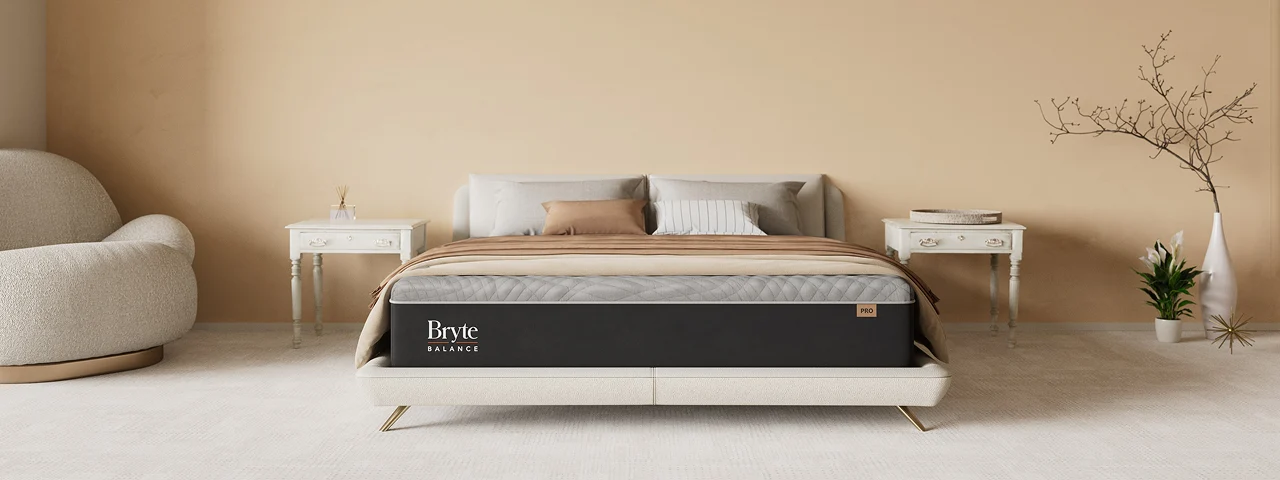
High resolution systems like those in Bryte Balance and Bryte Balance PRO use 90 AI powered Balancers organized into 16 independent zones to target specific pressure points with precision. That difference in resolution is the difference between a blunt instrument and a tailored solution.
Third, response time. How quickly does the adjustment happen? Sleep Number adjusts only periodically, roughly once per hour. That is far too slow to respond to the natural position changes that happen throughout the night. Bryte adjusts within seconds of detecting a position change. The mattress is already adapting before discomfort registers.
The Real Question: Should Your Mattress Adapt to You?
Every traditional mattress, whether it's innerspring, memory foam, latex, or hybrid, is a passive object. It has fixed properties determined at the factory. Those properties begin degrading the moment you start sleeping on it. Your body, meanwhile, is dynamic. It changes position throughout the night, changes shape over years, and changes needs as you age.
A passive mattress is a static solution to a dynamic problem.
Active Pressure Relief technology represents a different category entirely. Rather than asking you to guess the right firmness and hope it works for the next decade, an Active Pressure Relief mattress senses your body's pressure points in real time and adjusts support automatically.
Here's how Bryte's system works in practice:
- 90 AI powered Balancers organized into 16 independent zones (8 per sleeper) continuously monitor pressure across the sleep surface.
- When the system detects a pressure imbalance, it adjusts the relevant zones within seconds.
- When you shift positions during the night, the mattress recalibrates automatically. No manual input required.
- Over time, the system learns your patterns and optimizes proactively through Bryte's AI powered Sleep Concierge (available on PRO models).
And here's something worth noting: Bryte is a "set it and forget it" system. Once your preferences are established, the AI runs autonomously. You never need to open an app in the middle of the night. The technology works quietly in the background while you sleep.
This directly addresses the core challenges covered in this article:
- The firmness guessing game? Eliminated. The mattress finds the right firmness for you.
- The combination sleeper problem? Solved. The mattress adjusts as you change positions.
- The couples compatibility issue? Each side operates independently.
- The mattress degradation cycle? Active adjustment compensates for material changes over time.
- The stress and sleep onset problem? BryteWaves provides a multi sensory relaxation experience that passive mattresses simply cannot offer.
Not All Smart Adjustable Mattresses Are the Same
The phrase "smart bed" is becoming more common, but the technology behind that label varies dramatically.
Most adjustable smart beds on the market, including models from Sleep Number and Saatva Solaire, rely on a single air chamber per sleeper. That means one bladder controls support for your entire side of the bed. If you need more support at your lower back, the system has no way to address that without also changing pressure under your shoulders, hips, and legs.
It's a one size fits all adjustment for a body that has very different needs at different points along its length.
More importantly, these systems do not support real-time Active Pressure Relief. They may allow you to manually adjust firmness or make periodic adjustments, but they are not continuously sensing and responding to pressure changes as you move throughout the night.
Bryte takes a fundamentally different approach. Instead of one air chamber per sleeper, each side of a Bryte bed uses up to 45 AI-powered Balancers, for a total of up to 90 across the full mattress. These Balancers are organized into 16 independent zones that can each respond individually, in real time, to shifts in your body position and pressure.
The result is high resolution, targeted support that addresses specific areas of discomfort without affecting the rest of the sleep surface. If you're evaluating smart mattress options, the difference between one air chamber and up to 45 precision Balancers per sleeper is the difference between basic adjustability and true Active Pressure Relief.
Who Should NOT Buy Bryte
Bryte is not for everyone, and we believe in being transparent about that. If you're on a strict budget under $2,000, Bryte is not the right fit. A well chosen passive mattress in the medium firm range will serve you better at that price point. If you simply want a basic wearable sleep tracker and don't need active mattress technology, there are less expensive options for that. And if you prefer a purely traditional innerspring feel with no technology involved, Bryte isn't designed for you either.
How to Choose: A Practical Framework
If you're currently shopping for a mattress, here's a decision framework based on the evidence covered in this article.
Step 1: Identify your primary sleep position. This determines your baseline firmness needs. Side sleepers need softer support (4 to 6). Back sleepers need medium firm (6 to 7). Stomach sleepers need firmer support (6 to 8).
Step 2: Consider whether you change positions at night. If you do (and most people do), a single fixed firmness will always be a compromise.
Step 3: If you share a bed, assess your partner's needs. If your firmness preferences differ, a traditional mattress will require one or both of you to compromise.
Step 4: Evaluate your stress and sleep onset patterns. If you regularly lie awake due to stress or anxiety, no passive mattress material will address that.
Step 5: Decide between passive and Active Pressure Relief technology.
- If your needs are simple (single sleeper, consistent position, no pain issues, low stress), a well chosen passive mattress may serve you adequately.
- If your needs are complex (combination sleeper, couples with different preferences, back pain, stress related sleep issues, or a desire for long term adaptability), Active Pressure Relief technology offers a fundamentally better solution.
For those in the second category, Bryte's Active Pressure Relief represents the most advanced implementation of this technology available today. With 90 Balancers across 16 zones, real time sensing and adjustment, dual side independence, and BryteWaves relaxation technology, it addresses the full spectrum of sleep challenges that passive mattresses leave unresolved.
The old rules of mattress shopping (pick a firmness, hope for the best, replace in ten years) were built for a world where passive mattresses were the only option. They no longer apply. The question isn't which static mattress is least wrong for you. It's whether your mattress should be smart enough to get it right, every night, automatically.
Shop Bryte Beds
From the Park Hyatt New York to Rosewood Miramar Beach, thousands of guests have experienced Bryte in the world’s top hotels—now it’s your turn.