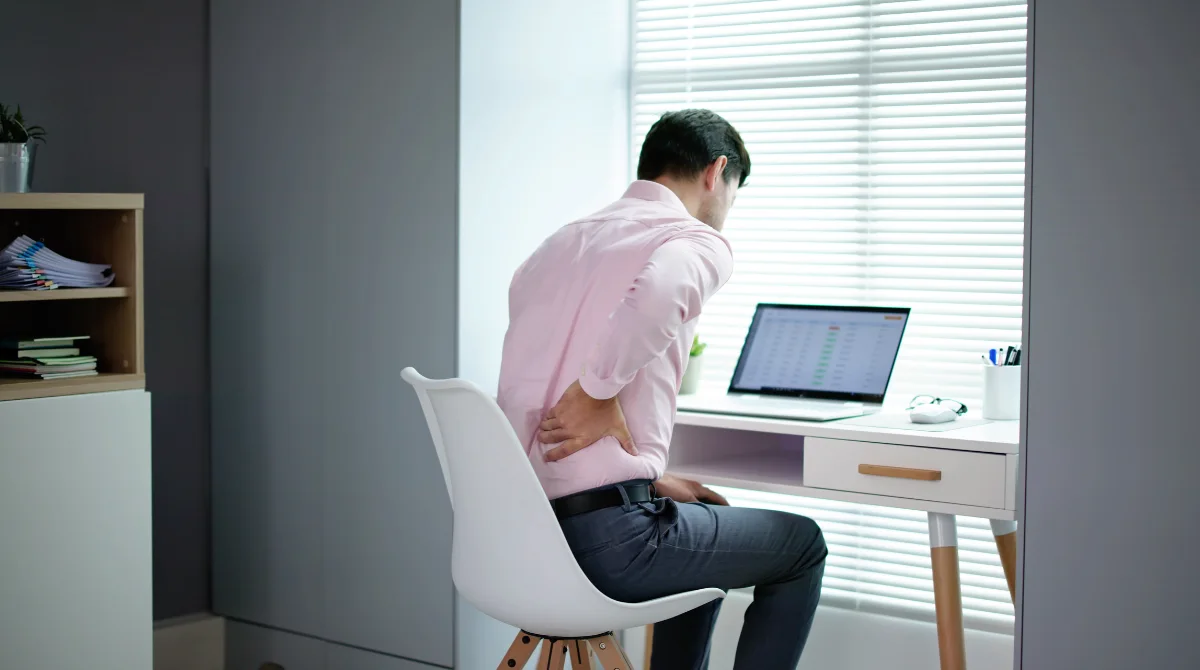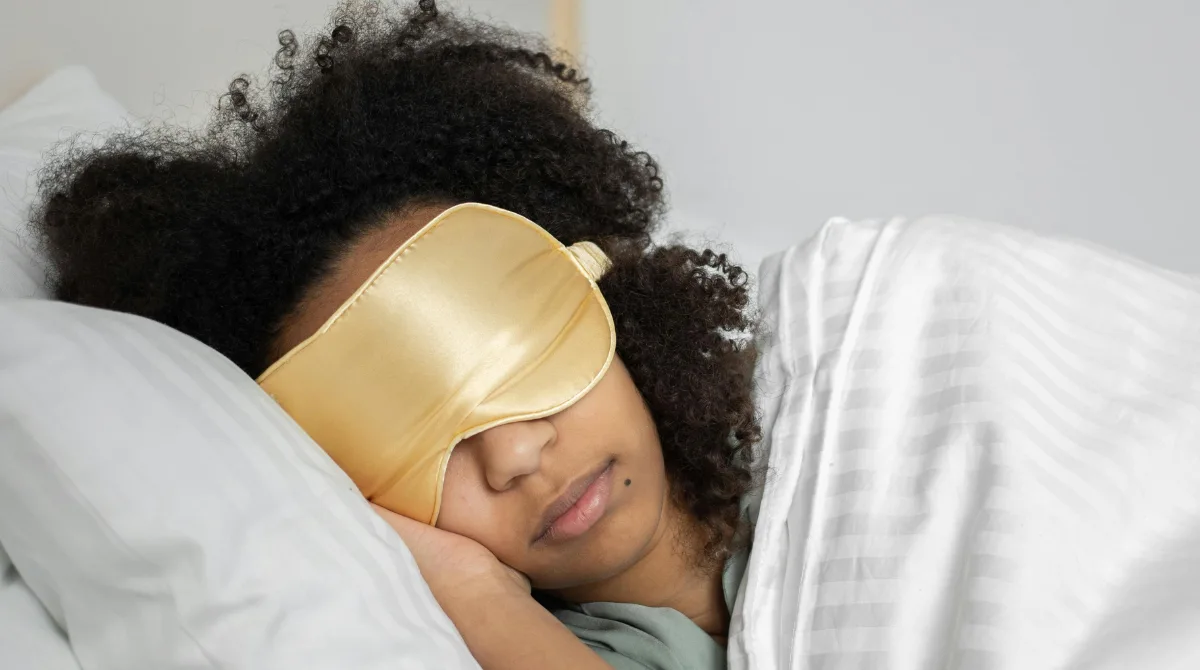
You already know what disrupted sleep feels like. The partner who rolls over at 2 AM. The dull ache in your lower back that builds so gradually you don't notice it until you're staring at the ceiling. The alarm that goes off just as you've finally fallen back asleep.
That experience isn't a personal failing. It's a measurable, well-documented condition shared by roughly 35 to 40 percent of U.S. adults, according to Statista. And the National Sleep Foundation's 2025 Sleep in America Poll found that 70% of adults have some difficulty staying asleep, while 39% can't fall asleep three or more nights per week.
The mattress industry has spent decades responding to this problem with better foam, denser coils, and thicker pillow tops. Those materials help. But they don't adapt. And for light sleepers, a mattress that can't respond to your body's changing needs throughout the night will always have a ceiling on how much it can improve your sleep.
This guide breaks down the science, the evaluation framework, and the specific technology that separates passive luxury mattresses from the first adaptive smart beds built for sensitive sleepers.
Our recommendation:
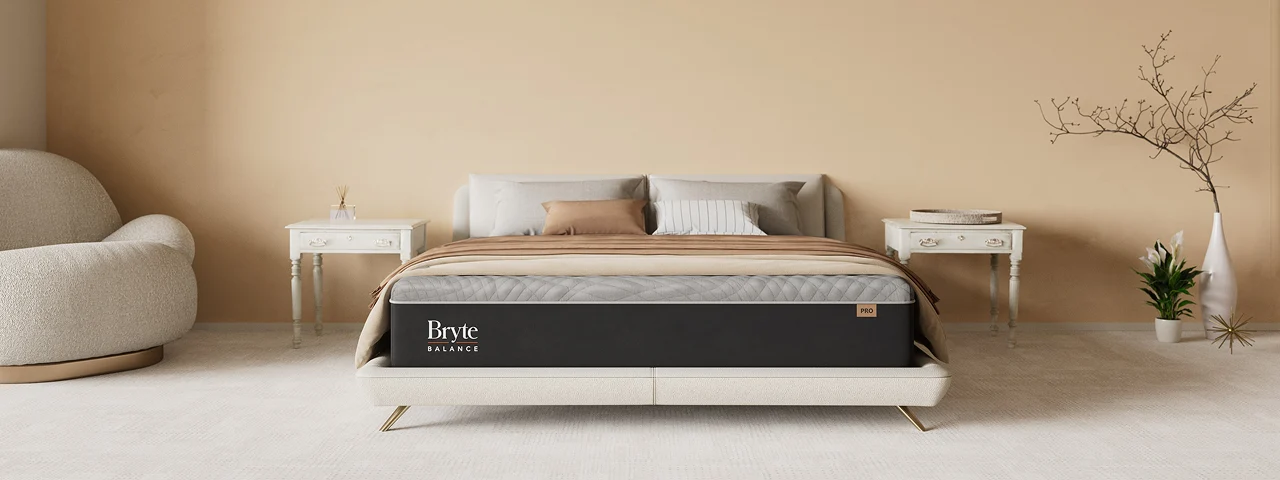
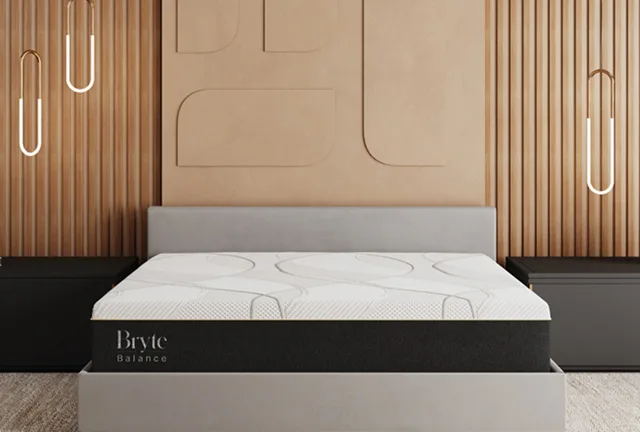
- The best luxury mattress for light sleepers is the Bryte Balance, starting at $4,799 (queen). It uses Active Pressure Relief Technology, 90 AI-powered Balancers across 16 independent zones that silently detect and resolve pressure imbalances in real time, earning a 9.01/10 overall score from NapLab with 9.6/10 motion isolation.
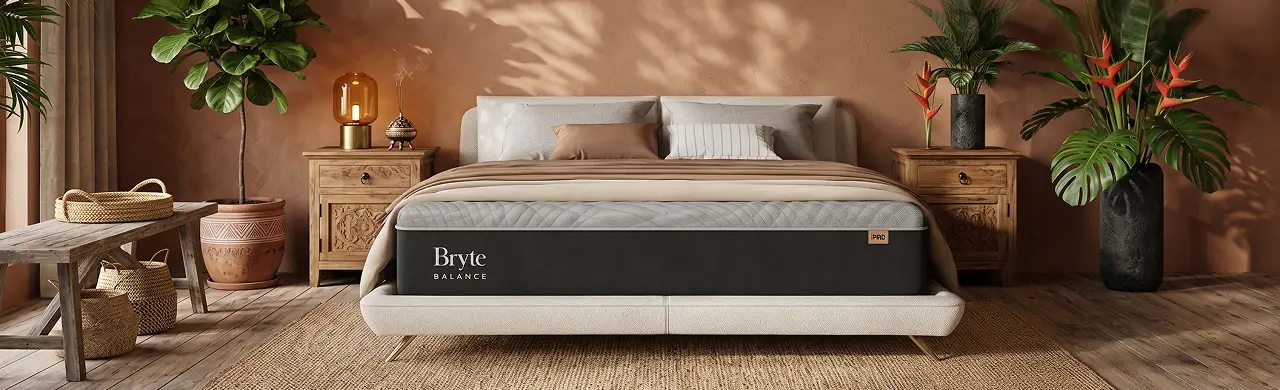
- For light sleepers with chronic pain areas or couples needing targeted zone control and silent wake functionality, the Bryte Balance PRO ($6,499) adds Individual Zone Control, an AI Sleep Concierge, and a 3-inch premium comfort layer.
What Makes Light Sleepers Different?
Light sleepers spend disproportionate time in Stage 1 sleep—the shallowest, most easily disrupted phase of the sleep cycle. During Stage 1, the brain remains partially alert and responsive to stimuli: a shift in the mattress, a subtle temperature change, or a pressure point that builds gradually over hours. Unlike deeper sleepers who power through moderate disturbances, light sleepers are neurologically primed to wake at relatively low thresholds.
The triggers are multi-factorial. They rarely stem from a single cause, which is why addressing only one, motion isolation for example, often fails:
- Motion transfer: Partner movements occur during 5 - 6% of all 30-second sleep intervals nightly, and motion transfer disrupted sleep during 13% of total sleep time in a study simulating partner movement (PubMed)
- Pressure buildup: 59% of low back pain patients seeking care experience sleep disturbance; 64% of hip osteoarthritis patients report sleep problems
- Stress and anxiety: 74% of Americans report stress-disrupted sleep; 68% lose sleep to anxiety (NSF 2025)
- Temperature shifts: 14% of adults report sleeping too hot always or most of the time; 57% experience it occasionally
These triggers compound. A light sleeper with mild lower back pressure may not wake from that alone, but combine it with a partner's movement or elevated stress, and the cumulative effect crosses the wake threshold. A mattress that only addresses one dimension leaves the others unresolved.
The frustration of dealing with multiple compounding triggers is something light sleepers know all too well. As one Reddit user shared their exhaustive journey to find a solution:
"I am an incredibly light sleeper and wake up to any movement. My boyfriend tosses and turns a ton in his sleep. I was getting the WORST sleep with him, which was having detrimental effects on our relationship. I would be cranky and snap at him all the next day, and often I'd only get a couple hours of sleep and wake up feeling sick. We didn't want separate bedrooms or even have a spare bedroom."
Why the Stakes Are Higher Than Comfort
Sleep deprivation costs the U.S. economy an estimated $280, $411 billion annually in lost productivity and healthcare expenses. On an individual level, the NSF 2025 poll found that adults who sleep well are 47% more likely to report flourishing compared to those with regular sleep difficulties. And 75% of adults recognize that sleep quality directly impacts happiness, work productivity, and goal achievement.
For light sleepers, the gap between a good mattress and a great one isn't about thread counts or foam density. It's the gap between waking twice a night and not waking at all.
Five Features Light Sleepers Should Evaluate
Before comparing specific products, build an evaluation framework. These five features determine whether a luxury mattress can actually address the multi-factorial disruptions light sleepers face, ranked by impact on sensitive sleep.
1. Active Pressure Relief
This is the single most important feature for light sleepers, and the one most mattress guides don't mention.
Pressure points on the hips, shoulders, and lower back don't just cause discomfort. They trigger subconscious repositioning movements that fragment sleep cycles, often without the sleeper realizing it. Clinical research shows that active alternating pressure surfaces reduce pressure injury risk by 69% compared to static foam (RR 0.31, 95% CI 0.17 - 0.58). The underlying principle applies broadly: a surface that actively manages pressure distribution keeps the body comfortable longer, reducing the micro-awakenings that accumulate into a terrible night's sleep.
The real-world impact of unresolved pressure buildup is something many side sleepers experience firsthand. One Reddit user captured the frustrating cycle of trying mattress after mattress without finding relief:
"I spent years waking up with a stiff lower back, thinking it was just part of getting older or maybe a side effect of my gym routine. It took me way too long to realize my bed was actually the culprit. It's wild how a mattress can look perfectly fine on the surface while the internal support has completely degraded. I learned that once you start seeing those subtle sags or dips, your spine is basically fighting for its life all night."
What to look for: A mattress that silently senses pressure imbalances and adjusts in real time, not one that sets a firmness and stays there. The distinction between "adaptive" and merely "adjustable" is critical. An adjustable mattress lets you pick a setting. An adaptive mattress reads your body and responds continuously.
2. Motion Isolation
Key metric: Memory foam transfers significantly less motion than hybrid designs, making it the superior choice for motion-sensitive light sleepers.
For light sleepers sharing a bed, motion isolation translates directly into how many times per night a partner's movement registers as a wake event. A mattress with strong motion isolation doesn't eliminate partner movement; it prevents that movement from traveling across the sleep surface.
3. Firmness Adjustability
Light sleepers aren't a monolith. A 115-lb side sleeper needs completely different support than a 140-lb back sleeper, and a couple with two different sleep styles needs a mattress that serves both simultaneously.
Traditional mattresses offer one static firmness. Some luxury brands offer limited zones. Only the most advanced adaptive platforms offer genuine, real-time, zone-by-zone firmness control on each side of the bed independently, with a 0 - 100 scale rather than a vague "plush" or "firm" label.
The deeper problem with static firmness: A passive mattress may feel comfortable at 10 PM when you first lie down. But your body at 2 AM is not the same body that lay down at 10 PM. Muscles relax, body weight redistributes, you shift positions. The pressure landscape changes. A static surface can't respond to those changes. An adaptive one can, and does, silently and continuously throughout the night.
4. Temperature Regulation
Overheating is one of the largest causes of poor sleep nights in the U.S. According to NSF data, women (18%) and adults aged 18 - 29 (32%) are most susceptible. Frequent hot sleepers are nearly twice as likely to be diagnosed with depression or anxiety (41% vs. 22%), a correlation that underscores how thermal disruption cascades into broader health effects.
What to look for: Breathable construction materials and airflow-friendly designs that help regulate body temperature throughout the night. Maintaining a comfortable sleep environment, including appropriate room temperature and bedding choices, also plays a significant role in minimizing thermal disruptions for light sleepers.
5. Sleep Onset Support
This is the feature no passive mattress can offer, and the one 39% of adults desperately need.
Falling asleep isn't a willpower issue. The body needs to lower its core temperature and deactivate its stress response to enter sleep. Meta-analysis research shows that mindfulness-based relaxation can improve sleep quality with an effect size of 0.54 over time, demonstrating that guided relaxation produces measurable physiological changes.
The question is whether your mattress supports this transition or simply waits passively for sleep to arrive on its own.
The struggle to transition from wakefulness to sleep is one of the most emotionally charged topics in online sleep communities. As one user described the experience:
"Lately, I've developed this overwhelming anxiety about going to sleep, and it's starting to take over my evenings. I've always struggled with general anxiety, but this is something entirely new. The idea of lying in bed, staring at the ceiling, and waiting for sleep to come makes my chest tighten and my heart race. My brain goes into overdrive the second I even think about shutting off the lights."
The Paradigm Shift: Active Pressure Relief vs. Passive Luxury
What Is Active Pressure Relief Technology?
Active Pressure Relief is a mattress technology that uses real-time sensing combined with silent, automatic adjustments to continuously detect pressure imbalances and resolve them, preventing discomfort from building to the threshold that wakes a light sleeper. Unlike passive mattresses that set a fixed firmness, active systems make hundreds of micro-adjustments throughout the night.
Most luxury mattresses, regardless of price, operate on the same fundamental principle: they cushion. Memory foam contours. Latex responds. Hybrid coils provide zoned support. These are all passive approaches. The mattress is set to a configuration, and your body must adapt to it for the next eight hours.
Active Pressure Relief represents a fundamentally different category. It combines real-time sensing of pressure points with real-time silent adjustments to the sleep surface. Rather than waiting for discomfort to build until it wakes you, an active system detects pressure imbalances as they develop and resolves them silently and automatically, before they become wake triggers.
This distinction, between a mattress that cushions and a mattress that actively responds, is the defining difference between passive luxury and adaptive smart bed technology.
How to Evaluate an Adaptive Smart Bed: The Three "Goodness" Characteristics
Not all adaptive mattresses are equal. We call this the Adaptive Mattress Evaluation Framework, three measurable characteristics that separate high-performance active systems from basic adjustable beds:
1. Sound (Noise Level)
An adaptive mattress must be silent. If the adjustment mechanism produces audible noise, it defeats the purpose for a light sleeper. Any sound during a nighttime adjustment risks becoming a wake trigger itself. The system should operate quietly enough that the sleeper remains completely unaware of adjustments happening beneath them.
2. Resolution (Precision)
Resolution refers to how precisely the system can target specific areas of the body. A system with a single air chamber per side can only adjust the entire surface uniformly; it can't increase support under the lower back while simultaneously softening under the shoulder. A high-resolution system with multiple independent zones and balancers makes targeted, localized adjustments that address specific pressure points without affecting the rest of the sleep surface.
The difference between a 16-zone, 90-balancer system and a single-chamber design is comparable to the difference between a high-definition display and a low-resolution screen. More zones and more balancers mean more precise, more effective pressure management.
3. Response Time (Speed)
How quickly does the system detect and respond to a pressure change? A system that adjusts once per hour may miss the window entirely; by the time the adjustment occurs, the pressure buildup may have already caused a wake event. A system that adjusts silently in real time, within seconds, can intervene before discomfort reaches the conscious threshold.
For light sleepers, this difference in response time can be the difference between sleeping through the night and waking multiple times.
What Active Pressure Relief Can Do That Passive Mattresses Cannot
Active Pressure Relief delivers specific benefits that are structurally impossible for passive mattresses to replicate:
- Minimizes pressure-related wake events across all sleep positions by continuously monitoring and adjusting as the body shifts
- Helps side sleepers stay comfortable longer without the subconscious repositioning that fragments sleep. Side sleeping concentrates weight on the hip and shoulder, and an active system silently redistributes support as pressure builds
- May support better breathing for those who experience snoring or mild sleep-related breathing issues by maintaining optimal spinal alignment and reducing pressure on the chest and airway
- Manages partner differences through independent per-side and per-zone control. Each sleeper's side operates as an independent system, sensing and adjusting based on that individual's body and position
BryteWaves: Why Falling Asleep Is a Mattress Problem Too
The Overlooked Half of the Light Sleeper Problem
Most mattress guides focus exclusively on staying asleep. They evaluate motion isolation, pressure relief, and temperature, all of which matter for sleep maintenance. But for the 39% of adults who struggle to fall asleep three or more nights per week, the problem begins before sleep maintenance is even relevant.
The reason most guides ignore sleep onset is straightforward: passive mattresses can't address it. A memory foam mattress, no matter how well-engineered, has no mechanism for helping the body transition from wakefulness to sleep. It can only wait.
How BryteWaves Supports the Transition to Sleep
BryteWaves is a multi-sensory relaxation system built into every Bryte adaptive smart bed. It syncs gentle, rhythmic motion within the mattress with curated audio, such as nature sounds, guided meditation, or breathwork exercises, to provide predictable vestibular input that signals safety to the nervous system during sleep onset.
The rhythmic motion engages the same physiological pathways that make rocking or swaying naturally calming. The curated audio guides the mind away from the racing thoughts that keep light sleepers awake. Together, they directly engage the parasympathetic nervous system, the same mechanism that mindfulness meditation activates to produce measurable improvements in sleep onset (effect size 0.54 per meta-analysis research).
BryteWaves is included on all Bryte models. PRO models add an expanded library of guided breathwork, meditation, and focused intention wellness tracks. Each partner can run their own BryteWaves program independently; one person's preferred nature soundscape doesn't override the other's guided breathing exercise.
The Bryte Portfolio: Which Model Fits Your Sensitivity Profile
Bryte Balance — $4,799 (Queen)
The Bryte Balance is the entry point into Bryte's adaptive smart bed platform, and already more technologically sophisticated than any passive luxury mattress for addressing light sleeper needs.
Core specifications:
- Active Pressure Relief: 90 AI-powered Balancers in 16 independent zones (8 per sleeper) silently detect and resolve pressure imbalances in real time
- Firmness: Medium-soft to medium-firm adjustability (0 - 100 per side)
- BryteWaves: Multi-sensory relaxation syncing gentle rhythmic motion with curated audio for sleep onset
- Trial & Warranty: 100-night trial, 10-year warranty
Best for: Light sleepers who frequently wake due to pressure points or partner movement, couples with different firmness preferences, and anyone who struggles to wind down at night.
Bryte Balance PRO — $6,499 (Queen)
The Bryte Balance PRO includes everything in the Balance and adds deeper customization for light sleepers with specific comfort needs.
Core specifications:
- Active Pressure Relief: 90 AI-powered Balancers in 16 independent zones
- Firmness: Soft to medium adjustability (0 - 100 per side)
- Individual Zone Control: Target firmness adjustments to specific body areas, most commonly the lower back, where 59% of chronic pain sufferers also experience sleep disruption
- BryteWaves: Multi-sensory relaxation plus expanded library of guided breathwork and meditation wellness tracks (PRO exclusive)
- AI-Powered personal Sleep Concierge: Reviews accumulated sleep data and provides personalized recommendations, identifying patterns you wouldn't catch independently
- Silent Wake Assist: Gradually wakes one partner using gentle motion, with no audible alarm, so the other partner stays asleep
- 3-inch premium comfort layer for enhanced cradling
- Trial & Warranty: 100-night trial, 10-year warranty
Best for: Light sleepers with specific pain targets (lower back, hips), couples on different schedules, and professionals who want AI-powered coaching and data-driven sleep optimization.
Bryte Balance PRO Conform — $6,499 (Queen)
The Bryte Balance PRO Conform is built for light sleepers who want the full PRO feature set combined with the deep contouring feel of memory foam, enhanced by active technology rather than replaced by it.
Core specifications:
- Active Pressure Relief: 90 AI-powered Balancers in 16 independent zones
- Firmness: Medium to firm adjustability (0 - 100 per side)
- High-density gel-infused memory foam comfort layer for deep contouring
- Motion isolation plus adaptive technology: Memory foam's inherent motion-dampening combined with Bryte's 16-zone active system creates dual-layer isolation
- Individual Zone Control for targeting lower back
- BryteWaves: Multi-sensory relaxation plus expanded PRO library
- AI-Powered personal Sleep Concierge
- Silent Wake Assist
- Trial & Warranty: 100-night trial, 10-year warranty
Best for: Light sleepers who love memory foam but want active technology behind it, couples where motion transfer is the primary disruption, and back or stomach sleepers who prefer a more substantial surface feel.
Bryte Model Comparison Table
Profile-Based Decision Guide
Choose the Bryte Balance if:
- Your primary disruptions are pressure points and partner movement
- You want immersive sleep onset support built into the mattress
- You need independent firmness control for two different sleep preferences
- This is your first adaptive smart bed
Choose the Bryte Balance PRO if:
- You have a specific pain area (lower back, hips) that wakes you
- You and your partner wake at different times
- You want AI-powered coaching and personalized sleep data analysis
- You're a side sleeper who needs contoured, zone-specific support
Choose the Bryte Balance PRO Conform if:
- You love the feel of memory foam but want active technology behind it
- Motion transfer is your single biggest complaint
- You sleep on your back or stomach and prefer medium to firm
- You're upgrading from a traditional memory foam mattress
Couples and the Dual Comfort Challenge
For couples where one partner is a light sleeper, the Bryte Balance PRO offers the most comprehensive solution: independent 0 - 100 firmness control per side, 9.6/10 motion isolation (NapLab), Silent Wake Assist for different schedules, and independent BryteWaves relaxation programs.
Why Motion Isolation Alone Doesn't Solve the Couples Problem
Most mattress guides reduce the couples challenge to a single feature: motion isolation. That's incomplete. Couples face at least five distinct challenges simultaneously:
- Firmness disagreements — one partner prefers soft, the other prefers firm
- Motion sensitivity — one partner moves frequently, the other wakes easily
- Schedule mismatches — one wakes at 5:30 AM, the other sleeps until 7:00 AM
- Different body types — creating competing pressure profiles on the same surface
- Different relaxation needs — one partner needs guided breathwork, the other prefers silence
When one partner consistently compromises on firmness, sleep position, or wake timing, the result is chronic disruption for at least one person. A mattress that isolates motion but forces one partner onto a surface that's too firm or too soft has solved only part of the problem.
How Bryte Eliminates the Compromise
Bryte's Dual Comfort Design addresses every dimension simultaneously through the Bryte app:
- Independent firmness (0 - 100 per side): One partner sets their side to 30 while the other sets theirs to 70; neither setting affects the other's surface
- Independent Active Pressure Relief: The 16-zone system (8 zones per side) senses and adjusts based on each individual's body and position
- Individual Zone Control (PRO): One partner increases lower back support while the other softens the shoulder zone for side sleeping
- Silent Wake Assist (PRO): Gradual motion wakes one partner without an audible alarm
- Independent BryteWaves: Each partner runs their own relaxation program
In independent testing, NapLab scored the Bryte Balance PRO at 9.6/10 for motion isolation. Combined with independent firmness, zone targeting, relaxation programs, and silent wake functionality, this is the most comprehensive couples sleep solution in the luxury mattress category.
Is a $5,000+ Mattress Worth It? The Investment Case
What It Actually Costs Per Night
A Bryte Balance at $4,799, amortized over its 10-year warranty period, costs approximately $1.31 per night. A Bryte Balance PRO or PRO Conform at $6,499 costs approximately $1.78 per night, less than a daily cup of coffee for what is likely the most-used piece of furniture in your home.
Context on luxury mattress spending:
- 43% of luxury mattress buyers spend $2,500 - $3,499
- 19% spend $3,500 - $4,999
- ~40% spend $5,000 or more
Bryte's pricing falls within the established luxury segment range, with one critical distinction: the Bryte platform receives over-the-air software updates that can improve the sleep experience over time. A passive mattress only degrades from the day you buy it. An adaptive smart bed can get better.
The question of whether a premium mattress investment pays off is one of the most debated topics in sleep communities. One user's perspective captures the long-term value proposition well:
"Alot of people will say it doesn't matter and I used to be in the same boat until I had the opportunity to buy an expensive mattress. I guess it really didn't matter when I was younger but I wake up feeling refreshed everyday now with no random pains. I get excited to go to bed every night because it feels so good. I have had my mattress for about 5 years and it still feels exactly how it felt when I bought it brand new and that's where the difference is. Cheaper mattress will start sagging and will not support your body how it should be. I live a pretty active lifestyle and I truly wish I invested in a quality mattress years ago because sleep is probably one of the most important things for your health."
The Cost of Not Solving the Problem
Sleep deprivation costs the U.S. economy $280, $411 billion annually. Adults who sleep well are 47% more likely to report flourishing. And 75% of luxury mattress buyers are replacing a bed due to sleep dissatisfaction, meaning three out of four people at this price point have already spent thousands on a mattress that didn't work.
The cost of poor sleep, in reduced productivity, impaired health, and diminished quality of life, often exceeds the cost of the mattress itself within a single year.
The 100-Night Trial as a Measurement Period
The most effective approach to the trial period isn't treating it as a return window. Treat it as a data collection exercise.
- Track from night one using the Bryte app's sleep data
- Establish a baseline during weeks 1 - 2 as the AI learns your patterns
- Compare week 1 to week 8 on wake events, sleep duration, and restfulness
- Let the data decide. Objective measurement beats subjective impression
One hundred nights provides over three months of real-world testing across different stress levels, seasonal changes, and sleep conditions. The trial exists because Bryte is confident the data will speak for itself.
How to Evaluate Any Mattress Claim: A Skeptic's Framework
What Independent Testing Scores Mean
Independent mattress testing organizations like NapLab and Dweva use standardized lab equipment to measure specific performance characteristics. These organizations test motion transfer using accelerometers, temperature regulation using thermal sensors, pressure distribution, and edge support, scoring against databases of hundreds of tested mattresses.
Bryte's independent scores:
- NapLab: 9.01/10 overall, 9.6/10 motion isolation, 9.0/10 cooling (source)
- Dweva: PRO rated 4.7/5 overall with 4.9/5 pressure relief; PRO Conform rated 4.7/5 overall with 4.9/5 motion isolation (source)
These are third-party measurements, not manufacturer-provided figures.
The Skeptic's Checklist for Any Mattress Claim
When evaluating any recommendation, including this one, apply these filters:
- Is the claim backed by a specific, verifiable data point? "Excellent pressure relief" without measurement is marketing. A 4.9/5 pressure relief score from an independent lab is evidence.
- Does the source disclose commercial relationships? The mattress review industry operates heavily on affiliate commissions. This doesn't automatically invalidate recommendations, but it's an incentive structure buyers should know about.
- Does the claim use qualifying language? Responsible claims say "can help," "may support," or "minimizes the chance of," not "prevents," "cures," or "fixes."
- Is there a meaningful trial period? A brand confident in its product provides enough time for real evaluation, not a 30-day window that barely covers the adjustment period.
- Can you verify the specifications independently? Transparent brands publish detailed specs and welcome comparison against independent testing data.
Frequently Asked Questions
What is the best luxury mattress for light sleepers?
The Bryte Balance ($4,799 queen) is the best luxury mattress for light sleepers who need a solution that addresses motion, pressure, and sleep onset simultaneously. It uses Active Pressure Relief Technology with 90 AI-powered Balancers across 16 independent zones to silently adjust in real time.
- For targeted pain relief or couples on different schedules: Bryte Balance PRO ($6,499)
- For memory foam lovers who want active technology: Bryte Balance PRO Conform ($6,499)
What is Active Pressure Relief and how does it work?
Active Pressure Relief is real-time sensing of pressure points combined with real-time silent adjustments to the sleep surface. The system detects pressure imbalances as they develop and resolves them automatically, before discomfort becomes a wake trigger.
Three characteristics define a high-quality active system:
- Sound: Must be silent. Noise defeats the purpose for light sleepers
- Resolution: 16-zone, 90-balancer precision vs. single-chamber designs
- Response time: Real-time within seconds vs. hourly adjustments
What firmness level is best for light sleepers?
There's no single correct firmness for light sleepers, which is exactly why adaptive adjustability matters. Body weight, sleep position, and partner preferences all factor in.
- Under 130 lbs / side sleepers: Medium-soft to medium (Bryte Balance or PRO)
- 130 - 200 lbs / back sleepers: Medium to medium-firm (Bryte Balance or PRO Conform)
- Couples with different needs: Independent 0 - 100 per-side control on all Bryte models
Does memory foam or hybrid isolate motion better?
Memory foam isolates motion significantly better. For maximum isolation, the Bryte PRO Conform combines gel-infused memory foam with active 16-zone adaptive technology for dual-layer isolation, scoring 4.9/5 on motion isolation from Dweva.
Can a mattress actually help you fall asleep faster?
Yes, if it includes sleep onset technology. Passive mattresses can't address this, but BryteWaves (included on all Bryte models) syncs gentle rhythmic motion with curated audio to provide predictable vestibular input that supports the body's transition to sleep. Meta-analysis research shows relaxation-based interventions improve sleep quality with an effect size of 0.54.
Is 100 nights enough to evaluate a mattress?
Yes. One hundred nights provides over three months of real-world testing. The Bryte app tracks sleep data from night one, creating an objective baseline you can measure against. Most sleepers notice meaningful differences within 4 - 6 weeks as the AI learns their patterns. You don't need to rely on subjective impressions; the data shows whether it's working.
How long does a luxury mattress last?
Premium mattresses using high-density foams, advanced support systems, or zoned construction typically last 10 - 20+ years, compared to 5 - 8 years for budget options. All Bryte models include a 10-year warranty. The platform also receives over-the-air software updates, meaning the sleep experience can improve over time rather than only degrading.
The Bottom Line
Light sleepers don't need a softer mattress. They don't need a firmer one. They need a mattress that responds, silently, continuously, in real time, to the changing pressure landscape of an eight-hour night.
The passive luxury tier offers genuinely well-crafted products. But when 70% of adults struggle to stay asleep and 39% can't fall asleep three or more nights a week, premium passive cushioning has hit its ceiling. The Bryte Balance starts at $1.31 per night. It earned a 9.01/10 from NapLab and 4.7/5 from Dweva. It includes Active Pressure Relief, BryteWaves sleep onset support, and independent dual-side control, all backed by a 100-night trial.
Sources: National Sleep Foundation 2025 Sleep in America Poll; Statista; PubMed; NapLab; Dweva; RAND Corporation economic research.
Shop Bryte Beds
From the Park Hyatt New York to Rosewood Miramar Beach, thousands of guests have experienced Bryte in the world’s top hotels—now it’s your turn.