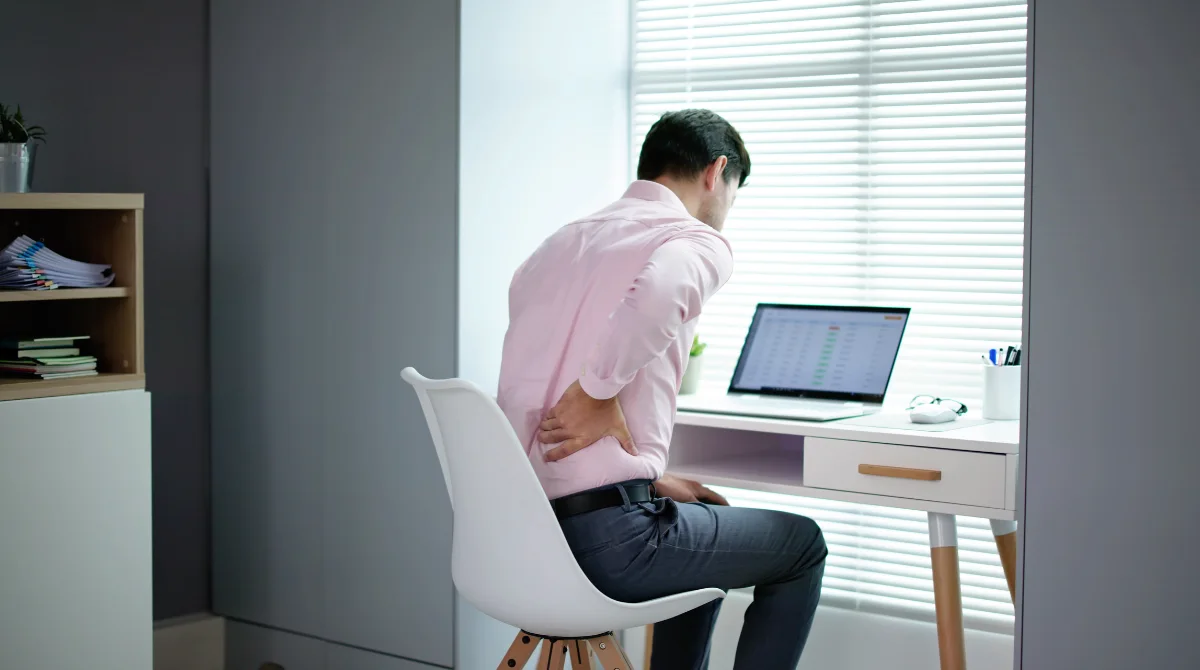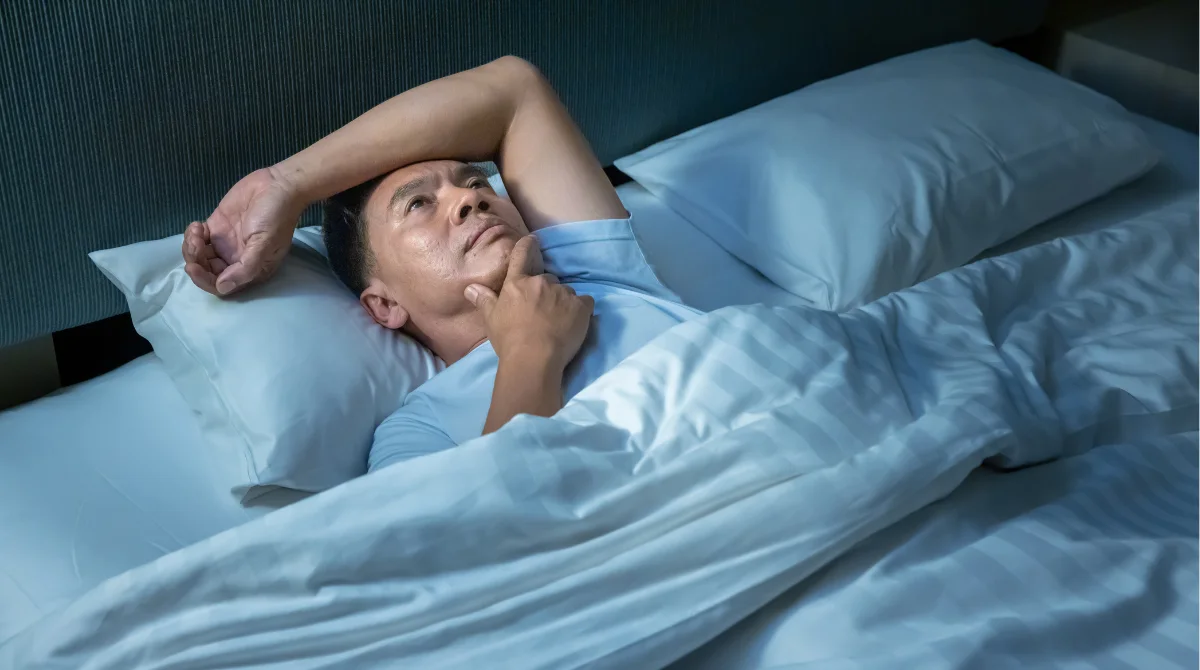
Hyperarousal is a state of heightened nervous system activation that is commonly discussed as an important factor in chronic insomnia. In research, it is often associated with increased stress hormones, elevated heart rate, and sympathetic nervous system activity.
It helps explain why you can feel exhausted yet still unable to sleep - a paradox so common it even has a nickname: “T’wired.”
This is not a failure of willpower. It reflects patterns of stress-system activation involving the HPA axis and autonomic nervous system that can keep the body in a state of heightened alertness, even when no immediate threat is present.
Why You Feel Exhausted But Can't Sleep
The “wired but tired” feeling happens when your sleep drive is high, but your arousal system is still active. In other words, your body is tired, but your brain and nervous system are still behaving as if they need to stay alert.
This can show up as:
- feeling physically tired but mentally “on”
- racing thoughts when you lie down
- a fast heartbeat or sense of internal restlessness
- muscle tension that does not release at bedtime
- feeling sleepy during the day but more alert at night
- drifting into light sleep, then waking again easily
The result: mental overactivity, racing thoughts, and fight-or-flight persistence that won't shut off.
Trying to force sleep makes this worse. Willing yourself to sleep activates problem-solving mode, which increases alertness. Your brain cannot simultaneously problem-solve and transition into sleep.
As one user described their experience on r/insomnia:
"What you're describing, being distressingly wired 24/7, hyperalert, and unable to sleep—is classic chronic hyperarousal, often tied to severe insomnia, nervous system dysregulation, or even sleep state misperception (where your brain is in light sleep but perceives itself as awake). This isn't just stress or anxiety, your sympathetic nervous system is likely stuck in overdrive, keeping your body on high alert even when it wants to rest. Sadly, many doctors overlook this and mistake it for psychiatric disturbance instead of recognizing it as a neurophysiological condition."
"Tired but can't sleep" ranks among the top sleep-related Google searches—you are not alone in this experience.
How Hyperarousal Differs from Normal Stress
Standard stress responses resolve once the stressor passes. Hyperarousal doesn't.
According to a review in the Journal of Sleep Research, hyperarousal involves hyperactivity of the arousal system with increased responsiveness to both external and internal stimuli. It represents overactive neurobiological systems—particularly HPA axis dysregulation and sympathetic nervous system activation—that remain engaged even without immediate threat.
Key distinction: Hyperarousal is included in many contemporary models of insomnia disorder. It is not simply a mindset you can think your way out of—it reflects underlying patterns of physiological activation that may include:
- Elevated nocturnal cortisol activity
- Increased heart rate and shallow breathing
- Altered brain wave patterns during sleep
- Heightened sensory sensitivity
The Three Domains of Hyperarousal Symptoms
Hyperarousal manifests across three distinct domains. Most people with chronic insomnia experience symptoms in more than one.
Somatic (Body) Symptoms
Physical manifestations of nervous system activation:
- Racing or elevated heart rate when lying down
- Muscle tension that won't release despite exhaustion
- Shallow, irregular breathing
- Heightened sensitivity to pressure, temperature, and touch
- Inability to find a comfortable position
Research suggests that many people with insomnia show signs of autonomic imbalance, including patterns consistent with increased sympathetic activity and reduced parasympathetic tone. These physiological patterns may make it harder to fall asleep and stay asleep.
Cognitive (Mind) Symptoms
Mental manifestations that prevent disengagement:
- Racing thoughts you cannot stop
- Rumination and worry loops
- Mental to-do list generation at bedtime
- Difficulty "turning off" despite exhaustion
- Heightened emotional reactivity
A PNAS study found insomnia severity strongly correlates with racing thoughts (β = 0.31, P < 10⁻²⁶), with 62.4% of the association between insomnia characteristics mediated by reduced overnight resolution of emotional distress.
The experience of cognitive hyperarousal is vividly described by users on r/ADHD:
"I have the exact same problem. When it happens I just have to exercise my body to the point of absolute collapse, basically rowing machine, weights, running in place until i can't do it anymore then fall on my bed. It seems counterintuitive because exercise is supposed to keep you awake but I can get myself to sleep after an hour of weights that's still better than after 3 hrs of melatonin and meditation videos."
Cortical (Brain Activity) Symptoms
Sleep architecture disruptions measurable on polysomnography:
- Higher likelihood of waking from all sleep stages
- Increased alpha waves during early sleep (wake-like brain activity)
- Decreased deep sleep (delta power)
- Reduced sleep spindle density
- Light, fragmented sleep despite adequate time in bed
Research on sleep architecture shows these patterns indicate continuous hyperarousal even during sleep—your brain never fully exits vigilance mode.
What Causes Hyperarousal Insomnia
Primary causes of hyperarousal insomnia:
- HPA axis dysregulation — Chronic stress creates persistent cortisol elevation and exaggerated stress reactivity
- Anxiety and depression — Approximately 40% of adults with insomnia have comorbid psychiatric conditions that share hyperarousal pathophysiology
- High sleep reactivity trait — Genetic predisposition to stress-disrupted sleep; highly reactive individuals show 2-3x higher odds of sleep onset insomnia
- Chronic pain — Dysregulates the HPA axis through pro-inflammatory cytokines, creating bidirectional pain-sleep disruption
- Trauma history — PTSD and trauma exposure share neurobiological mechanisms with hyperarousal insomnia
- Accumulated life stress — Even without major trauma, chronic low-grade stress can tip vulnerable individuals into persistent hyperarousal
The Sleep Reactivity Factor
Not everyone develops insomnia under stress. Sleep reactivity—a trait-like sensitivity to stress disrupting sleep—explains why.
Research shows high-reactivity individuals have longer sleep latency (65 vs. 37 minutes) and elevated risk of future insomnia independently of general hyperarousal. This trait is influenced by genetics, family history, gender (higher in women), and environmental stress history.
If insomnia "suddenly" appeared after a life change, you likely carried latent vulnerability that stress activated.
Why Standard Sleep Advice Fails
Generic recommendations—chamomile tea, avoiding screens, sleep hygiene—assume you can relax on command. Hyperarousal doesn't work that way.
The nervous system doesn't respond to commands. It responds to signals.
When your HPA axis is dysregulated and your sympathetic nervous system maintains vigilance, deciding to relax accomplishes nothing. The systems maintaining arousal operate below conscious control.
This is why effort backfires. Trying harder to sleep engages prefrontal problem-solving regions that need to disengage for sleep onset. You cannot simultaneously problem-solve and fall asleep.
Why Sleeping Pills Often Don't Resolve the Problem
A 12-month trial found zolpidem increases sleep time by about 45 minutes compared to placebo—but in hyperaroused patients, the medication did not reduce hyperarousal markers. These patients self-administered medication on 80% of nights without normalizing their arousal state and showed persistent severe insomnia.
One proposed explanation is that medication may help with short-term sleep initiation while longer-standing patterns of stress-system activation can require broader behavioral or clinical approaches. Treatment decisions should always be individualized in consultation with a qualified healthcare professional.
People often express frustration when medication alone does not fully resolve insomnia symptoms. Concerns about tolerance or diminishing effectiveness should be discussed directly with a prescribing clinician, who can evaluate risks, benefits, and alternative approaches.
Hyperarousal as a 24-Hour Condition
Insomnia isn't just a nighttime problem. Research increasingly positions it as a 24-hour arousal disorder.
According to the American Academy of Sleep Medicine, daytime hyperarousal predicts prescription sleep aid use more strongly than nocturnal symptoms alone.
European Sleep Research Society data shows hyperarousal peaks in the morning after poor sleep, with a significant overnight increase. This explains why mornings after bad nights feel worse than expected—it's not just sleep deprivation but amplified hyperarousal creating a self-reinforcing cycle.
The Chronic Pain-Hyperarousal Loop
Chronic pain and hyperarousal insomnia share the same underlying mechanism: HPA axis dysregulation.
Research on this bidirectional relationship shows chronic pain patients experience longer sleep onset latency, more frequent awakenings, shorter total sleep time, and poorer sleep quality. Studies demonstrate that HPA hyper-reactivity mediates the relationship between deficient sleep and increased pain sensitivity.
The cycle works like this:
- Pain disrupts sleep through physical discomfort and HPA activation
- Poor sleep increases pain sensitivity via inflammatory pathways
- Increased pain further activates the HPA axis
- Elevated cortisol maintains hyperarousal
- Hyperarousal prevents restorative sleep
Breaking this cycle requires addressing both the pain and the arousal—neither alone is sufficient.
How Physical Environment Affects Arousal
When your nervous system maintains vigilance, it processes physical sensations with heightened sensitivity. Pressure points, temperature fluctuations, and postural discomfort that might go unnoticed in a relaxed state become arousing stimuli.
Research on pre-sleep arousal found somatic hyperarousal positively correlates with insomnia symptoms (P = .03). Physical discomfort in the sleep environment amplifies the 24-hour arousal state.
Evidence for physical intervention:
- Medium-firm mattresses reduced back pain by approximately 48% and improved sleep quality by 55%
- Appropriate mattress support optimizes sleep architecture with higher N2 sleep percentage, reduced sleep latency, and increased efficiency
For someone experiencing somatic hyperarousal, a sleep surface that creates ongoing discomfort may contribute to continued alertness. Reducing unnecessary physical disturbance can be one supportive component of a broader sleep strategy.
The Safety Signal Framework
The nervous system exits vigilance not through willpower but through accumulating signals of safety.
For somatic hyperarousal, safety signals include:
- Pressure distribution that eliminates focal stress points
- Consistent physical comfort that minimizes disruptive sensations
- Postural support allowing muscles to release tension
- Absence of repositioning triggers that cause microarousals
Static mattresses provide passive cushioning but cannot respond to changing needs throughout the night. When pressure accumulates or alignment shifts, you either wake to reposition or experience microarousals fragmenting sleep architecture.
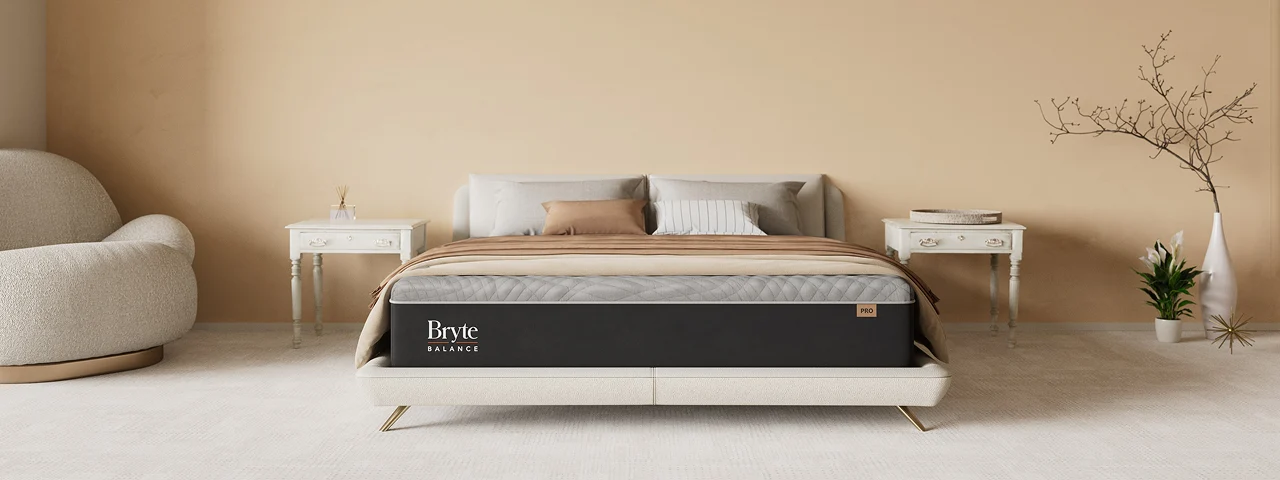
Active sleep technology addresses this differently. The Bryte Smart Bed uses Restorative-AI and up to 90 intelligent Bryte Balancers organized into 16 independent zones to sense pressure and adjust firmness in real-time. This active pressure relief detects imbalances and makes silent, automatic adjustments before they trigger arousal.
For some individuals, reducing repeated pressure buildup and repositioning may decrease one source of nighttime disturbance. While no bed treats insomnia, optimizing comfort can support overall sleep quality as part of a comprehensive approach.
Treatments That Target Hyperarousal by Domain
Matching intervention to your predominant arousal domain improves outcomes.
CBT-I: The Evidence Base
Meta-analysis of 124 studies ranks CBT-I, stimulus control, and relaxation training as "standards" for efficacy.
CBT-I achieves remission in 30-40% of patients with chronic insomnia. The majority don't achieve full remission through CBT-I alone—not because the therapy fails, but because multi-domain hyperarousal often requires combined approaches.
A psychiatrist on r/FamilyMedicine explained the clinical reality of CBT-I:
"Psych here who does CBT-I. It works for insomnia and I have good results from it. But lots of people who cannot sleep do not have insomnia. In the last year, I have had patients referred to me for insomnia who have had menopause symptoms ('cured' with HRT), thyroid issues, apnea, restless leg syndrome, and even a TBI that they were told were insomnia and offered no other medical treatment prior. So first, can we investigate and ensure it IS insomnia? Once we know it is, I sell patients on it like this: 'Look, you aren't sleeping and that is miserable. You already don't feel great about going to sleep and you don't feel good getting up because you don't feel rested. What I will ask you to do, may require you to go about your day tired - but you already do that, right? And I may ask you to stay up later and not go to bed, but you aren't usually sleeping anyway, right? So really, we are going to try and manipulate the symptoms you already have, and see if we can make them better.'"
Digital CBT-I shows noninferiority to face-to-face delivery, providing accessible options. Core components targeting hyperarousal include stimulus control (breaking bed-wakefulness association) and cognitive restructuring (interrupting rumination patterns).
Multi-Sensory Approaches: The Research
A clinical trial at Jefferson University found patients receiving auditory and vibratory stimulation showed significant changes in functional connectivity in sensory/auditory brain areas, thalamus, and prefrontal cortex—along with improved sleep quality.
Research on combined sensory input found multi-sensory groups showed sleep efficiency increases (1.16-1.19% vs. 0.26% control) and REM duration increases (7.00-7.60 minutes vs. 2.45 minutes).
A scoping review of 19 studies on sensory stimulation therapy found improved sleep quality with high completion rates (85-100%) and no adverse events.
This research informs interventions like BryteWaves, which syncs gentle rhythmic motion with curated audio—including guided breathwork and nature sounds on PRO models—to provide external signals facilitating the shift from vigilance to rest. Rather than asking the cognitive brain to decide to relax, multi-sensory approaches give the nervous system what it needs to disengage.
A Combined Approach for Hyperarousal Insomnia
Single-domain treatments achieve 30-40% remission because most sufferers experience multi-domain hyperarousal. Combined approaches address more of the problem.
For cognitive hyperarousal (racing thoughts, rumination):
- CBT-I with cognitive restructuring component
- Paradoxical intention techniques
- Digital CBT-I apps for accessibility
For somatic hyperarousal (racing heart, tension, physical restlessness):
- Progressive muscle relaxation
- Breathing techniques targeting vagal tone
- Active pressure management eliminating physical arousal triggers
- Multi-sensory intervention (rhythmic motion, curated audio)
For couples with different needs:
The Bryte Dual Comfort Design allows each partner to independently control firmness (0-100 scale), run separate relaxation tracks, and view individual sleep data. Silent Wake Assist uses gradual motion rather than audible alarm, preventing one partner's wake-up from triggering the other's sensitive arousal system.
The Path Forward
Understanding hyperarousal reframes insomnia from behavioral failure to physiological condition. Your body isn't failing to sleep because you're doing something wrong. It's failing because multiple systems maintain arousal despite exhaustion.
Effective intervention requires identifying where your hyperarousal manifests—cognitive, somatic, or both—and matching treatment accordingly. The combination of behavioral approaches for cognitive patterns and physical environment optimization for somatic arousal provides more complete coverage than either alone.
Chronic insomnia affects 10-12% of U.S. adults with economic costs exceeding $100 billion annually. The numbers that matter most, though, are personal: the hours spent lying awake, the days struggled through exhausted, the frustration of advice that doesn't match your experience.
Hyperarousal insomnia has identifiable mechanisms. Those mechanisms point toward interventions that match the problem—not generic advice, but targeted approaches addressing why your body won't let you sleep.
Frequently Asked Questions
What is hyperarousal?
Hyperarousal is a state of persistent nervous system activation involving elevated cortisol, increased heart rate, and sympathetic dominance that keeps the body in threat-detection mode. It's the primary physiological mechanism underlying chronic insomnia.
Key characteristics:
- Measurable via cortisol levels, heart rate variability, and polysomnography
- Persists even without active stressors
- Manifests in somatic (body), cognitive (mind), and cortical (brain activity) domains
What is the connection between hyperarousal and insomnia?
Hyperarousal is the central mechanism underlying most chronic insomnia—it explains why you feel tired but can't sleep.
Your sleep drive signals exhaustion, but your arousal system refuses to disengage. This creates the "wired but tired" paradox where physical tiredness coexists with mental alertness. Hyperarousal appears in all modern models of insomnia disorder as the core pathophysiology.
What causes hyperarousal?
Primary causes include HPA axis dysregulation, chronic stress, anxiety disorders, chronic pain, high sleep reactivity trait, and trauma history.
The HPA axis (your stress response system) becomes persistently activated rather than returning to baseline. Approximately 40% of insomnia patients have comorbid anxiety or depression sharing this pathophysiology. Genetic factors influence sleep reactivity—your vulnerability to stress-disrupted sleep.
How can I manage hyperarousal-related insomnia?
Address hyperarousal through domain-matched interventions: CBT-I for cognitive arousal, physical environment optimization for somatic arousal, and combined approaches for comprehensive treatment.
Effective strategies by domain:
- Cognitive: CBT-I, stimulus control, paradoxical intention
- Somatic: Relaxation training, active pressure management, multi-sensory intervention
- Combined: 30-40% achieve remission with CBT-I alone; most need multiple approaches
What are the symptoms of hyperarousal?
Common symptoms span three domains:
- Somatic: Racing heart at bedtime, muscle tension, inability to find comfortable position, heightened sensory sensitivity
- Cognitive: Racing thoughts, rumination, mental to-do lists despite exhaustion
- Cortical: Light or fragmented sleep, frequent waking, feeling unrested despite adequate sleep time
80% of insomnia patients show elevated heart-rate variability indicating autonomic hyperarousal.
Why doesn't medication work for hyperarousal insomnia?
Sleeping pills address state arousal (tonight's sleep) but not trait arousal (persistent nervous system dysregulation).
Research shows zolpidem increases sleep time by ~45 minutes but doesn't reduce hyperarousal markers in hyperaroused patients. These patients showed dose escalation (80% of nights) without normalizing arousal. Medication works best as one component of broader treatment, not as standalone solution.
Can my mattress affect hyperarousal?
Yes—physical discomfort generates arousal signals that maintain vigilance.
When your nervous system is hyperaroused, it processes pressure points and postural discomfort with heightened sensitivity. Research shows medium-firm mattresses reduced pain by 48% and improved sleep quality by 55%. Active pressure management that eliminates discomfort before it triggers arousal removes a category of arousing stimuli entirely.
Content Disclaimer
This content is for educational purposes only and is not medical advice. It does not diagnose, treat, cure, or prevent any condition. If you have persistent insomnia, significant daytime impairment, loud snoring or gasping during sleep, severe mood changes, or thoughts of self-harm, seek evaluation from a qualified healthcare professional. Individual experiences vary and are not guarantees of typical results.
Shop Bryte Beds
From the Park Hyatt New York to Rosewood Miramar Beach, thousands of guests have experienced Bryte in the world’s top hotels—now it’s your turn.