For most people with sciatica, a medium-firm mattress is usually a better starting point than either a very firm or very soft one. The goal is to keep the spine more neutral while reducing pressure at the hips and shoulders, since both too much sink and too much surface hardness can make nighttime pain worse.
In practical terms, the best mattress for sciatica is often one that features smart active pressure relief, a supportive hybrid, or responsive latex - designs that dynamically balance pressure offloading with steady, targeted lumbar support.
Side sleepers usually need a little more give, while back sleepers often do better with a slightly firmer feel.
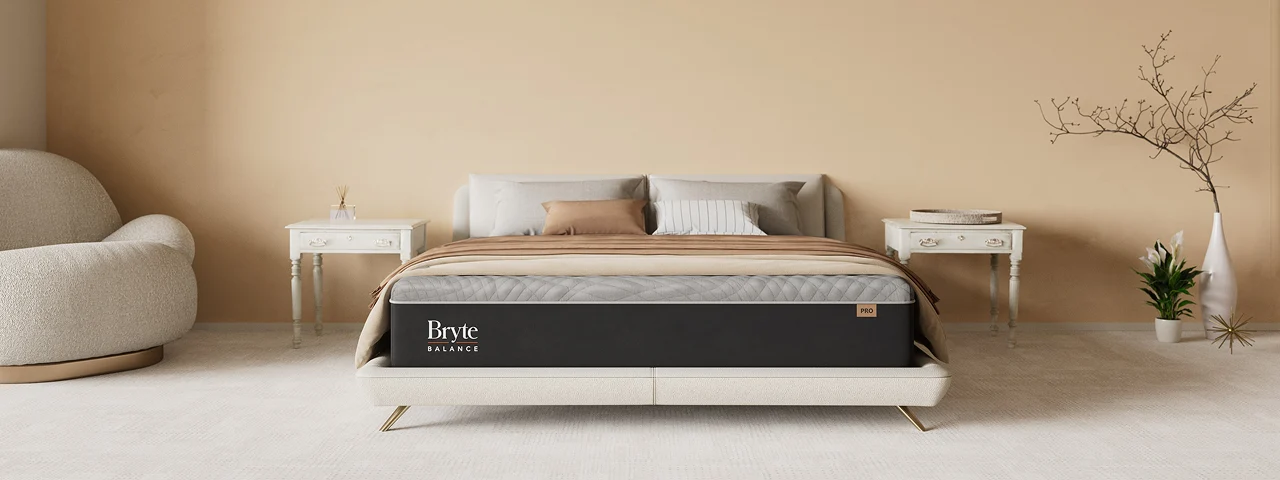
For people who change positions often or couples who need different feels on each side, a smart mattress like Bryte can also be relevant because it can adjust support over time instead of staying fixed.
Quick answers - best mattress for sciatica
- Firm or soft for sciatica? Medical consensus points to a medium-firm surface, though ideal firmness is highly subjective. Mattresses with adjustable or smart technology are increasingly recommended, allowing sleepers to fine-tune their comfort level.
- Best overall for most adults: A supportive hybrid or an adjustable smart mattress (to ensure personalized spinal alignment and prevent the lower back from sinking).
- Best for side sleepers: A medium to medium-firm bed with deep pressure relief, or an active-adjusting smart mattress (to cushion the hips and shoulders while preventing pelvic tilt).
- Best for back sleepers: A medium-firm mattress with reinforced lumbar support, or a smart mattress (to dynamically adapt to the spine's natural curve).
- Best for couples with different needs: A dual-zoned smart mattress (allows independent firmness adjustments so neither partner compromises on posture).
Here's the evidence behind these recommendations and a framework for finding the right option for your specific situation.
Why Sleep Disruption Can Worsen Pain
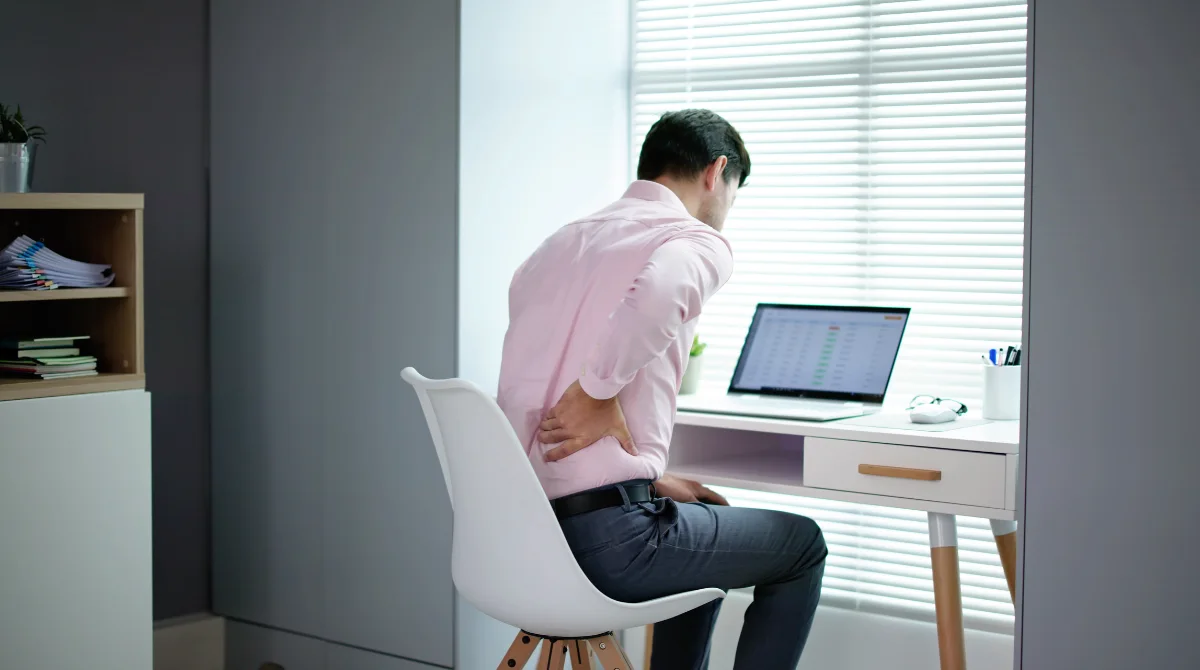
Sciatica is common, and symptoms can meaningfully disrupt sleep for many people. Sleep disruption and nerve pain create a bidirectional cycle that traps many sciatica sufferers in worsening symptoms.
The data is stark. A Mendelian randomization study reported a bidirectional association between insomnia and low back pain risk (OR = 1.954 for insomnia → LBP). Sleep complaints are present in up to 88% of chronic pain disorders, and between 67% and 88% of individuals with chronic pain experience sleep disruption.
What happens to your spine overnight:
- Without proper support, lying down can exaggerate spinal curvature and create sustained pressure on nerve roots
- One study found 33% of participants experienced their most intense spinal pain during evening and first waking
A supportive sleep setup may help reduce sleep disruption for some people, but it is not a substitute for medical evaluation or treatment for sciatica.
What Firmness Level Works Best for Sciatica?
Clinical studies in chronic low back pain often find medium-firm conditions perform well on average compared with very firm surfaces, but individual response varies and consumer firmness scales aren’t standardized.
A systematic review of 39 studies published in PMC found medium-firm mattresses showed higher improvements in pain, disability, sleep quality, and spinal alignment compared to firm or soft options for chronic low back pain. A randomized controlled trial of 313 adults with chronic non-specific low back pain found better outcomes on a medium-firm mattress than on a firm mattress at 90 days.
Why the extremes fail:
Additional research on institutionalized elders with musculoskeletal pain found medium-firm mattresses reduced cervical, dorsal, and lumbar pain significantly from the first week, with shorter sleep onset latency compared to high-firm mattresses.
Real-world experiences echo this clinical data. As one user shared on r/Mattress:
"Very firm being good for sciatica is old wisdom, most of the studies that come out nowadays find medium to medium firm being best for it. You can have a plush soft top but for sciatica issues the number one thing is support. Your old mattress is most likely losing support putting strain on the lower spine and triggering the sciatic nerve. I would look at a medium firm memory foam mattress. Go to a store with him for like an hour and a bit and see which one melts the pain away, that's what I did"
Adjusting for Body Type and Sleep Position
The "medium-firm" recommendation requires calibration based on individual factors:
By body weight:
- Under 150 lbs: Lean toward 5-6 (lighter sleepers sink less, so medium-firm can feel too rigid)
- 150-200 lbs: Standard 5-7 range works well
- Over 200 lbs: Lean toward 6-7 (heavier sleepers need firmer support to prevent excessive sinking)
By sleep position:
- Side sleepers: Need slightly softer surfaces (5-6) to allow shoulder and hip to sink enough for spinal alignment
- Back sleepers: Benefit from firmer support (6-7) to prevent pelvis from dropping
- Combination sleepers: Face a moving target—optimal firmness changes with each position shift
If you consistently wake stiffer or more uncomfortable and it improves after you get moving, your sleep setup (mattress, pillows, position) may be one contributing factor worth evaluating.
This connection between body weight and appropriate firmness is often overlooked. As one user explained on r/Mattress:
"You're not alone, the 'firm mattress is better' myth has misled people for years. Doctors used to tell everyone to sleep on a board for back pain. But if that really worked, why does your butt go numb after 10 minutes on a set of bleachers at a game? Body weight matters. At 130 lbs or less, a firm mattress may never soften up under you, leaving your spine unsupported and pressure points aggravated, especially with a herniated disc. A heavier person might sink into those same layers just fine."
Best Sleep Positions for Sciatic Nerve Relief
Sleep position significantly affects nerve root compression. Here's what works:
Some clinicians and patient-education resources commonly suggest:
- Back sleeping with a pillow under the knees, or
- Side sleeping with a pillow between the knees.
The best option depends on what reduces symptoms for you.
Stomach sleeping should be avoided, as it:
- Flattens spine's natural curve and increases lumbar strain
- Hyperextends lumbar spine, pinching nerve roots
- Creates sustained pressure throughout the night
For stomach sleepers transitioning away: Start with side sleeping using a body pillow for support. Gradual change is more sustainable than sudden shifts.
The pillow-between-knees technique is consistently recommended by those who've found relief. As one sciatica sufferer noted on r/Sciatica:
"I like side sleeping with a pillow between my knees and ankles, it keeps everything aligned and happy."
Critical Mattress Features for Nerve Pain
Zoned Support: Different Regions Need Different Firmness
Your body isn't uniform—the heavier hip region requires firmer support to prevent sinking, while the shoulder area needs softer contouring for side sleepers. Zoned support systems address this biomechanical reality.
A study of adjustable zoned air mattresses showed improved sleep efficiency, with zoned chambers outperforming ordinary mattresses in polysomnography metrics (EEG, HRV)
The Pressure Relief vs. Support Balance
Sciatica sufferers need both—cushioning to reduce pressure on sensitive nerve pathways AND firmness to maintain spinal alignment. This tension explains why many people cycle through multiple mattresses without finding relief.
Material trade-offs:
Features for Mobility Challenges
Edge support matters because getting in and out of bed can be challenging with radiating pain. Weak edge support forces you to use only the center of the bed and makes the transition to standing more difficult.
Responsiveness affects ease of position changes. A highly conforming mattress that responds slowly makes shifting positions feel labored—problematic for those who need to move frequently to find comfort.
Why Static Mattresses May Have Failed You Before
If you've invested in premium mattresses without finding sciatica relief, there's a structural reason: traditional mattresses—even excellent ones—face an inherent limitation.
The problem: Optimal firmness varies by sleep position. A setting perfect for back sleeping creates pressure points when you roll onto your side. Most people change positions multiple times per night.
Static mattresses optimize for one position. Adaptive systems respond to all positions you move through.
This distinction explains why the same mattress receives both 5-star and 1-star reviews from sciatica sufferers. Individual variation in body weight, sleep position, and pain location means a static firmness setting works for some and fails others.
What Research Shows About Adjustable Systems
A 6-week field study published in Oxford Academic comparing adjustable bases to flat sleeping found:
- 28% reduction in back pain (full sample, p<0.001)
- 27% reduction in back pain subsample (p<0.001)
- 15-16% improvement in perceived sleep quality (p<0.001)
- 18-20% improvement in feeling well-rested (p<0.001)
Adjustable bases change sleep posture, which may help some people find more comfortable positions compared with a flat setup.
Bryte's Approach to Adaptive Sleep
Bryte's Adaptive Core uses up to 90 intelligent pneumatic Balancers organized into 16 independent zones (8 per sleeper). These sensors actively detect pressure and adjust firmness in real-time—softening under a developing pressure point or firming when support is needed.
Three models for different preferences:
Bryte's Guided Comfort Tailoring suggests starting comfort settings based on user inputs and sleep data patterns. PRO models feature Individual Zone Control, allowing adjustment of specific areas (like additional lumbar support) and selection of Contours—profiles optimized for back, side, or stomach sleepers.
The Sleep Onset Problem Most Mattress Guides Ignore
For many sciatica sufferers, the challenge isn't just staying asleep—it's getting there. Research from EULAR studies found individuals with chronic pain have longer sleep onset latency, less total sleep duration, more frequent awakenings, and poorer sleep quality.
The anxiety-inflammation connection:
Anticipatory anxiety about pain flares heightens arousal and prolongs sleep onset. People with chronic stress have higher levels of inflammatory markers, which can make sciatica symptoms more severe according to Polaris PT Phoenix. The stress of anticipating pain actually makes the pain worse.
What helps:
CBT-I (cognitive behavioral therapy for insomnia) has been shown to reduce insomnia symptoms, lower inflammation markers (TNF, IL-6), reduce pain, and improve physical functioning in chronic pain patients. Relaxation-based interventions break the anxiety-inflammation-pain cycle.
Bryte's BryteWaves addresses this by syncing gentle, rhythmic motion within the mattress with curated audio (nature sounds, guided meditation) to physically lower stress before sleep. PRO models include guided breathwork and focused intention tracks—addressing the behavioral component that firmness alone cannot solve.
Couples: When One Partner Has Sciatica
Most sciatica mattress guidance focuses solely on the pain sufferer. In reality, mattress purchases typically involve two people with different needs.
Your sciatica affects your partner's sleep. A study published in PMC found the odds of a spouse having poorer quality sleep increased by 22% with every unit increase in patient pain. For less refreshing sleep, the increase was 31%.
Motion transfer fragments sleep cycles. When one partner shifts frequently due to discomfort, micro-arousals triggered by motion transfer repeatedly disturb the other partner.
Partners often need different firmness levels. The sciatica sufferer may require specific support for spinal alignment while their partner has different preferences based on body type and sleep position.
Features That Solve the Couples Problem
Motion isolation: In general, mattresses with strong motion isolation may reduce partner disturbance. Hybrid mattresses with pocketed coils and foam layers showed minimal motion transfer in testing.
Split firmness control: Bryte's Dual Comfort Design allows each partner to independently control their side's firmness (0-100), run their own relaxation tracks, and view their own sleep data. No compromise required.
Independent wake features: Bryte's Silent Wake Assist uses gradual motion to wake one partner without an audible alarm—preventing the sciatica sufferer's earlier waking from disturbing shared sleep.
How to Evaluate a Mattress During Your Trial Period
Trial periods vary by brand and retailer; check the current policy and any required break-in period. For sciatica, longer trials matter because chronic conditions improve slowly.
The importance of adequate trial periods is something the mattress community emphasizes strongly. As one user shared on r/Mattress:
"So here is how i look at it. You spend 1/3 of your time in a bed so i can justify spending good $ for a nice high quality bed. For me it was the best investment i have ever made for myself. But there are happy people out there sleeping on $500 beds. So to each its own. I also have lower back issues. I like the Serta Icomfort CF3000 line. I have had 2, my first was a queen and 2nd was a king. I would also look a sleep number if you have a store near you and you can go try one out. The good thing is that most places give you a trial period now. Take your time and shop around."
What to Track
Don't rely on general impressions. Monitor specific metrics:
- Pain levels upon waking (0-10 scale)
- Morning stiffness duration
- Number of position changes due to discomfort
- Radiating leg pain intensity
- Time to fall asleep
- Number of awakenings
Use a journal to track trends over weeks rather than judging individual nights.
Signs the Mattress IS Working
- Reduced morning stiffness
- Fewer position changes during night
- Less radiating leg pain
- Falling asleep faster
- Longer uninterrupted sleep periods
- Gradual improvement trend over 2-4 weeks
Signs to Return or Exchange
- Pain persists or worsens after 4-6 weeks
- Spinal misalignment upon waking (spine feels curved or twisted)
- Pressure points developing in same locations repeatedly
- No improvement trend despite position optimization
- Increased sciatica flare-ups compared to previous mattress
Normal adjustment period: 2-4 weeks of temporary muscle adaptation is expected. A mattress that's genuinely wrong will show persistent or worsening symptoms beyond this window.
Before Returning: Adjustments to Try
- Add pillow under knees (back sleeping) or between knees (side sleeping)
- Adjust firmness settings if available
- Try Bryte's Guided Comfort Tailoring for AI-recommended settings based on your body attributes
- Experiment with different sleep positions
Frequently Asked Questions
What mattress firmness is best for sciatica?
Medium-firm (5-7 on a 10-point scale) is clinically recommended. The Kovacs double-blind study of 313 adults found medium-firm outperformed both firm and soft options for pain, disability, and sleep quality.
Adjust based on your factors:
- Under 150 lbs: 5-6 range
- 150-200 lbs: 5-7 range
- Over 200 lbs: 6-7 range
- Side sleepers: Softer end of your range
- Back sleepers: Firmer end of your range
Can a mattress really help sciatica pain?
Yes—adjustable sleep surfaces reduced back pain by 28% in clinical trials. Beyond pain reduction, the right mattress breaks the bidirectional sleep-pain cycle where poor sleep increases inflammation and pain sensitivity, which further disrupts sleep.
The mechanism: Proper spinal alignment during sleep allows disc rehydration and reduces sustained pressure on nerve roots that accumulates over 8 hours of unsupported lying.
Is memory foam or hybrid better for sciatica?
Hybrid mattresses typically work better for sciatica sufferers over 150 lbs. Memory foam excels at pressure relief but may lack support for heavier sleepers, allowing the pelvis to sink and increasing lumbar flexion.
Quick comparison:
- Memory foam: Better pressure relief, less support, slower response to position changes
- Hybrid: Good pressure relief, better support, easier position changes
- Adaptive: Adjustable pressure relief and support, responds to position changes automatically
How long should I try a mattress before deciding?
Give it 4-6 weeks minimum; 60-90 days is better for sciatica. Normal adjustment takes 2-4 weeks. Chronic pain conditions improve slowly, and you need enough time to identify trends rather than react to individual nights.
Track daily: Pain levels upon waking, morning stiffness duration, position changes during night. Look for improvement trends, not perfection.
How do I know if my current mattress is causing my sciatica pain?
Key indicators your mattress is contributing to pain:
- Morning stiffness that resolves after 20-30 minutes of movement
- Waking with spine feeling curved or twisted
- Pain that's worse after sleeping than before bed
- Consistent pressure points in same locations
- Mattress is over 7-8 years old or visibly sagging
Do smart mattresses actually help with back pain?
Clinical evidence supports adjustable systems. A 6-week study found adjustable bases reduced back pain by 28% and improved feeling well-rested by 18-20% compared to flat sleeping.
Smart mattresses with real-time firmness adjustment address what static mattresses cannot: optimal support changes as you shift positions during the night. If you've tried multiple static mattresses without relief, this represents a categorically different approach.
Can couples with different needs find a sciatica-friendly mattress?
Yes—split firmness designs eliminate compromise. Research shows partner pain increases spouse sleep disruption by 22-31%. Motion transfer from frequent position changes compounds the problem.
Features that solve this:
- Dual firmness control (Bryte allows 0-100 per side)
- Motion isolation (pocketed coils, foam layers, or pneumatic systems)
- Independent wake features (gradual motion vs. audible alarms)
The right mattress for sciatica produces observable improvements: less morning stiffness, fewer position changes due to discomfort, reduced radiating leg pain, and better sleep quality overall. For those who have cycled through static mattresses without finding relief, adaptive technology addresses the fundamental limitation those mattresses cannot solve—the fact that your optimal support changes every time you shift positions during the night.
Content Disclaimer
This content is not a substitute for professional medical advice, diagnosis, or treatment. We recommend that anyone suffering from chronic pain or medical issues consult with a doctor. Be aware that individual testimonials and sleep experiences described herein are subjective and may differ from your own results.
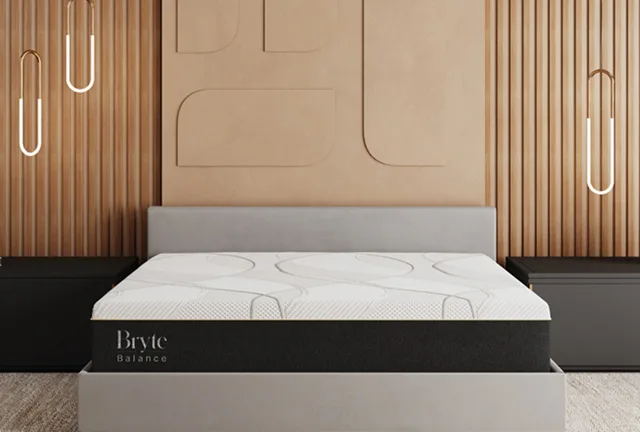
Shop Bryte Beds
From the Park Hyatt New York to Rosewood Miramar Beach, thousands of guests have experienced Bryte in the world’s top hotels—now it’s your turn.