Modern smart mattresses are designed to reduce sleep disruption by detecting pressure buildup at contact points and redistributing that pressure before it contributes to micro-awakenings. Unlike static mattresses that primarily respond to your initial position, some autonomous systems can respond during the night. In this article, that category is called Active Pressure Relief, defined as real-time sensing of pressure points combined with real-time adjustments.
This distinction matters because polysomnography research shows that the average insomnia patient experiences 26+ objective awakenings per night, yet most go unremembered. Feeling exhausted after spending seven hours in bed can reflect fragmented sleep, including brief arousals that reduce time in restorative sleep stages.
Key Research Findings
- 26.55 average objective awakenings per night in insomnia patients, with only 15% attributing disruptions to pain when asked (PMC study)
- Hip pressure in side sleeping is 2x higher than sacral pressure when lying on your back (Wiley pressure mapping study)
- 69% of U.S. adults sleep primarily on their side (2024 SSRS survey)
- 72.8% of chronic pain patients meet clinical insomnia criteria (PMC retrospective study)
- Medium-firm mattresses reduce sleep latency from 12.42 minutes to 7.71 minutes - statistically significant (PMC firmness study)
- Fragmented sleep increases inflammation and cardiovascular disease risk (NHLBI research)
How Pressure Triggers Your Body's Alarm System
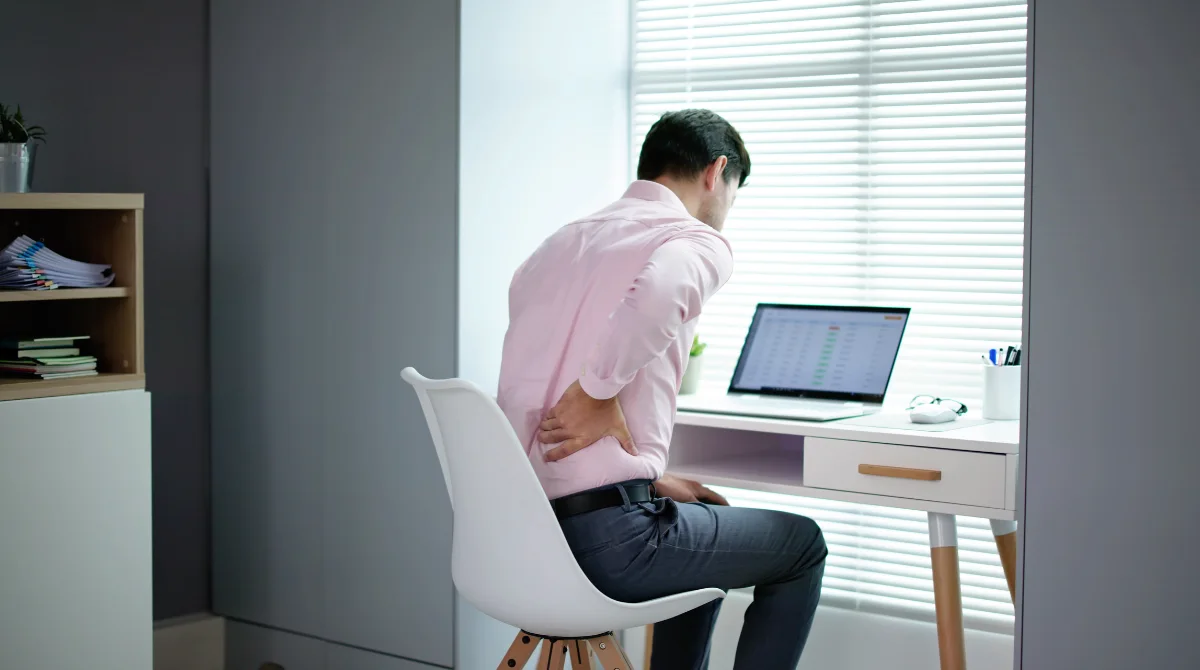
When you maintain one position, body weight compresses soft tissue at contact points - primarily shoulders and hips for side sleepers. This compression can reduce comfort and contribute to local discomfort over time. Your nervous system can respond to sustained pressure and discomfort with brief micro-arousals that prompt repositioning.
The mechanism is often described as gradual pressure buildup leading to discomfort and brief arousals. These arousals may be too short to remember but can still fragment sleep.
Interface pressure mapping research shows that maximum pressure at the hip in lateral position is twice that of the sacral region when supine. Side sleepers experience significantly higher pressure concentrations than back sleepers, creating more frequent triggers for the body's protective response.
The Hidden Toll: Micro-Arousals You Don't Remember
There's a critical difference between waking up fully and experiencing a micro-arousal. Full awakenings involve conscious awareness. Micro-arousals are brief cortical activations that fragment sleep without your knowledge.
A prospective polysomnography study found insomnia patients averaged 26.55 objective awakenings per sleep session (range: 10-43). Most weren't remembered. When asked, people may attribute sleep disruption to multiple causes, and discomfort is not always recognized as the driver in the moment.
The average person changes positions 11-13 times per night. Middle-aged adults average 3.2 conscious awakenings. But the subconscious arousals - the ones pressure triggers - accumulate invisibly.
This invisible accumulation resonates with many sleepers online. As one user explained on r/insomnia:
"I fall asleep relatively easily within half an hour around 11:30-midnight, but I always wake up around 3 or 3:30 AM, and then stay up for a couple of hours, then maybe drift off into little bouts of fragmented REM (dream) sleep, punctuated by periods of being awake, maybe each around 20-30 mins, but it varies. So I get like 3-3.5 hrs of sleep before my body just decides to go nope and then wake up, often coming out of a dream. And the sleep I get afterward is so fragmented that I don't think I really get into the restorative deep sleep type in it."
What fragmentation costs you:
Research demonstrates that fragmented sleep reduces slow-wave (N3) and REM sleep minutes compared to consolidated sleep. These stages handle:
- Memory consolidation
- Executive function restoration
- Emotional regulation
- Physical recovery
Seven hours in bed doesn't equal seven hours of restorative sleep. Not when pressure keeps triggering your body's alarm system.
The Side Sleeper's Dilemma: Why Uniform Firmness Fails
Side sleeping is the dominant position. 69% of U.S. adults sleep primarily on their side according to a 2024 SSRS survey. A study of 664 sleepers found participants spent 54% of bed time in lateral position.
Side sleeping concentrates body weight onto one hip and shoulder, creating a biomechanical problem that uniform firmness cannot solve.
Side Sleeper Zone Requirements:
- Shoulder zone: Must allow sink-in to prevent the mattress from pushing up into the joint
- Hip zone: Must balance cushioning (prevent pressure) with support (prevent excessive sinking)
- Lumbar zone: Must provide filling support to prevent lateral spinal bending in the waist gap
A firmness level soft enough to cradle the shoulder allows too much hip sink. A firmness level firm enough to support the hips creates shoulder pressure. This is often a physics problem that single-firmness surfaces struggle to solve.
The frustration is palpable in online discussions. One user on r/Home described the dilemma:
"I have arthritis in my low back (low lumber and sacrum areas) as well as hip pain (and neck, but I think that's more of a pillow issue). I have yet to find a mattress that does not cause me to have pain when I wake up. I sleep on my side and tend to roll back and forth from one side to the other all night. I don't want something too firm since it hurts my hips, but my current mattress (a gift from a friend) is super soft and while it does not cause pain in my hips, my back is horrible when I get up."
The Sinkage-Alignment Paradox
Many shoppers fear that a mattress soft enough for pressure relief will cause alignment problems. The concern is valid.
A mattress that's too soft allows excessive sinking at the hips, creating a U-shaped spinal position rather than neutral alignment. A mattress that's too firm fails to allow adequate sink-in at shoulders and hips, creating pressure concentration.
Research confirms the middle ground matters. Medium-firm mattresses promote comfort, sleep quality, and spinal alignment according to a systematic review. Cleveland Clinic reports medium-firm surfaces improve sleep quality by 55% and reduce chronic back pain.
But "medium-firm" isn't universal. A 130-pound side sleeper and a 230-pound side sleeper experience the same mattress completely differently. Body weight affects pressure magnitude. Body shape affects pressure distribution. Single-firmness solutions fail because they cannot account for this variability.
For some sleepers, the solution is not a single firmness choice. Zoned support can help, and Active Pressure Relief can adjust support during the night as pressure patterns change.
Pain and Sleep: The Bidirectional Trap
The intersection of chronic pain and sleep problems is nearly universal among pain patients.
Prevalence data:
- 53% of pain clinic patients experience moderate to severe clinical insomnia
- 72.8% of chronic pain patients meet diagnostic criteria for insomnia
- Up to 88% of chronic pain patients experience sleep problems
- Over 33% of adults reported back pain in the previous three months (2021 NCHS survey)
The relationship runs both directions. Fragmented sleep promotes chronic inflammation, increasing neutrophils throughout the bloodstream according to NHLBI research on 1,600+ adults. Inflammation lowers pain thresholds and amplifies pain perception.
Patients meeting insomnia criteria report mean pain scores of 6.4 versus 4.8 for those without insomnia. Pain disrupts sleep. Disrupted sleep increases pain sensitivity. Neither problem resolves without addressing the other.
For some people, intervening at the sleep surface level by reducing pressure-triggered awakenings may help reduce one contributor to the pain and sleep cycle.
The Firmness-Sleep Architecture Connection
Some sleep lab research has measured how mattress firmness can influence sleep outcomes.
A polysomnography study found:
The same research found that intermediate pressure distribution increased N3 (deep sleep) duration while reducing micro-arousals. Studies on actively adjusting sleep systems showed improved subjective sleep quality with trends toward increased slow-wave sleep.
Material composition affects pressure distribution measurably. Latex reduces peak body contact pressure by up to 35.1% compared to polyurethane foam. An air overlay reduced night awakenings and low back pain in chronic pain patients (n=19, statistically significant).
The Technology Spectrum: Three Categories
Not all "adaptive" mattresses adapt in the same way. The distinction determines whether a mattress can prevent pressure-triggered awakenings or merely cushion them.
Active Mattress Technology Comparison
Passive Conforming: Materials That Respond Once
Memory foam, latex, and zoned coils provide static contouring. They compress under heavier body regions and remain firmer under lighter areas. Zoned support provides different resistance levels in different mattress areas - typically softer at shoulders, firmer at lumbar.
The limitation: passive materials respond to your initial position but don't adjust as conditions change. Pressure builds over time in any static position. Body temperature affects foam responsiveness. Position changes create new pressure patterns the surface cannot anticipate.
A mattress that feels comfortable at 10 PM may create discomfort at 3 AM - the surface that worked for your initial position provides suboptimal support when you shift.
User-Controlled: Settings You Choose Before Sleep
User-controlled adjustable air systems allow firmness modification via app. Each partner can set preferred firmness independently. This addresses the compromise problem for couples.
The limitation is that settings typically remain constant once selected. If you change positions during the night or pressure builds over time, the system does not respond in real time. The firmness that worked when you fell asleep may not be optimal hours later.
User feedback on these systems reveals a significant limitation. As one reviewer shared on r/sleepnumber:
"I made the mistake of buying a sleep number bed in 2016. It cost around $6,000. Huge mistake. I took it down last month because every morning I woke up with a stiff back. The adjustable bed frame constantly disconnects. It sucks. I had to buy mattress topper after mattress topper to make it comfortable. I just bought $500 Novaform with back support at Costco. I love it. My sleep number is in about 6 black hefty yard bags."
Autonomous Real-Time Adaptive: Continuous Detection and Response
A third category involves systems like Active Pressure Relief, defined as real-time sensing of pressure points combined with real-time adjustments.
How to evaluate an Active Pressure Relief system:
- Sound level. It should be quiet. If it is noisy, it can wake the sleeper and worsen sleep fragmentation.
- Resolution. Higher resolution means more precise sensing and adjustment across more zones. Lower resolution systems such as Sleep Number use a single air bladder for the whole body, which limits precision.
- Response time. True real-time adjustment happens within seconds. Sleep Number adjusts only once per hour.
The distinction matters for preventing micro-arousals.
Pressure buildup is gradual - blood flow restriction develops, metabolites accumulate, and eventually the nervous system triggers an arousal. A system detecting pressure before the threshold is reached can intervene preemptively, redistributing pressure before the cascade begins.
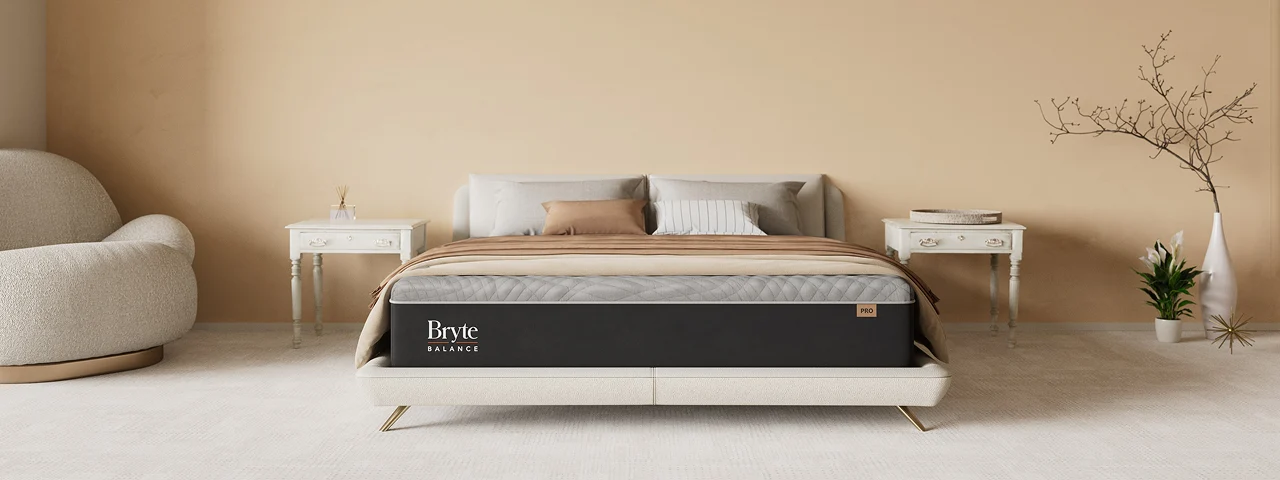
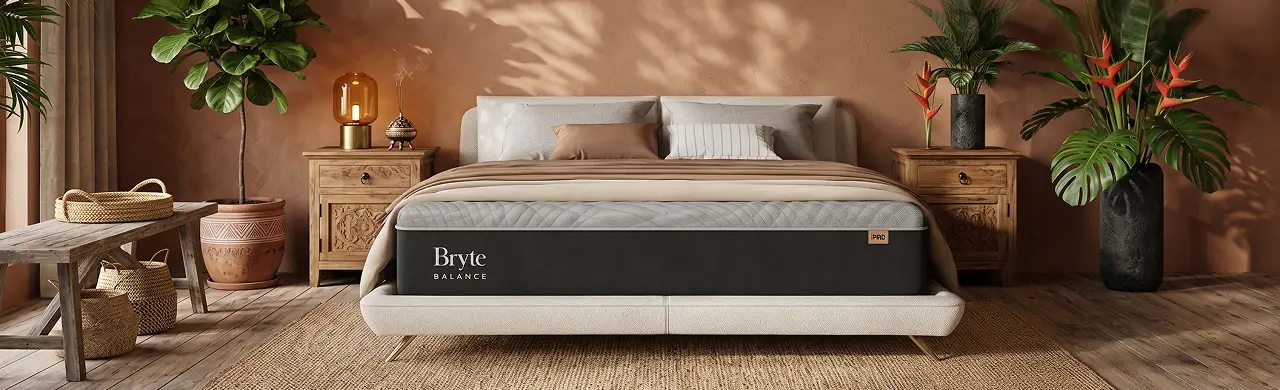
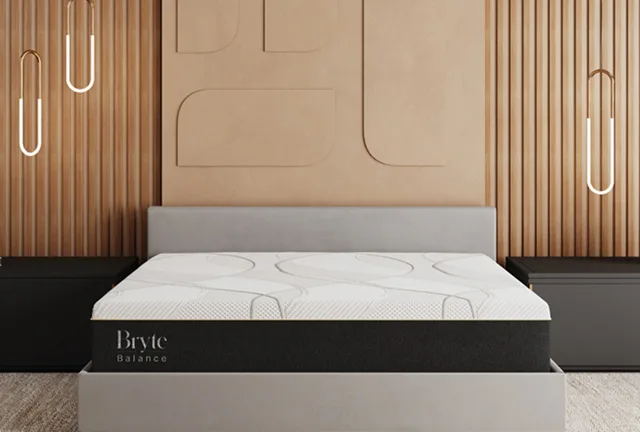
The Bryte Smart Bed operates in this autonomous category. The Bryte Adaptive Core features pneumatic Bryte Balancers organized into 16 independent zones (8 per sleeper). These sensors actively sense and remove pressure points in real-time throughout the night. When the system detects pressure imbalances developing, it makes silent automatic adjustments before they reach the arousal threshold.
The system is powered by Restorative-AI and software updates via Bryte OS. This design supports ongoing refinement over time.
Matching Pressure Relief to Body Type
Body weight and shape determine what support profile a sleeper actually needs.
Weight affects pressure magnitude:
- Heavier sleepers create higher PSI at contact points
- They require firmer support to prevent excessive sinking
- A "medium" mattress may feel soft to a 230-pound sleeper
Shape affects pressure distribution:
- Sleepers with broader hips relative to waist need more hip sink-in
- Those with narrower hips need less
- Hip-to-waist ratio determines alignment requirements
This variability explains why mattress recommendations based solely on sleep position often fail. Two side sleepers with different body types need different support profiles. Single-firmness solutions cannot accommodate this range.
One user on r/Home captured this discovery process well:
"Almost exactly the same here - 230 weight, side sleeper, tend to constantly roll between sides and back. Also, sleep with a CPAP. I have lower back arthritis so constant lower back pain. After testing a whole bunch of mattresses in all price ranges nothing seemed to be a 'magic bullet'. I visited my sister in another state and slept on her guest room mattress and slept like I was dead. Woke up so rested and no hip or other joint pain. I asked her what kind of mattress it was and she sheepishly told me is was some no-name Costco mattress that was very firm and she just put an inexpensive memory foam topper on it."
Bryte addresses this through Guided Comfort Tailoring, which recommends firmness settings based on body attributes and sleep data. You can explore Bryte products based on your preferences.
PRO models add Individual Zone Control, allowing adjustment of specific areas like the lower back, with Advanced Contour profiles optimized for back, side, or stomach sleeping.
The Bryte Model Portfolio
All models include:
- Active Pressure Relief Technology
- Dual Comfort Design (each partner controls 0-100 firmness independently)
- BryteWaves immersive relaxation (synced motion with curated audio)
- Sleep insights and management via Bryte app
- Premium covers (stretch knit for Balance, advanced cooling materials for PRO models)
PRO models add:
- Special BryteWaves added library of guided breathwork and focused intention tracks
- Advanced Contours and Zone Control, which allows users to tune precise support across 8 body zones
- AI-powered personal Sleep Concierge (personalized sleep advisor and coach)
- Silent Wake Assist (gradual motion wakes one partner without disturbing the other)
What This Means for Long-Term Health
Sleep fragmentation isn't just about feeling tired. Research connects poor sleep to systemic health consequences.
Chronic sleep deficiency is associated with adverse health outcomes, including cardiometabolic risk and mood symptoms. If you have persistent insomnia or sleep disruption, consider discussing it with a licensed healthcare professional.
Static mattresses degrade. Research using the Boston Mattress Satisfaction Questionnaire found a significant inverse correlation between mattress age and satisfaction - those with mattresses 10+ years old reported significantly lower satisfaction across all domains compared to those with mattresses under 3 years (p < 0.001).
Mattresses generally last 7-10 years before affecting sleep. Materials lose responsiveness. Springs lose tension. The surface that once provided adequate support no longer performs to specification.
Smart mattress systems with software updates can refine certain features over time, while mattress materials still experience normal wear.
Frequently Asked Questions
How do pressure points cause sleep fragmentation?
Sustained compression at contact points restricts blood flow, triggering your nervous system to initiate a protective micro-arousal before tissue damage occurs.
- Side sleepers experience 2x higher hip pressure than back sleepers
- The body detects pressure buildup through mechanoreceptors
- Brief arousals prompt repositioning - most aren't consciously remembered
- Cumulative effect depletes N3 (deep) and REM sleep stages
What firmness is best for side sleepers with hip pain?
Medium-firm surfaces show the best research outcomes, but optimal firmness depends on body weight and shape - not just sleep position.
- Medium-firm reduces sleep latency from 12.42 to 7.71 minutes
- Heavier sleepers need firmer support to prevent excessive sinking
- Lighter sleepers may need softer surfaces to trigger adequate contouring
- Zoned or dynamic adjustment addresses the shoulder-hip-lumbar conflict
Can a mattress really prevent nighttime awakenings?
It can help for some sleepers if it detects and redistributes pressure before discomfort triggers arousal. Passive materials cannot do this. User-controlled systems cannot do this during sleep. Autonomous real-time systems can intervene during the pressure-buildup phase, before your nervous system triggers the protective response.
How is Bryte different from Sleep Number?
Sleep Number adjusts firmness before sleep based on user input. Bryte adjusts firmness during sleep based on real-time pressure detection.
How long before I notice improvement?
Some sleepers notice differences within the first few weeks. Initial adaptation can take several nights as you adjust to a new sleep surface and settings.
What if my partner and I need different firmness levels?
Bryte's Dual Comfort Design allows each partner to independently control firmness from 0-100. Each side operates as an independent sleep surface - different firmness, different Contour profiles, different sleep data. Silent Wake Assist can wake one partner through gradual motion without disturbing the other.
Will a soft mattress hurt my spinal alignment?
Too-soft surfaces can cause hip sinking and spinal misalignment. Dynamic systems prevent this by maintaining support while providing surface cushioning. The 0-100 firmness range means support can be adjusted without sacrificing pressure relief. The system actively prevents excessive sinking rather than relying on static material properties.
Content Disclaimer
This article is for educational and informational purposes only and is not medical advice. It does not diagnose, treat, cure, or prevent any medical condition. If you have persistent insomnia, chronic pain, suspected sleep disorders, or symptoms that affect safety or daily functioning, consult a licensed healthcare professional. Quotes from online forums are included for general context only and do not represent every experience or outcome.
Shop Bryte Beds
From the Park Hyatt New York to Rosewood Miramar Beach, thousands of guests have experienced Bryte in the world’s top hotels—now it’s your turn.