For most people, a $1,000–$2,000 hybrid delivers 80–90% of the sleep performance of a $5,000+ luxury mattress built from passive materials.
But for specific groups - chronic pain sufferers, couples with different firmness needs, and people who struggle to fall asleep - active sleep technology (real-time, silent pressure adjustment, and AI personalization) delivers capabilities that passive materials at any price cannot match. The difference isn't better foam. It's a fundamentally different product category.
Here's the full breakdown: what the research actually shows, where your money makes a difference, and where it doesn't.
93% of Adults Don't Feel Well-Rested. The Problem Isn't Laziness
Before evaluating price tiers, the stakes matter. Sleep isn't a comfort preference. It's the single largest modifiable factor in your physical health, mental health, and cognitive performance, and the data on what poor sleep costs is worse than most people realize.
According to the National Sleep Foundation's 2025 Sleep in America Poll:
- 60% of American adults don't get the recommended 7–9 hours regularly
- 68% have difficulty falling asleep
- 70% struggle to stay asleep through the night
A separate 2025 Dreem Health survey found that only 7% of adults feel genuinely well-rested on a daily basis. Not 70%. Seven percent.
NielsenIQ's 2025 data shows 63% of global consumers say they prioritize sleep more than five years ago, yet outcomes haven't caught up with intention. The gap between wanting better sleep and getting it is exactly where the mattress investment question becomes relevant.
What Poor Sleep Actually Costs - In Health, Money, and Performance
The consequences go far beyond grogginess.
Health Impact
A 2025 meta-analysis of 54 randomized controlled trials covering 10,196 adults found that improving sleep quality leads to statistically significant reductions in depression scores (MD = −2.92, p < 0.001) and anxiety levels (MD = −1.14, p < 0.001). Short sleepers - those getting under six hours - report 5.3 poor mental health days per month and have a depression prevalence of 59.7%, compared to 42.8% among those sleeping 6–8 hours.
A clinical review published in PMC found that sleep deprivation raises all-cause mortality risk by 6–15% and is linked to cardiovascular disease risk increases of 16–38%.
Economic Impact
Poor sleep costs the U.S. economy $280–$411 billion annually - roughly 2.28% of GDP - according to RAND Corporation analysis. At the individual level:
- Sleep disorders add $94.9 billion/year to U.S. healthcare costs
- Affected individuals incur roughly $7,000 more annually (60% higher) in medical visits, ER use, and prescriptions
- Insomnia alone accounts for $63.2 billion in lost workplace productivity
- Employers lose an estimated $1,967–$3,156 per sleep-deprived worker per year
The point is straightforward: if spending more on a mattress meaningfully improves sleep quality, the return on that investment, measured in health outcomes, reduced medical costs, and professional productivity, can be significant. The question is whether spending more actually delivers that improvement.
Price Doesn't Automatically Mean Better Sleep
Let's get this out of the way, because credibility requires it.
Price alone does not correlate strongly with sleep quality. Consumer testing consistently finds that high-performing mattresses often cost around $1,000 for a queen, and that some budget models at ~$600 score well in support and durability. The price-quality relationship weakens significantly past approximately $1,000.
A 2025 polysomnography (sleep lab) study of 12 adults found that mattress firmness - not price - was the most significant variable in sleep outcomes. Medium-firm mattresses produced shorter sleep latency (7.71 minutes vs. 12.42 minutes on soft mattresses) and significantly fewer sleep stage disruptions.
The best-sleeping participants weren't on the most expensive beds. They were on the right beds for their bodies.
This is a sentiment echoed widely in real-world experience. As one Reddit r/Mattress user put it:
"The right mattress for your needs makes you sleep better. A $10k TempurPedic that doesn't work well with your sleep style/body/needs is worse than a $1000 generic memory foam that's the actual firmness/support/comfort that works for you. Nicer stuff (components) should last longer. More natural (more expensive) components should wear and temperature regulate better. There's also kind of quality levels to be had. The difference between the $500 queen and the $1500 queen is probably more profound than going from the $4000 to $10000 level."
What You Actually Get at Each Price Tier
Under $1,000: The Baseline
Budget mattresses provide adequate initial comfort but typically degrade within 5–7 years - sagging, losing support, and accumulating allergens. Warranties are often prorated, meaning you bear increasing replacement costs over time. According to the Sleep Foundation, innerspring mattresses last 5–8 years, while basic memory foam models last 7–10 years.
$1,000–$2,000: The Sweet Spot for Most Sleepers
This is where per-dollar improvements are most significant. You'll find individually pocketed coils, higher-density memory foam, natural latex layers, and zoned support systems. These mattresses typically last 8–12 years and carry non-prorated warranties. For the majority of adults - solo sleepers without chronic pain or complex sleep preferences - this range offers legitimate, measurable value.
$2,000–$5,000: Better Materials, Diminishing Returns
Beyond $2,000, the value equation for traditional mattresses shifts. Expert reviews consistently find that a $1,000–$2,000 hybrid matches 80–90% of the sleep performance of a $5,000+ luxury mattress when both are built from passive materials. You get superior foam densities, better edge support, premium cover fabrics, and longer warranties - real improvements, but progressively smaller ones for the average sleeper.
This is an important distinction. When the mattress industry talks about "luxury," it usually means higher-grade versions of the same fundamental approach: foam, springs, latex, or some combination. These are all passive materials. They do what they do when you lie on them, and they don't change.
$5,000+: Where the Paradigm Shifts
At this tier, something fundamentally different happens. You're no longer buying better materials. You're entering the category of active sleep technology - and that's where the standard diminishing-returns argument stops applying.
The Passive vs. Active Distinction Most Mattress Comparisons Miss
This is the single most important concept for evaluating whether a $5,000 mattress is worth it - and most comparisons ignore it entirely.
What Is a Passive Mattress?
A passive mattress - whether it costs $500 or $5,000 - is a static surface. It cushions your body based on its material properties. It cannot detect that your hip is bearing too much pressure at 2 AM, that you've shifted from your back to your side, or that your partner needs a firmer surface than you do. It exists in the state it was manufactured in, gradually degrading over time.
What Is Active Pressure Relief?
Active Pressure Relief is a mattress technology that uses real-time sensing of pressure points combined with real-time, silent adjustments to continuously adapt the sleep surface throughout the night. This is not the same as a mattress with a remote control that lets you manually change firmness before bed. The distinction is critical:
- Manual firmness adjustment = a one-time setting you choose before sleep
- Active Pressure Relief = a continuous, autonomous process that detects pressure imbalances and silently resolves them without the sleeper needing to wake up or intervene
The diminishing-returns curve that applies to passive mattresses doesn't apply in the same way to Active Pressure Relief technology, because you're not paying for incrementally better materials. You're paying for entirely different capabilities - capabilities that passive mattresses at any price cannot provide.
The Active Mattress Evaluation Framework: Three Metrics That Matter
Not all products marketed as "smart mattresses" deliver the same level of performance. We call this the Sound-Resolution-Response framework - three specific metrics that separate well-engineered active systems from gimmicky implementations:
1. Sound (Noise Level)
An adaptive smart mattress must be silent or near-silent. If the adjustment mechanism produces noise, it defeats its own purpose by creating a new source of sleep disruption. Any system that wakes the sleeper while trying to improve their comfort is poorly designed.
2. Resolution (Sensing Precision)
A system with a single air bladder per side has low resolution - it can make the entire surface firmer or softer, but it can't address a specific pressure point at your lower back independently from your shoulders. Bryte's 16-zone, 90 balancer system represents high resolution: 90 individual pneumatic balancers organized into 16 independent zones (8 per sleeper), each capable of independent adjustment. This precision allows the system to address localized pressure imbalances rather than making broad, imprecise changes.
3. Response Time (Speed of Adjustment)
How quickly does the system detect a pressure change and respond? A system that adjusts only once per hour is fundamentally different from one that adjusts silently in real time within seconds. The value of Active Pressure Relief depends on the system responding fast enough to prevent discomfort from building to the point where it triggers a wake event.
These three criteria give buyers a concrete framework for evaluating whether an adaptive smart mattress is genuinely well-engineered or simply using "smart" as a marketing label.
What the Clinical Research Actually Shows
The active vs. passive distinction isn't theoretical. Published research supports the premise that active pressure management and mattress characteristics directly affect objectively measured sleep outcomes.
Key Research Findings:
- Pressure-relieving mattresses improve objective sleep metrics. A 2024 quasi-experimental study of 39 adults with nonclinical insomnia found that switching to a pressure-relieving mattress for 8 weeks produced objectively measured improvements (tracked via Oura Ring) in total sleep time, deep sleep duration, and light sleep duration - while reducing time spent awake at night. Participants also reported improved Pittsburgh Sleep Quality Index scores and fewer awakenings.
- Medium-firm surfaces double pain improvement likelihood. A clinical analysis referencing a Lancet trial found that medium-firm, pressure-relieving mattress surfaces doubled the likelihood of low-back pain improvement over firm surfaces, with one study reporting 48% pain reduction after 28 days.
- Mattress firmness directly affects sleep latency. A 2025 polysomnography study of 12 adults found medium-firm mattresses yielded significantly shorter sleep latency (7.71 ± 1.31 min vs. 12.42 ± 1.94 min on soft) and fewer sleep stage shifts (23.33 vs. 29.17).
- Sleep quality improvements reduce depression and anxiety. The 2025 meta-analysis of 54 RCTs (10,196 adults) found statistically significant reductions in both depression and anxiety scores when sleep quality improved.
- Sleep deprivation carries measurable mortality risk. A PMC clinical review found sleep deprivation raises all-cause mortality risk by 6–15% and cardiovascular disease risk by 16–38%.
Active Pressure Relief extends these findings by making pressure management a continuous, real-time, silent process rather than a static, one-time configuration.
Chronic Pain: When a Mattress Becomes a Health Investment
Back pain affects 39% of U.S. adults at any given time, according to Piedmont Pain Care. Eighty percent experience it at some point in their lifetime. And the connection to mattress choice isn't speculative: research cited by iSense Sleep indicates that up to 38% of lower back pain cases can be aggravated by mattress choice.
Meanwhile, Better Sleep Council data shows 26% of consumers sleep on a mattress 7+ years old, despite 53% rating their sleep "fair" or "poor." The average disposal age is 13.9 years - meaning many people sleep on mattresses well past their effective lifespan.
The frustration of searching for the right mattress is something chronic pain sufferers know all too well:
"I got a Saatva RX, a mattress that's for chronic pain and it's like sleeping on a supportive cloud. My Husband waxes rhapsodic about it and we talk about writing the company a love letter about our bed at least once a week. The issue is… the king size was about 4k. There's a trust from my mom's will that okay's expenses that are considered investments in my health and this was one that they approved. It's about $1.10 a day, if the mattress lasts a decade, for me to be in less pain, have better condition, and be more active. One of the best expenses the trust could cover, honestly. It's still in the free at home trial period (a YEAR!?) but it's the best bed I've ever had. But most people, well, don't have trusts. And it's exorbitantly expensive, even with Black Friday. I hope that eventually it won't be seen as "extra," to have a bed that actually HELPS pain, when sleep is so important to maintenance and recovery. I hope you find a bed that's reasonably priced and helps ease your pain. I'm in mine at least 1/2 of the time and having it be a place of healing has been important." (Reddit, r/ChronicPain)
Why Passive Cushioning Falls Short for Pain
A traditional mattress - even a premium one - addresses pressure through passive cushioning. The foam conforms to your body shape and distributes weight. This can be effective in your initial sleeping position, but it doesn't adapt when you move. If you shift from your back to your side, the pressure distribution changes entirely. A passive surface can't respond. Over the course of a night, accumulated pressure in one area can build to the point where it triggers a micro-awakening - a brief disruption the sleeper may not consciously remember but that fragments restorative deep sleep.
How Active Pressure Relief Addresses Pain Differently
Bryte's 16-zone, 90 balancer system continuously detects pressure imbalances and makes silent, automatic adjustments in real time. This reduces the chance that discomfort becomes a wake trigger. The system can minimize pressure and wake events across all sleep positions and may help sleepers stay in side sleeping positions longer without disruption. It can also help improve breathing for those dealing with snoring and sleep apnea.
On the Bryte Balance PRO and Bryte Balance PRO Conform, Individual Zone Control allows users to target specific body areas - like the lower back - with distinct firmness settings. Users can also select "Contours," posture-specific profiles optimized for back, side, or stomach sleepers, so the support adapts not just to pressure but to sleep style.
Bryte mattresses are not medical devices and don't diagnose, treat, or cure conditions such as chronic back pain or spinal injuries. But the technology can help reduce discomfort and may support longer periods of uninterrupted sleep for people dealing with pain.
Couples: Why "Motion Isolation" Solves Only 25% of the Problem
Partner disturbance is far more common - and more complex - than most mattress comparisons acknowledge.
The data:
- 82% of Americans in relationships report being consistently woken by their partner
- 52% cite snoring as the primary cause; 25% cite tossing and turning
- ~40% of couples disagree on preferred mattress firmness
- 31% of U.S. adults have practiced "sleep divorce" - sleeping separately - rising to 39% among adults aged 35–44, per the American Academy of Sleep Medicine
Most mattress comparisons reduce this to a single feature: motion isolation. Motion isolation addresses physical movement transfer - when one partner rolls over, the other doesn't feel it. That's real and useful. But it solves only one dimension of the problem. It does nothing about firmness disagreements, different sleep schedules, different wake times, or the fact that two bodies with different weights and sleep positions generate entirely different pressure profiles.
What Couples Actually Need from a Shared Bed
Bryte's Dual Comfort Design addresses the full scope:
- Independent firmness control - each partner sets their own firmness on a 0–100 scale
- Independent BryteWaves relaxation - each partner runs their own multi-sensory tracks
- Independent sleep data - each partner views their own metrics through the Bryte app
- Silent Wake Assist - gradual motion wakes one partner without an audible alarm, leaving the other undisturbed
The Per-Person Math Changes Everything
A Bryte Balance at $4,799 for a queen, split between two sleepers, comes to approximately $2,400 per person - squarely within the $1,000–$2,500 range that mainstream advice identifies as the sweet spot for mattress value. For couples who would otherwise need two separate mattresses, two bed frames, or two separate rooms, a single dual-comfort bed is often the more economical solution.
The Sleep Problem Worth Talking About: Difficulty Falling Asleep
Most mattress comparisons focus exclusively on what happens after you're asleep - support, pressure relief, motion isolation. They almost entirely ignore the 68% of adults who struggle to fall asleep in the first place.
According to the National Sleep Foundation's 2025 poll, nearly 40% of adults experience difficulty falling asleep 3+ nights per week. The AASM reports that 12% of U.S. adults have diagnosed chronic insomnia, rising to 16% among those aged 25–34.
Sleep onset difficulty isn't just about physical comfort. It involves a neurological component - the inability to disengage from the stress state and transition into sleep. No passive material, regardless of how premium, can physically address this. A $5,000 organic latex mattress and a $500 memory foam mattress are equally inert when it comes to helping your nervous system shift from wakefulness to sleep.
The psychological dimension of sleep onset difficulty is something insomnia sufferers understand deeply:
"Negative associations with your own bed, it reminds you of sleepless nights. If you feel yourself getting insomnia, try to get up and walk around, drink some water, sit on the couch and read, then go back to bed when you feel sleepy." (Reddit, r/insomnia)
How BryteWaves Addresses Sleep Onset
BryteWaves™ multi-sensory relaxation, available on all Bryte models, takes a different approach. It syncs gentle, rhythmic motion within the mattress with curated audio - nature soundscapes, guided meditation, or breathwork - to provide predictable vestibular input that can signal safety and help lower stress arousal during sleep onset.
On the Bryte Balance PRO and Bryte Balance PRO Conform, the BryteWaves library expands to include additional guided breathwork, focused intention tracks, and meditation wellness tracks, along with an AI-Powered personal Sleep Concierge that tracks sleep data and makes continuous recommendations.
For the significant population of adults who struggle with sleep onset - whether due to stress, anxiety, or chronic insomnia - this represents a category of mattress functionality that passive products at any price point simply can't offer. BryteWaves can help support faster sleep onset and may reduce sleep-related anxiety, but it is not a substitute for clinical treatment of diagnosed sleep disorders.
The Cost-Per-Night Reality Check
Mattresses aren't lump-sum purchases. They're 10-year infrastructure investments, amortized nightly.
For context: a cup of coffee runs $5–$7. A gym membership averages $40–$50/month. You'll spend roughly one-third of your entire life on your mattress. At $1.31/night for an adaptive smart bed with Active Pressure Relief, the daily cost is less than most routine discretionary purchases.
What Poor Sleep Is Already Costing You
The value calculation has another side. Sleep disorders add approximately $7,000/year in additional healthcare costs per individual. Employers lose $1,967–$3,156 annually per sleep-deprived worker in lost productivity. For someone sleeping on a degraded mattress past its effective lifespan - and 26% of consumers are doing exactly that - the hidden costs accumulate in increased pain, fragmented sleep, reduced cognitive performance, and higher healthcare utilization.
When the annual cost of poor sleep can reach $3,000–$7,000 in healthcare and productivity losses, a $4,799 mattress amortized over 10 years ($480/year) starts to look less like an extravagance and more like a cost-effective intervention.
What Premium Buyers Actually Spend - And Why
The perception that $5,000 on a mattress is unusual doesn't match actual consumer behavior. According to the Better Sleep Council's 2025 survey of 500 U.S. adults purchasing queen mattresses at $2,500+:
- ~40% of premium buyers spend $5,000 or more
- 83% cite comfort, support, and health benefits as the top motivator
- 52% cite technology as a key purchase factor
These aren't impulse purchases. They're deliberate, health-motivated investment decisions. The sleep wellness economy reached $73 billion in 2024, growing at 12.6% annually - driven by consumers who've tried passive solutions and found them insufficient.
The Better Sleep Council also reports that the average mattress replacement cycle has dropped to 8.3 years, while the average disposal age sits at 13.9 years. Many people continue sleeping on mattresses long past their effective lifespan. A mattress that maintains performance over a full 10-year warranty period - particularly one that receives over-the-air software updates to improve over time, as Bryte's platform does - offers a durability dimension that passive mattresses can't match.
Who Should - and Shouldn't - Spend $5,000 on a Mattress
A $5,000+ Active Mattress Is Most Worth It For:
- Chronic pain sufferers - 39% of U.S. adults report back pain; up to 38% of cases are aggravated by mattress choice. Active Pressure Relief silently detects and resolves pressure imbalances in real time - a fundamentally different approach than passive cushioning.
- Couples with mismatched sleep needs - 40% disagree on firmness, 31% have resorted to sleeping separately. Dual-comfort systems with fully independent per-side control eliminate the need for compromise.
- People who struggle to fall asleep - 68% of adults have difficulty with sleep onset; 12% have diagnosed chronic insomnia. BryteWaves multi-sensory relaxation addresses the neurological component of sleep onset that no passive mattress can touch. Available on all Bryte models.
- Health-focused optimizers - consumers who treat sleep the same way they treat fitness or nutrition: as a deliberate investment in long-term performance and wellbeing.
When You Should NOT Spend $5,000:
- You consistently sleep well, wake feeling rested, have no chronic pain, and fall asleep without difficulty - a well-constructed $1,000–$2,000 mattress is likely sufficient
- Your sleep issues are environmental - noise, light, room temperature, or irregular schedules - a mattress upgrade of any kind may not address the root cause
- The purchase would create meaningful financial stress - the anxiety of the expense could offset the sleep benefits; a good mid-range mattress combined with basic sleep hygiene improvements may deliver a better overall outcome
Active sleep technology delivers its greatest value when it's solving a real, persistent problem that passive mattresses have failed to address. If you don't have that problem, you don't need the solution.
Pre-Purchase Questions to Ask Before Any Premium Mattress
Before committing to any premium mattress, these questions can help ensure a confident decision:
- What specific sleep problem am I trying to solve? If you sleep well and have no chronic pain or couple conflicts, a $1,200–$1,800 hybrid may be exactly right. Premium technology is most valuable when solving a real, persistent problem.
- Am I buying technology or just materials? Expensive natural materials are genuinely better than synthetic alternatives - but they're still passive. If your sleep problem requires adaptation, you need active technology, not just better foam.
- Does the adaptive smart mattress pass the Sound-Resolution-Response test? Is it silent? Does it have high-resolution sensing (multiple independent zones, not a single bladder)? Does it respond silently in real time within seconds, or does it adjust infrequently?
- What does the trial and warranty actually protect? Bryte's 100-night trial and 10-year warranty are standard for the premium tier. Use the full trial - most sleep experts recommend at least 30 nights before drawing conclusions. Look for non-prorated warranties that provide full coverage throughout.
- What's my cost-per-night calculation? At $1.31–$1.78/night over 10 years, the daily cost is less than a cup of coffee. If spending $1.50/night on coffee is unremarkable, ask yourself why the same amount spent on the third of your life you spend asleep deserves more scrutiny.
Bryte Product Comparison
Explore the full Bryte product portfolio or learn more about the technology behind Active Pressure Relief.
The Real Question Isn't "Is an Expensive Mattress Worth It?"
For most people buying a passive mattress, spending up to about $2,000 delivers clear value. Beyond that, the incremental gains from materials alone diminish.
But the calculation changes when the price buys active technology. An Active Pressure Relief system that silently prevents micro-awakenings in real time. An AI-driven personalization engine that learns your body. A multi-sensory relaxation experience that can help you fall asleep faster. A dual-comfort design that eliminates the perpetual compromise of sharing a bed. These are not better materials. They are different capabilities entirely.
The research is clear: sleep quality directly affects cognitive function, immune resilience, mental health, and longevity. The economic cost of poor sleep is measured in hundreds of billions of dollars annually. And yet the average American still sleeps on a mattress that's 8.3 years old, with 26% rating their sleep "fair" or "poor."
The question was never really "is an expensive mattress worth it?"
The real question is: what is poor sleep already costing you - and what would it be worth to fix it?
For some people, the answer is a solid mid-range hybrid. For others - those dealing with chronic pain, couples in conflict over firmness, professionals whose performance depends on recovery, or anyone who has tried passive solutions and still wakes up exhausted - the answer may be a mattress that actively works while they sleep.
That's not a luxury. It's an investment with a quantifiable return.
Frequently Asked Questions
Is a $5,000 mattress worth it?
It depends on what the $5,000 buys. If it buys premium passive materials (better foam, more coils), the answer is usually no - a $1,000–$2,000 hybrid delivers 80–90% of that performance. If it buys active technology (real-time, silent pressure adjustment, AI personalization, multi-sensory relaxation), the value proposition is fundamentally different.
A $5,000 active mattress is most worth it for:
- Chronic pain sufferers
- Couples with different firmness needs
- People who struggle to fall asleep
- Those treating sleep as a health investment
- People not sure which mattress comfort is perfect for them
What's the difference between a cheap and expensive mattress?
The biggest quality jump happens between budget (<$1,000) and mid-range ($1,000–$2,000) - better materials, longer lifespan, and improved support. Beyond $2,000, passive mattresses offer diminishing returns. Above $5,000, the difference is typically active technology: real-time sensing, silent autonomous adjustment, and AI-driven personalization that passive mattresses can't replicate at any price.
How long do expensive mattresses last?
Premium mattresses typically last 10–15 years, compared to 5–7 years for budget models. Active adaptive smart beds with over-the-air software updates can maintain or improve performance over a 10-year warranty period - a durability dimension passive mattresses don't offer.
Do smart mattresses actually work?
Yes, when well-engineered. A 2024 study of 39 adults found pressure-relieving mattresses objectively increased deep sleep and total sleep time while reducing nighttime wakefulness. Evaluate any adaptive smart mattress using three metrics: Is it silent? Does it have high-resolution sensing? Does it respond silently in real time within seconds?
How much should you spend on a mattress?
$1,000–$2,000 is sufficient for most solo sleepers without chronic pain or sleep onset difficulty. Spend more ($4,799–$6,499) only if you need capabilities passive mattresses can't provide: Active Pressure Relief, dual-comfort independence, or multi-sensory relaxation for sleep onset.
Can couples with different firmness preferences share a mattress?
Yes - with the right technology. Dual-comfort systems allow each partner to independently control their side's firmness (0–100), run separate relaxation tracks, and view individual sleep data. At $4,799 split between two people (~$2,400/person), the per-person cost falls within the mainstream sweet spot range.
What is Active Pressure Relief in a mattress?
Active Pressure Relief is a technology that uses real-time sensing of pressure points combined with real-time, silent adjustments to continuously adapt the sleep surface throughout the night. Unlike passive cushioning, it detects pressure imbalances and silently resolves them without the sleeper needing to wake or intervene - reducing the chance that discomfort becomes a wake trigger.
Sources
- National Sleep Foundation, 2025 Sleep in America Poll, https://www.thensf.org/wp-content/uploads/2025/03/NSF_SIA_2025-Report_final.pdf
- American Academy of Sleep Medicine (AASM), 2024 Sleep Prioritization Survey: Chronic Insomnia, https://aasm.org/wp-content/uploads/2024/06/sleep-prioritization-survey-2024-chronic-insomnia.pdf
- PMC/PubMed, 2025 Meta-Analysis: Sleep Interventions and Mental Health (54 RCTs, 10,196 adults), https://pmc.ncbi.nlm.nih.gov/articles/PMC12400548/
- PMC/PubMed, Clinical Review: Sleep Deprivation Health Impacts, https://pmc.ncbi.nlm.nih.gov/articles/PMC12674968/
- PMC/PubMed, 2024 Grid Mattress Study: Pressure Relief and Sleep Quality, https://pmc.ncbi.nlm.nih.gov/articles/PMC11025355/
- Better Sleep Council (BSC) / Sleep Savvy Magazine, 2025 Consumer Mattress Spending Survey, https://sleepsavvymagazine.com/sleep-savvy-feature-stories/research/bsc-new-research-what-consumers-are-willing-to-spend/
- Global Wellness Institute, Sleep Initiative Trends 2025, https://globalwellnessinstitute.org/global-wellness-institute-blog/2025/04/02/sleep-initiative-trends-for-2025/
- Sleep Foundation, How Long Should a Mattress Last, https://www.sleepfoundation.org/mattress-information/how-long-should-a-mattress-last
- NapLab, Mattress Sales Statistics, https://naplab.com/guides/mattress-sales-statistics/
- ConsumerAffairs, Mattress Statistics, https://www.consumeraffairs.com/furniture/mattress-statistics.html
- Piedmont Pain Care, Pain Prevalence Report, https://piedmontpaincare.com/more-than-half-of-americans-live-with-pain-according-to-report-everyday-health/
- iSense Sleep, Mattress and Back Pain Research, https://www.myisense.com/blogs/blog/is-your-mattress-causing-your-back-pain-find-out-now
- Bryte, Firm vs. Soft Mattress for Back Pain: What the Research Shows, https://www.bryte.com/blog/firm-vs-soft-mattress-for-back-pain-what-the-research-actually-shows
- South Bay International, Sleep Economy Growth Data, https://southbayinternational.com/blogs/news/why-the-sleep-economy-is-surging-and-how-south-bay-international-helps-retailers-wi
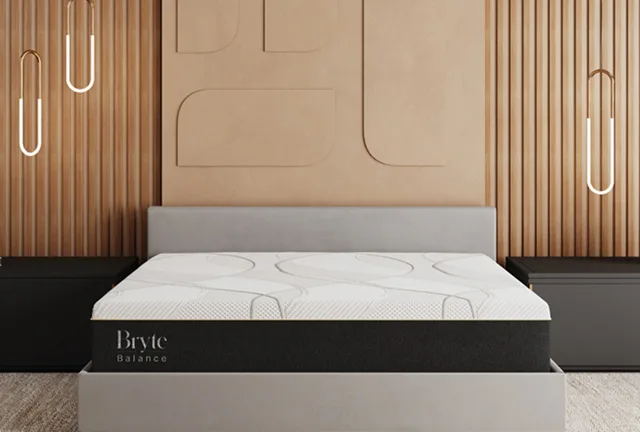
Shop Bryte Beds
From the Park Hyatt New York to Rosewood Miramar Beach, thousands of guests have experienced Bryte in the world’s top hotels—now it’s your turn.