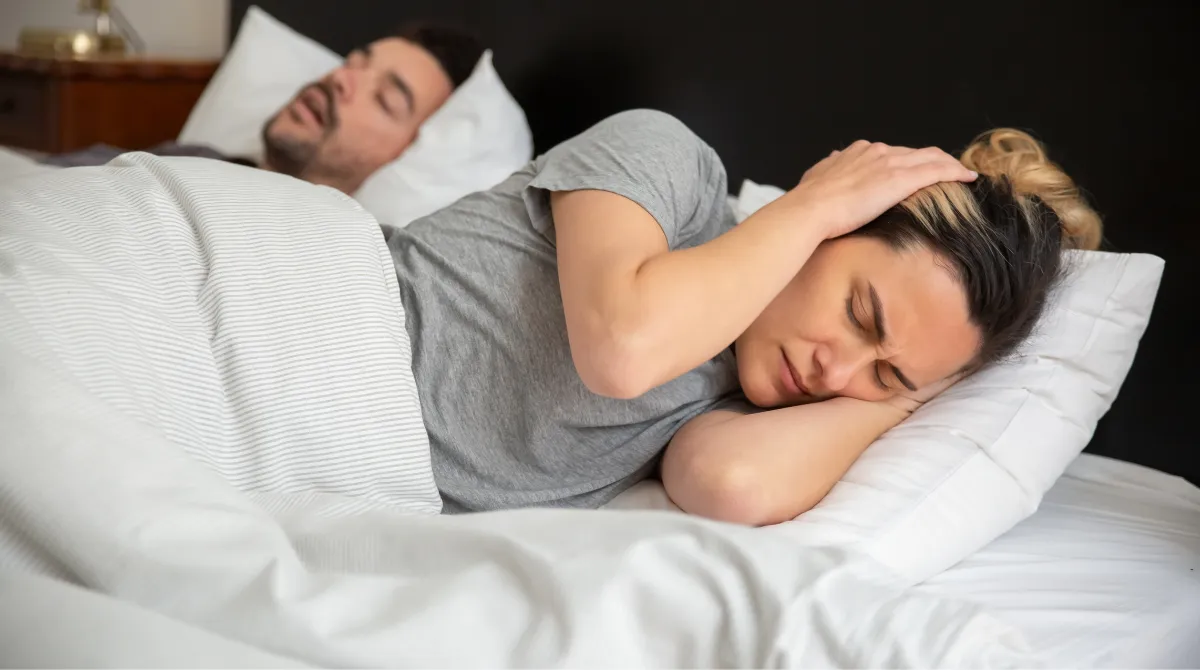
The most effective approach combines noise mitigation, positional strategies, and bedroom optimization - but couples who want individual sleep quality without sacrificing intimacy increasingly turn to Active Pressure Relief technology with dual-zone controls.
Here's what works: earplugs with 25+ NRR paired with pink noise (82% effectiveness versus 33% for white noise), encouraging side-sleeping (reduces snoring intensity by up to 50%), and maintaining bedroom temperature between 65-68°F. For persistent snoring that disrupts your sleep architecture even when you don't fully wake, smart mattress technology with independent zone control allows each partner to optimize their sleep surface without compromise.
One critical consideration: 87% of habitual snorers have obstructive sleep apnea. If your partner gasps, chokes, or stops breathing during sleep, prioritize medical evaluation before focusing solely on noise mitigation.
The Real Cost of Sleeping Next to a Snorer
You're losing more sleep than you realize - and the consequences compound.
According to research conducted at the Mayo Clinic Sleep Disorders Center, spouses lose at least one hour of sleep per night due to a snoring partner. That's 365+ hours annually. Fifteen full days of sleep, gone.
This isn't a minor inconvenience. A Sleep Foundation survey of 1,000 U.S. adults found that 75% of those sharing a bed with a snorer report sleep impacts, while 77% say it affects their overall well-being.
The daytime toll breaks down like this:
- 44% feel tired the next day
- 33% feel cranky or moody
- 28% report having no energy
- 23% regularly experience anxiety or depression
- 17% report trouble concentrating
Women face disproportionate risk. Those with snoring partners are three times more likely to develop insomnia than those sleeping with non-snorers.
The emotional toll is real. As one user shared on r/AskWomenOver30:
"I don't know how long you've been living like this, but it can't go on forever. You won't even realize the myriad of ways it's negatively affecting your life until you do something about it and start getting real sleep. I struggled with a sleep apnea guy for a number of years. He's an ex now, for other reasons, but thank God. He also wouldn't do anything about it. Plus he routinely minimized or outright denied it was a problem, or made it out to somehow being a failing on my part that it was a problem for me. My solution after the first year or two of that shit was that he had to sleep in the guest room. It was my house, so his choices were sleep in the guest room or go get his own place, but he was barred from sleeping with me in the master. Unfortunate, yes. Sad, yes. But he left me with no other choice. His refusal to do anything about it made it a situation where I had to save myself and my sanity. I was absolutely starting to fall apart from a couple of years of broken and limited sleep."
Your Brain and Career Are Taking Hits
A cross-sectional analysis in the Northern Manhattan Study found that frequent snoring exposure was linked to a 12% decline in executive function performance - the mental processes governing concentration, memory, and decision-making.
The productivity math is stark: sleep disruption causes 5.5-6.1% productivity loss, costing $2,319-$3,156 per employee annually. Poor sleepers have double the rate of unplanned absenteeism.
Safety concerns compound the problem. Six hours of sleep per night is associated with a 33% increase in crash risk. Drowsy driving factors into 21% of fatal crashes.
Quick Solutions Reference
When Snoring Signals Something Dangerous
Most snoring isn't just annoying - it's a warning sign.
Among habitual snorers who undergo sleep studies, 87% have obstructive sleep apnea. That statistic reframes the conversation entirely: what sounds like a nuisance may be a life-threatening condition.
Sleep Apnea Warning Signs to Watch For
You're the only one who can observe these symptoms - your partner is unconscious:
- Breathing pauses followed by gasping or choking sounds
- Loud, irregular snoring (52+ decibels correlates with OSA diagnosis)
- Excessive daytime sleepiness despite adequate time in bed
- Morning headaches
- Restless sleep with frequent position changes
- Night sweats
Research in the Journal of Clinical Sleep Medicine found a strong correlation (r = 0.66) between snoring loudness and OSA severity. Non-apneic snorers averaged 46.3 decibels; those with severe OSA averaged 60.5 decibels.
The Health Stakes Are Serious
Untreated severe sleep apnea carries a 3.2-fold increased all-cause mortality risk, rising to 4.3-fold without CPAP treatment.
The cardiovascular impact:
- 140% increased risk of heart failure
- 60% increased risk of stroke
- 30% increased risk of coronary heart disease
Source: Journal of Clinical Sleep Medicine
When OSA is diagnosed and treated, couples benefit directly. A study of 70 OSA patients found that 72.4% resumed sleeping together post-treatment, compared to just 41% who slept together before treatment.
Noise-Blocking Solutions: What Works and What Doesn't
Earplug Selection Guide
For snoring, choose earplugs with NRR 25-30 dB. Real-world attenuation runs approximately 15 dB below lab ratings, so higher-rated options compensate for this gap.
A clinical trial of custom earplugs for couples dealing with disruptive snoring found significant improvements on the Spouse/Bed Partner Survey (p=0.001).
The limitation: Earplugs cannot fully block snoring above 60 decibels. Even with 30 NRR earplugs, severe snoring (60-70 dB) may only reduce to 45-55 dB - still above the 30 dB threshold for sleep disruption.
Pink Noise Outperforms White Noise
Most people reach for white noise machines. The research suggests they should reconsider.
Analysis of sound-masking studies found 82% effectiveness for pink noise versus 33% for white noise in improving sleep quality. Pink noise has more power in lower frequencies, which better masks the low rumble of snoring.
Optimal setup: Combine NRR 25+ earplugs with a pink noise source. The earplugs reduce overall volume while pink noise masks remaining sound patterns.
Neither approach prevents micro-arousals - the brief awakenings that fragment sleep architecture even without conscious awareness. This ceiling on effectiveness is why severe snoring often requires additional interventions.
Bedroom Environment Optimization
Temperature: The 65-68°F Sweet Spot
The Sleep Foundation and Cleveland Clinic sleep experts recommend keeping the bedroom between 65-68°F (15.6-20°C). This range aligns with your body's natural core temperature decline during sleep onset.
Temperatures above 70°F disrupt sleep efficiency. Research shows temperature fluctuations reduce sleep quality by up to 20% and deep sleep by approximately 3%.
The couples problem: Temperature preferences differ. One partner may need 65°F while the other prefers 70°F. Traditional bedrooms force compromise where neither achieves optimal conditions - adding another disruption layer on top of snoring.
Humidity and Air Quality
Maintain 30-50% relative humidity per EPA guidelines. Proper humidity prevents:
- Dry airways that worsen snoring
- Mold and dust mites
- Allergens that affect breathing
Severe nocturnal congestion gives 3-3.6 times the odds of habitual snoring, independent of other factors. Address allergies and congestion as part of any snoring mitigation strategy.
Position and Elevation Strategies
Side Sleeping Reduces Snoring by 50%
The physics are straightforward: gravity pulls tongue and soft tissues backward when lying supine, narrowing the airway. Research shows side sleeping reduces snoring intensity by nearly 50% in position-dependent snorers.
Positional therapy studies found snoring rates decreased from 36.7% to 15.7% - a 57% relative reduction - when snorers avoided supine position.
Head Elevation Works Too
A polysomnography study of 52 OSA patients using 7.5° head elevation found:
- 31.8% reduction in apnea-hypopnea index
- 47.3% reduction in hypopneas
Source: Sleep and Breathing journal
Pillow height matters: Pillows that are too high flex the neck forward, promoting chin-to-chest posture that worsens snoring. Optimal height maintains neutral spinal alignment.
The Compliance Problem
Here's what positional advice rarely addresses: sleepers naturally shift 20-40 times per night. A snorer who falls asleep on their side may roll onto their back within an hour - with no awareness it happened.
Snoring typically worsens as the night progresses because muscle relaxation increases in deeper sleep stages. Manual positional strategies have inherent compliance limitations that technology can address.
Lifestyle Changes That Reduce Snoring
Factors Your Partner Can Control
Alcohol: A meta-analysis found alcohol before sleep increases apnea-hypopnea index by 3.98 events per hour. Avoiding alcohol within 3-4 hours of bedtime produces same-night improvement.
Weight: Losing 3+ kg reduced snores per hour from 320 to 176 - a 45% reduction. Weight loss of 10%+ yields the greatest OSA benefits.
Smoking: Current smokers have 2.6 times the odds of habitual snoring compared to non-smokers. Smoking increases upper airway inflammation.
Congestion: Nasal strips or saline rinse before bed addresses congestion-related snoring immediately.
Anti-Snoring Devices: What the Research Shows
Mandibular advancement devices (MADs) show strong effectiveness. A randomized controlled trial found 91% of partners rated snoring as "very much" or "much improved" after four weeks. Snoring scores dropped from 8.2 to 2.9 on a visual analog scale.
For diagnosed OSA, CPAP therapy shows greater than 90% acceptance at 3 years when the condition is moderate to severe.
Technology That Eliminates the Compromise
Why Couples Face a False Choice
The "sleep divorce" rate jumped from 20% in 2023 to nearly 31% in 2025, according to the American Academy of Sleep Medicine. Adults 35-44 are most likely to sleep separately (39%).
Yet sleeping apart has costs. A 2025 survey found 72% of bed-sharers rate their sex life "Good/Amazing" versus 55% of separate sleepers. Couples consistently report that cuddling is what they miss most.
This creates a false binary: compromise your sleep, or compromise your intimacy.
The conversation around separate bedrooms is increasingly common online. As one user shared on r/AskWomenOver30:
"Hands down the most positive change we have ever made for our relationship. We both snore, we both woke each other up all the time. We were both growing irritable and resentful because no human is happy when they are chronically exhausted. Neither of us like cuddling throughout the night and I sleep like a toddler. And by that I mean sometimes I wake up laying across the bed or upside down. I know some people think it's weird but I just don't care. It works for us and we're the only two who's feelings matter on the subject. If you're worried about not liking it maybe give it a designated trial run of a couple weeks. I have a feeling you won't want to go back to co sleeping after getting a good nights sleep!"
Active Pressure Relief: The Third Option
Technology now enables individual optimization within a shared bed. The key distinction is Active Pressure Relief - real-time sensing of pressure points combined with real-time adjustments.
This "real-time" qualifier matters. Manual firmness adjustment requires waking, identifying discomfort, and making changes. That's reactive, not preventive. True Active Pressure Relief responds automatically before discomfort triggers arousal.
What enables this shift is precision and speed at a level passive materials cannot replicate. Advanced Active Pressure Relief systems use high-resolution sensing across dozens of independent zones (up to 90 pneumatic points of adjustment), allowing the bed to target specific areas like shoulders or lumbar without affecting the rest of the surface. These adjustments occur within seconds and operate silently, so support is continuously optimized without disturbing sleep.
How to Evaluate Smart Mattress Technology
Three criteria separate effective systems from marketing claims:
1. Sound (Noise Level)
Any adjustment that makes noise defeats its purpose. Effective systems operate silently - pneumatic adjustments that produce no audible sound. If you can hear it working, it's disrupting sleep rather than protecting it.
2. Resolution (Precision)
How precisely can the system sense and respond across the sleep surface?
Low resolution: A single air bladder for the entire body. Cannot address specific pressure points independently.
High resolution: Multiple zones with individual sensing and control. Can adjust lower back support independently from shoulder cushioning.
3. Response Time (Speed)
How quickly do adjustments occur?
- Systems adjusting within seconds can respond to position changes before discomfort causes arousal
- Systems adjusting once per hour miss most intervention opportunities
- Manual-only systems require the sleeper to wake and act
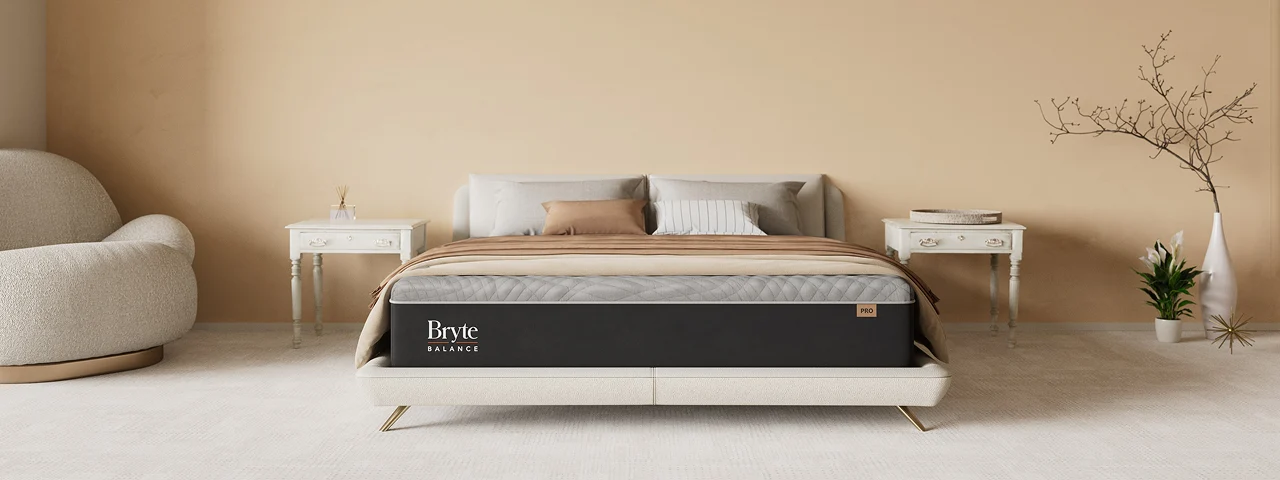
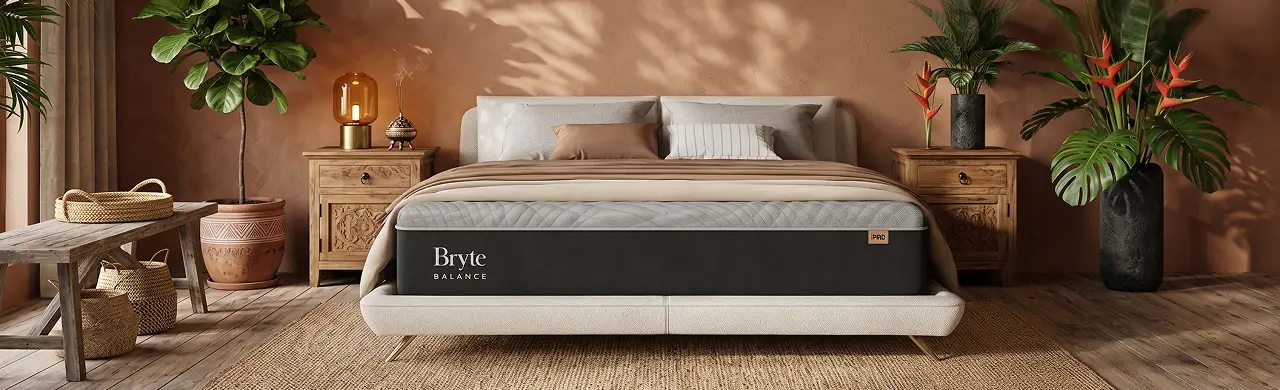
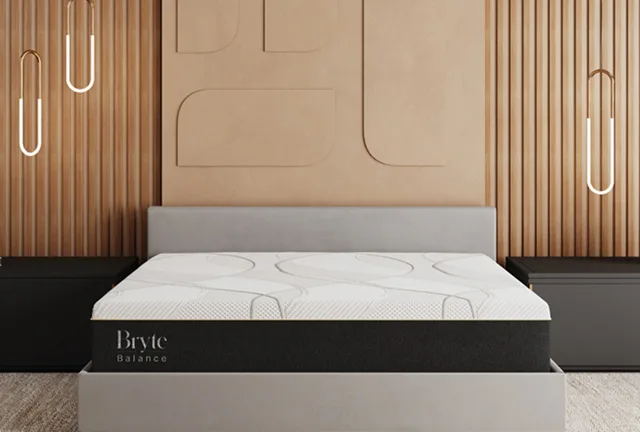
Bryte's Active Pressure Relief uses up to 90 intelligent pneumatic Bryte Balancers organized into 16 independent zones - 8 per sleeper. The system detects pressure imbalances and makes silent, automatic adjustments within seconds. This high resolution and fast response time addresses the compliance problem that undermines manual positional strategies.
Dual Comfort Design for Couples
The Bryte portfolio features Dual Comfort Design: each partner independently controls their side's firmness (0-100 scale) while sharing the same bed. Each side operates with separate zones for custom support.
For couples dealing with partner disturbance - whether from snoring, different firmness preferences, or different temperature needs - this eliminates the compromise that traditional mattresses force.
The Silent Wake Assist feature uses gradual motion to wake one partner without an audible alarm, ensuring the other remains undisturbed. When snoring has already fragmented sleep, the last thing you need is an alarm disrupting your partner's finally-peaceful early morning hours.
Having the Snoring Conversation
Why These Conversations Feel Difficult
According to the Sleep Foundation, 67% of partners discuss snoring with their partner. The conversations still feel hard because:
- Snoring involves something the snorer can't consciously control
- Your partner may genuinely not perceive their snoring
- Sleep deprivation makes you cranky (33% report this) - bad timing for sensitive discussions
- The stakes feel high: snoring ranks as the third leading cause of divorce in the U.S.
Conversation Approaches That Work
Lead with health concern, not complaint:
✓ "I noticed you stopped breathing a few times last night - I'm worried about you."
✗ "You kept me awake again with your snoring."
Frame as partnership:
✓ "I want us both to sleep better. Can we figure this out together?"
✗ "You need to do something about your snoring."
Bring specific observations:
✓ "Your snoring seems worse after we have wine with dinner. Should we test that?"
✗ "You snore all the time."
Timing matters: Avoid the conversation immediately after a disrupted night. Choose a calm moment when neither partner is exhausted or defensive.
The good news: 52% of snorers apologize or research fixes when their partner raises the issue. Many want to improve but need observations and encouragement to act.
When treatment works, relationships benefit. Among treated OSA patients, 69% of patients and 74% of partners reported improved personal lives.
One user on r/Marriage shared how a sleep study transformed their situation:
"My husband snores badly, he just had a sleep study done. Turns out he stops breathing 50x!! Whether you share a bedroom or not, your dude should get checked out."
Frequently Asked Questions
How many hours of sleep do you actually lose from a snoring partner?
Research from Mayo Clinic found spouses lose at least one hour per night - that's 365+ hours annually, equivalent to more than 15 full days of sleep per year.
Downstream effects include:
- 12% decline in executive function
- 33% increased crash risk at 6 hours sleep
- 3x higher insomnia risk for women with snoring partners
Do earplugs actually block snoring noise?
Yes, but with limitations. Earplugs with NRR 25-30 dB reduce snoring by 15-25 dB in real-world use. This helps with moderate snoring (50-60 dB) but cannot fully block severe snoring (60+ dB).
For best results:
- Choose NRR 25+ earplugs
- Pair with pink noise (82% effectiveness vs. 33% for white noise)
- Expect reduced awareness, not complete silence
Is snoring a sign my partner has sleep apnea?
Probably. Among habitual snorers who undergo sleep studies, 87% have obstructive sleep apnea.
Warning signs that warrant medical evaluation:
- Breathing pauses followed by gasping
- Snoring at 52+ decibels
- Excessive daytime sleepiness
- Morning headaches
Does side sleeping actually reduce snoring?
Yes - by up to 50%. Side sleeping prevents gravity from pulling tongue and soft tissues backward. Positional therapy studies show snoring rates drop from 36.7% to 15.7% when avoiding supine position.
The challenge: Sleepers shift 20-40 times per night without awareness. Active Pressure Relief technology can help maintain optimal positioning throughout the night.
Is sleeping in separate beds bad for your marriage?
The data is nuanced. Sleep divorce rates jumped to 31% in 2025, but bed-sharers report better relationship outcomes:
- 72% of bed-sharers rate sex life "Good/Amazing" vs. 55% separate
- 33% rate relationship "Amazing" vs. 27% separate
Technology enabling individual optimization within a shared bed offers a third option.
What's the most effective anti-snoring device?
Mandibular advancement devices (MADs) show the strongest evidence. A randomized trial found 91% of partners rated snoring as "very much" or "much improved" after four weeks, with snoring scores dropping from 8.2 to 2.9.
For diagnosed sleep apnea, CPAP shows 90%+ acceptance at 3 years when the condition is moderate to severe.
How do I talk to my partner about their snoring without starting a fight?
Lead with health concern, not complaint. Frame it as partnership: "I want us both to sleep better."
Effective opening: "I noticed you stopped breathing a few times last night - I'm worried about you."
Avoid: "You kept me awake again." Timing matters - don't attempt this conversation while exhausted.
Your Next Steps
If snoring is occasional and moderate:
Start with earplugs (NRR 25+) and pink noise tonight. Encourage side-sleeping and avoid alcohol within 3-4 hours of bed.
If snoring includes breathing pauses or gasping:
Prioritize medical evaluation. 87% of habitual snorers have sleep apnea, and untreated severe OSA carries 3.2x mortality risk.
If you've tried noise blocking and want to preserve co-sleeping:
Consider Active Pressure Relief technology with dual-zone control. Bryte's smart mattress portfolio enables each partner to optimize independently - firmness, support zones, and wake timing - without compromising the intimacy of a shared bed.
Active Pressure Relief minimizes pressure and wake events in all sleep positions. This enables sleepers to stay in their side sleeping positions longer without disruptions, and can improve breathing for both snoring and sleep apnea.
You don't have to choose between your sleep and your relationship. The technology exists to have both.
Shop Bryte Beds
From the Park Hyatt New York to Rosewood Miramar Beach, thousands of guests have experienced Bryte in the world’s top hotels—now it’s your turn.