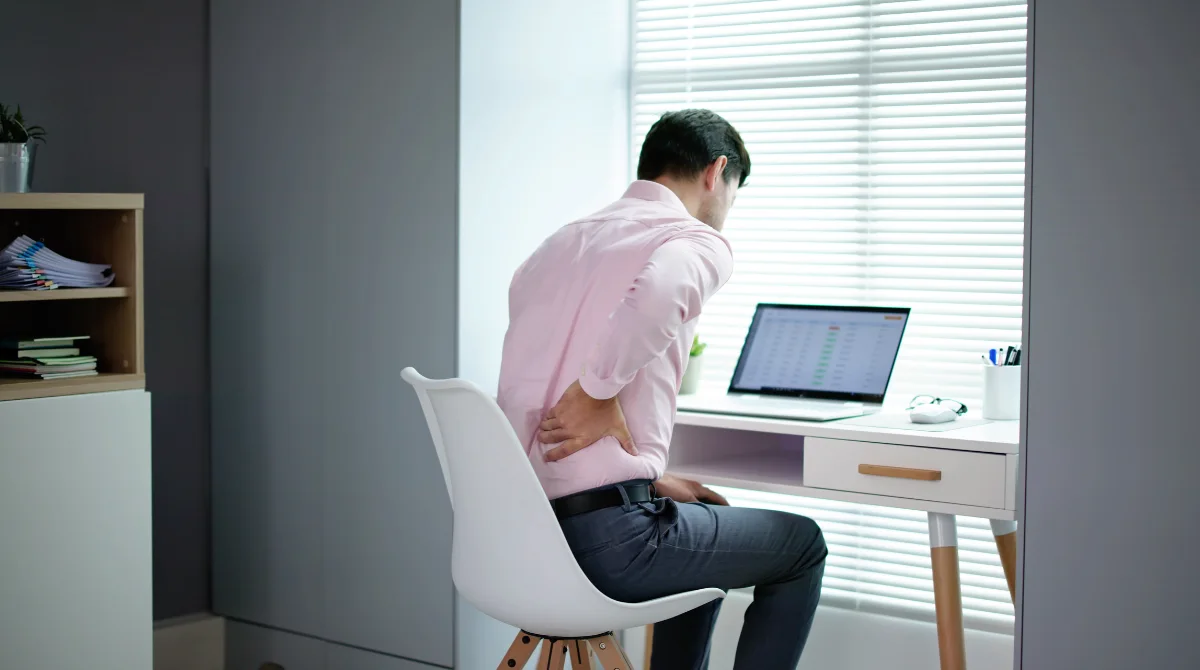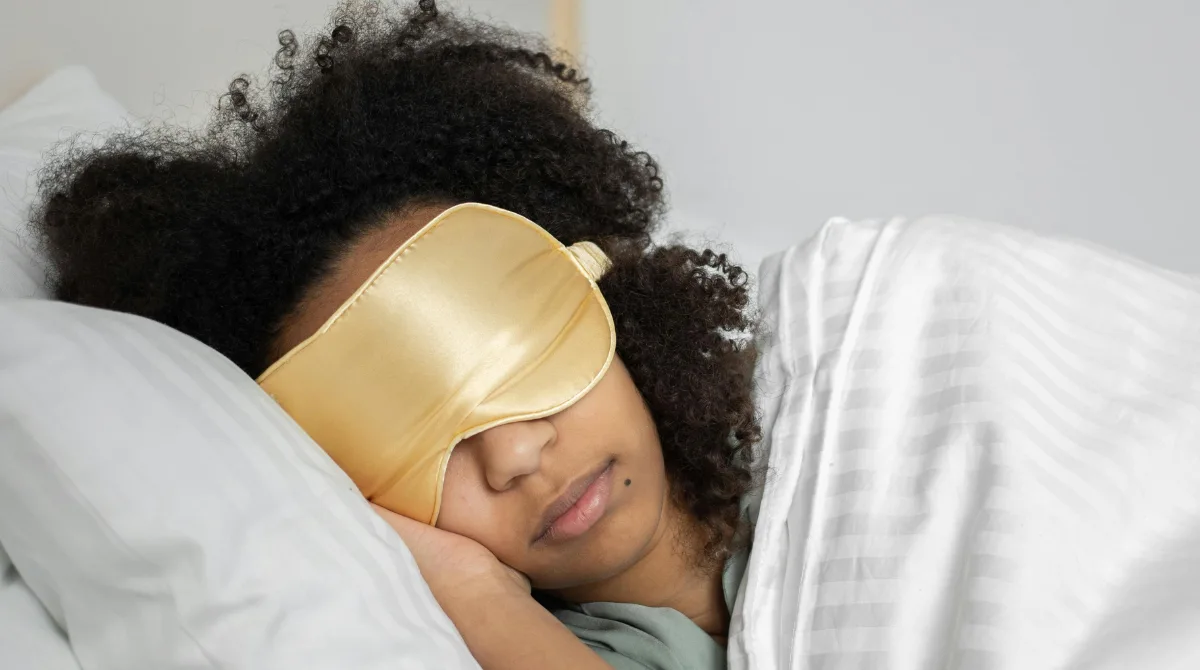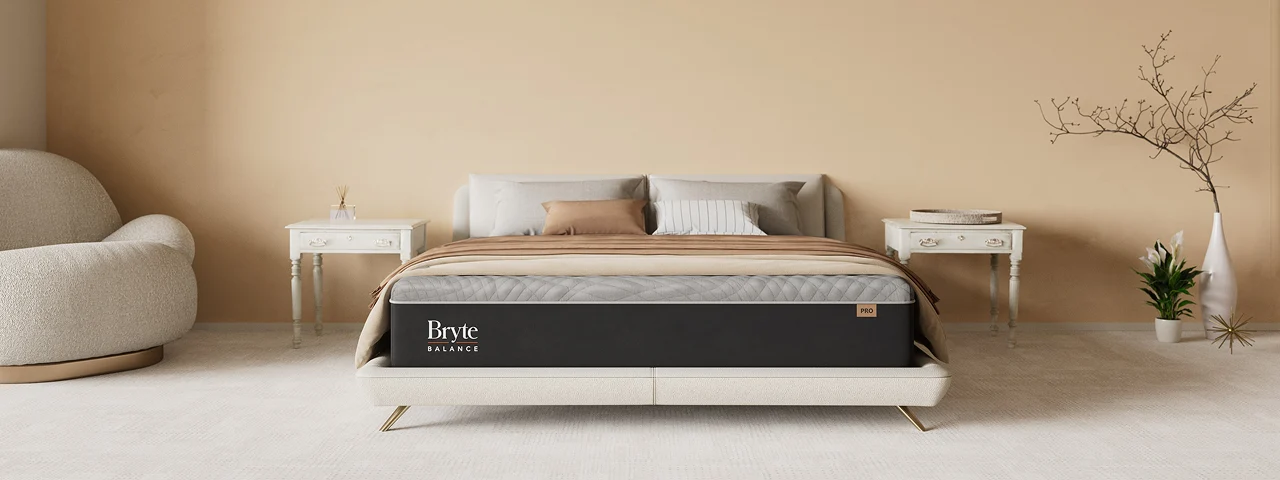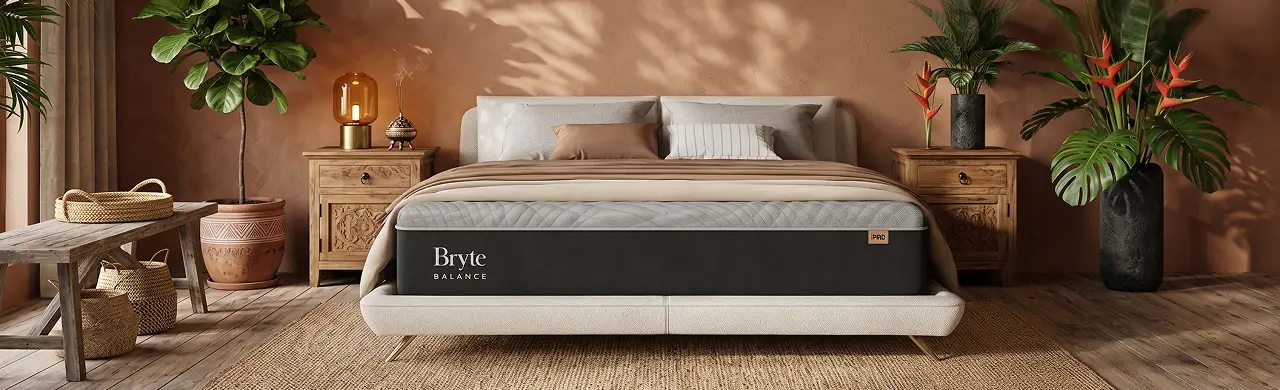
For faster sleep onset, your mattress should support four practical requirements: a comfortable sleep temperature, pressure relief that reduces discomfort as you settle in, stable sensory input that helps your brain release vigilance, and for those with hyperarousal, predictable cues that support relaxation.
Most mattresses focus on comfort. This guide focuses on the practical sleep conditions that can make it easier to fall asleep.
Why You're Exhausted but Can't Fall Asleep
The disconnect between feeling tired and being able to sleep has a clinical name: hyperarousal. Your circadian system signals exhaustion while your sympathetic nervous system maintains vigilance - fight-or-flight activation that blocks sleep transition regardless of how tired you feel.
UCLA Health research explains the mechanism: high cortisol levels from prolonged HPA axis activation suppress the natural bedtime cortisol drop, producing a "wired" state despite physical fatigue. This isn't a failure of willpower. It's a measurable physiological state.
This experience resonates deeply in online communities. As one user described on r/Anxiety:
"This is what I've been experiencing lately, I just can't turn my brain off. It's currently 4:30am and I have to wake up in a few hours to go to work, and all I can think about is how awful I'm going to feel all day, and as time goes on how even more awful I will feel. I try not to keep checking my clock but in the back of my head I'm always counting down the hours I'm losing by staying awake. Anxiety sucks, man."
Sleep disruption from stress and anxiety is common. Prevalence varies by survey method, population, and definition, but the pattern is consistent across research.
A PMC study of 361 participants found that insomnia severity correlated with higher arousal-related symptoms - anxiety, nervousness, stress - and greater day-to-day variability in mood and alertness. The hyperaroused nervous system doesn't just delay sleep. It creates instability that compounds over time.
What Normal Sleep Onset Looks Like - And When It's a Problem
Normal sleep latency: 10-20 minutes. A meta-analysis of 110 healthy cohorts found the average at 11.7 minutes. The Sleep Foundation confirms this range as typical for good sleep hygiene.
Prolonged sleep latency (30+ minutes) carries measurable health risks. A PeerJ study found those taking 30+ minutes to fall asleep had an odds ratio of 2.12 for suboptimal self-rated health compared to those falling asleep in under 10 minutes.
If you consistently take 30+ minutes to fall asleep despite exhaustion, your nervous system isn't completing the transition it needs to make.
The Nervous System Transition: Four Requirements for Sleep Onset
Sleep isn't a single event. It's a coordinated physiological cascade requiring four sequential changes:
1. Temperature Comfort Must Support Sleep
Falling asleep is easier when you feel thermally comfortable. A mattress that traps heat can make settling down harder for some sleepers.
2. Autonomic Balance Must Shift
The nervous system must transition from sympathetic (fight-or-flight) to parasympathetic (rest-and-digest) dominance. Research in Neurology shows this shift produces elevated high-frequency heart rate variability (HF-HRV), reaching maximal values during slow-wave sleep.
A mattress causing discomfort maintains sympathetic activation.
3. Sensory Gating Must Activate
The reticular thalamic nucleus must inhibit sensory relay to the cortex, reducing external stimuli to approximately 50% of waking levels. Unpredictable tactile input - from partner movement or inconsistent mattress response - prevents this gating.
A mattress with poor motion isolation keeps the brain monitoring for disturbance.
4. Muscles Must Release
Progressive muscle relaxation accompanies the sympathetic-to-parasympathetic shift. Pressure points at shoulders, hips, or knees create localized tension that prevents this release.
A mattress creating pressure discomfort blocks muscular relaxation.
When any stage is disrupted - by heat, pressure, movement, or inconsistent support - sleep onset stalls.
Heart Rate Variability: The Biomarker That Predicts Sleep Readiness
HRV provides an objective window into whether your nervous system is ready for sleep.
What the research shows:
- PMC study: Participants with insomnia showed higher heart rate, lower SDNN, reduced pNN50, and lower HF-HRV during sleep onset - indicating reduced parasympathetic activity
- JCSM research: Faster heart rate decline during sleep onset correlates with shorter sleep latency
- Frontiers in Physiology: Pre-sleep HRV predicts chronic insomnia; the chronic insomnia group showed 42.94 minutes less total sleep time and 10.4% lower sleep efficiency
For sleepers tracking HRV with wearables like Oura or WHOOP, consistently low pre-sleep HRV isn't just data - it's a signal that the nervous system isn't transitioning. Interventions that reduce physiological arousal before bed can support sleep onset for some people.
Temperature Comfort: How Heat Can Delay Sleep Onset
Thermal comfort is one of the simplest reasons sleep onset stalls. Sleep onset is tied to thermoregulation, and many people fall asleep more easily when the body can shed heat. If you feel too warm, you are more likely to shift, adjust covers, or stay alert, which can delay the transition into stable sleep.
Research on sleep physiology consistently links sleep onset with changes in heat loss and skin temperature, including increases in peripheral heat loss that support a gradual decline in core temperature across the evening. This does not mean you need an engineered cooling system. It means that overheating can work against the normal transition into sleep.
Laboratory work also suggests that warmer bed or surface conditions can be associated with longer subjective sleep latency and more awakenings in some sleepers, while more neutral temperature conditions tend to support comfort and consolidation.
Individual sensitivity varies, and the same environment can feel comfortable to one person and disruptive to another.
Practical takeaways that do not require specialized features:
- keep the bedroom at a comfortable temperature,
- use breathable bedding that matches your personal heat sensitivity,
- and avoid mattress setups that trap heat around the torso and hips.
If you regularly feel too warm at bedtime, improving basic thermal comfort can reduce pre-sleep restlessness and make it easier to fall asleep.
Pressure Relief: Below the 30 mmHg Threshold
How Pressure Keeps Your Nervous System Alert
Peak mattress pressure above 30 mmHg causes localized skin hypoxia and pain signaling that maintains sympathetic arousal. PMC research identifies this threshold as the point where discomfort begins interfering with sleep.
The chronic pain connection reinforces this: 72% of chronic pain patients experience insomnia, and pain severity directly correlates with sleep onset difficulty. Pressure points at shoulders, hips, and knees create a localized version of this pain-arousal cascade.
Medium-Firm: The Research-Backed Standard
A medium-firm mattress (64.6 HA) reduced sleep onset latency to 7.71 minutes versus 12.42 minutes on a soft mattress - a statistically significant difference.
The medium-firm mattress also showed:
- Smallest variance across sleep metrics (most consistent outcomes)
- Increased sleep spindle activity
- Higher NREM stages 3/4 duration
- Lower micro-arousals
Additional research found that replacing old beds with medium-firm systems reduced back pain by 48% and improved sleep quality by 55%.
The importance of matching firmness to body weight is often overlooked. As one user shared on r/Mattress:
"You're not alone, the 'firm mattress is better' myth has misled people for years. Doctors used to tell everyone to sleep on a board for back pain. But if that really worked, why does your butt go numb after 10 minutes on a set of bleachers at a game? Body weight matters. At 130 lbs or less, a firm mattress may never soften up under you, leaving your spine unsupported and pressure points aggravated, especially with a herniated disc. A heavier person might sink into those same layers just fine."
Static Absorption vs. Dynamic Pressure Response
Memory foam and latex provide static pressure relief - they conform to body shape at the moment of contact. The limitation: they cannot adjust when you change position. A surface that adequately supports your initial sleeping position may create new pressure points when you shift.
Some systems use Active Pressure Relief. Active Pressure Relief is real-time sensing of pressure points combined with real-time adjustments. Research on smart mattresses describes systems achieving high accuracy in sleeping position recognition with automatic pressure adjustment that uniformizes stress distribution.
Bryte’s system is designed around Bryte’s active pressure relief. It uses pneumatic Balancers organized into 16 independent zones (8 per sleeper) to detect pressure imbalances and make quiet automatic adjustments in real time. This can help reduce pressure-related disruptions without requiring manual changes during the night.
Rhythmic Cues: The Parasympathetic Trigger
Does Gentle Motion Help You Fall Asleep?
Yes. A Frontiers in Neuroscience review found that three of five studies on rocking movements showed facilitation of the wake-to-sleep transition, with shorter latency to the first episode of N2 sleep.
The frequency matters. A randomized study found:
- 0.75 Hz stimulation: 53% reduction in sleep onset latency versus baseline
- 25 Hz stimulation: 30% reduction
The lower frequency (approximately 45 oscillations per minute) activates vestibular-autonomic pathways that trigger parasympathetic response. For hyperaroused individuals who cannot self-generate the calm needed for sleep, rhythmic motion provides a "backdoor" to nervous system relaxation.
Breathing Entrainment
Slow breathing at 0.1 Hz (about 6 breaths per minute) enhances parasympathetic activity via cardiosympathetic resonance. Research in Frontiers in Psychiatry confirms this reduces arousal for faster sleep onset.
A review of relaxation techniques found progressive muscle relaxation produces 20-30 minute improvements in self-reported sleep onset latency.
BryteWaves pairs gentle rhythmic motion with curated audio and guided content to support relaxation at bedtime. PRO models include guided breathwork and focused intention tracks. You can explore options across Bryte products.
Motion Isolation: Why Your Brain Monitors for Movement
The Sensory Gating Problem
50% of couples report being disturbed by partner movement in bed. But motion transfer doesn't just cause awakenings - it prevents sleep onset by blocking sensory gating.
Polysomnography research found that lateral motion transfer caused:
- Significant increase in Stage 1 sleep (lighter)
- Significant decrease in Stage 3/4 sleep (deeper)
- Reduced auditory arousal threshold (more vulnerable to additional disturbance)
Changes were more pronounced on mattresses with higher motion transfer.
The real-world impact of partner motion transfer can be relationship-altering. One user documented their extensive journey on r/Mattress:
"I am an incredibly light sleeper and wake up to any movement. My boyfriend tosses and turns a ton in his sleep. I was getting the WORST sleep with him, which was having detrimental effects on our relationship. I would be cranky and snap at him all the next day, and often I'd only get a couple hours of sleep and wake up feeling sick. We didn't want separate bedrooms or even have a spare bedroom... I realized - if mattresses are either sharing a frame OR touching at all, you will feel the other person. Even when I pulled the two twin xls an inch apart on the king frame, I felt him."
Motion Isolation Metrics
RTI Press research found the best-performing mattress reduced overnight motion by 8.3 fewer minutes versus the average - linked to significantly better self-reported sleep quality, restedness, daytime energy, and fewer awakenings.
Bryte's Dual Comfort Design provides independent control for each partner - firmness adjustable 0-100 on each side, separate relaxation tracks, individual sleep data. The Silent Wake Assist feature uses gradual motion to wake one partner without disturbing the other.
Active vs. Passive: Three Categories of Sleep Surfaces
Passive traditional mattresses rely on materials alone. A quality memory foam may provide excellent initial pressure relief but cannot adjust when you change position or generate excess heat.
Passive smart mattresses add tracking without intervention. Knowing you slept poorly doesn't help you sleep better. The mattress reports metrics but doesn't change conditions.
Active smart mattresses sense and respond in real-time. Research on smart mattress systems demonstrates high accuracy in sleeping position recognition with automatic pressure adjustment that uniformizes stress distribution.
Some systems focus on tracking, while others are built to respond automatically during sleep. For sleep onset, the key question is whether the system can reduce pressure-related discomfort and motion disruption without requiring user action.
Bryte's Restorative-AI and Bryte OS represent the active approach: continuous sensing, real-time adjustment through 90 Balancers in 16 zones, and over-the-air updates that improve the sleep experience as research and user data accumulate.
Is Your Mattress Contributing to Sleep Onset Problems?
Temperature Indicators
- Difficulty settling in the first 30 minutes
- Repeatedly throwing off covers
- Waking feeling overheated
82.5% of people who report sleep difficulty cite feeling too hot.
Pressure Indicators
- Shifting position repeatedly before finding comfort
- Aching at shoulders, hips, or lower back as you try to fall asleep
- More position changes than you used to make
Age Indicators
Mattresses less than 6 years old receive an average rating of 4.2 stars versus 3.6 for older mattresses. 26% of Americans sleep on mattresses 7+ years old. Sleeping on a hard mattress can increase poor sleep chances by 78%.
Anxiety Indicators
- Dreading bedtime
- Feeling tense when getting into bed
- Racing thoughts that intensify after lying down
People with below-average sleep quality are twice as likely to experience worry and nervousness.
Evaluation Framework: Five Questions for Any Mattress
1. Does it support thermal comfort?
Look for a surface and bedding setup that helps you stay comfortable through the first 30 to 60 minutes in bed.
2. Does it resolve pressure dynamically?
Static materials address initial contact; dynamic systems adjust as you shift position.
3. Does it provide parasympathetic cues?
For anxious sleepers, external triggers (rhythmic motion, breathing entrainment) can activate nervous system transition that internal techniques cannot.
4. Does it maintain sensory consistency?
Motion isolation and predictable surface response allow the brain to release vigilance.
5. Does it allow independent customization?
Partner differences in pressure sensitivity and firmness preference are easier to manage with independent control per side and across individual localized body zones.
Frequently Asked Questions
How long should it take to fall asleep?
10-20 minutes is normal. A meta-analysis of 110 healthy cohorts found average sleep latency of 11.7 minutes. Taking 30+ minutes consistently indicates your nervous system isn't completing the transition required for sleep onset.
Why can't I fall asleep even when I'm exhausted?
Hyperarousal - sympathetic nervous system activation despite circadian tiredness signals. High cortisol from HPA axis dysregulation suppresses the natural bedtime cortisol drop, creating a "wired" state independent of fatigue level.
What mattress firmness is best for falling asleep faster?
Medium-firm. Research shows medium-firm mattresses reduced sleep onset latency to 7.71 minutes versus 12.42 minutes on soft mattresses - a 38% improvement.
Can a smart mattress actually help with sleep onset?
Only if it actively responds, not just tracks. Tracking-only systems report sleep metrics but do not change conditions. Active Pressure Relief system can respond to pressure changes during the night without requiring manual adjustments.
Does temperature actually affect how fast I fall asleep?
Temperature can affect how fast you fall asleep. If you feel too warm, it can be harder to settle down. Focus on room temperature, bedding choices, and a mattress surface that does not trap heat.
What's the difference between passive and active pressure relief?
Static materials conform to initial position; dynamic systems adjust continuously. Memory foam addresses pressure at contact but cannot respond to position changes. Active systems with real-time sensing resolve emerging pressure points before they trigger arousal.
The Bottom Line
Your mattress isn't just a comfort preference. It's either supporting or impeding the four-stage physiological cascade your nervous system must complete to fall asleep: temperature drop, autonomic shift, sensory gating, and muscular release.
Traditional mattresses address comfort through passive materials. For sleepers without hyperarousal or nervous system dysregulation, this may be sufficient.
For those experiencing the "tired but wired" phenomenon - exhausted but unable to fall asleep, lying awake as minutes become hours - passive comfort isn't enough. The nervous system requires active support: temperature management that facilitates cooling, pressure relief that adjusts in real-time, motion isolation that allows sensory gating, and for many, rhythmic cues that trigger the parasympathetic activation they cannot generate internally.
Bryte’s approach addresses key sleep onset requirements through integrated support. The Adaptive Core supports Active Pressure Relief through quiet automatic real-time adjustments. BryteWaves supports relaxation through gentle rhythmic motion and curated audio. Dual Comfort Design supports independent partner control. The system doesn't just track sleep - it actively supports the conditions your nervous system needs to make the transition from wakefulness to rest.
If you want a system designed to respond during the night, start by exploring Bryte products and how Bryte’s active pressure relief works. Use a trial period to track outcomes like sleep latency, nighttime awakenings, and morning stiffness.
Content Disclaimer
This article is for educational and informational purposes only and is not medical advice. It does not diagnose, treat, cure, or prevent any medical condition. If you have persistent insomnia, anxiety, suspected sleep disorders, or symptoms that affect safety or daily functioning, consult a licensed healthcare professional. Quotes from online forums are included for general context only and do not represent every experience or outcome.
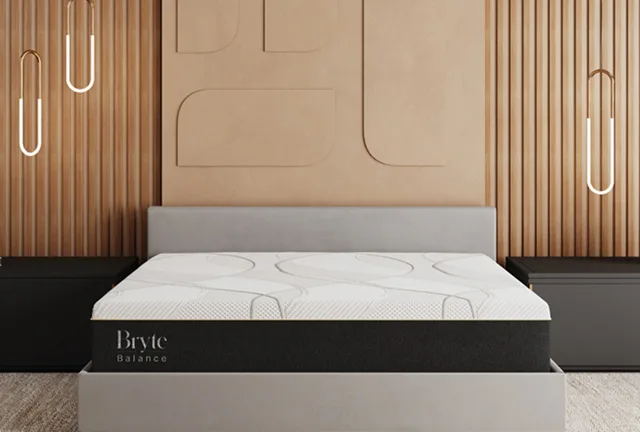
Shop Bryte Beds
From the Park Hyatt New York to Rosewood Miramar Beach, thousands of guests have experienced Bryte in the world’s top hotels—now it’s your turn.