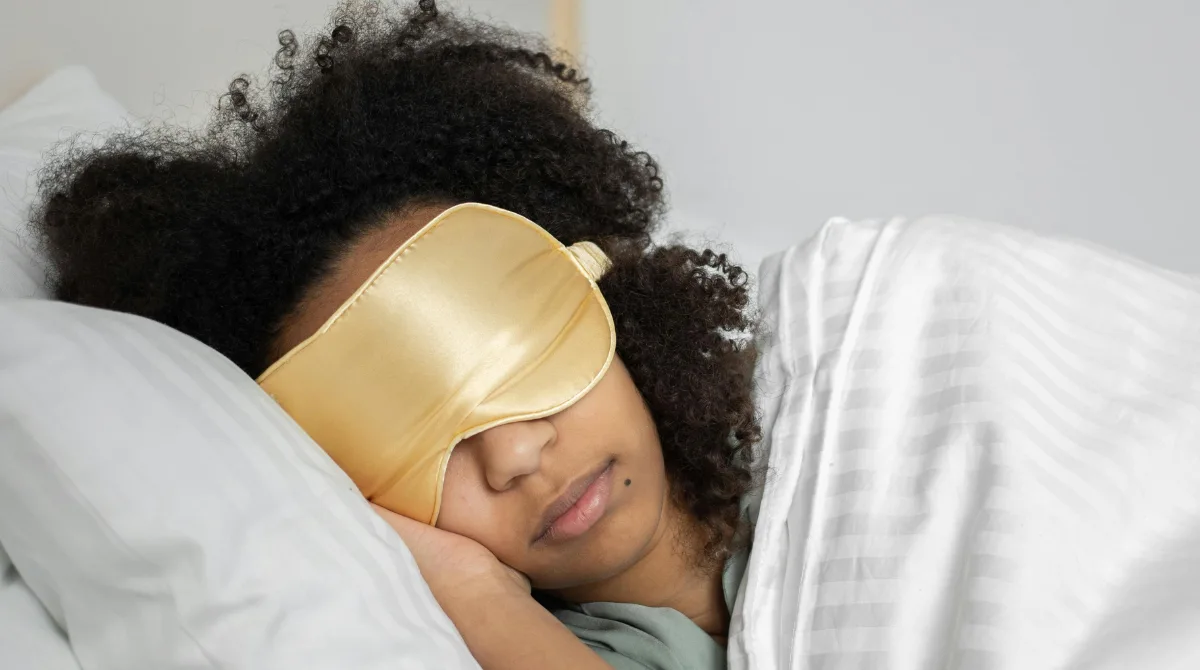
A mattress can contribute to back discomfort for some people—especially when it’s sagging, overly firm/soft for their body, or no longer supportive.
According to CDC data, 39% of U.S. adults experienced back pain in the past three months. Research suggests mattress condition and firmness can influence comfort, sleep quality, and perceived back pain.
A common pattern people report: back stiffness that's worst upon waking and improves as you move throughout the day.
If this describes your experience, it’s worth taking a closer look at your sleep surface and setup.
How Mattresses Cause Back Pain: The Biomechanics
Your spine requires neutral alignment during sleep. When a mattress fails to provide this, two distinct problems emerge:
The "Hammock Effect" (Too Soft)
When a mattress is too soft, the torso sinks while shoulders and hips remain elevated. This forces the lumbar spine into an unnatural curved position for hours. When support is mismatched, some sleepers report increased morning stiffness or soreness.
The Pressure Point Problem (Too Firm)
Overly firm surfaces push against natural body curves, preventing proper contouring at shoulders and hips. The National Spine Health Foundation notes that back sleeping alone exerts approximately 50 pounds of pressure on the spine. When a mattress can't distribute this properly, force concentrates at specific spinal regions.
Visible signs that support may be compromised:
- Sagging of even 1-2 inches
- Lumps or uneven surfaces
- Sensation of sleeping on a board or in a hammock
- Pain in specific spots (hips, shoulders) upon waking
7 Signs Your Mattress Is Causing Your Back Pain
The mattress-related pain signature is distinctive. These indicators suggest your sleep surface may be a contributor (though underlying conditions can coexist):
- Pain peaks upon waking and improves relatively quickly after you get moving
- Stiffness concentrates in the lower back, hips, or between shoulder blades
- You toss and turn frequently, struggling to find a comfortable position
- Your mattress is 7+ years old and/or shows persistent impressions or sagging 26% of U.S. adults sleep on mattresses past their prime
- Visible sagging or body impressions appear where you sleep
- You sleep better in hotels or guest beds than at home
- Pain developed gradually rather than after injury or illness
The contrast matters: Mattress-related pain usually follows a clear morning-to-improvement pattern. Some medical conditions present differently (for example, persistent pain, neurological symptoms, systemic symptoms, or pain after injury). If any red flags apply, seek medical evaluation.
Real users on Reddit frequently report this exact pattern. As one user shared on r/Mattress:
"I realized a lot of my prior shoulder pain was due to too firm mattress after I realized I always felt better during hotel stays."
Self-Assessment Tests You Can Do Tonight
Test 1: Quick comfort check
- If your lower back feels unsupported or “hollow,” the surface may be too firm for your shape.
- If your hips sink noticeably lower than your ribs when on your back, the surface may be too soft for you.
Test 2: Partner observation
Ask someone to notice whether your hips sink much deeper than your shoulders when you’re on your side. Large sagging can be a sign of insufficient support.
Test 3: Visual Inspection
Press down firmly across the mattress surface, particularly in center and high-use areas.
Signs the mattress may be worn:
- Permanent dips exceeding one inch
- Surface doesn't rebound evenly
- Edge collapse when sitting on the side
When It's NOT Your Mattress: Medical Red Flags
Certain symptoms require medical attention, not mattress replacement. According to UT Southwestern Medical Center and Spine-health, seek prompt medical evaluation if you experience:
- Loss of bladder or bowel control with back pain (may indicate cauda equina syndrome—a surgical emergency)
- Numbness, tingling, or weakness in legs, feet, or toes
- Fever, chills, or night sweats accompanying back pain
- Significant unexplained weight loss with persistent pain
- Pain following major trauma such as a fall or car accident
- Pain radiating to abdomen or shooting down legs
These patterns indicate conditions that mattress replacement cannot address.
The Sleep-Pain Cycle: Why Waiting Makes It Worse
Poor sleep and back pain create a bidirectional cycle that compounds over time. Several studies—including Mendelian randomization analyses—suggest a bidirectional relationship between poor sleep and back pain risk.
Research published in Frontiers in Neuroscience established:
- Insomnia nearly doubles low back pain risk (OR = 1.954)
- Low back pain increases insomnia risk (OR = 1.015)
- Each 1-point increase on a 10-point pain scale associates with 10% higher likelihood of sleep disturbance
A systematic review found that 75% of chronic back pain sufferers experience poor sleep quality, compared to 25% of those without pain.
Why this matters: An unsupportive mattress causes pain → pain disrupts sleep → poor sleep can increase pain sensitivity and reduce recovery → the next night is worse. Addressing sleep quality and pain triggers earlier can help prevent the cycle from becoming more entrenched.
One Reddit user's experience illustrates this cycle vividly. On r/Mattress:
"I was waking up several times a night with lower back pain. By morning I would have full-on muscle spasms and terrible pain until I was up and moving around. I switched from a foam mattress to a hybrid with inner springs for support. For me, having a medium-firm vs soft mattress helped so much. I NEVER have pain now and sleep all night. For reference, I'm a 5'10, 140-pound side sleeper. I'll never get another foam mattress."
What the Research Shows About Mattress Firmness
Several controlled studies have found medium-firm mattresses perform better than very firm surfaces for some people with chronic low back pain.
Important: Study designs, populations, and outcome measures differ. Results may not generalize to everyone.
Key Clinical Findings
The counterintuitive finding: Firm mattresses—long assumed to provide better support—actually worsened outcomes in the Kovacs randomized controlled trial. Medium-firm provided superior pain reduction and disability improvement.
This research finding aligns with what many mattress shoppers discover through trial and error. As one user explained on r/Mattress:
"You're not alone, the "firm mattress is better" myth has misled people for years. Doctors used to tell everyone to sleep on a board for back pain. But if that really worked, why does your butt go numb after 10 minutes on a set of bleachers at a game? Body weight matters. At 130 lbs or less, a firm mattress may never soften up under you, leaving your spine unsupported and pressure points aggravated, especially with a herniated disc. A heavier person might sink into those same layers just fine. There's a reason waterbeds, pillow tops, memory foam, and toppers gained popularity: people wanted comfort and support. But too often, salespeople still nod and sell whatever the customer thinks they need without asking the right questions. Glad you got your refund. Sorry it came with free back pain."
Expected Timeline for Improvement
Some studies report improvements within weeks, with results varying by person, baseline pain, and mattress condition.
The Oklahoma State University study documented immediate improvement when participants switched from mattresses more than 5 years old, with further gains over 4 weeks.
Mattress wear over time
Mattresses degrade internally before visible signs appear. A study of 130 patients with mechanical back pain found a direct correlation between mattress age and pain severity (r = 0.250, p = 0.004).
Mattress Lifespan Quick Reference
Source: Sleep Foundation, International Sleep Products Association
The gap between the recommended replacement interval (6-8 years) and the actual disposal age (13.9 years) means many people keep mattresses well past the point when support and comfort may be optimal. Internal support systems fail long before external appearance suggests a problem.
One user's story on r/Mattress highlights how dramatically mattress age can impact daily life:
"Three years ago, I was only 28 years old and woke up every morning not being able to stand up straight. My back hurt constantly. All of the time. The mattress that I had was probably 20 years old and I was desk bound for my job. In April of that year, I started a new job where I was at my desk much less. That helped my back pain by 50 or more percent. Then, at the beginning of last year, I got a Dreamcloud mattress. That fixed the other part of my back pain. Now...I rarely, if ever, have back pain. When I do have some (because I've tweaked my back or something), it goes away completely in a computer of days."
Sleep Position and Spinal Pressure
Your sleep position determines which mattress characteristics matter most.
A review of studies from 2005-2024 found that participants with waking spinal symptoms spent more time in provocative sleep postures. Position-specific findings:
Immediate Relief: Pillow Positioning
These no-cost adjustments may improve comfort for some people:
- Back sleepers: Place pillow under knees
- Side sleepers: Place pillow between knees
- All positions: Ensure head pillow maintains neutral neck alignment
The Fundamental Limitation of Static Mattresses
Before considering a new mattress, try the basics: verify your foundation/frame is supportive, adjust pillow placement for your usual position, and check for sagging/indentations. If symptoms persist, replacement or alternative support strategies may be worth exploring.
Traditional mattresses require selecting one firmness level that must serve:
- All sleep positions (back, side, stomach)
- Both partners (if sharing)
- The entire night (despite position changes during sleep cycles)
This creates inherent compromise. A surface firm enough to support back sleeping may create pressure points during side sleeping. A surface soft enough for shoulder contouring may allow hip sinking when you roll onto your back.
For individuals who have tried multiple mattresses without finding relief, the issue may not be choosing the wrong firmness—it may be the constraint of static, non-adaptive surfaces.
How Active Pressure Relief Addresses What Static Beds Cannot
Disclosure: This article includes discussion of Bryte products as an example of adaptive sleep technology.
Early research and product testing on sensor-guided sleep surfaces suggest benefits for comfort and sleep metrics in certain contexts. Evidence varies by device and study population.
Some pressure-redistribution studies are conducted in medical settings focused on pressure injuries; those results should not be generalized directly to everyday back pain, but they do demonstrate that active pressure redistribution differs mechanically from passive foam/coil support.
A randomized, double-blind trial on 54 chronic LBP patients demonstrated significant pain reduction (p<0.05) and improved sleep latency (p = 0.000175).
Bryte's Approach: Active Pressure Relief
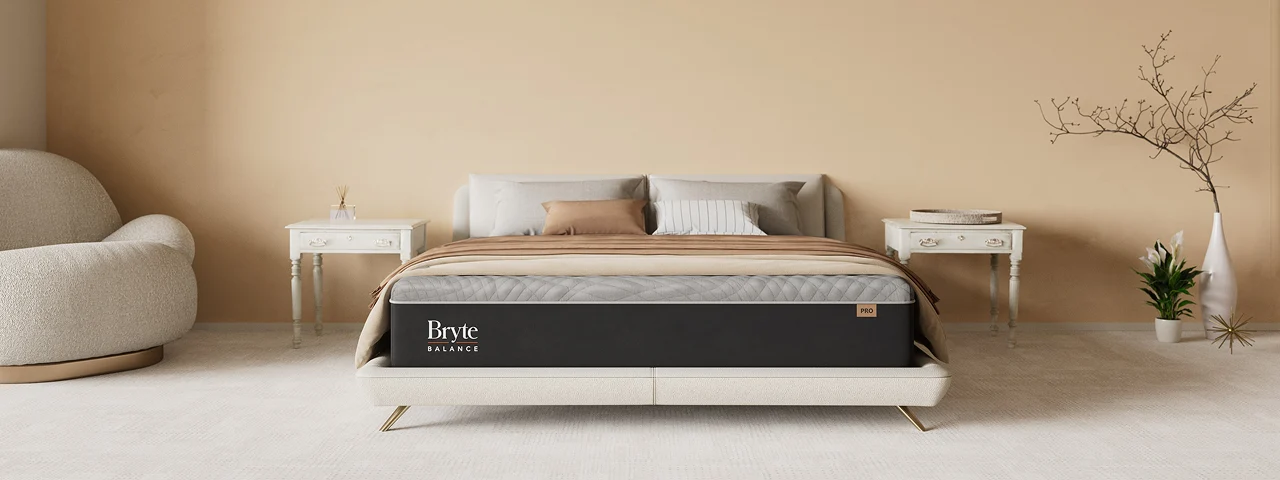
The Bryte Smart Bed is the only bed that delivers true Active Pressure Relief. Using up to 90 intelligent Balancers, the system actively senses pressure imbalances and removes them in real-time. These sensors detect pressure imbalances and adjust firmness in real-time throughout the night.
Key capabilities:
- Real-time pressure adjustment: Detects even small imbalances and makes silent, automatic corrections
- Dual Comfort Design: Each partner controls their side independently (firmness 0-100)
- Position-specific Contours: Tailored profiles for back, side, or stomach sleepers
- Individual Zone Control (PRO models): Adjust specific areas like lower back
- Over-the-air updates: Software improvements over time rather than static degradation
Results depend on individual factors and should be considered alongside basic sleep setup optimization and medical evaluation when appropriate.
When Adaptive Technology Makes Sense
Consider adaptive technology if:
- Partners have significantly different firmness preferences
- Pain varies by position and you move frequently during sleep
- Previous mattress purchases have failed to provide relief
- The sleep-pain cycle has become entrenched despite trying multiple solutions
Taking Action: Your Path Forward
Tonight
- Perform the self-assessment tests (hand test, alignment photo, visual inspection)
- Adjust pillow positioning based on your primary sleep position
- Note your pain pattern over the next few mornings—does it follow the mattress-related signature?
This Week
- Check your mattress age—if it's past 7 years, shows wear (sagging/indentations), or you consistently sleep better elsewhere, consider replacement
- Rule out medical red flags—if any apply, see a physician before focusing on mattress solutions
- Evaluate the severity of degradation indicators
Solution Spectrum
Frequently Asked Questions
Can a mattress cause lower back pain?
Yes. Research suggests mattresses can influence sleep posture, comfort, and perceived pain for some people. A mattress that's too soft creates the "hammock effect" which may place the lower back in a less neutral position for long periods. The Kovacs RCT with 313 patients found that firmness level significantly impacts pain outcomes.
How do I know if my mattress is causing my back pain?
Look for the mattress-related pain signature:
- Pain is worst upon waking
- Improvement relatively quickly after you start moving
- Pattern repeats consistently
- No accompanying fever, numbness, or trauma history
What does mattress-related back pain feel like?
Characteristic features:
- Lower back stiffness or aching upon waking
- Gradual improvement with daytime activity
- May include hip or shoulder discomfort
- Often accompanied by poor sleep quality and frequent position changes
Can a too-firm mattress cause back pain?
Yes—and this contradicts common belief. The Kovacs randomized controlled trial found firm mattresses actually worsened outcomes compared to medium-firm. Overly firm surfaces prevent proper contouring and concentrate pressure at natural body curves.
How long does it take for a new mattress to help back pain?
Some people notice changes within days to weeks; others may need longer to assess. Research shows continued gains through week 4 (approximately 24% additional improvement), with effects persisting at 5-6 months.
Should I see a doctor or get a new mattress for back pain?
See a doctor first if you have red flag symptoms: loss of bladder/bowel control, leg numbness or weakness, fever, unexplained weight loss, or pain following trauma. If your pain follows the mattress-related pattern (worst upon waking, improves with movement), mattress evaluation is appropriate.
How often should I replace my mattress?
Every 6-8 years under normal conditions. Research shows correlation between mattress age and back pain severity. The average disposal age (13.9 years) is nearly double the recommended replacement timeline.
About This Content
This article includes user-reported experiences from online forums, including Reddit. These examples are anecdotal and are provided for illustrative purposes only. They do not represent clinical evidence and should not be interpreted as medical conclusions.
This content summarizes publicly available sleep research and biomechanics concepts for educational purposes. It is not intended to diagnose or treat back pain. Persistent, severe, or worsening pain should be evaluated by a qualified healthcare professional.
Shop Bryte Beds
From the Park Hyatt New York to Rosewood Miramar Beach, thousands of guests have experienced Bryte in the world’s top hotels—now it’s your turn.