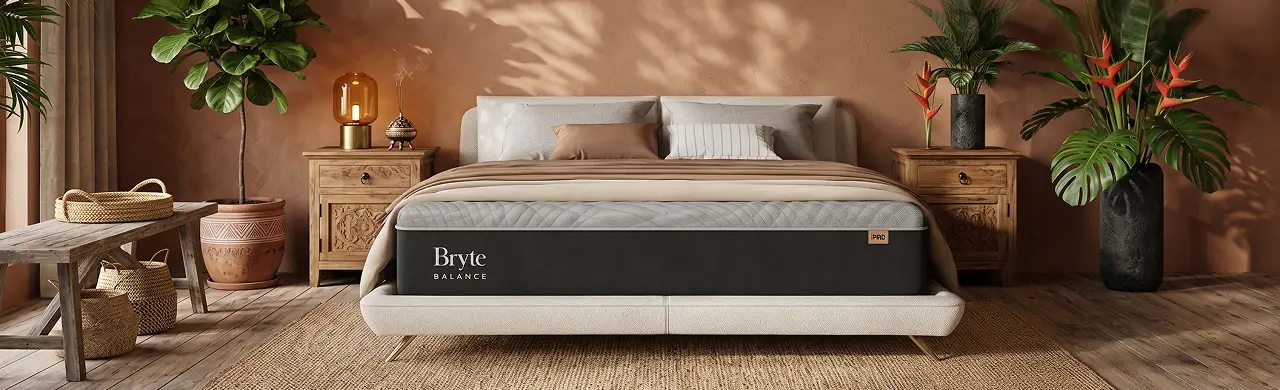
Four bed features may help some people with ADHD reduce bedtime arousal and shorten sleep-onset time:
- rhythmic motion,
- adjustable support,
- built-in relaxation audio,
- and independent partner controls.
Unlike passive mattress features that simply cushion, these features can change the sleep environment in real time (comfort, temperature, motion, and personalization), which some sleepers find helpful for winding down.
Research documents why this distinction matters. 66.8% of adults with ADHD have insomnia—more than four times the 13-15% rate in the general population. Standard sleep hygiene advice assumes a neurotypical circadian system. ADHD sleep patterns are often associated with delayed melatonin onset, sensory hyperreactivity, and persistent cognitive arousal. Passive comfort creates necessary but insufficient conditions for sleep.
Disclosure: This article includes Bryte products as examples of adjustable sleep technology. It is educational and not medical advice. Bed features may complement—but don’t replace—clinical care.
Key Research Findings: ADHD Sleep Is Neurologically Different
These patterns are commonly discussed as differences in circadian timing and arousal regulation. Sleep hygiene can help, but many people with ADHD benefit from additional supports (behavioral, environmental, and sometimes clinical).
Why Standard Sleep Advice Fails ADHD Brains
"Go to bed at the same time every night." "Avoid screens before bed." "Keep your bedroom cool."
This advice helps marginally—but doesn't address the underlying reality. The ADHD brain and body aren't ready for sleep at conventional times regardless of behavioral adjustments. Adults with ADHD report moderately longer sleep onset latency than controls across multiple studies involving 1,713 participants.
The frustration of failed sleep hygiene isn't a reflection of poor effort. It reflects the mismatch between generic recommendations and specific neurological patterns.
As one user on r/ADHD described the experience:
"I remember finding out people fall asleep faster than an hour or two when I was a young teenager and being SHOCKED. Not everyone lays there for an hour to an hour and a half stuck between awake and actually asleep, daydreaming vividly, but still having access to every sensory input from their enviroment? Witchcraft I say!!!"
Active vs. Passive Bed Technology: The Critical Distinction
This framework simplifies mattress evaluation for ADHD individuals:
Passive features matter for comfort but remain static after purchase. They assume the brain will cooperate—that it stops racing, the body relaxes, and sleep transition proceeds normally.
Active features work when the internal off-switch malfunctions. They deliver external calming signals, affect physiological conditions, and facilitate state transitions that don't happen automatically.
For ADHD individuals, this distinction is often the difference between a bed that cushions and a bed that actually helps you fall asleep.
Feature 1: Rhythmic Motion and Vestibular Stimulation
Key Finding: Some sleep studies suggest gentle rocking at 0.16-0.24 Hz accelerates sleep onset by providing external pacing that helps the brain shift from alert to drowsy states—without requiring executive function to maintain, as meditation does.
The Neurological Mechanism
The vestibular system—inner ear structures detecting motion and orientation—responds to gentle, rhythmic stimulation in ways that promote sleep transition. Research published in PMC found:
- Tendency toward shorter sleep latencies with moving beds
- Accelerated transition from wakefulness to deeper sleep stages
- 12 of 18 subjects preferred motion nights over baseline
- Optimal frequency: 0.16-0.24 Hz (one oscillation every 4-6 seconds)
Why This Matters for ADHD
Racing thoughts at bedtime represent a failure of the brain to downregulate from alert to drowsy states. Unlike meditation—which requires initiating and sustaining attention—rhythmic motion works automatically once activated.
The motion provides an external pacing signal. The brain doesn't need to cooperate or maintain focus. It receives consistent, calming vestibular input that facilitates state transition without executive function demands.
Bryte beds incorporate this through BryteWaves, which syncs gentle, rhythmic motion within the mattress with curated audio—nature sounds or guided meditation. The multi-sensory integration creates a relaxation experience that physically lowers stress without requiring the sleeper to manage it.
Feature 2: Active Pressure Relief
Key Finding: Some studies report beds with the lowest overnight motion were significantly associated with better sleep quality, improved daytime energy, and fewer nighttime awakenings—with sleep quality improving 13% on best-performing beds.
The Firmness Paradox for ADHD
Static mattresses require selecting one firmness level that must work across all sleeping positions throughout the night. Research supports medium-firm as generally optimal—sleep latency was significantly shorter on medium-firm mattresses (7.71 minutes) versus soft (12.42 minutes).
But optimal firmness for back sleeping differs from side sleeping. For ADHD individuals who move frequently while trying to fall asleep, cycling through positions means a firmness level optimal for one position creates discomfort in another. The search for a single "right" firmness becomes a compromise.
How Real-Time Adjustment Works
Dynamic pressure systems contain sensors detecting pressure distribution and actuators adjusting firmness in specific zones. Rather than requiring the sleeper to find the one position that works with a static surface, the surface adapts.
Bryte’s Active Pressure Relief technology features up to 90 intelligent, pneumatic Bryte Balancers organized into 16 independent zones (8 per sleeper). The bed actively senses pressure and adjusts firmness in real-time. When pressure imbalances are detected, silent automatic adjustments alleviate pressure points before they cause waking or position shifts.
For ADHD individuals, this means each position receives appropriate support without needing to find and maintain a single optimal position. Restlessness that interferes with sleep onset may be reduced when every position feels comfortable.
Feature 3: Integrated Meditation and Breathwork
Key Finding: Adolescents practicing five-minute daily guided meditation for four weeks experienced a 53% decrease in insomnia severity, with hyperactivity/impulsivity symptoms decreasing 60%.
Research on Brief Interventions
The brevity of effective protocols matters for ADHD populations:
- 5-minute meditation: 53% reduction in insomnia severity, 41% reduction in overall ADHD symptoms
- 5-minute mindfulness audio: Sleep quality improved from 12.85 to 9.44 after 2 weeks
- Meta-analysis of 10 studies: 66% improvement in attention, 53% decrease in hyperactivity/impulsivity
The mechanism involves teaching deep relaxation techniques that counteract 24-hour hyperarousal. Five-minute practices work—addressing the ADHD challenge of sustaining attention through longer sessions.
Why Bed Integration Solves the Consistency Problem
The primary challenge with standalone meditation apps for ADHD individuals is consistency. Initiating a practice requires executive function:
- Remembering to do it
- Deciding when
- Locating and launching an app
- Choosing a session
These steps create friction that causes ADHD individuals to skip relaxation routines even when they believe the practices help.
Bed-integrated relaxation reduces friction by building the practice into the sleep environment. When the calming intervention is part of the bed itself—activated through simple app interaction rather than requiring separate setup—the barrier to consistency drops.
Bryte PRO models include a library of guided breathwork and focused intention tracks, integrated with BryteWaves motion. The intervention is immediately available as part of wind-down, not a separate step requiring independent initiation.
The challenge of racing thoughts at bedtime is widely experienced. As one user on r/ADHD described:
"It goes against every bit of advice people give about sleep, but here is my solve: I sleep with a lamp on, and fall asleep with the TV on watching Futurama. On bad nights, I'll have candy or orange juice or a sugary drink and that puts me out within 30 minutes. I am only half joking, but I tell my family that the worst place ever is alone in the dark with my thoughts. I will stay up for days if that's how I have to sleep."
Audio Type Matters
A systematic review of 34 studies found notable differences:
Seven studies showed reduced sleep latency; 8 showed improved slow wave activity (deep sleep). Guided audio designed for sleep onset can meaningfully reduce racing thoughts.
Feature 4: Independent Partner Zones
Key Finding: Surveys suggest 40% of American adults report partner tossing and turning causes sleep problems; 56% are woken by partners two or more nights weekly.
The Scope of Partner Disturbance
- 44% of women (vs. 34% of men) report partner movement keeps them awake
- 44% of couples say sleep issues have made them question their relationship
- 31% of U.S. adults sleep separately to accommodate partners
ADHD Sensory Sensitivity Amplifies the Problem
The same heightened sensory processing that makes textures and temperatures more noticeable likely amplifies awareness of nighttime movements. Where neurotypical sleepers briefly register movement without fully waking, ADHD brains with poor sensory filtering may experience full arousal.
Addressing partner disturbance for ADHD individuals requires more than motion isolation materials. True independence means:
- Separate firmness control (no compromise required)
- Separate relaxation experiences (one partner's audio doesn't affect the other)
- Separate wake features (no audible alarms disturbing both)
Bryte's Dual Comfort Design allows each partner to independently control their side's firmness (0-100 scale), run their own relaxation tracks, and view their own sleep data. Silent Wake Assist uses gradual motion to wake one partner without disturbing the other.
Weighted Blankets: What Research Actually Shows
Weighted blankets receive significant attention for ADHD sleep. The mechanism—deep-pressure stimulation activating the parasympathetic nervous system—is sound.
However, a PMC review of sleep interventions for ADHD adults characterizes weighted blanket findings as "positive but unreplicated” but the evidence base is still developing and mixed across outcomes.
Practical limitations for ADHD individuals:
- Heat retention—problematic for those with temperature regulation difficulties
- Restrictive feeling rather than calming for some users
- Separate purchase, storage, and maintenance
- Partner preference conflicts
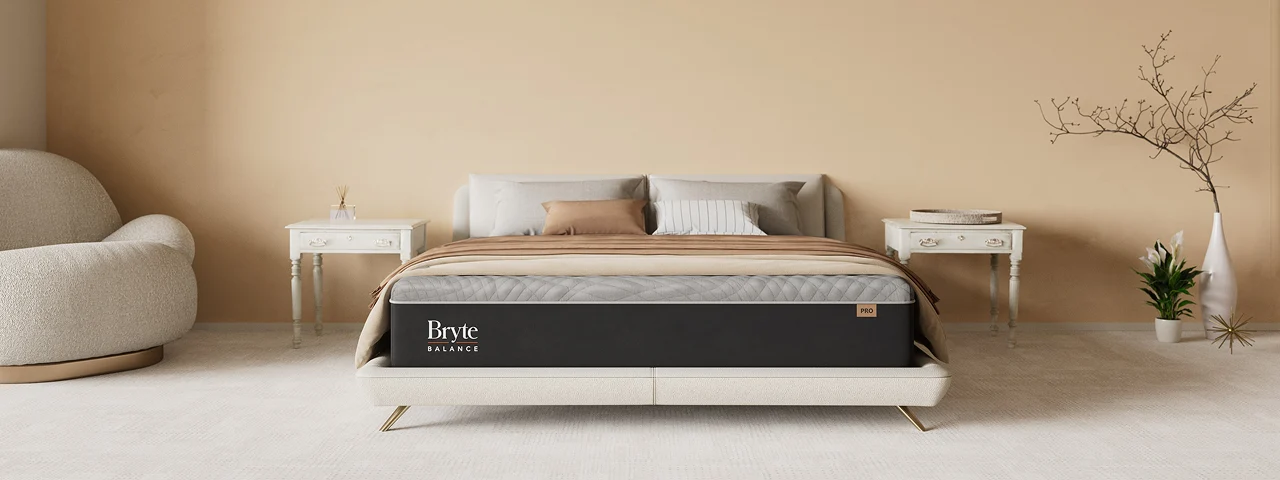
Bed-integrated pressure relief offers an alternative. Bryte's pneumatic balancers create conforming, supportive sensation without heat retention. The Balance PRO features a 3-inch "Serene" comfort layer for air-cushioned pressure reduction; the Balance PRO Conform uses gel-infused memory foam for motion isolation and contouring.
Many users find weighted blankets beneficial, though experiences vary. As one user on r/adhdwomen shared:
"I LOVE my weighted blankets. I used to wake multiple times a night and I don't anymore ever since I got a weighted blanket. They come in different weights and sizes so you could start with a smaller one. There are lap ones, throw sized ones, bed sized ones. I think the lap pads can be as light as 3lbs but the throws I think are usually 5lbs or more. I have a twin that's 15 lbs. They have a rule of thumb of 10% of your weight plus 1lb."
Match Your Primary Barrier to Features
ADHD sleep onset challenges aren't uniform. Identifying your primary barrier helps prioritize features:
Most people experience combinations. Prioritize based on which barriers cause the most frustration.
Bryte Model Comparison for ADHD Sleep Profiles
All models include: Bryte Adaptive Core with 90 Balancers, BryteWaves relaxation, Dual Comfort Design, Silent Wake Assist, Guided Comfort Tailoring via AI, over-the-air software updates.
For racing thoughts and relaxation needs: Balance PRO offers the most extensive relaxation library and advanced zonal control for personalized calming experiences.
For sensory sensitivity and temperature: Balance PRO and Balance PRO Conform feature cool-to-touch covers. The PRO's air-cushioned layer provides pressure relief without heat buildup.
For physical restlessness with partner: Balance PRO Conform's memory foam provides superior motion isolation while maintaining dynamic adjustment capabilities.
Addressing Smart Feature Concerns
A legitimate concern: Will smart features add cognitive burden rather than reducing it?
The answer depends on design. Technology requiring nightly decisions, troubleshooting, and management creates friction. Technology that operates invisibly after setup removes decisions.
Bryte's approach prioritizes automation:
- Guided Comfort Tailoring: AI recommends settings based on body attributes and sleep data—no trial-and-error required
- Automatic adjustment: The bed detects and responds to pressure imbalances without sleeper intervention
- Over-the-air updates: Improvements happen automatically without user action
- Set-and-forget operation: Initial preferences are remembered and executed consistently
The goal is technology that works in the background—the bed provides better sleep without requiring ongoing management. For ADHD individuals concerned about app fatigue, this distinction matters.
Frequently Asked Questions
Is my sleep problem actually ADHD-related?
Answer: If you have diagnosed ADHD and struggle to fall asleep, the connection is likely neurological, not behavioral.
- 66.8% of ADHD adults have insomnia (4x general population)
- 73-78% have delayed sleep-wake cycles
- Melatonin onset averages 1.5 hours later than neurotypical
These patterns mean your body genuinely isn't ready for sleep at conventional times—regardless of sleep hygiene efforts.
Why doesn't melatonin work for my ADHD insomnia?
Answer: Melatonin supplements assume your circadian timing is normal but insufficient. ADHD involves a phase-delayed system—your natural melatonin arrives 1.5 hours late. Adding more melatonin at the wrong time won't shift the underlying rhythm.
Bright light therapy in the morning (10,000 lux) has stronger evidence for ADHD circadian issues, advancing sleep timing by 31-57 minutes in studies.
Will smart bed features distract me or require constant attention?
Answer: Depends on design. Well-designed smart features operate invisibly after initial setup—no nightly decisions required.
Look for:
- AI-guided setup (recommendations, not trial-and-error)
- Automatic adjustment without manual intervention
- Over-the-air updates requiring no user action
The technology should reduce decisions, not add them.
How long before I'd notice improvement?
Answer: Active interventions can show effects immediately for some features:
- Rhythmic motion/relaxation: Same-night calming effects
- Temperature control: Immediate impact on sleep onset
- Dynamic pressure: Immediate comfort improvement
- Circadian adjustment: 2-4 weeks for rhythm shifts
Consistent use matters more than dramatic first-night results.
Can one bed work for both me and my partner with different sleep needs?
Answer: Yes, with independent control. Look for:
- Separate firmness adjustment (each side independent)
- Separate relaxation programs (one partner's audio doesn't affect the other)
- Silent wake features (gradual motion, not audible alarms)
Bryte's Dual Comfort Design provides 0-100 firmness control per side, independent relaxation tracks, and Silent Wake Assist.
Do weighted blankets actually work for ADHD sleep?
Answer: Evidence is preliminary. A PMC review found positive but unreplicated results—weaker evidence than light therapy or CBT-I.
Practical concerns for ADHD:
- Heat retention worsens temperature sensitivity
- May feel restrictive rather than calming
- Requires separate management
Bed-integrated pressure relief offers similar deep-pressure benefits without heat retention.
Evaluating Any Bed for ADHD Sleep Onset
When comparing options, ask these specific questions:
- Active or passive? Does this bed support sleep onset, or does it only provide static comfort?
- Automation level? Can it be configured once and operate automatically, or does it require nightly decisions?
- Barrier matching? Does it address your primary barrier—racing thoughts, temperature, restlessness, or sensory sensitivity?
- Partner independence? For couples: Can each partner control their experience without compromise?
- Cognitive burden? Will the technology reduce decisions or add another thing to manage?
The goal isn't simply finding a comfortable bed. It's finding a bed that actively supports the transition from hyperarousal to sleep—a transition that doesn't happen automatically for people with ADHD but can be facilitated by the right technology.
Taking the Next Step
Bryte's smart bed portfolio addresses the specific barriers ADHD individuals face at sleep onset through active intervention rather than passive comfort. The combination of rhythmic motion (BryteWaves), dynamic pressure adjustment (90 Balancers across 16 zones), integrated relaxation (guided breathwork and meditation library), and independent partner control (Dual Comfort Design) targets the neurological patterns that prevent people with ADHD from powering down.
For those prioritizing relaxation features: The Balance PRO offers the most extensive breathwork library with advanced zonal control.
For those prioritizing motion isolation: The Balance PRO Conform combines dynamic adjustment with high-density memory foam contouring.
For those seeking balanced performance: The Balance provides the signature combination of bounce, support, and active technology.
All models include Guided Comfort Tailoring—AI-powered recommendations that reduce setup decisions—and improve over time through software updates without requiring user action.
Content Disclaimer
This article includes user-reported experiences from ADHD communities and sleep discussion forums. These examples are anecdotal and meant to illustrate common experiences, not to establish medical effectiveness or treatment outcomes.
The information presented summarizes research findings related to sleep physiology and environmental factors. It is not intended to diagnose ADHD, insomnia, or sleep disorders, or to replace care from a qualified medical professional.
Shop Bryte Beds
From the Park Hyatt New York to Rosewood Miramar Beach, thousands of guests have experienced Bryte in the world’s top hotels—now it’s your turn.