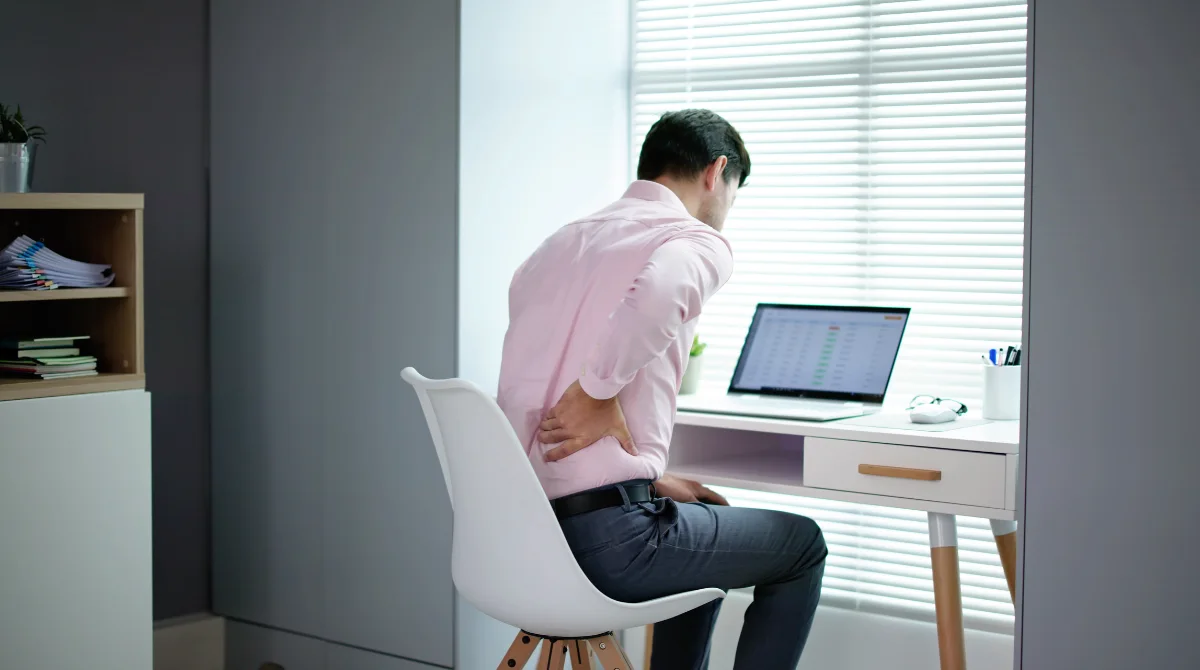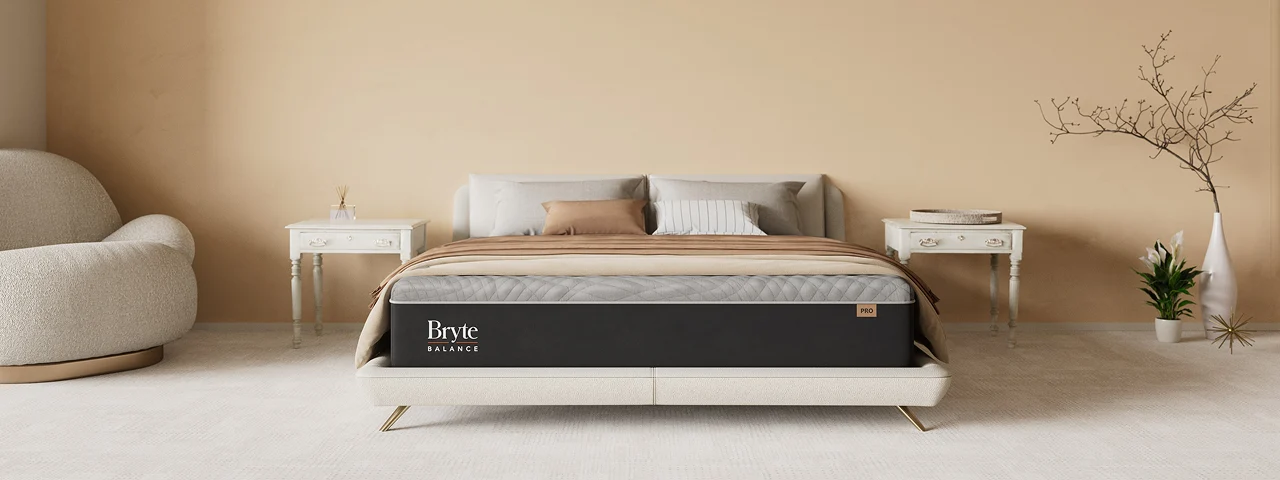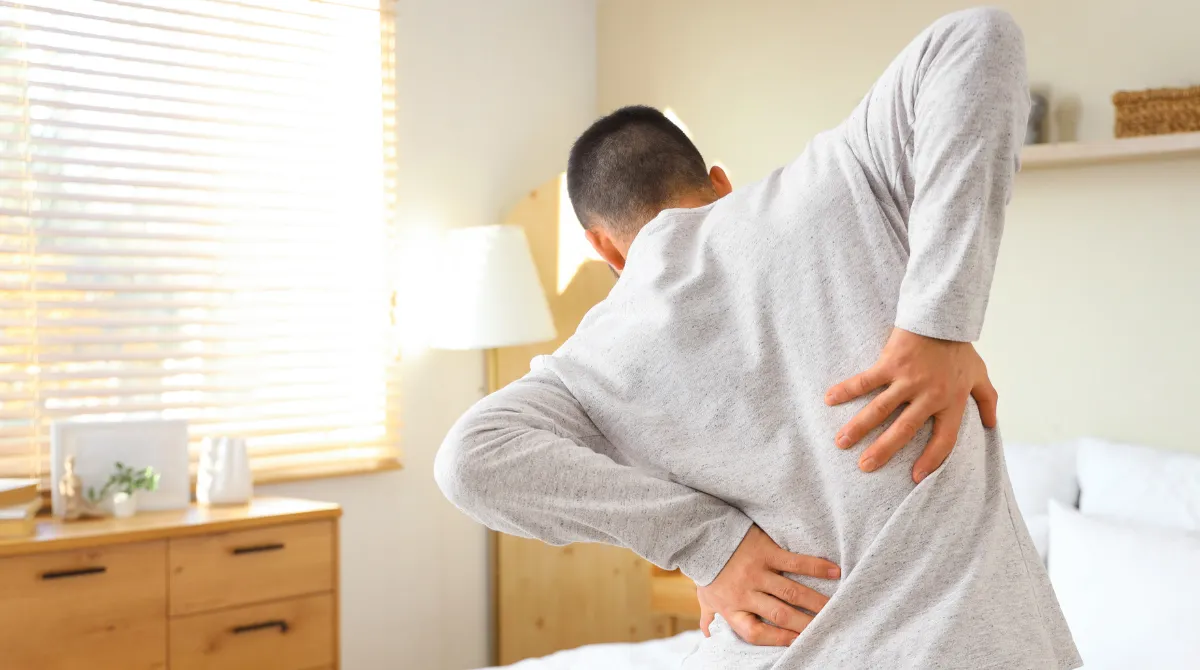
The best mattress for hip pain is a medium-firm (5-6/10) hybrid or a mattress with Active Pressure Relief, defined as real-time sensing of pressure points combined with real-time adjustments, with zoned support at the hip while maintaining spinal alignment.
For side sleepers specifically, the key features include targeted hip cushioning, responsive pressure distribution, and support that adapts to position changes throughout the night.
Here's why this matters: 74% of hip pain patients experience sleep disturbance, sleeping nearly one hour less per night than those without hip pain. The problem isn't just discomfort - it's a documented pattern that affects the majority of people dealing with hip issues, regardless of mattress quality.
Key features to prioritize for hip pain relief:
- Medium-firm support (5-6 on a 10-point scale)
- Zoned construction with softer hip and shoulder regions
- Adequate cushioning depth (3"+ comfort layer for side sleepers)
- Motion isolation if sharing the bed
- Adjustable firmness for combination sleepers or couples
This guide evaluates mattress performance using published sleep research, biomechanical pressure distribution principles, and clinical pain outcome data.
Why Your Comfortable Mattress Still Causes Morning Hip Pain
Your mattress felt right when you bought it. So why do you wake up stiff every morning?
The answer lies in something mattress marketing rarely addresses: pressure accumulates progressively over hours in ways you don't consciously notice.
When you first lie down, your body distributes weight across the surface in a pattern that feels balanced. During deeper sleep stages, you remain in single positions for extended periods. Pressure concentrates at the points bearing the most weight - for side sleepers, that's the hip. By the final 3-4 hours of sleep, hip pressure has intensified significantly compared to when you settled in.
Your body responds to sustained pressure by triggering wakefulness. Sometimes as pain. Sometimes as the urge to shift. Often as fragmented sleep that leaves you unrested despite spending adequate time in bed.
The Static Firmness Problem
Traditional mattress selection assumes the firmness you choose at purchase will remain appropriate throughout every night and across all sleeping positions. This assumption fails in practice.
Here's why static firmness can't fully solve hip pain:
- Position changes alter pressure distribution. A firmness that cushions hips during side sleeping may feel too soft when you roll onto your back.
- Adults shift positions regularly. Research shows adults spend 54.1% of sleep time on their side, 37.5% on their back, and 7.3% on their stomach - meaning most sleepers transition between positions nightly.
- Side sleeping increases with age and BMI. The demographics most likely to experience hip discomfort spend the most time in the position that concentrates pressure at the hip joint.
A mattress that felt correct during a showroom test may prove inadequate once you've slept on it for weeks. The problem isn't your judgment - it's a limitation of static technology.
This experience resonates with many Reddit users who've struggled to find the right mattress. As one user shared on r/BedroomBuild:
"I'm a lifelong side sleeper with shoulder pain that comes and goes, and I've tried more mattresses than I want to admit. Memory foam felt amazing for the first few weeks, then slowly turned into quicksand for my hips. Hybrids felt supportive until the pressure points started showing up again. Latex felt durable and responsive, but my shoulder never fully relaxed on it. Here's the part people don't like hearing. Your body adapts, then reacts. What feels perfect at week two can feel awful at month three. A lot of people declare success way too early. I didn't know a mattress was wrong until my hip pain crept back after a couple months, not days."
Clinical Evidence: What Firmness Actually Works
Medium-firm mattresses (5-6/10) produce measurably better outcomes for pain relief than softer or firmer alternatives.
A clinical study documented a 48% decrease in back pain and 55% improvement in sleep quality when participants switched to medium-firm mattresses over 28 days. Benefits sustained at 5-6 month follow-up. While this research focused on back pain, the underlying mechanism - appropriate pressure distribution and spinal alignment - applies equally to hip discomfort.
Why Very Firm Mattresses Make Hip Pain Worse
Sleep medicine specialists specifically caution against very firm mattresses for side sleepers. According to Consumer Reports, hard mattresses prevent hips from sinking adequately during side sleeping, disrupting spinal alignment and increasing pressure on sensitive joints.
The firmness tolerance paradox:
- Too firm: Hips can't sink in, forcing the spine into lateral curvature
- Too soft: Hips drop excessively, creating opposite misalignment
- Medium-firm (5-6/10): Allows adequate hip sinking while maintaining spinal neutrality
This narrow tolerance window explains why side sleepers often cycle through multiple mattresses without resolution. The problem isn't mattress quality - it's the inherent limitation of selecting a single firmness level for a body that changes position throughout the night.
Understanding Your Hip Pain in Context
Sleep disruption from hip pain is remarkably common. A study of 528 primary care patients with hip osteoarthritis found that 64% reported sleep problems, with 20% meeting clinical insomnia criteria. Patients reporting pain levels of 40mm or higher on a visual analog scale showed 2.54 times greater prevalence of sleep disturbance.
Hip osteoarthritis prevalence by the numbers:
If you're dealing with hip pain that disrupts sleep, you're not an outlier. This is a clinically documented pattern affecting millions.
Side Sleeper Hip Pressure: The Biomechanics
Side sleeping concentrates body weight at two primary contact points: shoulder and hip. Unlike back sleeping, which distributes weight across a larger surface area, side sleeping channels substantial force through the relatively small surface area of the lateral hip.
Three factors drive side-sleeping hip pain:
- Weight concentration: Two contact points absorb load that back sleeping distributes across many
- Joint loading angle: The hip rotates approximately 90 degrees from its natural weight-bearing axis
- Greater trochanter compression: The bony hip prominence presses directly against the mattress surface
For the spine to remain neutral during side sleeping, the mattress must allow the hip to sink sufficiently that the pelvis doesn't tilt. Too little sinking creates lateral spinal curvature. Too much creates the opposite problem.
Individual Factors That Affect Your Support Needs
Generic firmness recommendations assume a standardized body. Reality differs.
Body weight directly influences compression depth. A 130-pound sleeper experiences the same mattress differently than someone at 200 pounds - the heavier individual sinks further, potentially requiring firmer support.
Hip width affects pressure per unit area. Wider hips concentrate more force at the contact point, often requiring softer surfaces or targeted cushioning.
Age correlates with both increased side sleeping time and decreased position shifting. Research from the DPHACTO cohort indicates older adults move less during sleep, spending more time in pressure-accumulating positions.
Mattress Types Compared for Hip Pain
Hybrids lead recommendations for hip pain because they combine foam comfort layers (which contour and relieve pressure) with supportive coil systems (which maintain alignment and prevent excessive sinking). This addresses both cushioning and support requirements simultaneously.
Real-world experience backs this up. A user on r/Home shared their journey finding relief:
"Almost exactly the same here - 230 weight, side sleeper, tend to constantly roll between sides and back. Also, sleep with a CPAP. I have lower back arthritis so constant lower back pain. After testing a whole bunch of mattresses in all price ranges nothing seemed to be a 'magic bullet'. I visited my sister in another state and slept on her guest room mattress and slept like I was dead. Woke up so rested and no hip or other joint pain. I asked her what kind of mattress it was and she sheepishly told me is was some no-name Costco mattress that was very firm and she just put an inexpensive memory foam topper on it. So when I went back home we looked for a decent quality, very firm memory foam mattress... While my back felt great from the firm support, my joints (hips, elbows, shoulders, knees) were sore by morning. So I put an inexpensive 3" memory foam topper from Walmart on it and it's now perfect. Going on a year and the firm mattress is good for my back while the memory foam topper makes my joints not hurt."
Top-Rated Traditional Mattresses for Hip Pain
Bear Elite Hybrid - Sleep Foundation rated 8.5/10 for side sleepers with hip pain. Features Celliant fiber cover and zoned support targeting hip and shoulder relief.
Helix Midnight Luxe - Scored 4.2/5 in pressure relief and 5/5 for lateral hip pain in physical therapist evaluations. Medium firmness (approximately 6/10) suitable for most side sleepers.
Nolah Evolution Hybrid - Specific recognition for combined shoulder and hip pain: 4/5 for hip pain, 4.5/5 for sciatica relief.
Saatva Rx - Designed specifically for chronic pain relief as primary focus.
Queen pricing for these hybrids ranges from $1,000-$2,500 depending on model and promotions. Trial periods of 100-365 nights are standard.
Active Pressure Adjustment: When Static Mattresses Aren't Enough
Bryte’s Active Pressure Relief technology uses real-time sensing of pressure points combined with real-time adjustments across multiple precision zones.
Active pressure adjustment describes technology that senses body pressure in real-time and modifies surface firmness automatically throughout the night. Unlike passive mattresses relying on material properties alone, active systems monitor pressure distribution continuously and intervene before discomfort causes waking.
This differs fundamentally from sleep tracking. Tracking monitors and reports sleep patterns after the fact. Active adjustment intervenes during sleep. The distinction matters because tracking doesn't address overnight pressure accumulation - it just documents that it happened.
The Progressive Pressure Response Framework
Static mattresses - even excellent ones - face an inherent limitation: they cannot respond to pressure that builds over hours of sustained position. Active technology addresses this through what might be called the Progressive Pressure Response cycle:
- Detection: Sensors identify pressure accumulation at specific zones
- Analysis: System determines whether adjustment is needed
- Response: Firmness modifies at the affected zone
- Monitoring: Continuous assessment for further changes
This cycle repeats throughout the night, preventing the progressive pressure buildup that causes the "comfortable at bedtime, sore at morning" pattern.
When Active Technology Provides Genuine Benefit
Active adjustment isn't necessary for every sleeper with hip pain. If your discomfort stems from a clearly incorrect mattress - too firm, too soft, or worn out - replacing with an appropriate static mattress may resolve the issue.
Active technology provides greatest benefit for:
- Sleepers experiencing pressure buildup despite owning quality mattresses
- Combination sleepers whose needs change as positions shift
- Those with conditions causing progressive pressure sensitivity during extended sleep
- Couples with different firmness preferences
- Anyone who has purchased multiple well-reviewed mattresses without achieving relief
The 82% of adults 50+ with arthritis who reported their new mattress helped relieve pain achieved results through conventional mattress selection. But if you've already tried that approach without success, the limitation may be static technology itself - not mattress quality.
Bryte's Approach to Hip Pain
Bryte's smart bed technology uses the Bryte Adaptive Core - 90 pneumatic Bryte Balancers organized into 16 independent zones. The system detects pressure imbalances and makes silent, automatic firmness adjustments throughout the night.
Bryte products integrate this Active Pressure Relief technology across the full product portfolio.
Key differentiators for hip pain sufferers:
- Active Pressure Relief Technology continuously monitors and responds to pressure patterns
- Individual Zone Control (PRO models) allows adjustment of specific areas like hips independently
- Contours provide tailored profiles optimized for side, back, or stomach sleepers
- Guided Comfort Tailoring uses AI to recommend firmness based on body attributes and sleep data
Rather than a single “best” model for hip pain, Bryte’s PRO and PRO Conform offer two distinct approaches built on the same Active Pressure Relief system.
The PRO model emphasizes immediate pressure reduction with a plusher comfort layer, often preferred by side sleepers with higher hip sensitivity, while the PRO Conform provides a firmer, more stabilizing surface with enhanced motion isolation, supporting spinal alignment for back sleepers or those who need more structural support.
Both models continuously adapt in real time, ensuring pressure at the hips is relieved dynamically as positions change.
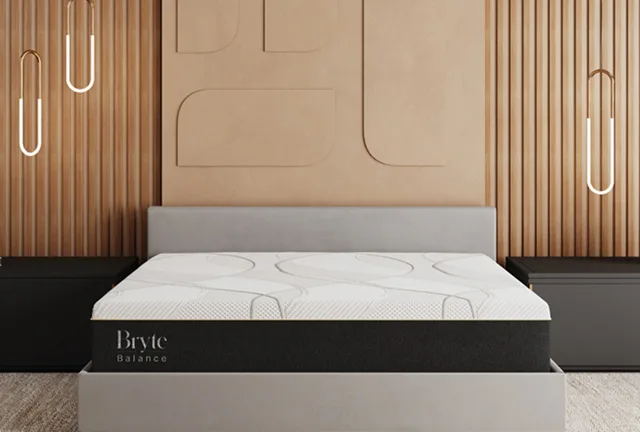
According to Sleep Foundation, Bryte Balance is recommended specifically for chronic pain and pressure points, with testers reporting feeling "pain-free come morning."
The Couples Advantage
Partner firmness preferences create unavoidable compromise in traditional mattress selection. One partner needs soft cushioning for hip pain. The other needs firmer support. The resulting choice satisfies neither fully.
This isn't a minor issue. Research shows 37% of respondents go to sleep at different times than desired to accommodate bed partners. Nearly one-third (31%) of U.S. adults engage in "sleep divorce" - sleeping in separate beds entirely.
Bryte's Dual Comfort Design eliminates the compromise:
- Independent firmness control (0-100) for each side
- Separate relaxation tracks via BryteWaves™
- Individual sleep data through the Bryte app
- Silent Wake Assist uses gradual motion to wake one partner without disturbing the other
For couples where one partner has hip pain requiring very different support, this technology removes the need for negotiation - or separate beds.
Making the Purchase Decision
What to Expect During Break-In
All mattresses require adjustment time before you can accurately evaluate comfort and pain relief.
Typical break-in timelines:
- Memory foam and latex: 2-4 weeks to fully conform
- Innerspring and hybrid: 1-2 weeks to settle
- Full evaluation period: 30-90 days recommended before deciding
During this period, expect the mattress to feel firmer initially than it will after break-in. Materials soften and conform with body heat and weight over time. Initial unfamiliarity doesn't necessarily indicate incompatibility - it may reflect normal adaptation.
This patience is crucial, as one Redditor on r/TotalHipReplacement explained from personal experience:
"That is what I currently have…. A Tempurpedic ProAdapt firm., which before both surgeries, felt like I was sleeping on a rock hard block of cement! Prior to surgery, nothing in the world would help with hip pain…..except 2 replacements within 4 months of each other, last Feb & June of '23. I bought the firm mattress about a year before the replacements. Since the surgeries, my hip pains are resolved, and the firm Tempurpedic is fine…..I can't tell you all the voodoo things I bought within 2 years before fixing the real problem."
For smart mattresses with adjustable firmness, the break-in process differs. Rather than waiting for materials to change, you can experiment with different firmness settings immediately. Bryte's Guided Comfort Tailoring uses AI to recommend adjustments based on sleep data, potentially identifying optimal configurations faster than manual selection.
Signs Your Mattress Is (or Isn't) Working
Positive indicators after 30-90 nights:
- Waking without hip aches or stiffness (or meaningfully reduced discomfort)
- Consistent comfort throughout the night
- No numbness or tingling in hips or shoulders upon waking
- Fewer nighttime awakenings to shift positions
Warning signs the mattress may not suit your needs:
- Persistent hip or shoulder discomfort that doesn't improve after break-in
- Numbness or tingling at pressure points
- Waking multiple times per night with urge to shift
If symptoms persist beyond 90 days on a traditional mattress, consider whether a topper might add sufficient cushioning before returning. However, if fundamental support characteristics are wrong - the mattress is too soft overall - a topper won't address the underlying problem.
When to See a Doctor Instead
Mattress changes address sleep-surface-related pressure issues. They don't treat underlying conditions.
Medical consultation is appropriate when:
- Mattress changes don't relieve hip pain after adequate trial
- Pain is severe or progressive
- Pain accompanies swelling, reduced mobility, or locking
- Discomfort persists during daytime activities, not just sleep
Hip pain can stem from bursitis, osteoarthritis, referred lower back pain, or other conditions requiring medical intervention beyond sleep surface optimization. If you've tried multiple quality mattresses without improvement, the issue may not be the mattress.
Frequently Asked Questions
What firmness is best for side sleepers with hip pain?
Medium-firm (5-6/10) provides the best balance of cushioning and support. Clinical research shows 48% pain reduction and 55% sleep quality improvement at this firmness level compared to softer or firmer alternatives.
Why this range works:
- Allows adequate hip sinking for spinal alignment
- Prevents excessive drop that causes opposite misalignment
- Provides enough support for position transitions during sleep
Is memory foam or hybrid better for hip pain?
Hybrids are generally preferred for hip pain. They combine foam contouring (for pressure relief) with coil support (for alignment and durability).
Memory foam offers deeper contouring but may retain heat and feel too soft for heavier sleepers. Hybrids provide the cushioning benefits while maintaining responsiveness and temperature neutrality.
Why does my hip hurt when I sleep on my side?
Side sleeping concentrates body weight at two points - shoulder and hip - creating higher pressure per square inch than back sleeping.
The greater trochanter (bony hip prominence) compresses against the mattress at an angle the joint isn't designed for. Over hours of sustained position, this pressure accumulates, eventually triggering wakefulness or morning stiffness.
How long does a new mattress take to help hip pain?
Expect 30-90 days before accurately evaluating results. Materials require 2-4 weeks to fully break in, and your body needs time adapting to new support patterns.
Initial firmness typically softens during break-in. If discomfort persists beyond 90 days, the mattress firmness may not match your needs.
What's the difference between Sleep Number and Bryte for hip pain?
Bryte offers 16 pressure zones with 100+ nightly adjustments; Sleep Number uses 1 chamber per sleeper with hourly adjustments.
For hip pain specifically:
- Bryte's granular zoning targets hip pressure points directly
- Sleep Number adjusts overall firmness but can't address specific zones
- Bryte's real-time response prevents pressure accumulation; Sleep Number maintains set firmness
Can a mattress actually help hip arthritis pain?
Yes - 82% of adults 50+ with arthritis reported their new mattress helped relieve pain. Proper pressure distribution reduces stress on affected joints during sleep.
However, mattresses address sleep-surface pressure, not underlying joint conditions. If hip pain persists despite mattress changes, medical consultation is appropriate.
Should I get a new mattress or see a doctor for hip pain at night?
Start with mattress evaluation if pain occurs primarily during/after sleep and improves with movement.
See a doctor first if:
- Pain is severe, progressive, or accompanies swelling
- Discomfort persists during daytime activities
- Hip mobility is reduced or joints lock
- You've already tried quality mattresses without improvement
Many cases involve both - appropriate sleep surface reduces nighttime aggravation while medical treatment addresses underlying causes.
Content Disclaimer
This article is for educational and informational purposes only and is not medical advice. It does not diagnose, treat, cure, or prevent any medical condition. Always consult a licensed healthcare professional regarding hip pain, arthritis, or other health concerns. Research findings and quoted user experiences are provided for general context and illustrative purposes only, and individual results may vary.
Shop Bryte Beds
From the Park Hyatt New York to Rosewood Miramar Beach, thousands of guests have experienced Bryte in the world’s top hotels—now it’s your turn.