The best mattress firmness for joint pain is medium-firm (5-7 on a 10-point scale). In a clinical study of adults with arthritis, participants using a medium-firm mattress reported an average 34% reduction in morning pain and a 28% improvement in sleep quality over several weeks.
If you've already tried medium-firm and still wake up stiff, you're not alone.
The gap between "research says medium-firm works" and "medium-firm didn't work for me" isn't about effort or choice. It's about a fundamental limitation in how static mattresses function.
Key Clinical Findings at a Glance
Why Medium-Firm Works: The Pressure Threshold Explained
Some pressure-mapping research suggests that sustained surface pressures above approximately 30–32 mmHg may contribute to localized tissue discomfort in certain individuals.
This is why you might wake up aching. Excessive surface pressure may contribute to discomfort in sensitive areas such as the hips and shoulders.
A 2023 study of 312 arthritis patients found that mattresses outside the medium-firm range created problems in opposite directions:
- Too soft: Joints sink beyond natural alignment, stressing connective tissues
- Too firm: Pressure points exceed the 32 mmHg threshold, cutting off circulation
Research on mattress pressure effects confirms that peak pressure should remain below 30 mmHg to prevent discomfort from localized skin hypoxia. In one controlled study, participants using a medium-firm surface showed changes in sleep parameters including reduced sleep onset latency and differences in EEG spindle activity.
A study comparing latex and polyurethane foam found latex reduced peak body contact pressure by up to 35.1%. The latex mattresses maintained 90.9%-96.1% of body surface area in the low-pressure range, compared to 82.1%-91.8% for foam.
Why Generic "Medium-Firm" Advice Fails: The Body Weight Calibration Problem
A mattress rated 6/10 feels medium-firm to a 130-lb sleeper but medium-soft to a 230-lb sleeper. The mattress didn't lie—firmness is relative.
Research from Lancashire Knowledge Bank assessed spinal alignment across 59 participants subgrouped by body weight, height, BMI, shoulder width, and hip circumference. The findings:
- Higher body weight → better alignment on firmer mattresses
- Lower body weight → better alignment on softer mattresses
- Larger hip circumference → greater spinal deviations on softer surfaces
Weight-Adjusted Firmness Starting Points
The PMC study on musculoskeletal pain found improvement from medium-firm mattresses showed no significant correlation with BMI—benefits appeared across body types when properly calibrated. But the literature notes overweight individuals may be more sensitive to hardness changes, making accurate selection more consequential.
The frustration of trying to find the right firmness is a common experience. As one user shared on r/PsoriaticArthritis:
"Yes, and I changed just because mine was old. But I didn't realize I wasn't sleeping properly because of it. Took me ages to fall asleep and was turning constantly during the night. I'm a side sleeper. DO NOT TAKE THE ADVICE FOR A FIRM MATTRESS aka it's good for your back. Firm is good if you sleep on your back only. Soft mattresses are not at all sagging and unsupportive like the old days. Boxed springs are very good to allow your hips to sink. I have an Irisette Lotus, but I don't think the actual brand is super important. Another thing is to get the firmness correct for your weight. I'm 63 kg and went with the H2. Tempur pillow also highly recommended for neck pain."
Sleep Position Creates Zone-Specific Requirements
You change positions 10-30 times per night. Your optimal firmness changes with each shift. Static mattresses can only be right for one of them.
Different sleep positions concentrate pressure on different body areas:
Side Sleepers with Hip or Shoulder Pain
- Need softer hip/shoulder zones (4-5/10) to prevent pressure buildup
- Need firmer waist support (6-7/10) to prevent lateral spinal curve
- Uniform medium-firm creates a compromise that addresses neither zone optimally
Back Sleepers with Lower Back Pain
- Need medium-firm surface (5-6/10) overall
- Need adequate lumbar support to maintain natural curve
- Too soft allows pelvis to sink, increasing lumbar flexion
Combination Sleepers
- Requirements shift throughout the night as positions change
- No single static firmness setting can adapt to these shifts
Biomechanical analysis quantified the consequences of wrong firmness:
- Soft vs. medium: Cervical lordosis increased 26.7mm, with 49% increase in cervical disc loading
- Hard vs. medium: Lumbar lordosis decreased 10.6mm
Side sleepers in particular face unique challenges finding the right balance. One Reddit user on r/Mattress described their extensive search:
"I have trialled 19 mattresses in 4.5 years. I also did every single DIY imaginable. I weighed 132 when my 'mattress journey' started and thanks to weight lifting, I hover around 150lbs now. I could not, for the life of me get comfortable on anything longer term. I was dealing with some pretty significant shoulder pain, along with hip and lower back pain. Everything was either too firm, or too soft…I just couldn't find a happy middle. In September, I bought a DLX Hybrid Premier in Soft. Initially, I thought it was too soft, and actually tested the medium insert for a bit (the top has a zipper, so you can change out the insert to change the firmness of the mattress), but that truly was too firm for me. I have been sleeping on the Soft for about 6 months, and while I wouldn't say it's PERFECT for me, I will say, my shoulder pain is gone, and my hips don't hurt."
Zoned Support Outperforms Uniform Firmness
The clinical evidence for zone-specific support is substantial—and explains why uniform medium-firm often disappoints.
Spine Journal research (2023) on osteoarthritis patients found zoned mattresses achieved:
- 42% reduction in nocturnal pain episodes
- Pressure points maintained below 32 mmHg threshold
- Improved daytime function from better nighttime spinal positioning
f you've tried medium-firm without adequate relief, the issue may not be overall firmness level—it may be lack of zone-specific optimization.
The Couples Firmness Conflict
Nearly 1 in 5 couples report mattress firmness as an issue they've had to discuss. For couples where one or both have joint pain, compromise firmness means both sleep on suboptimal surfaces.
According to Mattress Firm's Sleep Index survey, approximately 20% of couples who share a bed have navigated firmness disagreements. Joint pain intensifies this:
- Partner with hip arthritis may need softer surface
- Partner with back pain may need firmer support
- Body weight differences compound the mismatch
PMC research shows 23.1% of U.S. adults with arthritis experience insomnia—affecting 10.2 million people. Poor sleep exacerbates pain perception, creating a cycle that compromise firmness cannot break.
The struggle is real for couples with different needs. As one user explained on r/Mattress:
"We also have a sleep number and hate it. Tried the Nest mattress because it can be ordered with 2 different sides. We ordered one side firm and one side plush and also hated it. We should have ordered it with medium across the whole bed. I agree with the sleep number offering no support once you make it soft enough to relieve pressure points."
Solutions for couples with different firmness needs:
- Split king configurations (though this creates center gap)
- Dual-firmness mattresses with different support levels per side
- Adaptive systems with independent zone control per sleeper
How to Know If Your Current Mattress Is Wrong
Signs Your Mattress Is Too Firm
- Pain at pressure points (hips, shoulders) upon waking
- Numbness or tingling in extremities
- Frequent position changes from discomfort during night
- Pain that improves once you're up and moving
Signs Your Mattress Is Too Soft
- Lower back pain upon waking
- Difficulty rolling over or feeling "stuck"
- Visible sagging or body impressions when you exit bed
- Hips sinking deeper than shoulders when side sleeping
According to iSense, too-firm mattresses press directly on joints without allowing the natural spinal curve, creating concentrated pressure that exacerbates joint pain.
Test: If stiffness improves after getting out of bed, the mattress may be one contributing factor.
Timeline: When to Expect Improvement
67% of arthritis patients experience measurable pain reduction within 2-4 weeks of switching to an appropriate mattress, according to Journal of Rheumatology research.
Typical Adjustment Timeline
According to Mattress World Northwest, those with chronic pain or musculoskeletal issues may need the full 90-100 night period—the mattress adapts in approximately 30 nights, but the body may require 60-90 nights for complete adjustment.
Some initial discomfort is normal. If your old mattress allowed spinal sagging or twisting, your muscles have been compensating. A properly supportive mattress may initially feel different as your body unlearns those compensatory patterns.
Mattress Replacement Timing for Joint Pain
According to Sleep Foundation, the standard replacement interval is 6-8 years. But for joint pain sufferers, the timeline may need to be shorter.
Research cited in the Journal of Chiropractic Medicine found:
- 33% of people experience sleep disturbances from old, sagging mattresses
- Patients who replaced mattresses after 5-7 years reported significant decreases in back and neck pain
A study of 130 patients with mechanical back pain found a positive correlation between mattress age and low back pain (r = 0.250, p = 0.004), suggesting firmness degradation over time contributes to pain progression.
Static vs. Adaptive: A Different Approach to Firmness
The traditional approach to firmness—selecting a number before purchase and hoping it's correct—contains inherent limitations:
NIH-cited research on therapeutic mattresses found that non-randomized studies showed statistically significant pain improvement with adjustable airbeds compared to static mattresses.
The question shifts from "what firmness should I choose?" to "how can optimal firmness be maintained continuously?"
How Bryte's Adaptive Technology Addresses Firmness Limitations
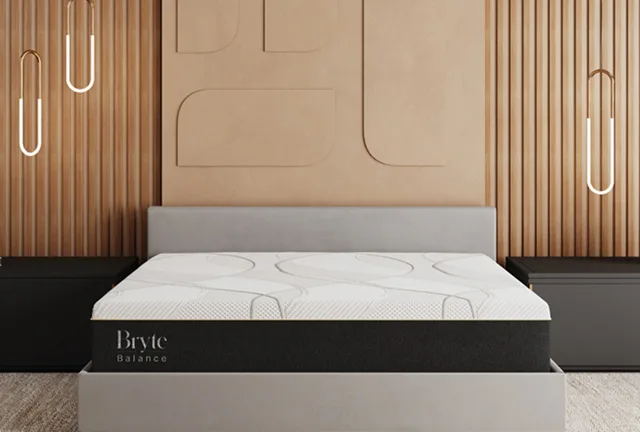
Bryte's approach centers on active pressure relief rather than passive cushioning. The Bryte Adaptive Core contains up to 90 intelligent pneumatic Bryte Balancers organized into 16 independent zones (8 per sleeper).
How It Works
Real-time pressure detection and response: The system detects pressure imbalances and makes silent, automatic adjustments—not once at purchase, but continuously throughout the night.
Zone-specific optimization: Because each zone adjusts independently, the system can provide softer support at shoulders and hips while maintaining firmer lumbar support—the configuration research shows produces superior outcomes.
Bryte Model Comparison for Joint Pain
Dual Comfort Design: Each partner controls their side's firmness independently (0-100 scale), eliminating the compromise that satisfies neither.
Guided Comfort Tailoring: AI-backed system provides comfort setting suggestions based on user inputs and sleep data patterns.
Continuous optimization: Over-the-air updates through Bryte OS mean the system improves over time rather than degrading.
For individuals seeking more personalized comfort adjustments, this approach reduces the need to select a single fixed firmness.
Frequently Asked Questions
Is a firm mattress better for joint pain?
No. Several studies have found medium-firm mattresses to perform well for many adults. Survey data from The Sleep Doctor found adults on firm mattresses are more than twice as likely to experience back pain compared to those on medium-firm surfaces.
Why firm fails:
- Creates pressure points exceeding 32 mmHg
- Restricts blood flow to compressed tissues
- Prevents natural spinal curvature accommodation
How long does it take for a new mattress to help joint pain?
2-4 weeks for measurable improvement; 4-8 weeks for full adaptation.
According to Journal of Rheumatology research, 67% of arthritis patients see results within 2-4 weeks. Those with chronic conditions may need up to 90 nights for complete adjustment.
Signs it's working:
- Progressive reduction in morning stiffness duration
- Fewer nighttime awakenings
- Less reliance on morning stretching to feel mobile
What firmness is best for side sleepers with hip pain?
Medium to medium-soft (4-6/10) with zoned support that's softer at the hip.
Side sleeping concentrates weight on hip and shoulder prominences. Without adequate give at these points, pressure may contribute to discomfort in sensitive areas. But the waist still needs firmer support to prevent lateral spinal curve.
Uniform medium-firm creates a compromise that addresses neither zone optimally—which is why zoned or adaptive mattresses outperform uniform firmness for this specific combination.
Can couples with different firmness needs share a mattress?
Yes—with split-firmness or adaptive technology.
Options include:
- Split king configurations (separate mattresses, center gap)
- Dual-firmness construction (different support per side)
- Adaptive systems like Bryte with independent zone control per sleeper (0-100 firmness scale each side)
Compromise firmness typically leaves both partners on suboptimal surfaces—particularly problematic when one has joint pain.
What is the 32 mmHg pressure threshold?
The pressure level above which blood flow to compressed tissue becomes restricted, causing discomfort and potential tissue damage.
Clinical research established that peak mattress pressure should remain below 30-32 mmHg to prevent localized skin hypoxia. This explains:
- Why too-firm mattresses cause numbness and aching at pressure points
- Why medium-firm works better than firm for most sleepers
- Why zone-specific support (softer at hips/shoulders) produces better outcomes
How do smart mattresses help with joint pain?
By providing zone-specific support that adjusts in real-time rather than requiring you to predict optimal firmness before purchase.
Smart mattresses with adaptive firmness can:
- Detect pressure imbalances automatically
- Adjust firmness in specific zones (softer hips, firmer lumbar)
- Adapt as you change positions during the night
- Allow independent settings for each partner
This addresses the core limitation of static mattresses: the inability to optimize for your body's changing needs throughout the night and over time.
How do I know if my current mattress is making joint pain worse?
Check whether pain improves shortly after rising.
If stiffness and aching vanish within 30-60 minutes of getting up, your mattress is likely contributing. Persistent all-day pain may indicate the underlying condition requires medical attention beyond mattress changes.
Red flags your mattress is wrong:
- Pain at specific pressure points (hips, shoulders)
- Numbness or tingling upon waking
- Visible body impressions in the mattress surface
- Sleep quality declining despite no change in condition
Making Your Decision: Framework vs. Technology
If pursuing a traditional mattress:
- Start with medium-firm (5-7/10) as clinical baseline
- Adjust based on body weight (lighter → softer, heavier → firmer)
- Factor in primary sleep position (side sleepers → softer at hips/shoulders)
- Consider zoned support if uniform firmness has failed previously
- Evaluate for minimum 4 weeks before deciding
If considering adaptive technology:
The question shifts from selecting the right firmness to whether a system can optimize firmness continuously. Bryte's 16-zone Adaptive Core, AI-driven comfort tailoring, and independent partner control address the limitations that cause traditional mattress selections to fail—body weight variation, position changes during sleep, zone-specific needs, and couples with different requirements.
For joint pain sufferers who have tried multiple mattresses without lasting relief, the pattern suggests the problem may not be which firmness to choose, but whether any single fixed firmness can meet needs that change throughout the night.
Content Disclaimer
This article is for informational purposes only and is not intended as medical advice. Individuals with chronic pain or medical conditions should consult a qualified healthcare provider.
The individual experiences described in this article are anecdotal and may not reflect typical outcomes.
Shop Bryte Beds
From the Park Hyatt New York to Rosewood Miramar Beach, thousands of guests have experienced Bryte in the world’s top hotels—now it’s your turn.