The best mattress for lower back pain is medium-firm (firmness rating 5-7/10) with zoned lumbar support. Clinical research shows medium-firm mattresses are 2.36 times more effective than firm mattresses at reducing pain in bed.
For combination sleepers or those with variable pain, mattresses with Active Pressure Relief can address a key limitation of static firmness. Active Pressure Relief is real-time sensing of pressure points combined with real-time adjustments.
Here is what the research shows, why your current mattress might be failing you, and how to choose a mattress that addresses lumbar pain specifically.
Clinical Evidence: How Much Improvement Can You Expect?
Medium-firm mattresses reduce back pain by approximately 48% within 28 days.
Research by Jacobson et al. tracked participants switching from commercial spring mattresses to medium-firm options. Sleep quality improved by 55% over the same period, with benefits persisting at five to six months of follow-up.
The Lancet published a randomized, double-blind trial of 313 adults with chronic non-specific low-back pain that quantified the firmness difference:
An AARP survey found 92% of adults ages 50+ with back pain who purchased a new mattress reported symptom relief, suggesting mattress replacement helps the substantial majority of chronic pain sufferers.
Why Medium-Firm Works: The Spinal Mechanics
Lumbar support maintains your spine's natural curve during sleep. When a mattress provides proper support, it fills the gap between the inward curve of the lumbar spine and the sleep surface, preventing the spine from flattening or curving unnaturally.
A meta-analysis showed statistically significant pain reduction with lumbar support (SMD: -1.33; 95% CI: -2.09 to -0.57; p=0.0006). The mechanism works through three pathways:
- Spinal stabilization – Prevents excessive flexion or extension
- Muscle offloading – Reduces overnight strain on supporting muscles
- Postural correction – Maintains neutral alignment across sleep positions
Some consumers report similar patterns in their own experience.
As one user shared on r/Mattress:
"You're not alone, the 'firm mattress is better' myth has misled people for years. Doctors used to tell everyone to sleep on a board for back pain. But if that really worked, why does your butt go numb after 10 minutes on a set of bleachers at a game? Body weight matters. At 130 lbs or less, a firm mattress may never soften up under you, leaving your spine unsupported and pressure points aggravated, especially with a herniated disc. A heavier person might sink into those same layers just fine."
The Hammock Effect: Why Soft Mattresses Fail
The "hammock effect" occurs when a mattress sinks in the center, creating a V-shaped valley that concentrates pressure on the hips and lower back. This forces unnatural spinal twisting and strains the lumbar region throughout the night.
Overly firm mattresses create a different problem: they don't contour to the body's curves, leaving gaps beneath the lower back and creating pressure points at the hips and shoulders.
Medium-firm can hit the balance. It offers enough support to prevent sinking and enough give to fill lumbar gaps.
The Sleep-Pain Cycle: Why Your Pain Compounds
Insomnia increases lower back pain risk by nearly 2x (OR=1.954), and back pain increases insomnia risk. This bidirectional relationship, documented by the IASP Pain Organization and Frontiers in Neuroscience,helps explain why pain can worsen over time and vary unpredictably.
The numbers are stark. Among patients with low back pain:
- 58.7% experience sleep disturbance overall
- 76% of chronic pain sufferers report sleep problems
- 47.4% get less than 6 hours of effective sleep per night
- 75.6% experience pain during sleep itself
This creates a compounding cycle. Poor sleep increases pain sensitivity. Increased pain disrupts sleep further. The same mattress that felt acceptable six months ago may now feel intolerable - not because the mattress changed, but because the cycle has escalated.
Breaking this cycle requires a mattress that addresses both pain and sleep quality simultaneously.
Sleep Position and Lower Back Pain: What Research Shows
Back sleeping is associated with lower LBP prevalence; stomach sleeping increases risk.
Research published in PubMed confirms that supine (back) sleeping supports spinal alignment, while prone (stomach) sleeping strains the lumbar area. Among chronic lower back pain patients studied, 42% actively avoided the prone position due to discomfort.
Position-Specific Mattress Requirements
Side sleeping - the most common position among adults - creates pressure on hips and shoulders while leaving a gap beneath the waist. Without support to fill this gap, the spine curves laterally, straining the lumbar region.
The Combination Sleeper Problem
Most people change positions multiple times per night. A mattress optimized for back sleeping provides different support characteristics than one optimized for side sleeping. When you shift positions at 2 AM, the same surface that felt supportive earlier may now create pressure points or inadequate lumbar support.
This explains a common frustration: the mattress feels fine when you fall asleep but causes morning soreness. The firmness level that works for your initial position may be wrong for subsequent positions. Static mattresses force you to accept a compromise that's suboptimal for every position.
Mattress Types Compared: Which Works Best for Lumbar Pain?
According to Kaneman Sleep, memory foam achieves a 9.5/10 pressure relief score but can make position changes feel sluggish. Traditional innerspring mattresses transfer 89% of movement - problematic for those sharing a bed.
Hybrid mattresses combine supportive coils with pressure-relieving foam layers. According to Tiami, they generally outperform innerspring for back pain because they cushion the spine's natural curves while preventing hips and back from sinking out of alignment. The ideal firmness rating for back pain relief is approximately 6-7/10.
One user's experience with memory foam mattresses illustrates a common problem with foam longevity. As shared on r/BuyItForLife:
"My recommendation is avoid memory foam mattresses. I bought one while I was single and when I met my partner both her and I would always wake up sore from trying to avoid rolling into the divot left by years of me sleeping directly in the middle. No amount of rotating the mattress ever fixed it. She also had a memory foam mattress at her place and although hers sagged less it was still an issue. First thing we did when we moved in together was go mattress shopping. We ended up buying an old school pocket coil mattress, and got a new bedframe with strong straight slats (rather than the ikea style curved slats.) We probably spent a good 2-3 hours laying on mattresses before deciding on one we both liked. The best part is because it's an old school style it's built to last, and completely flippable which is hard to find these days. I always used to wake up with small little pains in my back and shoulders and it's all completely disappeared with this new mattress and frame."
Zoned Support: How It Targets the Lumbar Region
Zoned support means a mattress has multiple firmness levels built in, supporting different body areas differently.
According to Sleepopolis, the coils or foam are typically softer under shoulders and firmer under hips and the lumbar region. This prevents heavier midsection areas from sinking while allowing shoulders and hips to compress appropriately.
Research on adjustable zoned air mattresses found that zoned designs with variable rigidity improve:
- Sleep efficiency
- Deep sleep proportion
- Reduced movements during sleep
Mattresses marketed for back pain typically feature 3-10 zones. Three-zone configurations cover head/shoulders, waist/lumbar, and legs. More specialized setups use seven or more zones for finer control.
The limitation: zones are fixed based on average body proportions and can't adapt to individual anatomy, weight distribution, or position changes throughout the night.
Smart Mattresses: Active Adjustment for Variable Pain
Smart mattresses use sensors and actuators to dynamically adjust firmness based on real-time pressure point mapping. According to Mattress World Northwest, smart beds can map approximately 2,000 pressure points and make adjustments to maintain spinal alignment throughout the night.
This addresses two problems static mattresses can struggle with:
- The combination sleeper problem. When you change positions, the mattress detects the shift in pressure distribution and adjusts firmness in specific zones.
- Night to night variability. Stress, inflammation, and fatigue can affect your support needs. Active systems can respond to these changes.
To evaluate Active Pressure Relief, focus on three quality metrics.
- Sound level. The system should be quiet so it does not wake you.
- Resolution. Higher resolution means more precise sensing and adjustment across more zones, including the lumbar area.
- Response time. True real-time adjustment occurs within seconds, not on an hourly schedule.
Bryte Smart Bed: Designed for Lumbar Pain
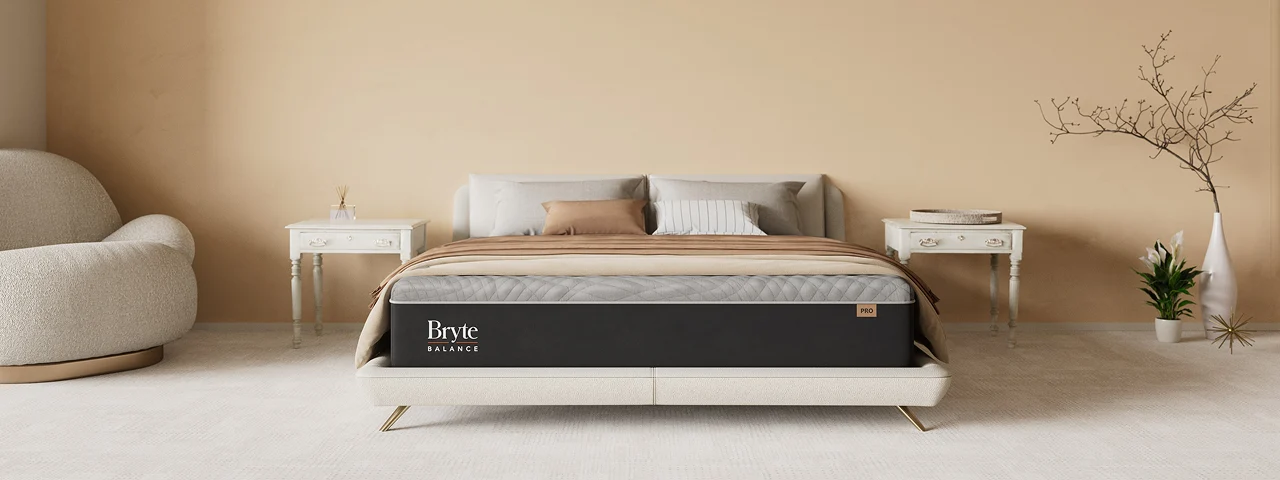
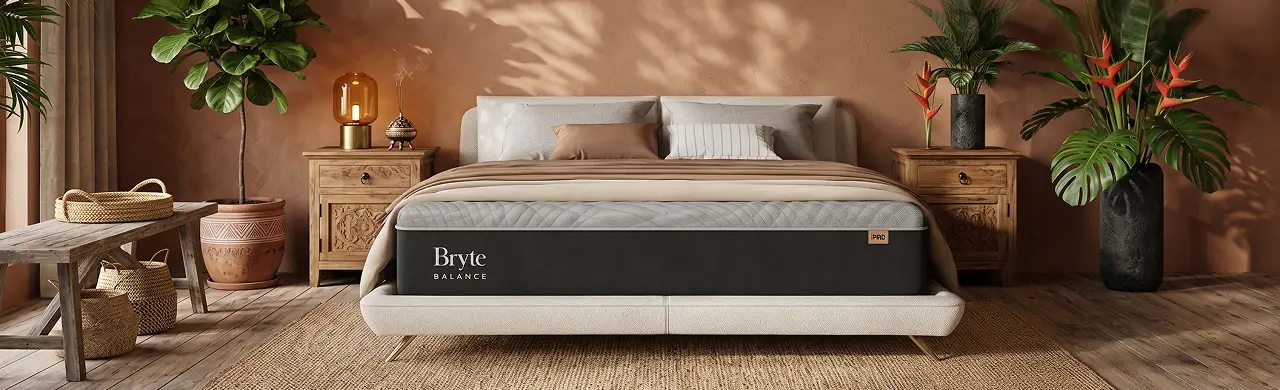
The Bryte Smart Bed features the Bryte Adaptive Core with up to 90 intelligent, pneumatic Bryte Balancers organized into 16 independent zones - 8 per sleeper. These sensors actively sense pressure and adjust firmness in real-time.
Key features for lumbar support:
- Active Pressure Relief Technology - Continuously senses and redistributes pressure in real time using up to 90 silent air balancers, automatically adjusting firmness as you move to eliminate pressure points, reduce nighttime wake-ups, and support uninterrupted, restorative sleep. Individual Zone Control (PRO models) – Adjust firmness specifically in the lower back area
- Contours profiles – Tailored settings optimized for back, side, or stomach sleepers
- Dual Comfort Design – Each partner controls their side independently (0-100 firmness)
- Restorative-AI with over-the-air updates – Sleep experience improves over time rather than degrading
Three models address different preferences:
According to ReST Smart Bed and clinical sources, those with chronic back pain, sciatica, or spinal issues benefit most from personalized, responsive support - the ability to respond to the variable nature of chronic pain rather than relying on a single static configuration.
Signs Your Mattress Is Causing Lower Back Pain
Diagnostic checklist - if three or more apply, your mattress is likely contributing:
Physical signs on the mattress:
- Visible sagging or indentations (especially hip/lower back area)
- Lumps, bumps, or uneven surface
- Central third dips noticeably when you lie down
- Mattress is 7+ years old
Pain pattern indicators:
- Pain present on waking but improves during the day
- Stiffness worse in the morning than at bedtime
- Numbness or tingling on waking
- Constant tossing and turning
- Better sleep when traveling (different mattress)
According to Casper, these symptoms arise from poor spinal alignment, overnight muscle strain, or pressure points from uneven support. If your symptoms align specifically with sleep and improve throughout waking hours, the mattress is a likely contributor.
A user on r/Mattress described the frustration of trying to diagnose whether a mattress is the culprit:
"I am going through the same dilemma except I have a Ghost Bed that I bought 5 years ago. I am thinking it is the mattress because both my wife and I started hurting at the same time and it happened almost over night. One day fine then the next day not. I am guessing it is due to the support layers breaking down and our bodies hitting the coils. From what I can see there are no noticeable dips or valleys however. It couldn't be due to it being too firm as that would have been a problem at the beginning. We actually liked the bed and got a good night's sleep on it until recently. I am now trying to figure out if I can salvage another year or two out of it by purchasing a topper."
A study of low back pain patients found a positive correlation between mattress usage duration and pain severity (r=0.250, p=0.004). Average mattress usage was 7.18 years, but actual disposal age averages 13.9 years - meaning many people use mattresses well beyond their effective lifespan.
The Couples Problem: Different Bodies, Different Needs
Partner movement represents an overlooked factor that undermines pain recovery. According to research on motion isolation, couples with opposing schedules lose an average of 45 minutes of sleep per night due to partner movement - 275 hours annually per person.
Traditional innerspring mattresses transfer 89% of movement. According to Luxe Mattresses UK, this disrupts deep sleep and reduces REM cycles by 40%. For back pain sufferers, disrupted sleep perpetuates the pain-sleep cycle.
Solutions for different support needs:
- High-density memory foam – Reduces transfer to less than 5%
- Pocket coil hybrids – Each spring wrapped individually absorbs movement
- Split configurations – Separate mattresses for each partner
- Dual-zone smart mattresses – Independent firmness control per side
Bryte's Dual Comfort Design allows each partner to independently control their side's firmness from 0-100, eliminating the need for compromise. The Silent Wake Assist feature uses gradual motion to wake one partner without disturbing the other.
When to Replace Your Mattress
The correlation between mattress age and pain severity suggests waiting until obvious physical deterioration means tolerating years of suboptimal sleep and increased pain.
Traditional mattresses begin degrading from the first night - foam loses resilience, coils lose tension, comfort layers compress. Smart mattresses with over-the-air software updates represent a different model: the sleep experience can improve over time as AI learns your patterns and new optimizations are deployed.
Frequently Asked Questions
Is a firm or soft mattress better for lower back pain?
Neither - medium-firm is optimal. The Lancet trial found medium-firm mattresses 2.36x more effective than firm for reducing pain in bed.
Why extremes fail:
- Too soft: Hammock effect misaligns spine
- Too firm: Creates pressure points, leaves lumbar gaps
- Medium-firm (5-7/10): Balances support with contouring
A discussion on r/IsItBullshit captures the nuance well:
"I think what really helps is a mattress that is firm with a SOFT top. The firmness gives you the support you need while the softness helps conform to your shape and give you more support and comfort. I have had Back pain for 14 years and a bed that was firm as shit left me sore all over everything else and a soft bed made my back hurt. But when i got a firm bed with a soft top it made a huge difference and i started sleeping way better."
How long does it take for a new mattress to help back pain?
Expect measurable improvement within 28 days. Research shows 48% pain reduction and 55% sleep quality improvement over this period, with benefits increasing progressively.
Week-by-week expectations:
- Week 1-2: Adjustment period (may feel different, not necessarily better)
- Week 3-4: Pain reduction and sleep quality improvements emerge
- Month 2-6: Continued improvement as body adapts
Can a mattress actually cause lower back pain?
Yes. Clinical research documents a positive correlation between mattress age and pain severity (p=0.004). Signs your mattress is the cause include pain on waking that improves during the day and visible sagging.
Do I need an adaptive smart mattress, or is a good traditional mattress enough?
Depends on your situation. Traditional medium-firm mattresses work for many people. Consider adaptive smart mattresses if you:
- Change positions frequently throughout the night
- Have pain that varies day-to-day
- Share a bed with someone who needs different firmness
- Haven't found relief with static mattress options
What's the best mattress for side sleepers with lower back pain?
Medium firmness (5-6/10) with zoned support - softer under shoulders and hips, firmer at the waist. Side sleeping creates pressure on hips and shoulders while leaving a gap beneath the waist. Zoned construction or smart mattresses with position-specific profiles address this.
How do adaptive smart mattresses compare to adjustable bases for back pain?
Different mechanisms, complementary benefits. Adjustable bases change your body position (incline head/feet). Adaptive smart mattresses change surface firmness in response to pressure. A 6-week study found adjustable bases reduced back pain by 28%. Combining both may provide maximum benefit.
What mattress firmness rating should I look for?
5-7 on a 10-point scale (medium-firm). A study of 130 low back pain patients found medium firmness showed significantly lower pain across groups (p<0.001). Avoid mattresses marketed as "plush" or "extra firm" for lumbar issues.
Making the Decision
The evidence points clearly to medium-firm support with targeted lumbar reinforcement. For most people with lower back pain, this means:
- Evaluate your current mattress using the diagnostic checklist above
- Identify your primary sleep position to determine specific support needs
- Consider whether static or adaptive support better addresses your situation
- Use trial periods to test before committing - 28 days minimum to assess improvement
The 92% improvement rate among new mattress purchasers over 50 with back pain suggests the odds are strongly in your favor. The question isn't whether a better mattress will help - it's which type addresses your specific lumbar support needs.
Content Disclaimer
This article is for educational and informational purposes only and is not medical advice. It does not diagnose, treat, cure, or prevent any medical condition. Always consult a licensed healthcare professional regarding lower back pain, sciatica, or other health concerns. Research findings and quoted user experiences are included for general context and illustrative purposes only, and individual results may vary.
Shop Bryte Beds
From the Park Hyatt New York to Rosewood Miramar Beach, thousands of guests have experienced Bryte in the world’s top hotels—now it’s your turn.