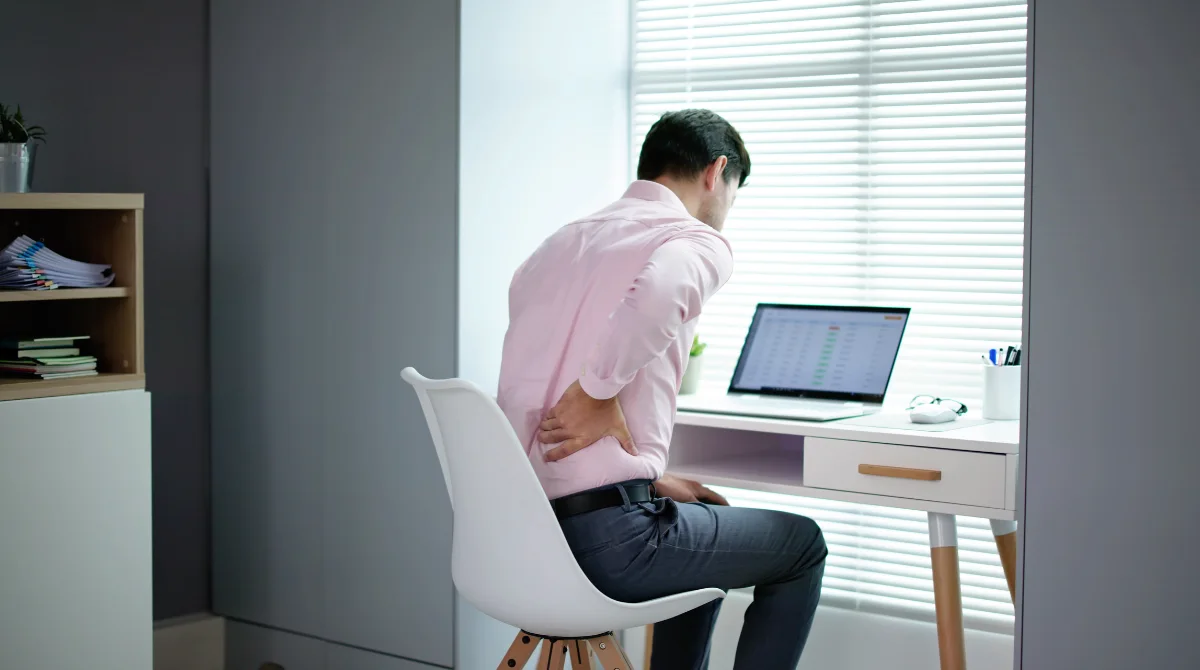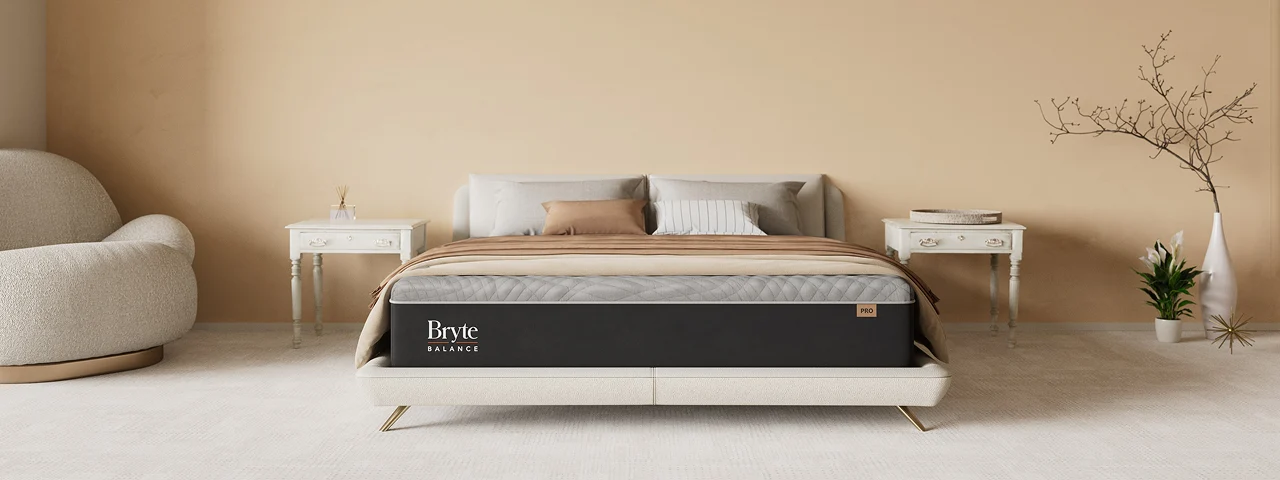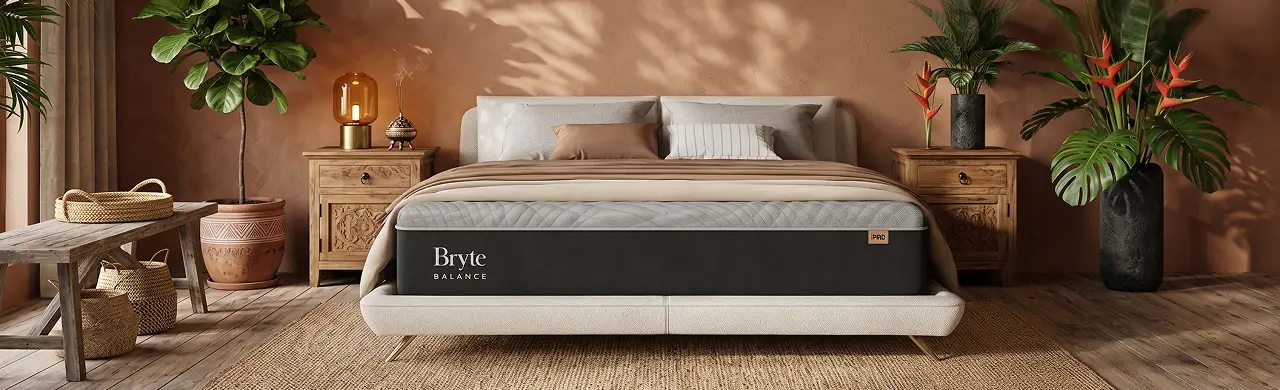
The best mattress for joint pain provides Active Pressure Relief, defined as real-time sensing of pressure points combined with real-time adjustments that respond to overnight position changes, not just initial comfort.
For arthritis sufferers, prioritize medium-firm support, zoned pressure relief, motion isolation, and ideally adaptive technology that adjusts firmness automatically throughout the night.
Here's the critical insight most mattress guides miss: a mattress that feels perfect at 10 PM provides the same support at 3 AM - regardless of the 11 to 30 position changes you've made or where pressure has accumulated. This explains why 82% of arthritis sufferers report pain relief from a new mattress, yet many still wake with stiffness and soreness.
The Static Mattress Paradox: Why "Medium-Firm" Isn't Enough
Static mattresses cannot adapt to overnight pressure accumulation. This fundamental limitation explains why mattresses that pass showroom tests fail in actual use.
The average person changes sleep position 11 to 30 times per night. Each shift redistributes your body weight differently. Side sleeping loads your hip and shoulder. Back sleeping concentrates pressure on your lumbar region. Yet your mattress responds identically to every position - compressing where weight applies, pushing back uniformly.
For the 53.2 million U.S. adults with diagnosed arthritis, this creates what we call the repositioning paradox:
- You need to change positions to relieve accumulated pressure
- But movement itself triggers joint pain
- So you either wake fully or never reach deep restorative sleep
A 2003 randomized trial of 313 adults confirmed medium-firm mattresses reduce pain-related disability better than firm ones. This is accurate - but incomplete. Medium-firm addresses initial firmness. It doesn't address the 3 AM problem.
The Sleep-Inflammation Cycle: Why This Matters Beyond Comfort
Poor sleep directly worsens joint inflammation through measurable biological pathways.
This isn't speculation. A longitudinal study of 5,994 older men with osteoarthritis found poor sleep health associated with:
- 16% higher C-reactive protein (a key inflammation marker)
- 12% higher interleukin-6 (directly linked to joint inflammation)
An analysis of 72 studies involving 50,000 participants confirmed sleep disturbances increase these same inflammatory blood markers. The research also found that treating sleep problems reduces inflammation - evidence that sleep quality is a cause of inflammation, not just a symptom.
The vicious cycle works like this:
- Joint pain disrupts sleep
- Disrupted sleep elevates inflammatory markers
- Higher inflammation worsens joint pain
- Worsened pain further disrupts sleep
Breaking this cycle requires preventing nighttime awakenings - not just providing initial comfort.
Mattress Materials Comparison: What Each Type Actually Does
Memory Foam Mechanism
Body heat softens foam on contact, allowing gradual contouring to your body's shape. According to Leesa Sleep, this drops contact pressure from 50-100 mmHg on traditional mattresses to 20-30 mmHg. The trade-off: slow recovery (15-30 seconds) creates resistance when repositioning.
Hybrid Advantage
Sleep experts often recommend hybrids for arthritis because they combine foam's contouring with coil responsiveness. The coil layer also provides better airflow, which may help regulate overall sleep environment comfort.
Real-world arthritis sufferers frequently share their experiences finding the right mattress balance. As one user explained in a discussion on r/Mattress:
"They're pretty similar in feel since both usually have foam on top, but the big difference is what's underneath, all foam mattresses use solid denser foam for support, while hybrids use an innerspring coil system. That one change makes a big difference in how they perform. All-foam beds tend to feel more contouring and "huggy," which is great for pressure relief and keeping motion isolated if you sleep with a partner. But because they don't have springs, they can trap more heat and sometimes feel a bit too soft or hard to move around on, especially at the edges. Hybrids add coils for support, so they usually sleep cooler, feel a bit more responsive, and have better edge support. They're a good middle ground for people who like the comfort of foam but still want a bit of bounce and airflow. Downsides? They're often heavier and a little more expensive, and depending on the design, they can transfer a bit more motion than all-foam beds. So it really just comes down to how you like your bed to feel and what kind of support you prefer."
The Active Pressure Relief Difference
Unlike passive materials that compress uniformly, mattresses with Active Pressure Relief use real-time pressure-point sensing and real-time adjustments to modify support zone-by-zone.
This addresses what static mattresses cannot: responding to your 2 AM position change without requiring you to wake and manually adjust settings.
Condition-Specific Recommendations
For Osteoarthritis (OA)
Priority: Targeted pressure relief at specific joint sites.
OA involves localized joint wear - hips, knees, spine. Morning stiffness typically lasts under 30 minutes. Focus on:
- Adequate cushioning at weight-bearing joints (hips for side sleepers, lumbar for back sleepers)
- Zoned support that provides firm center support with softer shoulder/hip zones
- Medium-firm hybrid construction for most sleepers
For Rheumatoid Arthritis (RA)
Priority: Ease of repositioning to combat prolonged morning stiffness.
RA creates systemic inflammation with morning stiffness lasting 30-60+ minutes. Memory foam's "hugging" sensation can make repositioning painful. Consider:
- Responsive surfaces (latex, hybrid with responsive foam, or adaptive technology)
- Avoiding deep-conforming memory foam that requires effort to move
- Faster-responding materials that don't trap you in position
For Hip Pain
Side sleepers place significant pressure on the hip joint. You need:
- Softer zones at the hip area specifically
- At least 2-3 inches of comfort layer material
- Zoned construction that doesn't create uniform firmness
The struggle to find the right mattress for hip pain is a common theme among arthritis sufferers. One user shared their extensive journey on r/Home:
"Almost exactly the same here - 230 weight, side sleeper, tend to constantly roll between sides and back. Also, sleep with a CPAP. I have lower back arthritis so constant lower back pain. After testing a whole bunch of mattresses in all price ranges nothing seemed to be a 'magic bullet'. I visited my sister in another state and slept on her guest room mattress and slept like I was dead. Woke up so rested and no hip or other joint pain. I asked her what kind of mattress it was and she sheepishly told me is was some no-name Costco mattress that was very firm and she just put an inexpensive memory foam topper on it. So when I went back home we looked for a decent quality, very firm memory foam mattress. There's a local place called Bob's Furniture and we we bought the 'Bob-o-pedic' from them. My side is very firm and her side is plush. While my back felt great from the firm support, my joints (hips, elbows, shoulders, knees) were sore by morning. So I put an inexpensive 3" memory foam topper from Walmart on it and it's now perfect. Going on a year and the firm mattress is good for my back while the memory foam topper makes my joints not hurt. So yes, even though it's memory foam on memory foam, the firm base and soft topper work well. The queen size mattress was under $1k and the topper around $100. I think the mattress business is a complete and total ripoff, at least for the 'high-end' mattresses anyway. YMMV."
For Lower Back Pain
16 million U.S. adults experience chronic back pain. Balance is critical:
- Enough support to maintain spinal alignment (not too soft)
- Enough cushioning to prevent lumbar pressure (not too firm)
- Medium-firm with lumbar-zone reinforcement works for most
For Mobility Limitations
Getting in and out of bed matters as much as lying-down comfort:
- Bed height: 20-23 inches from floor to mattress top (ADA recommendation for seniors)
- Edge support: Reinforced edges prevent sinking when sitting on the bed edge
- Surface responsiveness: Avoid deep memory foam that creates a "stuck" sensation
Clinical Evidence: Adjustable vs. Static Mattresses
Clinical trials show adjustable systems outperform static mattresses for chronic pain - significantly.
Key Study: Adjustable Airbed vs. Innerspring
An A-B-A clinical trial in chronic back pain patients found:
Supporting Study: Air Flotation Overlay
A four-week pilot study using low-pressure inflatable mattress technology found:
- Median daytime pain reduced from 6 to 5 (p < 0.001)
- Median nighttime pain reduced from 7 to 5 (p < 0.001)
- 13 subjects reduced analgesic medication use
These results suggest the issue isn't just firmness preference - it's whether the mattress can adapt to changing pressure patterns.
Adaptive Technology: How It Addresses the Static Mattress Problem
The distinction between "conforming" and "actively adjusting" is significant.
Conforming materials (memory foam, latex) respond passively - they compress where weight applies and return to shape when weight lifts. They cannot anticipate or respond to pressure accumulation during position changes.
Active adjustment involves:
- Sound Level: The system must operate silently. Any audible motor or pump noise disrupts sleep and defeats the purpose of pressure relief.
- Resolution: High resolution means sensing and adjusting across many small zones. Low resolution systems use large air chambers that adjust the entire body at once, reducing precision.
- Response Time: True Active Pressure Relief adjusts within seconds. Systems that adjust only once per hour are not real-time and cannot respond to dynamic pressure accumulation.
Consumer Receptiveness to Sleep Technology
According to a 2026 Global Mattress Market Trends report:
- 75% of mattress consumers are open to AI-driven customization
- 68% are interested in AI-driven sleep monitoring with personalized coaching
- 18% increase in customer satisfaction from AI-powered customization
Sensor Journal research found smart bed users experience an additional 170 hours of restful sleep annually - averaging 28 extra minutes per night.
How Bryte's Approach Works
Bryte's Restorative-AI uses up to 90 intelligent pneumatic Balancers organized into 16 independent zones (8 per sleeper). The system:
- Detects pressure accumulation in real-time
- Adjusts firmness zone-by-zone without requiring you to wake
- Learns and adapts through continuous software updates
All models include Dual Comfort Design (independent 0-100 firmness control per partner) and daily sleep insights via the Bryte app.
Partner Considerations: The Overlooked Factor
56% of couples report being woken by their partner two or more nights per week.
A Sleepopolis survey of 1,000+ adults found partner disturbance is pervasive. Additional research shows partner movement accounts for 36% of significant sleep disruption.
For joint pain sufferers already struggling with sleep quality, this compounds the problem.
The "Sleep Divorce" Alternative
Over one-third of Americans now sleep in separate rooms. But mattress technology offers alternatives:
- Motion isolation: Foam and hybrid designs reduce movement transfer
- Independent firmness zones: Each partner gets their optimal setting
- Silent Wake Assist: Bryte's feature uses gradual motion to wake one partner without disturbing the other
Bryte's Dual Comfort Design allows each partner to independently control firmness (0-100 scale), run personal relaxation tracks, and view individual sleep data - eliminating the compromise that drives many couples to separate rooms.
Making Your Decision: Evaluation Framework
What to Track During Your Trial Period
Don't rely on "does this feel good?" Track specific metrics:
- Morning stiffness duration: How long until you move freely?
- Nighttime awakenings: Can you identify wake-ups?
- Daytime pain levels: Any changes from baseline?
- Repositioning difficulty: Are you getting "stuck"?
Trial Period Recommendations
30 days may not capture enough variation. Joint pain fluctuates with:
- Weather changes (cold worsens stiffness)
- Activity levels
- Arthritis flare cycles
Look for 90+ day trials when possible.
Understanding Price and Value
75% of luxury mattress buyers start shopping due to issues with their current bed. 33% cite health or medical reasons specifically.
For joint pain sufferers spending on medications, physical therapy, and doctor visits, a mattress that meaningfully reduces inflammation markers and improves sleep quality may represent value beyond its upfront cost. The Adjustable Beds and Mattress Market is projected to grow from $8.21 billion (2025) to $16.24 billion (2033) - driven by consumers recognizing this connection.
Frequently Asked Questions
What type of mattress is best for arthritis?
Medium-firm hybrid or adaptive mattresses with zoned pressure relief work best for most arthritis types. Look for 2-3 inches of comfort layer material over supportive coils or an adaptive system that adjusts automatically.
Key features to prioritize:
- Zoned support (softer at hips/shoulders, firmer at center)
- Motion isolation if sharing with a partner
- Responsive surface if RA morning stiffness is severe
Is memory foam or hybrid better for joint pain?
Hybrid mattresses work better for most joint pain sufferers. They combine foam's pressure relief with coil responsiveness for easier repositioning.
Choose memory foam if: Motion isolation is your top priority and repositioning isn't difficult for you.
Choose hybrid if: You need both pressure relief and the ability to turn over without fighting the mattress.
What firmness level is best for joint pain?
Medium-firm provides the best balance for most joint pain sufferers. A clinical trial of 313 adults found medium-firm mattresses reduced pain-related disability more than firm mattresses.
Adjust based on:
- Sleep position (side sleepers may need slightly softer)
- Body weight (heavier sleepers may need firmer support)
- Pain location (hip pain may benefit from softer hip zones)
Do smart mattresses actually help arthritis?
Yes - clinical evidence supports adjustable systems over static mattresses. A clinical trial found 95% of chronic pain patients showed improvement with adjustable systems, with 32% average pain decrease.
Why they work differently:
- Detect pressure accumulation overnight
- Adjust support without requiring you to wake
- Respond to position changes automatically
How long should I try a mattress before knowing if it helps?
Minimum 30 days; ideally 90+ days for joint pain assessment. Initial impressions can be misleading - your body needs time to adapt, and you need to experience different conditions.
What to track:
- Morning stiffness duration
- Nighttime wake-ups
- Daytime pain levels
- Ease of repositioning
Can couples with different firmness needs share one mattress?
Yes - dual-zone mattresses allow independent firmness settings for each side. This eliminates the compromise that often leads to separate sleeping arrangements.
Bryte's Dual Comfort Design allows each partner to control firmness independently on a 0-100 scale, plus run personal relaxation tracks and view individual sleep data.
How does poor sleep affect joint inflammation specifically?
Poor sleep increases inflammatory markers that directly worsen joint conditions. A study of older adults with osteoarthritis found poor sleep associated with 16% higher C-reactive protein and 12% higher interleukin-6.
Research shows treating sleep problems reduces these markers - making sleep quality a clinical intervention, not just a comfort preference.
Content disclaimer
This article is for educational and informational purposes only and is not medical advice. It does not diagnose, treat, cure, or prevent any medical condition. Always consult a licensed healthcare professional regarding arthritis, chronic pain, sleep disorders, or other health concerns. Research findings and consumer quotes are provided for general context and illustrative purposes only, and individual experiences and results may vary.
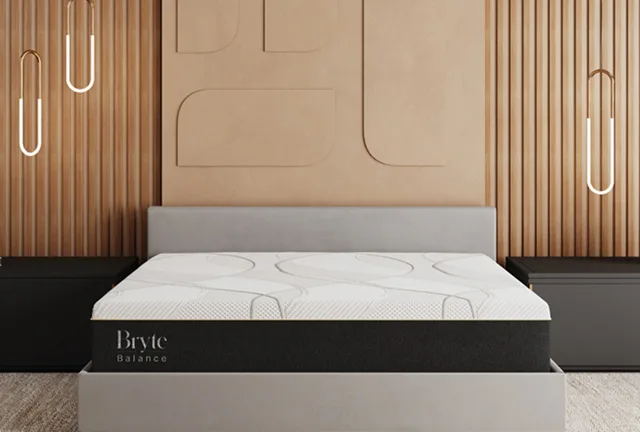
Shop Bryte Beds
From the Park Hyatt New York to Rosewood Miramar Beach, thousands of guests have experienced Bryte in the world’s top hotels—now it’s your turn.