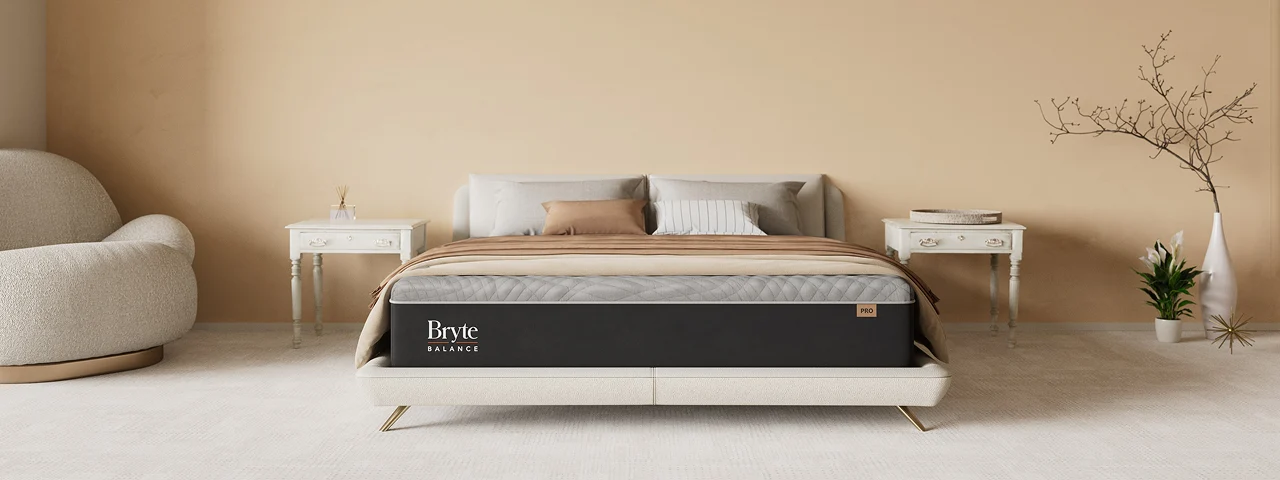
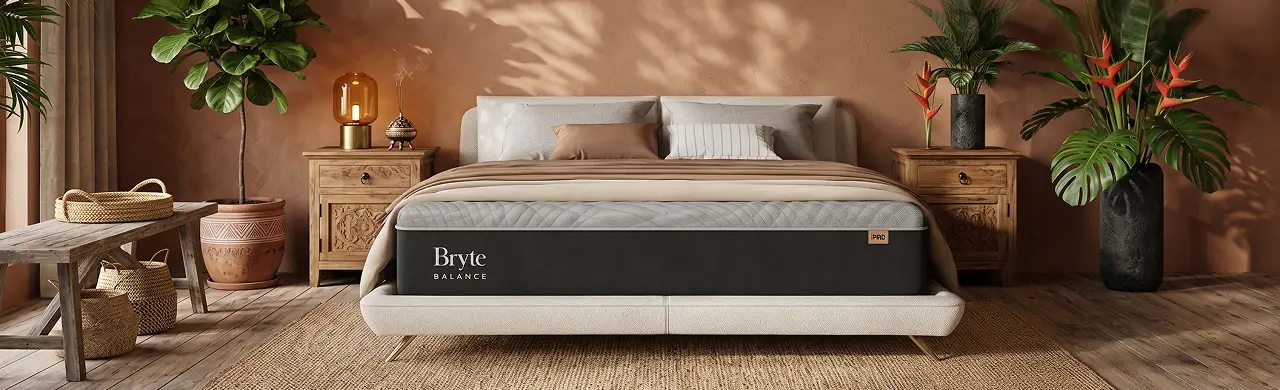
For busy professionals with high-stress days, the best luxury mattress is one with Active Pressure Relief technology that adapts throughout the night—not premium materials that provide static comfort. Active Pressure Relief means real-time sensing of pressure points combined with real-time adjustments. The Bryte Balance smart mattress portfolio leads this category, using AI-powered Restorative Technology with up to 90 pneumatic sensors across 16 zones to actively prevent the sleep fragmentation that stress causes.
This matters because stress doesn't just make falling asleep harder. It fundamentally changes your sleep architecture, suppressing deep sleep by 20-30% even when you log adequate hours. A passive mattress—regardless of price—can't respond to what stress does to your body overnight. Active Pressure Relief technology can.
Here's what the research shows and how to choose.
The Professional Sleep Crisis in Numbers
- 41% of professionals report poor sleep quality (AASM)
- 57% of high-stress workers experience insomnia symptoms (National Sleep Foundation)
- 1.2 hours less sleep per night for stressed professionals vs. general population (CDC)
- $411 billion annual U.S. economic loss from insufficient sleep (RAND Europe)
- $1,967 annual productivity cost per sleep-deprived employee (Sleep Foundation)
These aren't lifestyle inconveniences. They're measurable performance deficits with documented career and health consequences.
Why You Wake Up Exhausted Despite Sleeping 8 Hours
The problem isn't how long you sleep. It's what stress does to your sleep architecture.
Chronic work stress elevates cortisol—the hormone that kept your ancestors alert for predators now keeps you mentally reviewing tomorrow's presentation at 2 AM. According to meta-analysis research, elevated evening cortisol correlates with a 20-30% reduction in slow-wave (deep) sleep.
Deep sleep is when 70-80% of human growth hormone releases for physical repair, per the National Sleep Foundation. Suppress it, and you wake up tired no matter how many hours you logged.
The Cortisol-Sleep Sabotage Cycle works like this:
- Work stress elevates evening cortisol
- Elevated cortisol suppresses deep sleep by 20-30%
- Suppressed deep sleep reduces cognitive recovery
- Reduced recovery requires compensatory overwork
- Overwork elevates stress—restart the cycle
This explains why sleep hygiene advice ("put your phone away," "keep a consistent schedule") often fails stressed professionals. You're treating symptoms while the cortisol-architecture disruption continues underneath. Breaking the cycle requires intervention at the physiological level—not just behavioral changes.
Professionals dealing with this exact challenge have shared their experiences on Reddit. As one user on r/WFH explained:
"I work with global teams in different time zones too. Two suggestions I would make that work for me: 1) If you know you're waking up at 3am that means you're looking at the clock. Stop this because if you don't look at the clock, you don't know what time it is and so you can't get anxious because of knowing you have to get up in X hours. Just trust in the alarm 2) At the end of each day, write a preliminary to do list for the next day. That way you've thought about the tasks ahead and what you need to do already, and that feeling of preparedness can help with anxiety during non work time. I've been working at home for ten years now and I have a 'consider me dead' policy out of working hours. It's important to have time to decompress, or your productivity will suffer"
The Desk-Job Double Burden
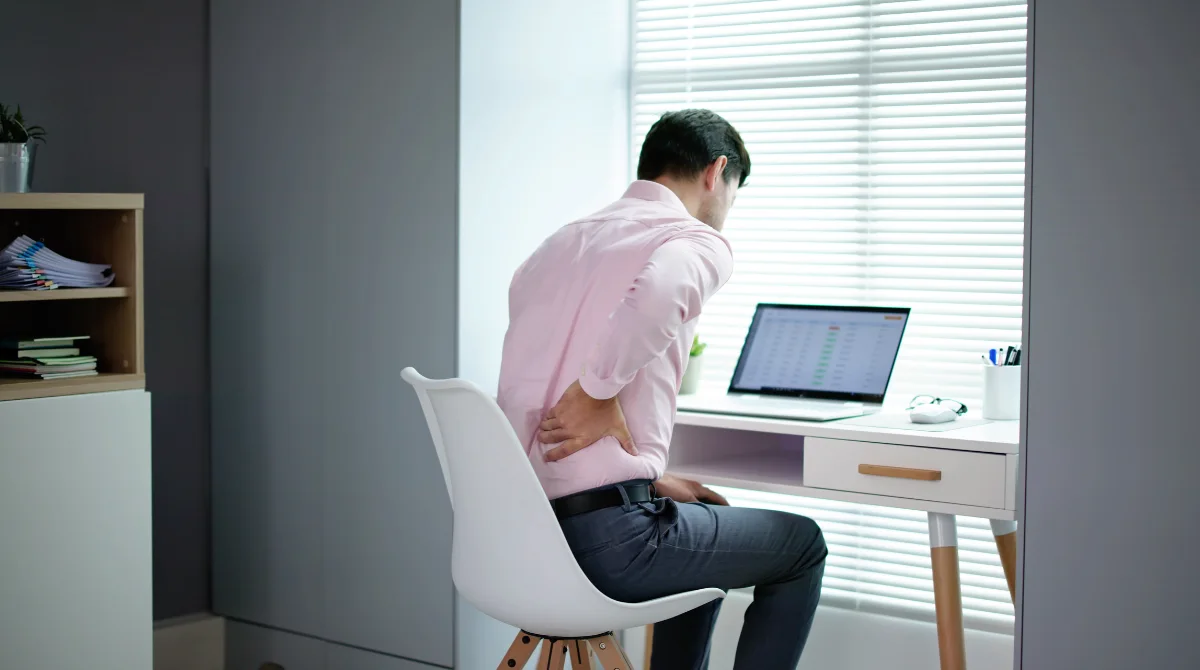
Your daytime work position creates nighttime recovery problems that standard mattresses can't address.
Prevalence of desk-related pain among office workers:
Static sitting creates asymmetric muscle tension. Your lower back compressed for 8+ hours doesn't release that tension simply by lying down. Standard mattresses provide uniform support—they can't match the asymmetric pressure distribution your specific desk setup creates.
The result: daytime ergonomic failures cascade into nighttime recovery failures. You need zonal pressure relief that targets your actual pain patterns, not generalized cushioning.
Reddit users dealing with WFH-related back pain have discovered this connection firsthand. As one user on r/Ergonomics shared:
"I totally get where you're coming from...I didn't realize how much my mattress was contributing to my back pain until I switched it up. A mattress with zoned support has been a game changer for me. The 'zoned support' just means different parts of the mattress are firmer or softer to help align your spine properly...great for back and side sleepers. If you're worried about getting hot at night, definitely look for one with breathable materials. I spent about $1.5k on mine and it's been worth every penny. Also, checking reviews or trying a few in store can really help! Good luck and I hope it helps with your back pain soon!
Active Pressure Relief vs. Passive Technology: The Distinction That Actually Matters
Forget brand names and marketing claims. The fundamental question is whether your mattress reacts in real-time or just absorbs.
Active Pressure Relief means the mattress senses pressure points in real-time and automatically adjusts firmness throughout the night. It intervenes before discomfort triggers micro-awakenings. This "real-time" distinction is critical—manual firmness adjustability that requires you to wake up and make changes doesn't qualify.
Passive mattress technology provides fixed cushioning that responds to your initial body position but cannot adapt when you shift positions during sleep.
For stressed professionals who experience more position changes (elevated cortisol increases restlessness), this distinction is critical. A passive mattress optimized for your initial lying position may create pressure points when you shift. Active Pressure Relief adapts to each position change automatically.
Three metrics separate truly effective Active Pressure Relief from imitations:
- Sound (Noise Level): The system must be silent. If adjustments wake you, the technology defeats its own purpose. Bryte's Active Pressure Relief operates silently throughout the night.
- Resolution (Precision): How precisely can the system sense and adjust across the sleep surface? Low-resolution systems use a single air bladder for an entire body half—meaning your shoulders and hips receive identical treatment despite vastly different pressure needs. High-resolution systems like Bryte use 90 sensors across 16 independent zones, allowing precise targeting of specific pressure points.
- Response Time (Speed): How quickly does the system respond to position changes? Some adjustable beds only recalibrate once per hour—by then, you've already experienced the micro-awakening. Bryte adjusts within seconds of detecting a pressure imbalance.
Clinical evidence supports the difference:
- Active alternating pressure systems reduced pressure issues by 60% vs. passive surfaces (Journal of Wound Care)
- Adjustable air systems reduced peak pressure by 64% and repositioning needs by 50% vs. fixed foam (Journal of Tissue Viability)
The physics that makes Active Pressure Relief effective in clinical settings applies to any sleeper: real-time redistribution outperforms static cushioning for preventing discomfort-triggered awakenings.
Luxury Mattress Features Mapped to Professional Pain Points
Wind-Down Technology for the "Can't Switch Off" Problem
Meta-analysis of 93 studies covering 13,000+ participants found pre-bed relaxation interventions reduce sleep onset by 15-20 minutes. That's not marginal—for someone lying awake reviewing work anxieties, it's the difference between frustration and sleep.
BryteWaves syncs gentle rhythmic motion within the mattress with curated audio (nature sounds, guided meditation) to physically facilitate parasympathetic activation. PRO models include guided breathwork and focused intention tracks. The integration matters: physical motion combined with audio creates coordinated nervous system downshifting that separate apps can't replicate.
Zonal Pressure Relief for Desk-Job Recovery
General cushioning doesn't address asymmetric pain patterns. Lower back strain from prolonged sitting needs targeted lumbar support, not uniform firmness.
Bryte PRO models feature Individual Zone Control—adjust firmness in specific problem areas. The AI-powered Guided Comfort Tailoring recommends settings based on body attributes and sleep data. Contour profiles optimize specifically for back, side, or stomach sleepers.
Dual-Comfort for Couples Who Both Work Demanding Jobs
More than half of consumers share beds with partners (Mintel 2025). When both partners have demanding careers, compromised sleep for one affects both.
Bryte's Dual Comfort Design provides:
- Independent firmness control (0-100) for each side
- Separate relaxation tracks through the app
- Individual sleep data for each partner
- Silent Wake Assist—gradual motion wakes one partner without disturbing the other
No more arguments about firmness. No more 5 AM alarm waking both of you.
The mattress expert community has taken note of multi-chamber designs like Bryte's. As one user on r/MattressMod explained:
"Bryte is the super-luxury brand in this space. They use a multi-chamber design with a lot of air chambers (90!) and variable support characteristics intended to solve the problems created by a single air-chamber. These are almost like pocket coils - maybe call it a 'pocket chamber' design? They also claim to be able to sense changes in pressure and dynamically respond to different sleep positions. This could be quite interesting."
Which Bryte Model Fits Your Needs
Quick recommendations:
- Back pain from desk work? Balance PRO's Individual Zone Control targets lumbar support specifically
- Partner with different firmness needs? All models offer dual-zone independence; PRO Conform adds superior motion isolation
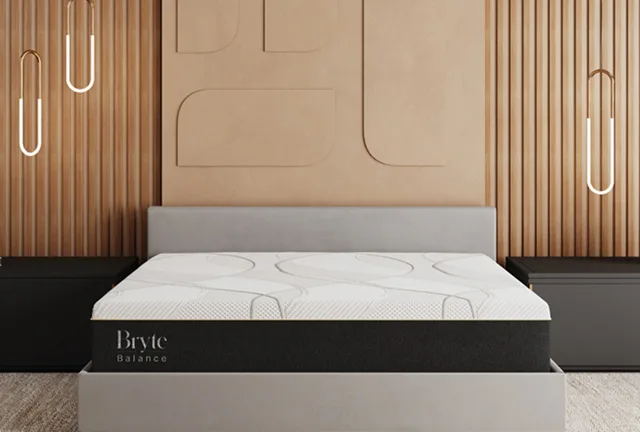
- Want hotel-level luxury with bounce? Balance offers the signature responsive feel
The Sleep Foundation gave Bryte Balance a Test Lab Score of 8.3/10, noting "above-average motion isolation and pressure relief" with "sleep-tracking data found to be accurate." Testing specifically highlighted benefits for heavier users and combination sleepers.
The Investment Math: What Premium Sleep Actually Costs
Cost Per Night Breakdown
Compare that to:
- One premium coffee: $5-7
- Monthly executive gym membership: $150-300 ($5-10/day)
- Single executive coaching session: $500-1,500
The Hidden Cost of Not Investing
Poor sleep reduces next-day performance by 10-30% in reaction time, memory, and attention tasks (British Journal of Sports Medicine). The American Academy of Sleep Medicine links high sleep fragmentation to 20-30% higher cardiovascular disease risk.
If you're operating at 80% cognitive capacity because of fragmented sleep, that performance gap compounds across every meeting, every decision, every client interaction. The mattress isn't the expense. The accumulated cost of inadequate sleep is.
What Research Says About Smart Mattress Technology
Skepticism about sleep technology is reasonable. Many products add features without demonstrable benefit.
Three findings matter:
- Consumer sleep tracking now matches clinical standards. Springer Nature research (2024) found consumer sleep-tracking devices are as effective as actigraphy (the clinical gold standard). Your data is trustworthy.
- Active Pressure Relief systems outperform passive by measurable margins. The 60-64% pressure reduction advantage isn't marketing—it's physics.
- Software-based mattresses improve over time. Bryte OS delivers over-the-air updates. Unlike traditional mattresses that depreciate from day one, the sleep experience evolves.
Technavio market research found brands offering personalized sleep experiences report 30% higher customer retention and 15% lower return rates than standard mattress lines. The personalization isn't gimmick—it produces measurable satisfaction differences.
The Hotel Sleep Gap—And How to Close It
More than half of global travelers sleep better in hotels than at home, per Hilton's 2025 travel trends report. Two-thirds of Americans report this gap. Nearly 4 in 10 luxury mattress buyers learned about brands from hotels—and 53% of that group purchased mattresses at $7,500+.
Hotels prioritize guest sleep because it drives satisfaction scores. What they provide—premium materials, climate control, blackout conditions—can now be matched or exceeded at home with smart mattress technology that offers personalization no hotel can provide.
The difference: a hotel mattress is optimized for the average guest. Your Bryte is optimized for you, continuously.
5 Questions to Ask Before Buying a Luxury Mattress for Stress Relief
- Does it offer Active Pressure Relief (real-time sensing combined with real-time adjustments) or only passive cushioning?
If it can't respond to position changes during the night automatically, it can't address stress-induced restlessness. - Are there integrated wind-down features?
Sleep onset is a documented challenge for stressed professionals. Relaxation technology isn't optional luxury—it addresses a measurable need. - Does it provide dual-zone independence for couples?
Compromise mattresses mean both partners sleep suboptimally. Independent control breaks the mutual disturbance cycle. - Is the system silent, high-resolution, and fast-responding?
Noisy adjustments wake you. Low-resolution systems can't target specific pressure points. Slow response times mean discomfort happens before correction. - Does the technology improve over time?
Over-the-air software updates mean your mattress gets better. Static products only depreciate.
Frequently Asked Questions
Is a smart mattress worth it for busy professionals?
Yes—if it offers Active Pressure Relief, not just passive tracking. Sleep tracking alone doesn't improve sleep. Real-time pressure sensing combined with real-time adjustment addresses the specific challenges stress creates: fragmented sleep, difficulty falling asleep, and overnight discomfort from position changes.
Key differentiators:
- Real-time pressure adjustment (not just manual firmness settings)
- Integrated relaxation features for sleep onset
- Validated sleep tracking for measuring ROI
- Silent operation, high resolution, and fast response time
How much should I spend on a luxury mattress?
Plan for $2,500-$7,500+ for technology-enabled luxury mattresses. This translates to $0.68-$2.05 per night over a 10-year lifespan.
Research from the Better Sleep Council shows 80%+ of premium buyers cite comfort, support, and health benefits as primary purchase drivers—not status. The ROI framework: compare per-night cost against the $1,967 annual productivity cost of sleep deprivation.
What's the best mattress for back pain from desk work?
A mattress with zonal Active Pressure Relief that targets your specific pain patterns. Uniform firmness can't address the asymmetric tension desk work creates.
Look for:
- Individual zone control (especially lumbar region)
- AI-guided firmness recommendations based on body type
- Position-specific profiles (back, side, stomach sleeper optimization)
- High-resolution sensing (90 sensors across 16 zones vs. single-bladder systems)
The Bryte Balance PRO offers advanced zonal control specifically designed for targeted pressure relief.
Do expensive mattresses actually improve sleep quality?
Price alone doesn't predict improvement. Technology category does. A $3,000 passive mattress and a $6,000 passive mattress both provide static support. Neither can respond to the dynamic pressure changes during stress-disrupted sleep.
Active Pressure Relief systems show 60% improvement in pressure-related issues vs. passive surfaces in clinical research. The premium pays for intervention capability, not just materials.
How long before I notice improvement with a new mattress?
Most users notice differences within 1-2 weeks for sleep onset and comfort. Deep sleep architecture improvements typically take 4-6 weeks.
Validated sleep tracking (like Bryte's app) shows daily metrics so you can verify changes objectively rather than relying on subjective impressions. Track deep sleep percentage and awakening frequency as primary indicators.
Can a mattress help with work stress and anxiety?
Directly reducing stress? No. Facilitating the physiological transition from stressed to relaxed? Yes. BryteWaves uses synchronized gentle motion and audio to activate parasympathetic response—the "rest and digest" state that chronic work stress suppresses.
Meta-analysis shows relaxation interventions reduce sleep onset by 15-20 minutes. That's not treating anxiety, but it is addressing one of its most damaging symptoms.
What separates true Active Pressure Relief from manual adjustability?
Three critical metrics: sound, resolution, and response time.
Manual adjustability requires you to wake up and make changes. True Active Pressure Relief operates silently throughout the night, uses high-resolution sensing (Bryte's 90 sensors across 16 zones vs. single-bladder systems), and responds within seconds rather than once per hour.
Bryte's Active Pressure Relief meets all three criteria—silent operation, 90-sensor precision, and real-time response—making it fundamentally different from systems that simply let you set a firmness number manually.
The Bottom Line
Stressed professionals face a biological challenge that passive mattresses can't address. Elevated cortisol suppresses deep sleep regardless of how premium your materials are. Active Pressure Relief—real-time sensing combined with real-time adjustment—intervenes where static comfort cannot.
Bryte's smart mattress portfolio delivers:
- 90 pneumatic sensors across 16 zones for high-resolution Active Pressure Relief
- Silent operation that never disturbs your sleep
- Seconds-fast response time that corrects pressure imbalances before they cause micro-awakenings
- BryteWaves multi-sensory wind-down for sleep onset
- Dual Comfort Design eliminating partner compromise
- Validated sleep tracking proving your investment works
- Over-the-air updates improving the experience over time
At $0.68-$2.05 per night over a 10-year lifespan, the question isn't whether you can afford premium sleep technology. It's whether you can afford the accumulated performance cost—10-30% daily cognitive decline, $1,967 annual productivity loss, compounding health risks—of continuing without it.
Your career runs on cognitive performance. Cognitive performance runs on restorative sleep. The mattress is the infrastructure.
Shop Bryte Beds
From the Park Hyatt New York to Rosewood Miramar Beach, thousands of guests have experienced Bryte in the world’s top hotels—now it’s your turn.