.webp)
The four main luxury mattress categories are hybrid, memory foam, adjustable (air chamber), and smart—but the more important distinction is whether you need passive materials, manual adjustability, or Active Pressure Relief technology that senses and responds to pressure points in real-time.
This framework matters because a pressure point developing at 2 AM cannot be relieved by materials that set their response when you first lie down. If you've already invested in a premium mattress that "felt amazing in the store" but now causes morning stiffness, you likely experienced a category-level mismatch—not a quality problem.
Key Market Context: The global luxury mattress market reached USD 3.7 billion in 2024, with hybrids commanding 46.8% share and memory foam at 38.9%. Smart mattresses represent the fastest-growing segment, with AI-powered sleep technology projected to reach USD 26.6 billion by 2030 at 13.4% CAGR.
Why Technology Tier Matters More Than Materials
Most mattress guides compare foam densities, coil counts, and latex types. This misses the critical variable: how the mattress responds to your body.
The Three Technology Tiers
Passive Systems (Hybrid, Foam, Latex):
- Respond through fixed material properties set at manufacturing
- Provide consistent support regardless of position changes
- Cannot detect or address pressure that develops during sleep
Manual Systems (Air Chamber/Adjustable):
- Allow user-controlled firmness changes via app or remote
- Require conscious intervention—you must wake, access controls, and wait
- Cannot respond to problems you don't notice
Active Pressure Relief Systems (AI-Driven Smart Beds):
- Use sensor arrays to detect pressure imbalances automatically
- Adjust firmness in real-time—within seconds, not hours
- Address discomfort before it accumulates enough to wake you
This hierarchy creates a diagnostic framework: if your problems occur at bedtime (initial comfort), passive materials work. If preferences evolve over time, manual adjustability helps. If disruption happens during sleep—pressure points, partner movement, difficulty falling asleep—Active Pressure Relief solves what passive materials cannot.
Hybrid Mattresses: The Balanced Passive Choice
Definition: Hybrid mattresses combine pocketed coil support systems with foam or latex comfort layers, providing airflow through the coil base while delivering pressure relief through conforming upper layers.
Quick Specs: Hybrid Performance
Where Hybrids Excel
Edge support: Less roll-off sensation means more usable sleep surface. The 4.38" sinkage versus foam's 5.21" translates to confident sitting on the bed edge.
Responsive feel: You sleep "on" a hybrid rather than "in" it. Combination sleepers who change positions appreciate the bounce that makes movement easier.
Market momentum: The global hybrid market reached USD 3.23 billion in 2025, projected to hit USD 6.39 billion by 2031—reflecting strong consumer validation.
Real-world users confirm the value proposition. As one buyer shared after extensive research:
"The luxury foam experience is something ive never felt before. The mattress is insanely supportive and feels medium firm when you first jump on it but then over the course of 20-30 seconds you slowly sink down on your heavy pressure points. Cheap foam mattresses take like 3 seconds to sink in to, so its actually crazy to experience this for the first time with the very slow but deep enough sinkage, its almost like cold gel. The motion transfer is very good as well, don't notice my wife moving around yet we can tell its good and not over sinking for when we make spicy time. Overall, S-tier mattress."
Where Hybrids Fall Short
The coil and foam configuration is fixed at manufacturing. A hybrid cannot:
- Detect that your hip pressure increased at 3 AM
- Adjust firmness when you shift from back to side sleeping
- Provide different support levels for each partner simultaneously
The mattress that felt perfect at bedtime provides identical support—no more, no less—until morning. Premium materials don't change this fundamental passivity.
Best for: Sleepers who maintain consistent positions, prioritize bounce, and don't experience pressure-point development during sleep.
Memory Foam: Maximum Pressure Relief, Passive Approach
Definition: Memory foam mattresses use viscoelastic polyurethane foam that conforms to body contours under heat and pressure, distributing weight across a larger surface area to relieve pressure points.
Quick Specs: Memory Foam Performance
Where Memory Foam Excels
Motion isolation: The 4.04 m/s² transfer rate means partner movement largely stays on their side. Light sleepers sharing a bed see real benefit here.
Pressure distribution: The conforming sensation—sinking "into" the mattress—spreads body weight across more surface area. Side sleepers often find relief at shoulders and hips.
The cradled feeling: Some sleepers genuinely prefer the embracing sensation foam provides. This is preference, not performance—but it's a valid reason to choose foam.
Where Memory Foam Falls Short
Slower response: Changing positions means waiting for the foam to release and re-conform. Some sleepers describe feeling "stuck."
Edge support: The 5.21" sinkage versus hybrid's 4.38" means more roll-off sensation and less usable surface near edges.
Like hybrids, foam operates passively. The conforming properties cannot adapt to pressure changes during sleep—they respond identically whether you've been lying there for 30 seconds or 6 hours.
Best for: Side sleepers prioritizing pressure relief, couples where motion transfer is the primary concern, sleepers who prefer the conforming "hug" sensation.
Adjustable Air Chamber Systems: Manual Control
Definition: Adjustable air chamber mattresses use inflatable bladders that allow user-controlled firmness changes via app or remote—distinct from adjustable bases, which change mattress position rather than firmness.
Critical Distinction: Bases vs. Mattresses
This confusion trips up many buyers:
- Adjustable bases: Frames that elevate the head/feet. Compatible with most mattresses up to 14–17" thick. Price range: $1,000–$3,000+ for queen.
- Adjustable mattresses: Contain internal air chambers that change surface firmness. Fundamentally different products with different purposes.
An adjustable base raises your head for reading. An adjustable mattress lets you make the surface softer or firmer. Both are valid—but they solve different problems.
How Air Chamber Systems Work
Air bladders within the mattress core inflate for firmer support or deflate for softer cushioning. Dual-zone systems allow each side to maintain independent settings—one partner firm, the other soft, without compromise.
Specs:
- Lifespan: 8+ years when chambers maintain air retention
- Warranties: Typically 20–25 years
The Manual Adjustment Limitation
To benefit from firmness adjustment, you must:
- Notice discomfort
- Wake enough to access controls
- Decide which direction to adjust
- Wait for the change to take effect
This sequence means pressure points developing during deep sleep go unaddressed. By the time discomfort wakes you, disrupted sleep has already occurred.
Additionally, resolution varies significantly. Some systems use a single bladder per side—any adjustment affects the entire surface uniformly. Firmer back support also means firmer shoulders. This lack of precision limits targeted relief.
Why Resolution Matters: A single air bladder per side represents low-resolution adjustment—the entire surface changes together, making it impossible to address localized pressure at your hip without also changing support at your shoulders. High-resolution systems with many independent zones can target specific pressure points without affecting surrounding areas.
Why Response Time Matters: Manual systems may adjust only once per hour or require you to wake and intervene. True Active Pressure Relief requires response within seconds—before discomfort accumulates enough to disrupt sleep.
The reality of adjustable air beds often differs from showroom expectations. As one long-term owner shared their candid assessment:
"You would be essentially paying a huge sum for what amounts to a fancy air mattress that's prone to mechanical problems. Take this with a grain of salt as I personally have never laid on one. That being said, I do sell beds and see a large number of Sleep Number owners that despise it and come to me looking for something else. To be fair, my sample size is skewed because it's not like someone would just stop in my store to not buy a bed and tell me that they love their Sleep Number, but I would be cautious."
Best for: Sleepers whose preferences change over time (injury recovery, weight changes), couples with different firmness needs who don't experience disruption during sleep itself, buyers uncertain about optimal firmness who want flexibility.
Smart Mattresses: The Active Pressure Relief Tier
Definition: Smart mattresses integrate sensors and algorithms to monitor sleep and/or adjust firmness. They range from basic sleep tracking (data collection without intervention) to AI-driven Active Pressure Relief (real-time sensing of pressure points combined with real-time adjustments).
The Smart Mattress Spectrum
Not all "smart" mattresses are equivalent. The label spans vastly different capabilities:
The distinction between tracking sleep and improving sleep represents the most consequential difference buyers should understand.
What Active Pressure Relief Requires
True Active Pressure Relief demands three capabilities most smart mattresses lack:
High Resolution (Precision): Detecting localized pressure buildup, not just general movement. Low-resolution systems use a single air bladder per side—any adjustment affects the entire surface. High-resolution systems like Bryte's Active Pressure Relief technology use 90 independent pneumatic zones organized into 16 independent areas (8 per sleeper across shoulders, lumbar, hips, and legs). This precision allows targeted relief at specific pressure points without affecting surrounding areas.
Fast Response Time (Speed): Adjusting within seconds, not hours. Some systems make changes on hourly cycles or only after detected events. Effective Active Pressure Relief responds before discomfort accumulates enough to wake you—the adjustment must happen in real-time, within seconds of detecting pressure changes.
Silent Operation (Noise Level): If firmness changes produce audible sounds, the adjustment that should prevent waking may itself cause disturbance. Effective Active Pressure Relief systems operate silently—noise defeats the entire purpose of automatic adjustment during sleep.
According to research on real-time sensing mattresses, embedded sensors can monitor body position, pressure, and sleep stages—automatically adjusting firmness without requiring the sleeper to wake and intervene.
Smart Mattress Pricing
Addressing Technology Obsolescence Anxiety
The legitimate concern: a $6,000+ investment feels risky when technology becomes outdated. Two questions separate systems that age well from those that don't:
Does the system receive software updates?
Systems built on continuously evolving software platforms deliver over-the-air updates—new algorithms, refined calibration, additional features—without hardware replacement. The sleep experience in year five can improve beyond year one because the underlying intelligence evolves.
Systems with fixed programming cannot improve. The technology at purchase is the technology for the mattress lifespan.
What happens if tech fails?
Ask whether the mattress functions as a quality sleep surface independent of smart features. A premium mattress base with optional technology differs from a budget mattress that depends on technology to perform.
Questions to ask vendors:
- What updates shipped to existing owners in the last 12 months?
- Does the mattress work without WiFi/app connectivity?
- What's the company's track record of ongoing development investment?
Partner Disturbance: What Actually Solves It
Survey data shows 68% of couples report frequent partner disturbances from motion—rising to 75% on innerspring beds versus 32% on foam hybrids.
Motion Isolation by Category
What Passive Solutions Cannot Address
Motion isolation handles movement transfer. It cannot solve:
- Different schedules: One partner waking earlier means alarm disturbance regardless of motion isolation
- Firmness preference differences: Without dual-zone control, one partner compromises
- Position-specific support: Both partners get identical support profiles
Dual-zone support technology has been adopted in 40% of new luxury mattresses launched 2024–2026, up from 22% in 2023—reflecting market recognition that couples need more than motion isolation.
Advanced Couples Features
Active Pressure Relief systems offer capabilities passive materials cannot provide:
Silent wake technology: Gradual pressure changes or gentle motion wake one sleeper without audible alarm, allowing the other to continue undisturbed.
Independent zone control: Each side monitors and responds to its sleeper independently—one partner's position change triggers adjustments only on that side.
Bryte's Dual Comfort Design allows each partner to independently control their side's firmness on a 0-100 scale, run their own relaxation tracks, and view separate sleep data. The Silent Wake Assist feature uses gradual motion rather than sound—capabilities no passive mattress can match regardless of premium construction.
Sleep Onset: The Overlooked Category Criterion
Most mattress guides focus on support and pressure relief—problems that occur once you're asleep. But 54 of 72 voluntary regulated breathing interventions significantly reduced stress and anxiety in clinical trials. For buyers whose primary challenge is falling asleep rather than staying asleep, sleep onset features deserve priority.
What Helps With Falling Asleep
Passive mattresses: Provide comfortable surfaces but no active intervention for racing thoughts or physical tension.
Basic smart mattresses: May offer sleep tracking but don't address sleep onset.
Advanced Active Pressure Relief systems: Some integrate multi-sensory relaxation—rhythmic motion synced with guided audio (nature sounds, breathwork, meditation) to physically lower stress and help users unwind.
If anxiety or difficulty "shutting off" is your primary challenge, evaluate sleep onset features alongside pressure relief metrics. Most category guides omit this criterion entirely.
The Category Selection Framework
Decision Checklist: Which Technology Tier?
Choose PASSIVE (Hybrid or Foam) if:
- Your primary goal is upgrading comfort quality
- You sleep consistently in one position without pain
- You sleep alone or with a partner who shares your preferences
- You don't wake with stiffness despite comfortable bedtime positioning
Choose MANUAL ADJUSTABLE if:
- Your preferences change over time (injury, weight changes)
- You and your partner have different firmness needs
- You're uncertain about optimal firmness and want flexibility
- You don't experience disruption during sleep itself
Choose ACTIVE PRESSURE RELIEF if:
- You wake with pain despite comfortable bedtime positioning
- Pressure points develop in different locations night-to-night
- Partner movement disrupts your sleep
- You experience difficulty falling asleep due to anxiety
- You and your partner have significantly different preferences AND schedules
- You've already tried premium passive materials without resolution
Matching Feel Preferences
Price vs. Problem Alignment
The premium for Active Pressure Relief technology is justified when passive materials have already failed. Upgrading from basic foam to premium foam addresses material quality—it doesn't change the fundamental passive nature.
According to the Better Sleep Council, 75% of luxury mattress buyers ($2,500+) are triggered by issues with their current bed—including waking with sore backs (20-29%) and mattress sagging (18-32%). These problems suggest passive solutions have already failed for many premium buyers.
Trial Periods and Purchase Confidence
The average trial period is 176 nights across 290 tested models, with 94.1% offering at least 100 nights and 27.1% providing a full 365-night trial.
Evaluating During Your Trial
Don't judge based on first impressions. A meaningful evaluation requires:
- Weeks 1-2: Adjustment period. Initial impressions are unreliable.
- Weeks 3-6: Consistent use. Note patterns in comfort, partner disturbance.
- Weeks 7-12: Long-term assessment. Are initial improvements sustained? Any new issues emerging?
Questions to Ask Before Purchase
- What's the return process and who covers shipping?
- Is there a break-in period before returns are accepted?
- For smart mattresses: What updates have shipped in the last 12 months?
- For smart mattresses: Does it function without WiFi connectivity?
- What warranty covers—and what it explicitly excludes?
Frequently Asked Questions
What's the difference between an adjustable bed and an adjustable mattress?
Answer: Adjustable beds are frames that change mattress position (elevating head/feet). Adjustable mattresses contain internal air chambers that change surface firmness. Different products solving different problems.
Key distinction:
- Adjustable base: Raises your head for reading or legs for circulation
- Adjustable mattress: Makes the surface softer or firmer
- They can be used together but aren't interchangeable
Is a smart mattress worth the extra cost?
Answer: It depends on whether your sleep problems require Active Pressure Relief. If you've already tried premium passive materials without resolution, the premium pays for capability—not just quality.
Worth it if:
- Pressure points develop during sleep (not just at bedtime)
- Partner disturbance or schedule differences disrupt sleep
- You need different conditions per side
Not necessary if:
- Current issues are purely about initial comfort
- You sleep consistently in one position without pain
Which luxury mattress type is best for couples?
Answer: Depends on your specific challenges. Motion isolation alone: memory foam or pocketed-coil hybrid. Different firmness preferences: dual-zone air chamber or Active Pressure Relief system. Different schedules: Active Pressure Relief with silent wake features.
Quick guide:
- Same preferences, motion concern only → Premium hybrid (9.5-10/10 isolation)
- Different firmness preferences → Dual-zone adjustable or Active Pressure Relief
- Different schedules → Active Pressure Relief with silent wake technology
How long do luxury mattresses last by type?
Answer: Hybrids: 6-10 years. Memory foam: 7-10 years. Air chamber: 8+ years. Smart mattresses: 5-15 years depending on base construction and software support.
Key factor for smart mattresses: Systems receiving ongoing software updates can improve functionality over time—potentially extending effective lifespan beyond physical materials.
Do smart mattresses work without WiFi?
Answer: Most function as quality mattresses without connectivity, but features vary. Ask specifically: "Does the mattress work offline, and which features require WiFi?"
Typical breakdown:
- Basic firmness settings: Usually work offline
- Sleep tracking/reporting: Requires connectivity
- Real-time AI adaptation: May require periodic connectivity for algorithm updates
Which mattress type is best for back pain?
Answer: Depends on when pain occurs. Morning stiffness despite comfortable bedtime suggests pressure points developing during sleep—requiring Active Pressure Relief technology. Pain from initial positioning suggests passive material upgrade may help.
Diagnostic questions:
- Does pain vary by sleep position? → Zoned support (hybrid or Active Pressure Relief)
- Does pain develop in different locations night-to-night? → Active Pressure Relief with real-time adjustment
- Is pain consistent and position-related? → Targeted passive support may suffice
What features make a mattress "luxury" versus regular?
Answer: Luxury typically means premium materials (higher-density foams, tempered steel coils, organic covers), longer warranties, and advanced features (zoning, dual-zone controls). Price threshold is generally $2,000+ for queen.
Not automatically luxury:
- "Smart" label alone (basic tracking doesn't equal premium)
- Marketing claims without performance data
- Brand prestige without material specification
How do I evaluate an Active Pressure Relief mattress?
Answer: Focus on three critical metrics:
- Resolution (Precision): How many independent zones can sense and adjust? Single-bladder systems offer low resolution. Look for high-resolution systems with many independent zones for targeted pressure relief.
- Response Time (Speed): How quickly does adjustment happen? True real-time means seconds, not hours. Systems that adjust only once per hour cannot prevent pressure-related disruption.
- Sound (Noise Level): Is adjustment silent? If the mattress makes noise during adjustment, it may wake you—defeating the purpose of automatic intervention.
Your Next Steps
Category selection determines what problems your mattress can solve. Materials and brands matter less than matching technology tier to your specific sleep challenges.
If passive materials suit your needs: Evaluate hybrids for bounce, memory foam for motion isolation and conforming pressure relief. Compare within category using performance metrics (motion transfer rates, edge support).
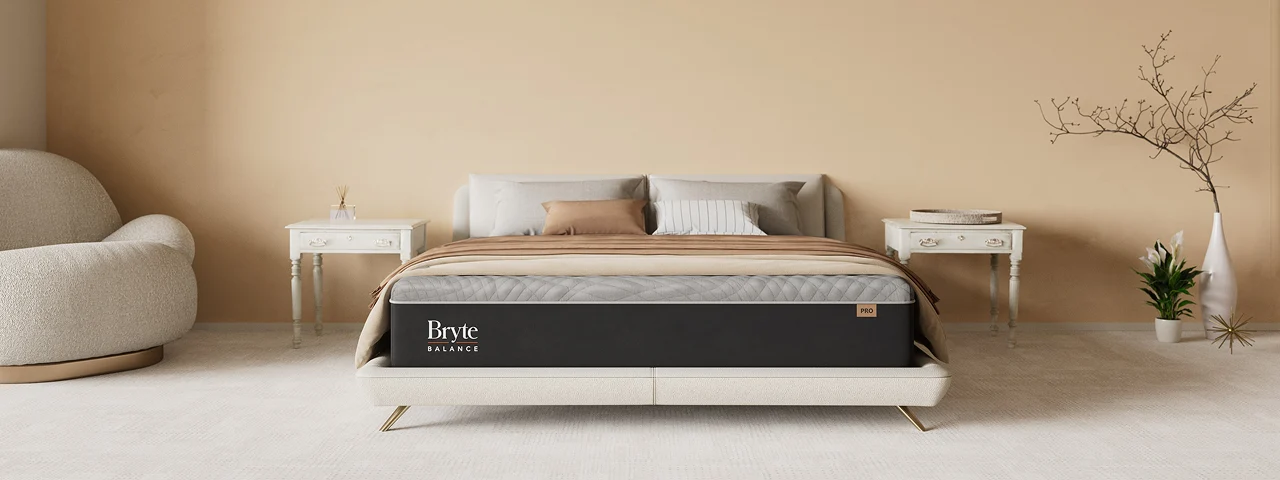
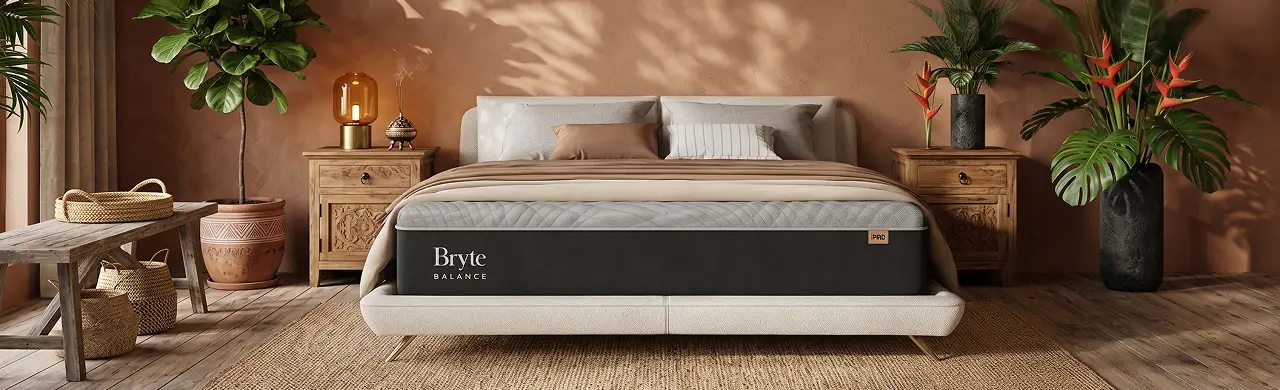
If Active Pressure Relief addresses your challenges: Focus on the three key metrics: resolution (how many zones?), response time (real-time within seconds or delayed?), and silent operation. Also evaluate software investment (ongoing updates or fixed programming?). The Bryte Balance portfolio uses up to 90 independent pneumatic zones with AI-driven real-time adaptation—representing true Active Pressure Relief for sleepers whose problems passive materials cannot address.
The goal isn't finding the "best" mattress. It's matching the right technology tier to your specific sleep challenges—then selecting the best execution within that category.
Shop Bryte Beds
From the Park Hyatt New York to Rosewood Miramar Beach, thousands of guests have experienced Bryte in the world’s top hotels—now it’s your turn.