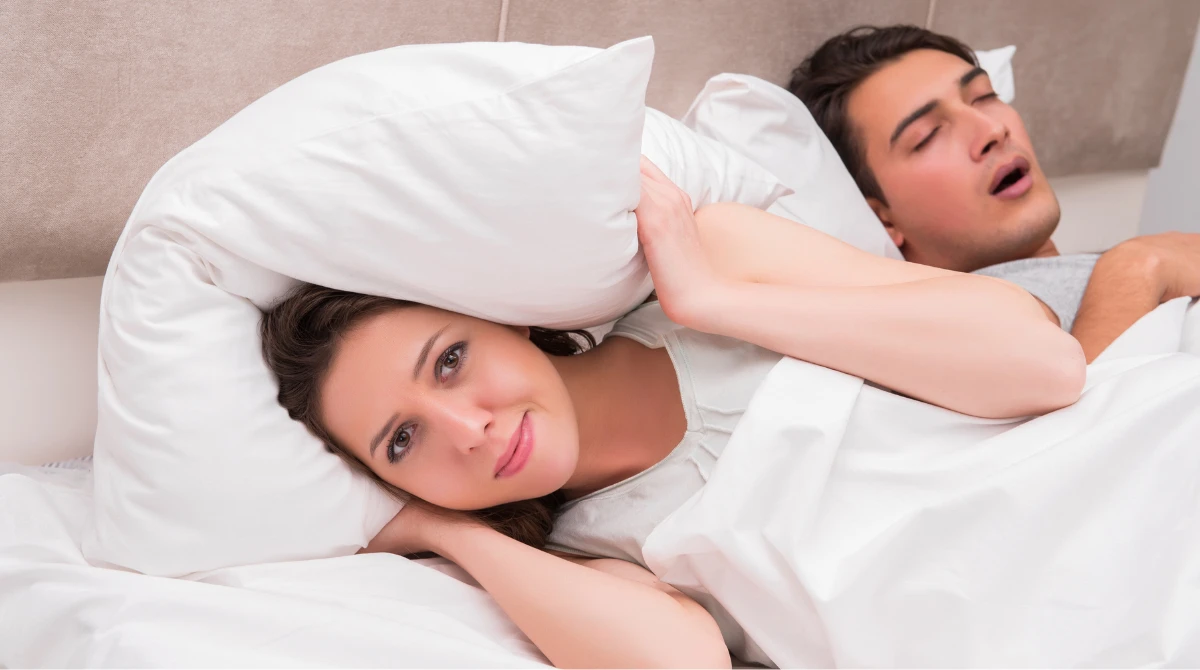
Sleep divorce is when couples choose to sleep in separate beds or rooms to improve their individual sleep quality. The term carries negative connotations, but sleep experts like Wendy M. Troxel, Ph.D. and Jade Wu, Ph.D. recommend viewing it as a "sleep alliance"—a deliberate decision made together to prioritize both partners' health rather than a sign of relationship failure.
According to the American Academy of Sleep Medicine, 31% of U.S. adults have engaged in sleep divorce. That's nearly one in three couples.
Sleep divorce is when couples choose to sleep in separate beds or separate rooms to improve sleep quality. While the term can sound negative, many sleep experts frame it as a practical decision couples make together when sharing a bed is disrupting rest.
It is more common than many people think, and it usually has less to do with relationship trouble than with sleep incompatibility. Snoring, movement, different schedules, and temperature preferences are some of the most common reasons couples start looking at sleep divorce, separate bedrooms, or lower-friction alternatives that let them sleep better without feeling less connected.
Sleep divorce may be worth considering if:
- snoring, movement, or different sleep schedules keep waking one or both partners
- you are comparing the pros and cons of separate bedrooms in marriage or looking for alternatives to sleep divorce
- you want better rest without turning a sleep problem into a relationship problem
Many couples try lower-friction alternatives first, then decide whether separate beds, separate rooms, or a better shared-bed setup gives them the best balance of rest and connection.
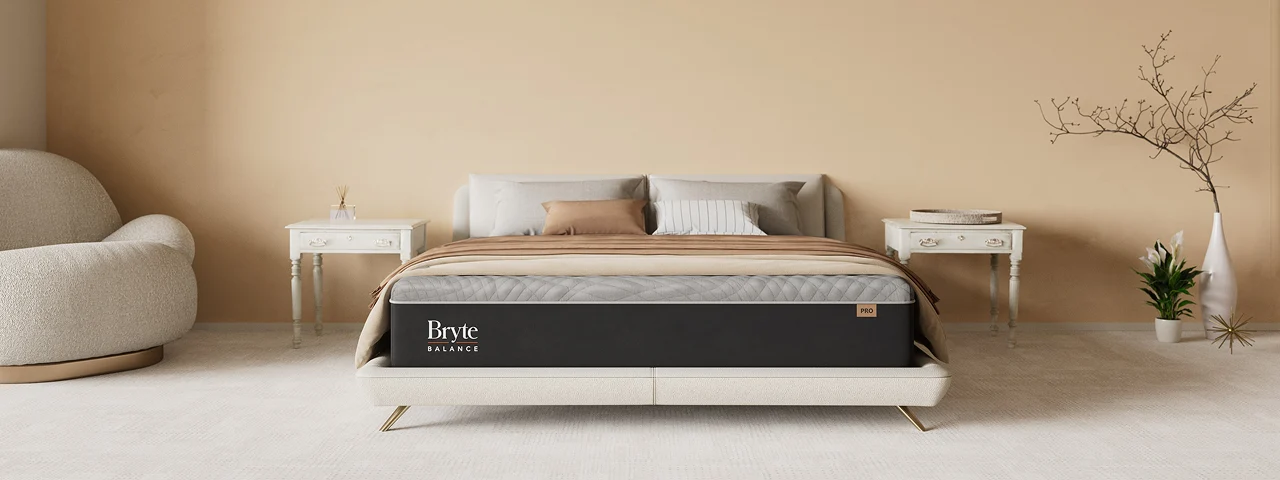
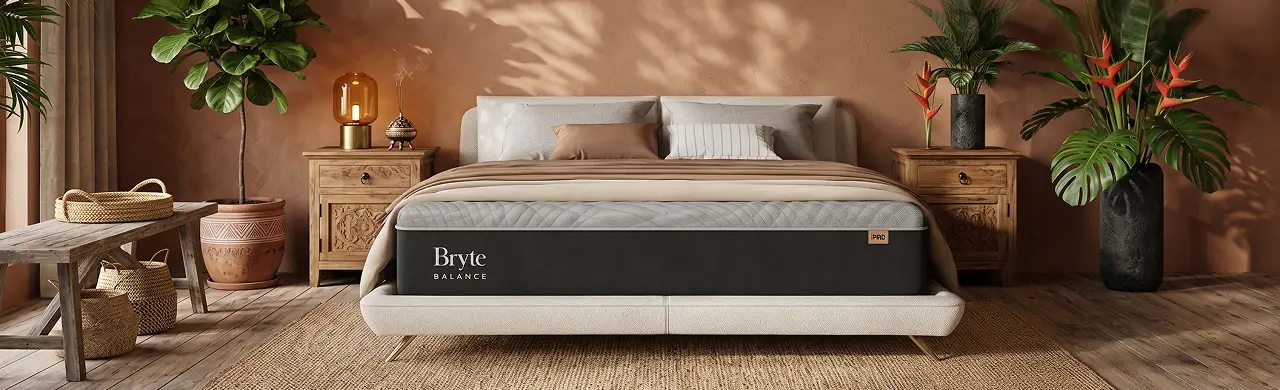
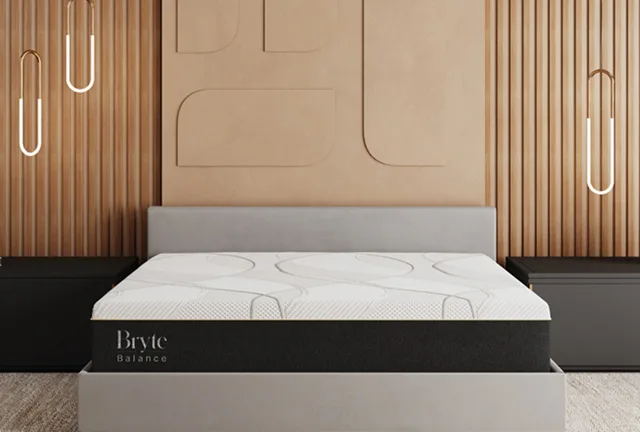
Before moving to separate rooms, some couples try a better shared-bed setup, such as Bryte’s Active Pressure Relief Technology, which can help manage different comfort needs through silent real-time adjustments and independent control on each side.
Sleep divorce exists on a spectrum:
- Same room, separate beds – Maintains proximity while eliminating motion transfer
- Adjacent rooms – Close enough for connection, separate enough for uninterrupted sleep
- Entirely separate bedrooms – Maximum sleep optimization with intentional intimacy practices
The arrangement typically stems from specific sleep incompatibilities—snoring, different schedules, temperature preferences, or movement—rather than relationship dissatisfaction.
Why Partner Sleep Disruption Damages More Than Your Energy
The Measurable Cost of Sharing a Bed
Partner sleep disruption isn't about being "too sensitive." Research quantifies the damage.
A study in Sleep Health journal using polysomnography found that bed partners cause 23% more arousals per hour compared to sleeping alone. Sleep efficiency drops from 91% when sleeping solo to 82% when sharing a bed—a significant reduction in restorative sleep.
Sleep Cycle's analysis of over 1 million nights revealed that shared beds increase wake-ups by 20-50% compared to solo sleeping. Lighter sleepers experience the worst impact during their partner's REM phases, when movement increases.
The National Sleep Foundation reports that one in three American couples regularly disturb each other's sleep, with partners waking each other 2-3 times per week on average.
What's Actually Causing the Disruption
Snoring dominates. According to Naturepedic research, 68% of Baby Boomers and 57% of all separate sleepers cite snoring as the deciding factor. CNN reports that 40% of Americans experience sleep disruptions from partner habits.
Schedule conflicts hit younger couples hardest. Naturepedic found that 63% of Millennials and 62% of Gen Z report conflicting sleep schedules as their primary reason for separate sleeping. When chronotypes clash or work schedules diverge, the conflict repeats nightly.
The Sleep-Conflict Cascade: How Tired Couples Fight More
Poor sleep doesn't just make you tired. It systematically degrades your capacity for healthy relationships.
A study in the Journal of Family Psychology found that couples with one partner experiencing poor sleep are 3x more likely to argue the next day. Each additional hour of sleep loss heightens conflict risk.
The mechanism is neurological. According to research by Gordon and Chen, sleep-deprived individuals exhibit 25-30% poorer emotional regulation. The prefrontal cortex—responsible for impulse control, empathy, and effective communication—functions significantly worse without adequate sleep.
Sleep Medicine Reviews research demonstrated that one night of sleep restriction:
- Reduces positive relationship behaviors by 20%
- Increases negative interactions
- Impairs conflict resolution through heightened hostility
- Creates cascading effects on mood and intimacy
The paradox: Couples who share a bed to preserve closeness may accumulate sleep debt that generates the very conflict and resentment they're trying to avoid.
Real couples on Reddit echo this experience. As one user shared on r/AskReddit:
"Wonderfully. I actually sleep now as opposed to feeling anger and resentment at him for sleeping while his snoring would keep me up night after night. I asked for 3 years for him to just see a doctor to see if there was anything that could be done. He thought I should just get over it. I am a light sleeper and can't use ear plugs because he is a ridiculously heavy (could easily sleep through our fire alarms) sleeper and one of us needs to be able to hear our kids at night if needed. Therefore he sleeps elsewhere now. He is welcome to come back to our room, all he has to do is make good on his promise to see a doctor that he never followed through on. As is I only sleep about 4 hours a night with my work schedule plus taking care of our kids. If we had to share a room I honestly do believe the further decreased sleep would cause me to snap."
The Guilt Cycle Blocking Productive Solutions
According to Sleepopolis, 94% of people who disrupt their partner's sleep feel guilt about it. This creates a destructive dynamic:
- The disrupting partner (snorer, restless sleeper) feels ashamed about something they can't control
- The disrupted partner suppresses complaints to avoid causing more guilt
- Neither can discuss the problem openly
- Resentment builds on both sides
This guilt cycle prevents productive problem-solving and pushes couples toward either silent suffering or sudden rupture—neither of which serves the relationship.
Sleep Divorce: The Evidence-Based Pros and Cons
Documented Benefits
Better sleep translates to better relationships. Research shows that sleep-deprived couples argue more and resolve conflicts less effectively. Separate sleep can paradoxically strengthen relationship quality by eliminating the exhaustion that fuels conflict.
Expert endorsement is growing. AASM spokesperson Dr. Seema Khosla recommends sleep divorce when partner disruptions compromise rest to the point of causing resentment. She frames it as health-focused rather than relationship failure.
Many couples report transformative results. One Reddit user on r/AskReddit explained their experience:
"It was the best decision we ever made. My husband and I are utterly incompatible when it comes to our needs for sleeping. Basically, I need some light in the room and some white noise, and he needs complete darkness and silence. We tried to find a middle ground for years, but there simply wasn't one. One of us was always cranky and tired. We finally decided to try the separate bedrooms thing and it was absolutely life-changing. A lot of people think our marriage is in shambles because we sleep in different beds but we don't give a shit. Our sex life is awesome now because we're not tired all the time anymore."
Documented Risks
Physical proximity creates passive intimacy infrastructure. Cuddling, pillow talk, spontaneous touch—these happen naturally when sharing a bed. Separate sleeping eliminates ambient intimacy opportunities, requiring couples to actively create connection that previously happened automatically.
Older couples show particular vulnerability. A 2025 BMC Public Health study of 860 Taiwanese couples aged 50+ found separate rooms associated with lower psychological well-being, even after controlling for sleep quality and relationship factors.
The critical distinction: The 65% who find sleep divorce "very effective" likely replaced passive intimacy with intentional connection practices. The 30% who lost emotional connection likely did not.
7 Alternatives to Try Before Separate Rooms
Before committing to separate bedrooms, work through this progression from least to most disruptive:
- White noise machines – 40% reduction in snoring interruptions (Sleep Foundation)
- Scandinavian sleep method – Separate blankets, same bed; reduces ~33% of movement disruptions
- Motion isolation mattress – 80-95% reduction in partner motion transfer (Sleep Foundation)
- Split king adjustable bed – 78% report improved sleep quality (Saatva)
- Active Pressure Relief smart bed – Real-time sensing and adjustment of pressure points per partner
- Couples sleep therapy – 70% effectiveness after 8 sessions (Journal of Clinical Sleep Medicine)
- Medical evaluation – Snoring may indicate sleep apnea requiring treatment
Quick Wins: Low-Cost Behavioral Changes
White noise masks snoring without changing anything else. According to Sleep Foundation research, couples using white noise saw a 40% reduction in sleep interruptions from snoring. A $30 machine or free smartphone app may solve the problem.
The Scandinavian sleep method went viral for good reason. Standard practice in Sweden, Norway, and Denmark, this approach involves sharing a bed but using two separate duvets instead of one shared blanket. Each partner wraps up or kicks off covers independently. According to the Sleep Foundation, this preserves the co-sleeping benefits of stress reduction and oxytocin release while eliminating blanket competition and reducing movement disruption.
Mattress Technology That Addresses Root Causes
Motion isolation changes the physics of partner disturbance. Sleep Foundation testing shows motion isolation mattresses reduce partner motion transfer by 80-95% compared to innerspring beds. Pocketed coil hybrids with foam layers prevent up to 90% of vibrations, improving deep sleep by 15-30 minutes.
Split kings offer independence within a shared frame. Each partner gets a separate mattress on one frame, enabling different firmness levels and positions. Saatva research found 78% of couples using split kings reported improved sleep quality.
Active Pressure Relief Technology: The Couples Compatibility Framework
What is Active Pressure Relief? Active Pressure Relief refers to sleep technology that combines real-time sensing of pressure points with real-time adjustments. This "real-time" distinction is critical—it separates beds that actively respond to your body throughout the night from those that merely allow manual firmness adjustments.
When evaluating Active Pressure Relief beds for couples, three metrics determine effectiveness:
1. Sound Level
The bed must operate silently. Adjustments that make noise wake the sleeper and defeat the purpose. Any system that creates audible sounds during adjustment will disrupt rather than improve sleep.
2. Resolution (Zone Density)
High-resolution systems with multiple independent zones address specific pressure points without affecting the entire surface. Low-resolution systems using a single air bladder for the whole body cannot differentiate between areas requiring different support—they adjust everything at once, making personalized couples sleep impossible.
3. Response Time
Real-time adjustment (within seconds) responds to actual position changes as they happen. Systems that adjust only periodically (once per hour or less frequently) cannot provide active pressure relief during sleep—by the time they respond, you've already experienced the discomfort.
Bryte's approach to couples sleep: The Bryte Adaptive Core features up to 90 intelligent, pneumatic Bryte Balancers organized into 16 independent zones—8 per sleeper. This high resolution allows the bed to sense pressure and adjust firmness in real-time without disturbing the other partner. The system operates silently, ensuring adjustments don't wake either sleeper.
The Dual Comfort Design enables each partner to:
- Control their side's firmness independently (0-100 scale)
- Run their own relaxation tracks through BryteWaves
- View their own sleep data through the Bryte app
For couples with different schedules, Silent Wake Assist uses gradual motion to wake one partner without an audible alarm—the other partner remains undisturbed.
When the Problem Requires Professional Intervention
Loud snoring may signal sleep apnea. If snoring includes gasping, choking sounds, or occurs alongside daytime fatigue, a sleep study should precede any mattress purchase or separate sleeping decision. A CPAP machine or oral appliance may resolve the disruption at its source.
Couples therapy works for sleep issues. According to Journal of Clinical Sleep Medicine research, couples sleep therapy achieves 70% effectiveness after 8 sessions. The therapy addresses sleep hygiene, CBT-I tailored for couples, and communication patterns around sleep.
No mattress can fix sleep apnea. No technology can repair communication breakdowns. Identify the actual problem before selecting the intervention.
How to Discuss Sleep Problems Without Starting a Fight
Why These Conversations Trigger Defensiveness
Suggesting separate sleeping often gets heard as "I don't want to be close to you." This conflation of physical proximity with emotional connection runs deep—cultural messaging reinforces that happy couples share beds, making deviation feel like failure.
Common fears on both sides:
- Partner hearing the suggestion: Rejection, feeling unwanted, worry the relationship is declining
- Partner raising the issue: Hurting their partner, being seen as selfish, causing defensiveness
Acknowledge these fears directly rather than arguing about logistics.
Conversation Framework That Works
Timing matters. Not at bedtime. Not when either partner is exhausted. Not after a sleep-disrupted night. Choose a calm, rested moment.
Frame it as collaborative problem-solving:
"I've been feeling really tired lately, and I think my sleep is affecting how I show up for us. Can we talk about ways to improve that?"
"I love sleeping next to you, but I'm struggling with [specific issue]. What if we experimented with some changes to see if we both rest better?"
Use the trial approach:
"Let's try [solution] for two weeks, track how we feel, and adjust from there."
This reframes the decision as an experiment rather than a permanent verdict—reducing psychological stakes for both partners.
Address the emotional subtext directly:
"This isn't about us as a couple—it's about better rest for our relationship."
Therapists at Therapy Group of DC recommend stating facts rather than accusations: "I wake up five times" rather than "You snore too much." Propose multiple options rather than a single ultimatum.
Making Sleep Divorce Work: The Intentional Intimacy Playbook
The 65% who find sleep divorce "very effective" share a common pattern: they replaced passive intimacy with deliberate connection practices.
Specific Practices That Maintain Connection
Therapy Group of DC counselors recommend:
- 15-minute pillow talks before going to separate rooms
- Morning cuddles as part of waking up
- Planned "rekindle nights" when couples intentionally share a bed
- Shared wind-down rituals – stretching together, watching a show, having tea
Physical intimacy requires deliberate planning. Establish which room serves as the space for connection. Some couples designate certain nights for shared sleeping regardless of sleep quality, accepting the tradeoff.
Couples who have successfully navigated this transition often develop creative rituals. One user on r/AskOldPeople shared their detailed approach:
"My husband has his own room. He has his own bathroom. I use the bathroom in the hall, which is close to my room. Every night we meet in my room. I have a king size bed and a huge TV in here. We watch TV, cuddle, or we both have our laptops in here and we're doing our thing. We also have all three cats in bed with us... Then, when my husband gets tired enough to sleep, he goes to his room. I like to 'park' on something on TV and settle in for some sleep, which will come soon. My husband sometimes wakes up at 3:00am, or 4:00am. He works on chemistry, answers more student emails, or he looks at the news, whatever... Before he leaves for work he comes in so we can say our goodbyes and 'I love you' to each other. There's also times when I have some insomnia. I turn the TV on till I get sleepy again. Sometimes he wakes up extra early and wants to work on chemistry on his laptop. He doesn't want to disturb me, and I don't want to disturb him. We only want to SLEEP."
Monitoring for Drift
Signs the arrangement is working:
- Better moods and energy
- Fewer arguments
- Both partners satisfied with the arrangement
- Maintained physical and emotional intimacy
Warning signs requiring adjustment:
- Declining physical intimacy
- Reduced communication
- One partner feeling abandoned
- Growing emotional distance
The 30% who felt less emotionally connected after 6 months underscore the need for active monitoring—not passive assumption that the arrangement will maintain itself.
Frequently Asked Questions
What is sleep divorce?
Sleep divorce is when couples choose to sleep in separate beds or rooms to improve their individual sleep quality. It ranges from separate beds in the same room to entirely separate bedrooms. Experts recommend calling it a "sleep alliance"—a deliberate health decision rather than relationship failure.
Is sleep divorce healthy for marriage?
It can be, when approached intentionally. 53% report improved sleep quality, and better-rested couples argue less and resolve conflicts more effectively. However, 30% felt less emotionally connected after 6 months—success depends on replacing passive intimacy with intentional connection practices.
Does sleeping apart lead to divorce?
Correlation exists, but causation is not established. Couples sleeping separately report 15% lower relationship satisfaction on average—but couples who sleep apart intentionally and maintain connection often report stronger relationships than those suffering through disrupted shared sleep.
How common is sleep divorce?
31% of U.S. adults have engaged in sleep divorce according to AASM. Prevalence varies by age:
- Ages 35-44: 39%
- Millennials: 43%
- Gen X: 33%
- Gen Z: 28%
- Baby Boomers: 22%
What are the main reasons couples sleep separately?
- Snoring: 57-68% cite as primary reason
- Different schedules: 62-63% (especially Millennials/Gen Z)
- Temperature disagreement: 80% of couples affected
- Motion disruption: 33% cite partner movement
How do couples maintain intimacy with sleep divorce?
Through intentional practices: 15-minute pillow talks before separating, morning cuddles, planned shared-bed nights, and establishing dedicated spaces for physical connection. Couples who succeed treat intimacy as requiring active investment rather than assuming it will happen naturally.
Should we try alternatives before separate rooms?
Yes. Work through this progression:
- White noise (40% reduction in snoring interruptions)
- Separate blankets (Scandinavian method)
- Motion isolation mattress (80-95% reduction in motion transfer)
- Split king or Active Pressure Relief bed with dual-zone control
- Medical evaluation for snoring
- Couples sleep therapy (70% effectiveness)
When should we consider sleep divorce?
Consider it when partner disruptions compromise rest to the point of causing resentment, conflict, or health consequences—and when less disruptive alternatives have been tried. Dr. Seema Khosla of AASM recommends addressing medical issues and trying alternatives first.
The Path Forward: Sleep as Relationship Investment
The question isn't whether couples should share a bed. It's whether your current sleeping arrangement serves your relationship.
If shared sleep is causing:
- Chronic exhaustion
- Increased conflict
- Building resentment
- Health consequences
...then the arrangement meant to preserve closeness may be actively damaging it.
As one Redditor on r/relationship_advice summarized the key mindset shift:
"People need to normalize prioritizing their sleep even if it means they aren't sleeping with their partner."
The progression that works:
- Acknowledge the problem openly, without blame
- Try behavioral and environmental adjustments first
- Consider Active Pressure Relief technology that addresses root causes
- If necessary, approach separate sleeping as a deliberate "sleep alliance"
- Actively maintain intimacy through intentional practices
Whether you end up in the same bed with better technology, the same room with separate beds, or different rooms with stronger daytime connection—the goal remains the same: two well-rested partners with the emotional resources to show up fully for each other.
Shop Bryte Beds
From the Park Hyatt New York to Rosewood Miramar Beach, thousands of guests have experienced Bryte in the world’s top hotels—now it’s your turn.