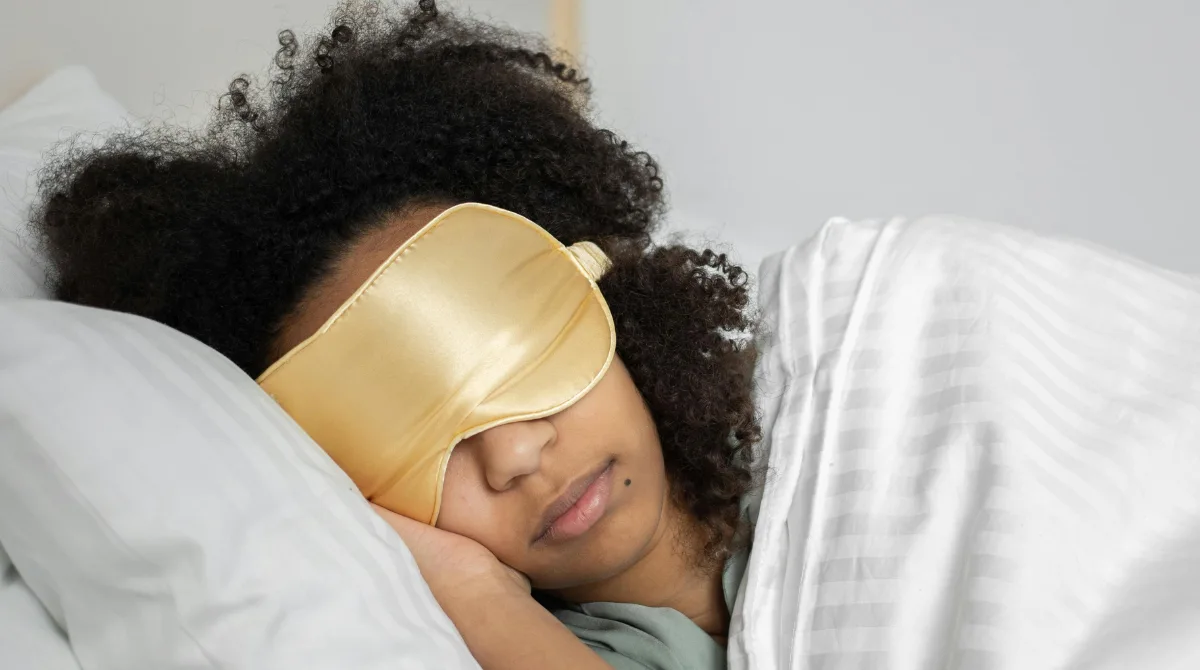
Yes, a bad mattress can cause or worsen insomnia, especially if it makes it harder to fall asleep, causes repeated wakeups, or leaves you tossing and turning instead of sleeping deeply. When a mattress is part of the problem, the pattern is usually physical discomfort at the sleep surface, not just wakefulness on its own.
Signs your mattress may be contributing to sleep issues include:
- you fall asleep slowly because you cannot get comfortable
- you wake during the night to shift positions or relieve pressure
- you wake with back, shoulder, neck, or hip discomfort that improves after you get up
- your sleep is better in hotels, guest rooms, or on a different mattress
A mattress can affect sleep latency, sleep fragmentation, and overall sleep quality, but it is not the only possible cause of insomnia. Morning aches that improve once you are up may point to your mattress, while racing thoughts or stress-related wakeups may point elsewhere.
Polysomnography studies show mattress quality directly affects how quickly you fall asleep, how often you wake, and how much restorative deep sleep you achieve. Medium-firm mattresses reduced sleep latency from 12.42 minutes to 7.71 minutes in controlled research - a 38% improvement.
But here's what matters more: determining whether your mattress really is the problem.
How a Mattress Actually Disrupts Sleep
Pressure points trigger unconscious position shifts that fragment your sleep architecture.
When your mattress fails to distribute body weight evenly, concentrated pressure builds at contact points—shoulders, hips, lower back. Your body responds by shifting position, even while you're asleep. Research published in PMC found that soft mattresses produced 29.17 stage transitions per night compared to 21.75 on firm surfaces (p < 0.05). Each transition pulls you out of deeper sleep stages, preventing the restorative Stage 3/4 sleep your body needs.
This creates a specific problem: you can spend 7-8 hours in bed and still wake exhausted. The Mattress Firm Sleep Index found that 53% of Americans rate their sleep quality as low despite 58% getting 7 or more hours per night. Duration without quality is the signature of fragmented sleep architecture.
Key research findings on mattress-sleep connection:
- Medium-firm mattresses improved sleep quality by 55% within one week of replacement
- Chronic back pain decreased by 48% in the same timeframe
- Sleep latency dropped from 12.42 to 7.71 minutes on medium-firm vs. soft surfaces (p < 0.05)
- An 8-week study with Oura Ring tracking confirmed increased deep sleep and reduced awakenings on pressure-relieving surfaces
The Invisible Decline: Why You Haven't Noticed
Your mattress tonight is nearly identical to your mattress last week. But it's measurably different from your mattress two years ago.
Mattress degradation happens gradually—foam compresses, springs weaken, structural integrity declines. Your brain adapts to these changes through habituation, the same neurological process that lets you stop noticing background noise. You accept the new normal without registering the change.
The data reveals how common this problem is. According to research using the Boston Mattress Satisfaction Questionnaire, mattresses owned for 10+ years showed significantly lower satisfaction across all domains compared to those owned 0-3 years (p < 0.001). Yet the average mattress isn't replaced until 13.9 years—4+ years past the point where performance measurably declines.
You may have attributed increasing morning stiffness or daytime fatigue to aging, stress, or "just getting older." The mattress—sitting right beneath you every night—often escapes suspicion because the decline happened too slowly to notice.
This gradual decline catches many people off guard, as one Reddit user discovered:
"Me and the wife's old one lasted us almost 10 years of sleep, but it's time to go. It's sagging now (more so on my side), and no longer comfortable to sleep in, so we stepped up our mattress shopping endeavor and bought another high quality mattress (and a good boxspring). Got to sleep in the new one last night, and almost all of my issues with my back just evaporated in one night of sleep. Woke up feeling chipper this morning, but yet I didn't want to get out of bed for work because it was just so comfortable! I'm definitely going to be sleeping in Saturday morning! I thought I was just getting old with the back pain I've been feeling recently, but it turns out it was just our mattress getting old on us."
Diagnosing Mattress-Induced Insomnia
Mattress-related sleep problems follow a specific symptom pattern. Recognizing it helps you avoid spending money on a mattress when the real cause is something else—or dismissing mattress factors when they're the actual culprit.
Signs Your Mattress Is the Problem
The hotel test is a particularly revealing diagnostic tool. As one Reddit user shared:
"I realized a lot of my prior shoulder pain was due to too firm mattress after I realized I always felt better during hotel stays."
Medical Red Flags That Require Professional Evaluation
If medical red flags apply, see a sleep specialist before investing in a new mattress. A Mayo Clinic overview notes that conditions like sleep apnea and restless leg syndrome require diagnosis and treatment beyond sleep surface changes.
The Physical Assessment Tests
These tests give you objective data instead of subjective guessing.
The Straight-Edge Sagging Test
- Remove all bedding from your mattress
- Place a long straight edge (yardstick, level, or board) across suspected sag areas
- Measure the gap from the straight edge to the lowest point of the mattress surface
- Repeat in multiple spots, especially where you typically sleep
Interpretation:
- Under 1 inch: Within acceptable range
- 1–1.5 inches: Borderline—monitor for worsening symptoms
- Over 1.5 inches: Internal support has failed; warranty thresholds and industry standards indicate replacement is appropriate
The Hotel Test
Track your sleep quality across multiple locations:
- Do you fall asleep faster elsewhere?
- Do you wake less frequently?
- Do you wake without the morning aches you experience at home?
- Is your energy level better the next day?
One night isn't conclusive—any new environment can temporarily disrupt sleep. Multiple nights in different locations provide reliable data. If you consistently sleep better anywhere except home, your mattress is likely a significant factor.
The Economic Reality of Untreated Insomnia
Annual costs tell a story that reframes the mattress decision.
The cost differential between insomnia sufferers and good sleepers is $4,589 per year. A premium mattress represents roughly 4% of that gap annually. You're not deciding whether to spend money—you're deciding where the money goes.
Beyond direct costs, presenteeism from poor sleep results in 11.3 lost workdays per person annually ($2,280 in individual productivity loss). The national economic burden of insomnia reaches $150–175 billion annually, including $63.2 billion in productivity loss alone.
Reddit users frequently echo this perspective on sleep as an investment:
"What amazes me is that people won't spend decent money on a mattress. We spend approximately a third of our lives in bed; we buy good cars, and good sofas... but not good mattresses, that we use just as much, if not more. You can bet my bedding is awesome!"
The math favors mattress replacement when:
- Your symptoms match the mattress-related pattern
- Your mattress fails the physical assessment tests
- You sleep better on other surfaces
- Your mattress is older than 9-10 years
The math doesn't favor immediate replacement when:
- Symptoms persist regardless of sleep location
- Medical red flags are present
- Your mattress is under 5 years old with no visible degradation
- You haven't addressed sleep hygiene basics
Partner Disturbance: The Shared Bed Problem
Sharing a bed introduces variables beyond your own comfort.
Research tracking 46 couples over 8 nights found that 5-6% of all 30-second sleep epochs contained body movements, with approximately one-third of those movements occurring simultaneously in both partners. Your partner's movements can fragment your sleep even when you don't consciously wake.
The firmness preference conflict compounds this problem. The RTI International study found that optimal firmness varies individually based on body weight, sleep position, and personal comfort needs. Traditional mattresses force couples into a compromise that leaves both partners on a suboptimal surface.
Solutions for partner sleep conflicts:
- Dual-zone mattresses allowing independent firmness control per side
- Motion-isolating materials (memory foam, pocket coils) that reduce transfer
- In some cases, separate mattresses placed side by side
What Active Pressure Relief Actually Does
Active Pressure Relief is defined as real-time sensing of pressure points combined with real-time adjustments to redistribute support before discomfort causes sleep disruption.
The “real-time” distinction matters — systems that only allow manual firmness changes do not qualify.
Understanding the difference between passive and active technology helps you evaluate whether premium investment makes sense for your situation.
Passive Materials
Traditional mattresses use materials that don't change during the night. Memory foam conforms through heat and pressure response. Latex provides contouring with faster recovery. Springs offer bounce and airflow. These materials cushion—but they can't adjust when you change positions.
For many people, a well-selected passive mattress fully addresses sleep problems. The research showing 55% sleep quality improvement used conventional innerspring construction. When your issue is simply an old, degraded, or poorly matched mattress, a quality passive replacement may be the complete solution.
Active Pressure Relief Systems
Active systems use sensors and adjustment mechanisms to modify the sleep surface in real time. A PMC feasibility study examined a smart mattress with pressure sensors that achieved high accuracy in sleeping position recognition and automatically adjusted for uniform pressure distribution based on body position.
Research from Frontiers in Neurology found that machine learning models using smart bed data could detect insomnia risk through sleep/wake patterns and cardio-respiratory metrics. A study reported in Managed Healthcare Executive found smart beds detected lower heart rate variability in insomnia patients compared to healthy controls—suggesting diagnostic value beyond comfort adjustment.
When Active Pressure Relief System Makes Sense
Active Pressure Relief mattress investment is appropriate when:
- You've confirmed mattress-related factors contribute to your sleep problems
- Conventional mattresses haven't provided adequate results
- You have specific needs passive materials can't address (frequent firmness changes, significant partner disturbance)
- You value ongoing sleep data and personalization
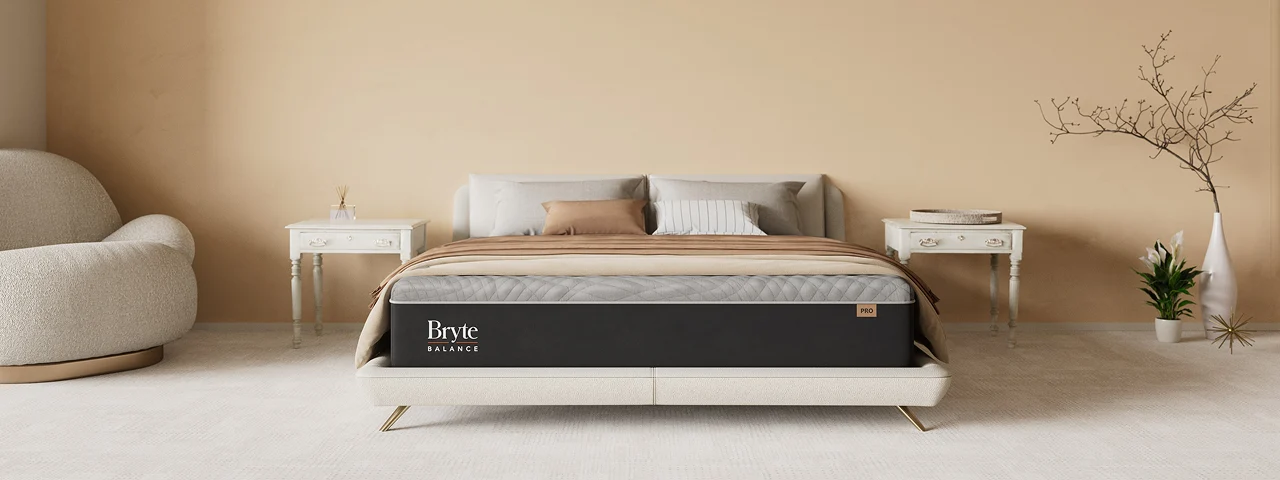
Bryte's approach addresses the root causes identified in research. The Bryte Adaptive Core uses up to 90 pneumatic Balancers across 16 independent zones to sense pressure and adjust firmness automatically—before discomfort causes waking. The Dual Comfort Design lets each partner control their side independently (0-100 firmness scale), eliminating the compromise problem entirely. BryteWaves technology addresses sleep onset through rhythmic motion synced with audio, targeting the psychological component that passive materials can't touch.
Unlike passive materials that degrade over time, Bryte's Restorative-AI improves through over-the-air updates—the opposite trajectory of conventional mattresses.
Timeline: What to Expect After Switching
Most improvement happens quickly. Research shows 55% sleep quality improvement within the first week of switching to an appropriate mattress, with an additional 24.2% improvement by week four.
Realistic expectations:
- Days 1-3: Adjustment period; new surface may feel unfamiliar
- Week 1: Initial improvements in sleep quality and pain if mattress was the issue
- Week 2-4: Continued adaptation; accumulated sleep debt begins recovering
- Month 2+: Full adaptation; stable improvement if mattress was a significant factor
Real-world experiences often align with these research timelines. As one Reddit user shared about their dramatic improvement:
"I was waking up several times a night with lower back pain. By morning I would have full-on muscle spasms and terrible pain until I was up and moving around. I switched from a foam mattress to a hybrid with inner springs for support. For me, having a medium-firm vs soft mattress helped so much. I NEVER have pain now and sleep all night. For reference, I'm a 5'10, 140-pound side sleeper. I'll never get another foam mattress."
If improvement doesn't materialize:
- Confirm you selected appropriate firmness for your body and sleep position
- Check whether other factors (stress, medical conditions, sleep habits) are contributing
- Use any trial period to evaluate—most quality mattresses offer 90-120 nights
Research indicates 75-80% report improved outcomes after mattress replacement. The 20-25% who don't improve typically have causes beyond the sleep surface that require different interventions.
Frequently Asked Questions
Can a bad mattress cause insomnia?
Yes. Research shows mattress quality directly affects sleep latency, sleep architecture, and pain-related awakenings. A degraded or poorly matched mattress can cause or worsen insomnia symptoms—particularly if you wake with morning aches that improve during the day.
How do I know if my mattress is causing my insomnia?
Apply the diagnostic pattern: Morning stiffness that improves once you're up, waking to reposition due to discomfort, and sleeping better elsewhere all point to your mattress. The straight-edge test (measuring sag over 1.5 inches) provides objective confirmation.
Can an old mattress cause sleep maintenance insomnia?
Yes. Mattress degradation creates pressure points that trigger unconscious position shifts throughout the night. Research found soft/degraded surfaces produced 34% more stage transitions than firm ones—fragmenting sleep even without full awakenings.
How often should you replace your mattress?
Most mattresses show measurable performance decline around 9-10 years. The average disposal age is 13.9 years—meaning many people sleep on degraded surfaces for 4+ years without realizing it.
What type of mattress is best for insomnia?
Medium-firm surfaces show the strongest research support. Studies demonstrate 55% sleep quality improvement and reduced sleep latency on medium-firm mattresses. Individual optimal firmness varies—the RTI study found no universal "best" firmness across all sleepers.
How long does it take to adjust to a new mattress?
Expect significant improvement within 1-2 weeks if your mattress was the issue. Research shows 55% improvement in week one, with additional gains through week four. Full adaptation typically completes within 30-60 days.
Will a mattress topper fix my problem?
Toppers can help with surface comfort but don't address structural failure. If your mattress sags more than 1.5 inches, no topper will restore proper support. Toppers work best for fine-tuning comfort on a structurally sound base.
Next Steps
1. Perform the sagging test. Place a straight edge across your mattress and measure. Over 1.5 inches indicates structural failure.
2. Run the hotel test. Track your sleep quality over multiple nights in different locations. Consistent improvement elsewhere confirms your mattress as a factor.
3. Check for medical red flags. Gasping, excessive daytime sleepiness, or leg sensations relieved by movement warrant professional evaluation before mattress investment.
4. Calculate your cost equation. Compare the $4,589 annual cost differential between insomnia sufferers and good sleepers against mattress amortization.
5. Match solution to diagnosis. If your symptoms follow the mattress-related pattern and your current mattress fails the physical tests, replacement has a 75-80% probability of meaningful improvement.
The 12% of Americans with diagnosed chronic insomnia face real costs—financial, physical, and emotional. For those whose sleep problems trace to their mattress, the solution is concrete and actionable. For those whose causes lie elsewhere, the diagnostic framework above helps avoid spending money on the wrong intervention.
Your sleep surface matters. The question is whether it's your problem—and now you have the tools to find out.
Shop Bryte Beds
From the Park Hyatt New York to Rosewood Miramar Beach, thousands of guests have experienced Bryte in the world’s top hotels—now it’s your turn.